What Is the BSL Sign for "even smooth"?
Imagine running your hand across a perfectly flat, unblemished surface; that's the essence of the BSL sign for even smooth. This isn't merely about a lack of bumps; it’s a sign encapsulating uniformity, consistency, and a pleasing tactile quality. Understanding this particular British Sign Language even smooth gesture unlocks a nuanced way to describe textures, states, or even situations in your daily conversations. You'll discover how versatile this BSL sign for even smooth truly is for communicating clarity and absence of obstruction.
How to Sign "even smooth" in British Sign Language - Step-by-Step
Let's break down the individual components that combine to form this wonderfully descriptive BSL sign, ensuring you capture its full meaning.
Step 1: Handshape
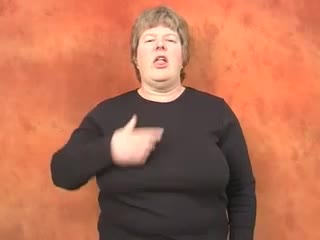
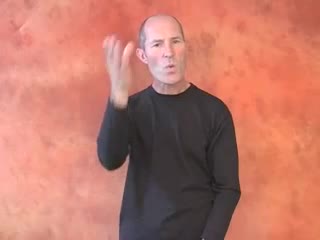
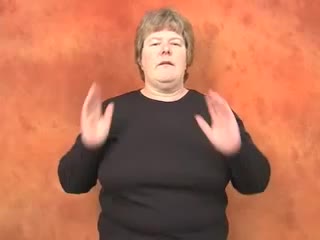
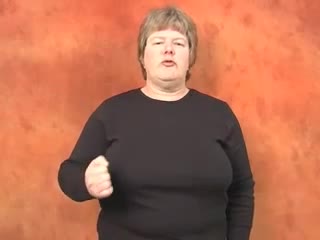
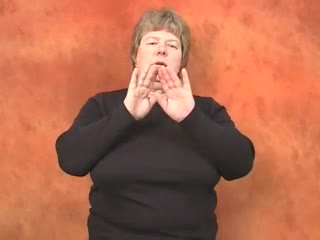
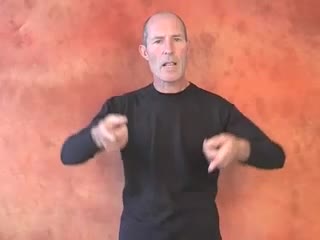
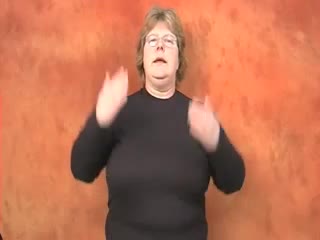
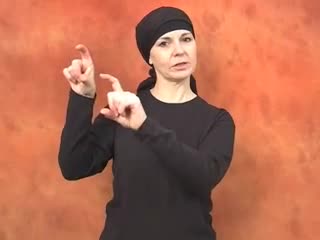
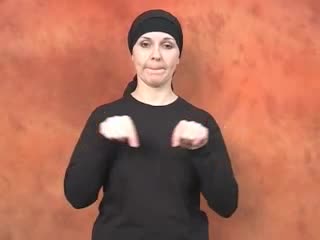
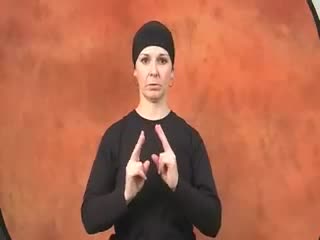
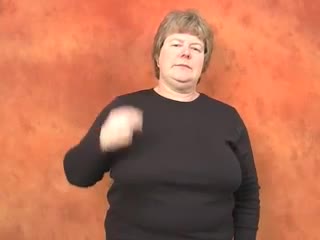
For this sign, you'll want to extend your dominant hand flat, with all four fingers held together tightly, pointing forward. Your thumb should rest along the side of your palm, tucked neatly against your index finger, not splayed out. Picture the palm of your hand as a perfectly flat plane, ready to glide over a surface. Ensure there's a gentle firmness in your hand, avoiding any stiffness, as if you're preparing to feel a very delicate texture.
Step 2: Hand Placement and Location
You'll begin with your dominant hand positioned relatively in front of your upper chest or shoulder area, with your palm facing downwards. Hold your hand in this starting position comfortably, ensuring your wrist is relaxed but not drooping. The exact height can vary slightly based on the context, but generally, it initiates in your neutral signing space, which is the area directly in front of your body where most signs occur.
Step 3: Movement
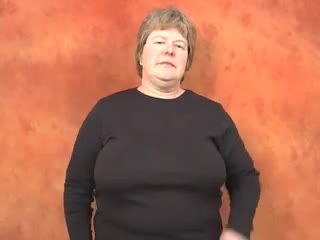
From its initial position, your dominant hand then sweeps forward and slightly downwards in a smooth, continuous arc. This movement should be graceful and deliberate, as if you are gently ironing out an imaginary wrinkle or levelling an uneven surface. The sweep is usually a single, unrepeated motion, moving from near your body outwards into the neutral space. There's no abrupt stop; instead, the motion naturally tapers off at its furthest point, conveying a sense of completion.
Step 4: Facial Expression and Mouthing
A relaxed, neutral facial expression typically accompanies the BSL sign for "even smooth," reflecting the calm, unruffled quality of the word. Your mouth will naturally mouth the English word "smooth" or "even" as you perform the sign. Mouthing, a non-manual feature, plays a vital role in BSL grammar, often clarifying the specific English word you're referencing, and here it distinguishes the sign's precise meaning when context might be ambiguous.
Step 5: Palm Orientation
Your palm will consistently face downwards throughout the entire movement of this sign. This downward orientation is crucial as it physically represents the action of smoothing or flattening a surface beneath your hand. A shift in palm orientation would alter the meaning significantly, perhaps turning it into a different sign or losing its iconic connection to the concept of evenness and smoothness. Maintaining this downward gaze anchors the sign to its core meaning of a level, untextured plane.
"even smooth" in BSL - Quick Reference Snapshot
- **Handshape:** Dominant hand flat, fingers together, thumb tucked.
- **Location:** Starts in front of upper chest/shoulder, moves forward.
- **Movement:** Single, smooth, downward arc outwards.
- **Facial Expression:** Relaxed, neutral.
- **Dominant Hand:** Used for the entire sign.
- **Palm Orientation:** Consistently palm-down throughout.
5 Memorisation Tricks for the BSL Sign "even smooth"
- **Visual Mnemonic:** Picture your hand as a squeegee cleaning a window or a spatula smoothing icing on a cake. The flat handshape and the sweeping motion perfectly mimic these actions, embedding the idea of 'even' and 'smooth' into your muscle memory.
- **Muscle-Memory Drill:** Stand in front of a mirror and practice the sign, really focusing on the feeling of your hand gliding. Imagine you're physically smoothing out a rumpled tablecloth or levelling a patch of sand, letting the sensation of the movement reinforce the concept.
- **Connection to Meaning:** Think about what it *feels* like to touch something smooth and even. Your hand naturally wants to flat-palm stroke it. This sign embodies that tactile sensation, linking the physical gesture directly to the sensory experience of "even smooth."
- **Common-Confusion Tip:** Don't confuse this with signs for "flat" or "table," which might have similar handshapes but distinct movements or locations. Remember, "even smooth" specifically has that single, graceful, downward-arc sweep, distinguishing it from related concepts.
- **Daily-Life Practice Idea:** Every time you encounter something smooth in your day, whether it's a polished countertop, a freshly ironed shirt, or a calm water surface, perform the BSL sign for even smooth. This constant, real-world association will solidify the sign in your mind.
Real-Life Situations to Use the BSL Sign for "even smooth"
- You might use this sign to describe a surface, perhaps explaining to a friend that "the new road is wonderfully even smooth now," where the sign clarifies the quality of the road's surface.
- Imagine discussing a challenging project; you could comment, "Hopefully, the meeting goes even smooth," expressing a desire for a problem-free, straightforward discussion, applying the concept metaphorically.
- When sharing feedback on a design or a plan, you might sign, "We need to make sure the transition is even smooth," indicating that the process should be seamless and without hitches.
- Someone might ask you, "Is the baby's skin even smooth?" after an allergic reaction, and your response using this sign would directly communicate the skin's texture, perhaps indicating improvement.
Top 3 Mistakes Learners Make Signing "even smooth" in BSL
- **Incorrect Handshape or Finger Tension:** Many beginners either splay their fingers or curl them slightly, or their hand might be too tense. This often happens because they're not fully visualising the flat, unblemished surface the sign represents. The correction is to consciously ensure all four fingers are pressed together firmly, with the thumb tucked, maintaining a relaxed yet flat posture as if your hand itself is a smoothing tool.
- **Choppy or Repeated Movement:** Instead of a single, fluid arc, some learners might make several small, jerky movements, or even repeat the sweeping motion multiple times. This breaks the essence of continuity and effortlessness inherent in "even smooth." The solution is to practice the movement slowly and deliberately, focusing on achieving one long, graceful sweep that starts and finishes smoothly, much like drawing a perfect arc in the air.
- **Incorrect Palm Orientation:** A common error is for the palm to face forward or slightly upwards during the sign, rather than consistently downwards. This changes the visual representation from smoothing a surface to pushing something away or presenting an open hand. To correct this, always remind yourself that the palm must be oriented towards the imaginary surface you are smoothing, keeping it facing the ground throughout the entire motion.
Fascinating Facts About the BSL Sign for "even smooth"
- The iconic nature of this sign is remarkable; it's a truly visual representation of the concept, making it relatively intuitive for new learners to grasp once they understand the core movement.
- While the core sign remains consistent across the United Kingdom, subtle regional variations might exist in terms of the exact starting height or the length of the sweep, reflecting the rich diversity within the BSL-using community.
- This sign isn't directly derived from the manual alphabet, but its clear, distinct handshape contributes to BSL's overall clarity, ensuring it stands out from signs using similar but modified handforms.
- Linguistically, "even smooth" often functions as an adjective in BSL, describing qualities, but its versatility means it can also imply a process of becoming smooth or even, adding a dynamic layer to its meaning.
- The sign can be subtly modified in its speed or intensity to convey different degrees of smoothness; a very slow, deliberate sweep might indicate extreme smoothness, showcasing BSL's expressive range.
"even smooth" in Deaf Culture - Community and Identity
The concept of "even smooth" extends beyond mere texture in Deaf culture; it often metaphorically describes situations, processes, or even interactions. Deaf people deeply value clear, direct communication, and a "smooth" conversation or interaction is one that flows effortlessly, without misunderstandings or communication breakdowns. This sign, therefore, represents an ideal state of clarity and ease, mirroring the community's desire for accessible and unimpeded communication. When a Deaf person describes an event as having gone "even smooth," it speaks volumes about a positive, hassle-free experience, reinforcing the cultural emphasis on effective and enjoyable interaction. It’s a sign that resonates with the collective experience of navigating a world that isn't always designed for effortless Deaf communication.
Example Conversations Using "even smooth" in BSL
English: The new road surface is wonderfully even smooth. - BSL structure: Topic-comment order, with the quality "even smooth" describing the road surface.
English: I hope the whole process goes even smooth. - BSL structure: Expressing a wish or hope, the sign functions adverbially to describe the desired manner of the process.
English: Is this fabric even smooth enough for the baby? - BSL structure: A question incorporating a descriptive adjective, often with a raised eyebrow for the interrogative non-manual feature.
English: After painting, the wall became completely even smooth. - BSL structure: Demonstrating a change of state, the sign highlights the resulting quality of the wall following an action.
English: We need to ensure the presentation runs even smooth. - BSL structure: An imperative statement emphasising the desired quality of execution for an event, with "even smooth" acting as a descriptor of the desired flow.
Frequently Asked Questions: The BSL Sign for "even smooth"
Is the BSL sign for "even smooth" suitable for beginners?
Absolutely, this is a fantastic sign for beginners to learn early on because of its highly iconic nature and straightforward movement. Its visual representation of smoothing something out makes it quite intuitive, helping new learners build confidence with BSL's expressive qualities. Mastering it also introduces fundamental handshape and movement principles crucial for many other signs.
Are there any regional variations for the BSL even smooth sign?
While the core handshape and movement for "even smooth" are widely recognised across the UK, you might observe minor regional nuances in BSL, such as a slightly longer sweep in some areas or a subtly different starting height. These variations are generally small and won't impede understanding, but they highlight the organic evolution of BSL within different Deaf communities. It's always great to observe local signers in your area if you can.
What's the best way to remember the BSL sign for even smooth without confusing it with similar gestures?
The key to distinguishing the BSL sign for "even smooth" from similar gestures lies in its unique, singular, downward-arc movement combined with the consistently palm-down orientation. Many similar signs, like "flat" or "table," either involve different movements, hand placements, or a different palm orientation. Always focus on that specific, deliberate smoothing motion and the flat hand going *downward* and *outward* to lock in its distinct meaning.
Can children easily learn the BSL sign for even smooth?
Yes, children typically pick up the BSL sign for "even smooth" quite readily, often enjoying the physical act of "smoothing" something imaginary. Its clear visual meaning and tactile connection make it very accessible for young learners. You can make it fun by pretending to smooth out a blanket, a pet's fur, or even a drawing, encouraging them to connect the sign with real-world objects and actions.
How does the BSL sign for "even smooth" differ from 'flat'?
The BSL sign for "even smooth" specifically conveys the quality of having no bumps or irregularities, often implying a process of making something uniform, whereas 'flat' typically describes a two-dimensional plane or a lack of depth. While both might use a similar flat handshape, 'flat' often involves a more static hand or a broader, horizontal sweep, whereas "even smooth" focuses on the action or result of *removing* unevenness. They're related, but their nuances are distinct within BSL.
Signs That Pair Naturally with "even smooth" in BSL
- **SURFACE:** This sign clearly links to "even smooth" because smooth often describes the quality of a surface. Learning them together helps you discuss textures and planes effectively.
- **TEXTURE:** Understanding "even smooth" in conjunction with "texture" allows for a richer description of how things feel. They form a natural pair for sensory communication.
- **PERFECT:** If something is "even smooth," it's often considered perfect in its finish or execution. These two signs frequently appear together to describe ideal outcomes.
- **DIFFICULT / EASY:** When a situation isn't "even smooth," it's often difficult. Conversely, an "even smooth" process is usually easy. Learning these helps express the flow and challenges of events.
- **PROBLEM (NONE):** A lack of problems can be described as "even smooth," especially when discussing events or processes. Signing "problem none" then "even smooth" effectively communicates a hassle-free experience.
- **ROUGH:** As a direct opposite, learning "rough" alongside "even smooth" provides a complete vocabulary for describing tactile sensations and conditions.
Building Fluency: How to Practise "even smooth" in BSL
To truly embed the BSL sign for "even smooth" into your signing repertoire, start by using a mirror; observe your handshape, placement, and the fluidity of your sweeping motion, making sure your palm orientation is consistently downwards. Next, integrate this sign into your daily BSL conversations by actively looking for opportunities to describe things around you, whether it's a calm lake, a polished table, or a straightforward plan. Try filming yourself performing the sign in various contexts, then watch it back to refine your technique and facial expression. The most effective way to build genuine fluency is to connect with a Deaf conversation partner; they'll offer invaluable feedback and real-world usage examples you won't find anywhere else. Remember, consistent repetition spaced out over several days, rather than intense cramming, will cement this sign into your long-term memory.