What Is the BSL Sign for "cable duct"?
Imagine the intricate network beneath our feet, the veins of modern infrastructure carrying vital connections. Here's a sign that brings that often-hidden world into clear view: the BSL sign for cable duct. This specific gesture in British Sign Language powerfully communicates the concept of a protective channel for wires, conduits, or fiber optics. Understanding this sign allows you to discuss construction, repairs, technology installations, or even simple home improvements with precision within the Deaf community. It's a fundamental piece of vocabulary for anyone needing to describe the physical pathways that house cables, bridging a practical gap in everyday communication.
How to Sign "cable duct" in British Sign Language - Step-by-Step
Let's get your hands ready to accurately convey this practical term, focusing on the nuances that make it distinctly BSL.
Step 1: Handshape
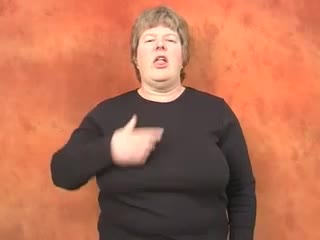
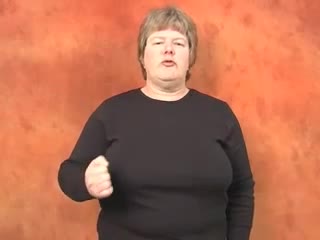
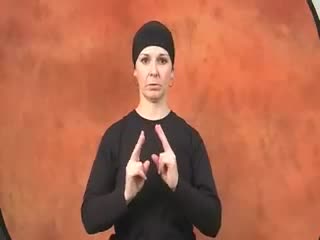
For this sign, you'll primarily use your dominant hand. Form your dominant hand into a 'C' shape, almost like you're gently gripping a small pipe or cylinder. Your thumb should be extended, lightly touching the side of your index finger, while your index, middle, ring, and pinky fingers are all curved inward, mimicking the roundness of a duct. Ensure your fingers aren't too tightly clenched; there should be a visible opening, like the cross-section of a channel.
Step 2: Hand Placement and Location
Position your dominant hand, holding that 'C' shape, slightly in front of your chest, just below your sternum. It should be in what we call the neutral signing space, comfortable and easily visible. Your non-dominant hand remains passive, often resting gently or held in a relaxed fist, not interacting with the signing hand for this particular BSL gesture.
Step 3: Movement
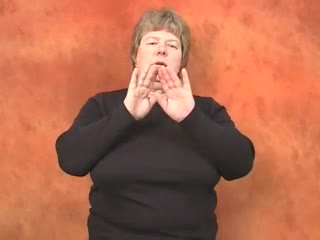
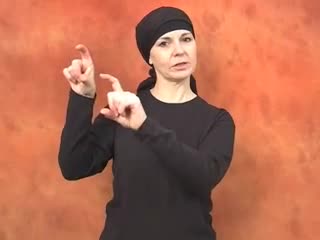
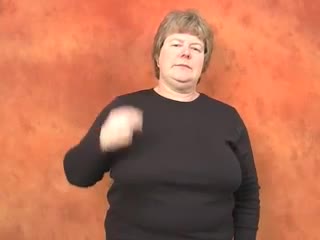
Begin with your 'C'-shaped dominant hand positioned as described. The movement involves a clear, deliberate sweep forward and slightly downwards, moving away from your body in a shallow arc. Think of tracing the path a cable might take as it emerges from a wall or extends across a surface. Execute this motion once, with a smooth, controlled trajectory, indicating the linear progression of a duct.
Step 4: Facial Expression and Mouthing
While the sign itself is quite descriptive, a neutral and focused facial expression generally accompanies it. Since "cable duct" is a noun describing an object, there isn't typically an exaggerated emotional component. However, mouthing the word "cable duct" or a related concept like "channel" can significantly aid comprehension, especially for learners or in situations where context needs reinforcing. This non-manual feature supports the manual sign, acting as a visual cue for the spoken word.
Step 5: Palm Orientation
Initially, your palm faces slightly inwards towards your body, with the opening of the 'C' handshape pointing forward. As you execute the forward sweeping movement, your palm maintains this orientation, keeping the "channel" aspect of the 'C' visible as it moves through the signing space. This consistent palm orientation visually reinforces the idea of an open, continuous conduit, clarifying the sign's meaning as a protective pathway rather than a solid object.
"cable duct" in BSL - Quick Reference Snapshot
- Handshape: Dominant hand forms a 'C' shape, fingers curved, thumb extended alongside index.
- Location: In front of the chest, within the neutral signing space.
- Movement: Single, smooth sweep forward and slightly downwards, an arc away from the body.
- Facial Expression: Neutral, focused; mouthing "cable duct" is common.
- Dominant Hand: Used exclusively for the sign, non-dominant hand remains relaxed.
- Palm Orientation: Palm initially faces slightly inwards, opening of 'C' points forward, maintained during movement.
5 Memorisation Tricks for the BSL Sign "cable duct"
Here are some clever ways to really make this sign stick in your memory, transforming learning into an intuitive process.
- Visual Mnemonic: The Cable's Path: Picture a single cable being gently guided through a rounded channel. Your 'C' handshape literally mimics the cross-section of that duct, and the forward movement represents the cable's journey along its length. Really visualise a conduit stretching out from your body.
- Muscle-Memory Drill: Repetitive Tracing: Stand in front of a mirror and practice the exact forward and slightly downward sweep with your 'C' hand. Repeat this motion ten times, focusing on the smooth, consistent arc, letting your arm and wrist remember the precise trajectory. You'll build a physical memory for the movement.
- Connection to Meaning: The Protective Channel: Think about the core purpose of a cable duct: protection. The enclosing 'C' shape of your hand inherently conveys this sense of surrounding and safeguarding. This direct link between the sign's form and its function makes it logically memorable.
- Common-Confusion Tip: Not Just "Pipe": While the 'C' hand can appear in other signs, remember the distinct forward sweep. Don't confuse it with a simple "pipe" sign, which might use a similar handshape but often involves a more vertical or rotational movement to indicate a different type of conduit. Pay attention to the specific horizontal trajectory.
- Daily-Life Practice: Spot the Ducts: Next time you're out and about, actively look for cable ducts or similar channels in buildings, on streets, or even under your desk. Each time you spot one, subtly practise the sign, mentally connecting the real-world object to the BSL gesture. This contextual reinforcement is incredibly powerful.
Real-Life Situations to Use the BSL Sign for "cable duct"
Knowing a sign is one thing; using it naturally in conversation is another! Here are some practical scenarios where you'd find yourself signing "cable duct."
- Imagine you're discussing a home renovation project with a Deaf builder: "We need to install a new cable duct along this wall for the network wires." This shows practical application in planning.
- Perhaps you're pointing out an issue to a friend at a public event: "Look, the cable duct here is broken, those wires are exposed." This demonstrates its use in observation and problem identification.
- You might be explaining a technical drawing in a work meeting: "This diagram indicates the main power cable duct runs underneath the floor here." This highlights its role in conveying precise technical information.
- In a question, you could ask: "Where's the best place to run the cable duct for the new TV?" Here, the sign fits seamlessly into an interrogative sentence structure, often marked by raised eyebrows and a forward lean in BSL.
Top 3 Mistakes Learners Make Signing "cable duct" in BSL
It's completely normal to make a few errors when you're learning, but recognising them is the first step to signing with confidence and clarity.
- Incorrect Handshape Rigidity: Many beginners hold the 'C' handshape too stiffly or too loosely, making it look like a closed fist or an open hand. This obscures the crucial visual of a channel. The correction is to ensure your fingers are gently curved, maintaining a clear opening, like you're holding a pipe you could just slip a cable through.
- Lack of Clear Movement Trajectory: Sometimes learners perform a vague wiggle or a short, choppy motion instead of the distinct forward sweep. This loses the visual representation of a continuous duct. The precise correction is to execute one smooth, deliberate arc forward and slightly downwards, as if you're tracing the path of the duct itself.
- Forgetting Non-Manual Features: A common oversight is neglecting the mouthing of "cable duct" or having an overly dramatic facial expression. While some signs demand strong facial grammar, this specific sign is fairly neutral. The solution is to practise mouthing the word clearly alongside the sign, ensuring your facial expression supports comprehension without distracting from the meaning.
Fascinating Facts About the BSL Sign for "cable duct"
Every sign has a story and unique characteristics; let's uncover some intriguing aspects of "cable duct."
- The sign for "cable duct" is considered an iconic sign, meaning its form directly resembles the object or concept it represents. The 'C' handshape quite literally depicts the cross-section of a duct, making it visually intuitive for learners.
- While BSL has regional variations for many signs, "cable duct" tends to be fairly consistent across the UK, likely due to its clear iconic motivation and practical, unambiguous nature. This consistency makes it a reliable sign to learn early on.
- Its connection to the manual alphabet is subtle but present; the initial handshape bears a resemblance to the 'C' handshape used in the fingerspelling alphabet, though the context and movement entirely differentiate it.
- The sign's linear movement is crucial for its meaning, distinguishing it from other 'C' handshape signs that might indicate a container or a different type of channel with varied movements. The forward sweep specifically conveys the idea of an elongated conduit.
- This sign often appears in technical or construction-related contexts, highlighting how BSL is a rich and versatile language capable of expressing highly specialised vocabulary needed in professional environments.
"cable duct" in Deaf Culture - Community and Identity
The practical signs we use, like "cable duct," are woven into the fabric of daily life and, by extension, into Deaf culture itself. While "cable duct" might not carry the deep historical weight of signs related to identity or family, its very existence and common usage reflect the Deaf community's full participation in modern society. Deaf people are engineers, architects, electricians, and homeowners, actively engaged in planning and maintaining the physical world around them. Having a clear, established sign for such a specific technical term ensures that communication is never a barrier to participation, innovation, or simply discussing home improvements. It underscores the completeness and adaptability of BSL as a living language, evolving to meet the needs of its users in every walk of life, reinforcing the idea that Deaf individuals navigate and shape the world just like anyone else, simply with a different language.
Example Conversations Using "cable duct" in BSL
Here are some practical sentences demonstrating how "cable duct" fits into various BSL contexts.
English: We need a new cable duct for the internet wires. - BSL structure: TOPIC (internet wires) COMMENT (new cable duct needed).
English: Where should the cable duct go? - BSL structure: QUESTION (cable duct, where go?) using spatial grammar and raised eyebrows.
English: That cable duct is too small. - BSL structure: TOPIC (that cable duct) COMMENT (too small), possibly with negative headshake.
English: Can you measure the length of the cable duct? - BSL structure: COMMAND/REQUEST (you measure, cable duct, length?).
English: They installed the cable duct yesterday. - BSL structure: TOPIC (yesterday) COMMENT (they install cable duct).
Frequently Asked Questions: The BSL Sign for "cable duct"
Is the BSL sign for cable duct the same across all regions of the UK?
Generally, yes, the sign for cable duct is quite consistent throughout the UK. Its iconic nature, directly representing the object, means there's less room for regional variation compared to more abstract concepts. You'll find it widely understood wherever BSL is used.
Are there any similar BSL signs I should be careful not to confuse with cable duct?
You'll want to be mindful of signs for "pipe" or "tunnel," which might use a 'C' handshape but employ different movements or locations. The distinctive forward, slightly downward sweep of "cable duct" is what sets it apart, indicating a pathway specifically for cables rather than a general conduit.
Is this BSL sign suitable for beginners to learn early on?
Absolutely, the sign for cable duct is an excellent sign for beginners! Its clear iconic representation and straightforward movement make it relatively easy to grasp and remember. It's a useful practical vocabulary item that you'll encounter in many everyday contexts.
Can children easily learn and use the BSL sign for cable duct?
Yes, children can certainly learn and use this sign effectively. The visual connection to a real-world object like a duct or channel makes it accessible and engaging for younger learners. Incorporating it into discussions about toys, building, or even cartoon characters can make it fun.
How does the British Sign Language sign for cable duct compare to signs in other sign languages?
While the concept of a "cable duct" is universal, the specific signs for it will vary across different sign languages. BSL's sign is distinct in its handshape and movement, reflecting its unique linguistic evolution, just as other sign languages have their own distinct ways of conveying the same idea.
Signs That Pair Naturally with "cable duct" in BSL
To really expand your BSL vocabulary around this concept, here are some related signs that naturally fit alongside "cable duct."
- CABLE: This makes sense, as a duct's purpose is to house cables. Learning "cable" helps you specify what's going into the duct.
- WIRE: Similar to cable, "wire" is often found within ducts. Knowing both allows for more precise descriptions of electrical or data lines.
- INSTALL: You often "install" a cable duct, so this verb is a natural companion to the noun, helping you discuss the action of putting it in place.
- BROKEN: Ducts can get damaged, so knowing "broken" allows you to describe the condition of a faulty cable duct effectively.
- ELECTRICITY: Cable ducts frequently carry electrical wires, making "electricity" a highly relevant associated term for context.
- BUILDING: Cable ducts are integral to construction and infrastructure, so the sign for "building" provides the broader context for where ducts are found.
Building Fluency: How to Practise "cable duct" in BSL
You've learned the sign; now let's make it a natural part of your BSL repertoire! Grab a mirror and use it to observe your handshape and movement closely; ensure your 'C' is open and your sweep is smooth, exactly as described. Try to integrate "cable duct" into your daily conversations, even if it's just a mental rehearsal while you're commuting or waiting in a queue. Film yourself signing the word in short sentences and then watch it back, critically assessing your precision and clarity. A truly invaluable step involves finding a Deaf conversation partner; they can provide immediate, constructive feedback and help you use the sign in authentic contexts. Remember, consistent, spaced repetition over several days will solidify the sign in your memory far better than one intense session. Keep practising, keep connecting, and you'll be signing "cable duct" like a pro in no time!