What Is the BSL Sign for "indent"?
Stepping into the world of British Sign Language means discovering how deeply visual and conceptual communication truly is. Today, we're exploring the BSL sign for indent, a useful term that perfectly illustrates BSL's clarity in conveying specific ideas. This sign represents the action of setting text inwards from a margin or creating a recessed space. Learning the British Sign Language indent helps you communicate nuances about formatting, structure, and even physical alterations, making your conversations much richer. It's a fantastic example of a sign that combines a clear handshape with a precise movement to paint a vivid picture in the air.
How to Sign "indent" in British Sign Language - Step-by-Step
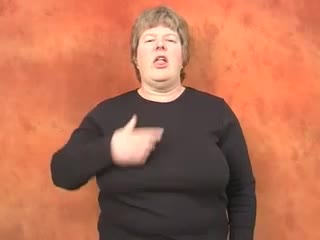
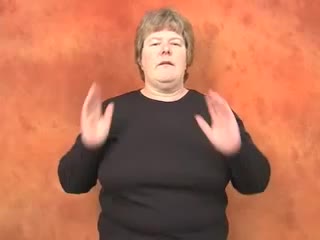
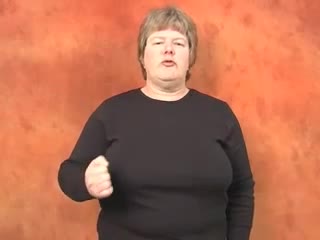
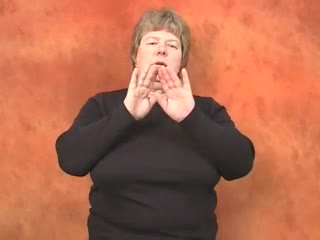
Mastering the sign for "indent" requires attention to a few distinct elements that bring this concept to life in your signing space.
Step 1: Handshape
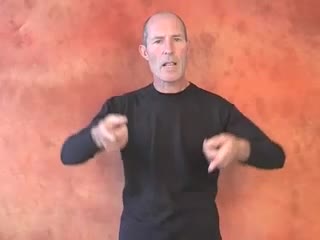
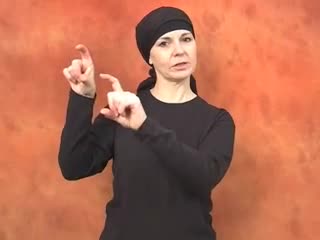
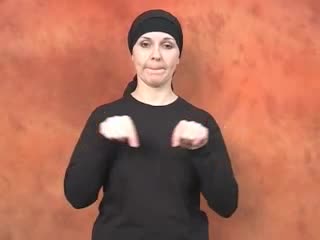
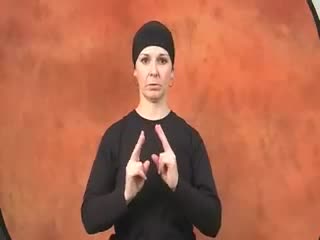
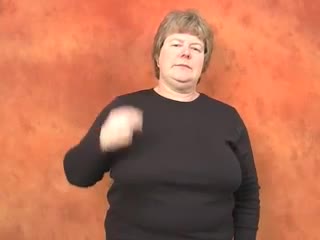
For this sign, your dominant hand forms a clear 'G' handshape. Imagine extending your index finger straight out, keeping it firm and pointed. Your thumb then rests along the side of that extended index finger, while your remaining three fingers (middle, ring, and pinky) are curled neatly into your palm. Meanwhile, your non-dominant hand will adopt a 'B' handshape; this means holding your hand flat with all fingers together and extended, and your thumb tucked neatly alongside.
Step 2: Hand Placement and Location
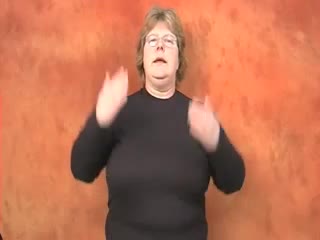
Position your non-dominant 'B' hand, held flat, directly in front of your chest, about a hand's width away from your body. The palm of this non-dominant hand should face slightly upwards and outwards, representing the "page" or surface that will receive the indentation. Now, bring your dominant 'G' hand, with its extended index finger, so the fingertip gently touches the palm of your non-dominant hand, near the heel or wrist side. This initial contact point marks the original margin.
Step 3: Movement
With your dominant 'G' hand's index finger still lightly touching your non-dominant palm, perform a short, deliberate pushing motion. Move your dominant hand inward, away from the initial contact point, across the non-dominant palm by about an inch or two. This small, precise push signifies the creation of the recessed space. After this primary inward movement, lift your dominant hand slightly, then execute a brief, horizontal sweep to the right, just above the non-dominant palm, as if indicating the start of the text after the newly created indent.
Step 4: Facial Expression and Mouthing
Maintaining a neutral and focused facial expression is ideal when performing this sign; there's no inherent emotion tied to the concept of indenting. Crucially for clear communication in BSL, you'll want to mouth the word "indent" silently as you sign. This non-manual feature helps disambiguate the sign, particularly for new learners or when the context might be less clear, reinforcing the English meaning of the sign.
Step 5: Palm Orientation
Throughout the movement, the palm of your dominant 'G' hand will generally face downwards or slightly towards your non-dominant hand, keeping the index finger pointed towards the 'page' surface. Your non-dominant 'B' hand's palm consistently faces slightly upwards and outwards, maintaining its role as the stable surface. This particular orientation is vital because it visually reinforces the idea of something being pushed into or set back from a flat plane, making the sign's meaning immediately apparent to your conversation partner.
"indent" in BSL - Quick Reference Snapshot
- Handshape: Dominant 'G' hand (index finger extended, thumb alongside), non-dominant 'B' hand (flat, open palm).
- Location: Dominant hand index finger touches non-dominant palm, held in front of the chest.
- Movement: Dominant hand pushes inward across non-dominant palm, followed by a short horizontal sweep.
- Facial Expression: Neutral and focused.
- Dominant Hand: Performs the active pushing and sweeping motion.
- Palm Orientation: Dominant palm faces down/towards non-dominant; non-dominant palm faces up/outwards.
5 Memorisation Tricks for the BSL Sign "indent"
Here are some clever ways to help you remember the sign for "indent" and keep it firmly in your BSL vocabulary.
- Visualise the 'G' as a Guide: Picture your dominant 'G' hand's extended index finger as a little guide pushing the text line on a page. The 'G' shape itself looks a bit like a pointer, making it easy to associate with guiding something inward. This mental image helps solidify the specific handshape and its initial action.
- Muscle Memory Push: Repeatedly practice the gentle inward push across your non-dominant palm, focusing on the tactile sensation. The specific feeling of your index finger moving against your other hand will create a strong kinesthetic memory, making the movement feel natural over time. Don't forget the small follow-through sweep.
- Connect to Meaning: Think of the non-dominant flat hand as a paper or a wall, and your dominant index finger as making a small "dent" or pushing a boundary inward. This direct link between the physical action of the sign and the word's definition makes the sign deeply intuitive. It's like you're literally creating the space.
- Avoid 'Start' Confusion: Some learners occasionally confuse this sign with 'start' or 'begin' because of the initial contact and forward motion. Remember, 'indent' has that distinct *inward* push first, creating a *recess*, whereas 'start' often involves a more direct, outward, or forward initiation. Pay close attention to the direction of the very first movement.
- Daily Life Practice: Whenever you see an indented paragraph in a book or a physical indentation in an object, take a moment to practice the sign. Seeing the concept in your environment and immediately connecting it to the BSL sign helps integrate it into your active vocabulary. You could even sign it silently every time you hit the "tab" key on your keyboard.
Real-Life Situations to Use the BSL Sign for "indent"
The sign for "indent" proves incredibly versatile in various communicative contexts within British Sign Language.
- Imagine discussing document formatting with a friend: "Could you please indent the first line of each paragraph?" This demonstrates its use for specific instructions.
- Perhaps you're describing a car accident: "The impact caused a large indent in the car door." Here, the sign conveys a physical mark or depression.
- When explaining a computer task, you might sign: "You need to indent the code block to make it readable." This shows its application in technical or instructional settings.
- Discussing design elements, you could ask, "Should we indent this section to highlight it visually?" Here, the sign fits perfectly into a question structure, often accompanied by raised eyebrows to indicate interrogation.
Top 3 Mistakes Learners Make Signing "indent" in BSL
Getting this sign just right can take a little practice, and there are a few common pitfalls beginners often encounter.
- Incorrect Handshape on the Dominant Hand: A frequent error involves using a 'D' handshape (index finger extended, thumb touching the middle finger) instead of the correct 'G' handshape (thumb alongside the index finger). This happens because both involve an extended index finger, but the 'G' hand is crucial for the specific visual representation of a precise 'pushing' point. The correction is to ensure your thumb consistently rests along the side of your index finger, not touching your middle finger.
- Insufficient or Incorrect Movement: Sometimes learners either don't execute the inward push clearly or they omit the subsequent horizontal sweep. Without the distinct inward movement, the sign might look like a generic pointing action, and without the sweep, it loses the 'text starts here' implication. Always remember the deliberate, short inward push across the non-dominant palm, followed by that small, clarifying sweep to the right.
- Neglecting Non-Manual Features: Another common oversight is failing to mouth the word "indent" or maintaining a blank expression. While BSL is primarily visual, non-manual features are integral to its grammar and meaning. Forgetting to mouth the word can lead to ambiguity, especially with signs that might have similar manual components. Actively mouth "indent" as you perform the sign; it significantly enhances clarity and understanding.
Fascinating Facts About the BSL Sign for "indent"
Delving into the specifics of a sign like "indent" often reveals intriguing insights into BSL itself.
- The iconic nature of the sign for "indent" is quite strong; it directly mimics the action of pushing something inward, much like pressing a button or starting a line of text further in. This visual representation makes it relatively easy for new learners to grasp its meaning quickly.
- While the core handshape and movement are widely understood across the BSL-using community, you might observe slight regional variations in the speed or emphasis of the horizontal sweep. Some areas might perform a very subtle sweep, while others make it more pronounced, though the essential inward push remains consistent.
- This sign clearly demonstrates the use of a non-dominant hand as a 'surface' or 'placeholder,' a common feature in BSL grammar. The non-dominant 'B' hand provides a stable reference point, allowing the dominant hand to perform a spatial action upon it, effectively illustrating the concept of a margin or boundary.
- Unlike many signs that are derived from finger-spelled letters or have strong historical ties to older forms of manual communication, the sign for "indent" appears to be primarily motivated by its physical and visual function. It's a pragmatic and direct way to convey the action.
- The precision required for the 'G' handshape in this sign highlights BSL's reliance on subtle distinctions in hand configuration. A slight alteration in finger position can change the meaning of a sign entirely, underscoring the importance of careful observation and execution.
"indent" in Deaf Culture - Community and Identity
The concept of "indent" in a cultural context extends beyond simple formatting to represent structure and clarity, values highly appreciated within Deaf communities. Clear, precise communication is paramount, and signs like "indent" contribute to that goal by providing unambiguous ways to convey complex information. Whether discussing academic papers, design layouts, or even describing physical spaces, the ability to clearly sign "indent" facilitates effective information exchange. It underscores the shared commitment to precise language that helps foster strong connections and mutual understanding, ensuring that messages are not just delivered but truly comprehended. This attention to detail in language reflects a broader cultural appreciation for clarity and directness in all interactions.
Example Conversations Using "indent" in BSL
Here are five practical examples demonstrating how "indent" might appear in BSL conversations, showcasing varied grammatical contexts.
English: Please indent the first line of the document. - BSL structure: TOPIC (DOCUMENT) - ACTION (FIRST LINE INDENT PLEASE)
English: Did you see the indent in the wall? - BSL structure: QUESTION (WALL INDENT YOU-SEE?)
English: I need to indent this paragraph further. - BSL structure: SUBJECT (I) - NEED - ACTION (PARAGRAPH INDENT MORE)
English: How much should I indent this text? - BSL structure: QUESTION (TEXT INDENT HOW-MUCH?)
English: The artist made a small indent on the clay. - BSL structure: TOPIC (ARTIST) - ACTION (CLAY SMALL INDENT MADE)
Frequently Asked Questions: The BSL Sign for "indent"
We often hear these questions from learners keen to master the sign for "indent."
Is the BSL sign for "indent" universally understood across the UK?
Yes, the core sign for "indent" as described is widely recognised and understood throughout the BSL-using communities across the United Kingdom. While minor stylistic differences in speed or emphasis might occur regionally, the essential handshapes, placement, and movement remain consistent enough for clear communication. You can confidently use this sign knowing it will be understood.
Are there any similar signs in BSL that I should be careful not to confuse with "indent"?
You'll want to avoid confusing "indent" with signs like 'start' or 'begin,' which can have an initial forward movement, but lack the specific inward push and flat non-dominant hand. Also, some signs for 'mark' or 'point' might use an extended index finger, but their context and overall movement will differ significantly. Always focus on the precise combination of the 'G' handshape, the inward push, and the non-dominant 'page' hand to ensure you're signing "indent" correctly.
Is "indent" a suitable sign for beginners to learn early in their BSL journey?
Absolutely, "indent" is a very practical and accessible sign for beginners. Its iconic nature, directly representing the action, makes it easy to grasp and remember. Learning signs like this early helps build a strong foundation in understanding how BSL visually represents concepts, and it's useful in many everyday contexts, from discussing documents to describing objects.
Can children easily learn and use the BSL sign for "indent"?
Children can certainly learn the sign for "indent" quite easily. The concrete action of pushing a finger into a flat hand is very tangible for younger learners. You can make it fun by relating it to pushing a button or making a mark on a piece of paper, helping them connect the sign to their experiences. Encourage them to mouth the word too for full language development.
How does the BSL sign for "indent" compare to a similar concept in another sign language?
While specific comparisons are difficult without naming other languages directly, it's generally true that different sign languages often develop distinct signs for the same concept. For "indent," another country's sign language might use a different handshape, a one-handed approach, or a movement that is more abstract rather than directly iconic. Each sign language uniquely reflects its community's linguistic and cultural perspectives.
Signs That Pair Naturally with "indent" in BSL
Building your vocabulary means understanding how signs connect, and "indent" links well with several other BSL concepts.
- DOCUMENT: Often, when you sign "indent," you're referring to formatting a 'document,' making this a natural pairing for discussing text.
- MARGIN: This sign, representing the edge of a page, is closely related to "indent" as it defines the space from which an indent is measured.
- TEXT: You frequently indent 'text,' so learning this sign alongside "indent" helps you talk about the content being formatted.
- PARAGRAPH: As paragraphs are commonly indented, this sign is a perfect companion for discussing structure in written materials.
- FORMAT: The overarching action of 'formatting' something, including making indents, makes this a logically connected sign for comprehensive discussions.
- PUSH: While a general sign, 'push' shares the core physical action with "indent," which can help reinforce the movement aspect of our target sign.
Building Fluency: How to Practise "indent" in BSL
Ready to really make the sign for "indent" feel like second nature? Here's how to integrate it effectively into your BSL practice routine. Start by using a mirror to observe your handshape and movement; ensuring your 'G' hand is precise and that inward push is clear makes all the difference. Try integrating "indent" into simple daily BSL conversations, perhaps by describing the layout of an email or a book you're reading, even if you're just signing to yourself. A fantastic way to refine your signing is to film yourself performing the sign from different angles, then watch it back to identify any areas needing adjustment. Don't forget the power of spaced repetition: practice the sign for a few minutes each day over several days, rather than cramming it all into one session. Ultimately, connecting with a Deaf conversation partner, even if briefly online, provides invaluable real-time feedback and helps you use the sign naturally within a genuine communicative context, truly bringing your BSL to life.