What Is the BSL Sign for "pit hole"?
Navigating the world often requires precise language to describe our surroundings, and among the many practical concepts we communicate, the presence of an unexpected depression in the ground, a "pit hole," holds particular importance. Understanding the BSL sign for pit hole allows for clear warnings or descriptions of terrain, enhancing safety and shared awareness within the British Sign Language community. This essential sign effectively conveys a sunken area, whether a hazardous cavity in a road or a natural indentation in the earth, providing a vital piece of vocabulary for everyday discussions. Mastering the British Sign Language pit hole sign expands your ability to articulate observations about the physical environment, making your communication more vivid and practical.
How to Sign "pit hole" in British Sign Language - Step-by-Step
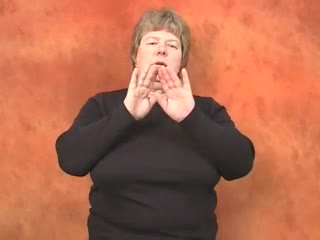
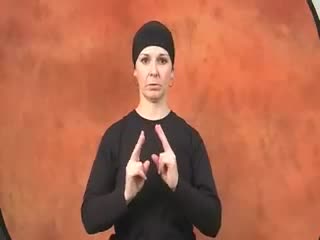
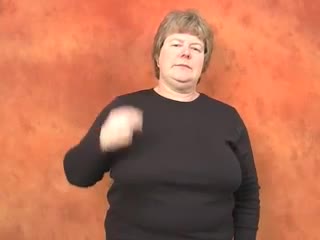
Mastering the BSL sign for "pit hole" involves a distinct combination of handshape, placement, movement, and non-manual features that accurately convey its meaning.
Step 1: Handshape
Begin by forming a 'C' handshape with your dominant hand, ensuring your fingers are slightly curved and held together, while your thumb rests against the side of your index finger. The entire hand should appear somewhat cupped, creating an impression of an enclosed, concave space, ready to represent the opening of a hole. Your fingers remain relaxed yet unified, providing a clear visual representation of the sign's initial form.
Step 2: Hand Placement and Location
Position your dominant hand, maintaining the 'C' handshape, directly in front of your body at a comfortable mid-chest height. The sign originates in the neutral signing space, which is the area directly in front of your torso. This central placement ensures visibility and prepares for the subsequent downward movement, establishing the general area where a "pit hole" might be encountered.
Step 3: Movement
From its initial position, move your 'C' shaped dominant hand downwards in a short, deliberate motion, as if dipping into a space. The movement is relatively brief, concluding with a slight, subtle downward twist of the wrist, reinforcing the idea of something sinking or dropping into an aperture. This action mimics the visual of an object descending into a cavity, clearly defining the spatial nature of a pit hole.
Step 4: Facial Expression and Mouthing
A neutral or slightly concerned facial expression often accompanies the sign for "pit hole," especially if conveying a warning or describing a potential hazard. Simultaneously, mouth the word "pit hole" clearly and naturally, without vocalisation. This mouthing, a crucial non-manual feature in BSL, provides additional clarity and reinforces the specific lexical item being conveyed, forming an integral part of the sign's overall grammatical structure.
Step 5: Palm Orientation
Throughout the sign's execution, your palm maintains a downward orientation, facing towards the ground. This consistent palm direction directly contributes to the sign's meaning by visually suggesting a downward-facing opening or an indentation in the surface beneath. The orientation remains steady, providing an unambiguous visual cue for the concept of a hole.
"pit hole" in BSL - Quick Reference Snapshot
- Handshape: Dominant hand forms a 'C' shape, fingers together and slightly curved.
- Location: In front of the body, at mid-chest height, within the neutral signing space.
- Movement: Short, deliberate downward motion with a slight wrist twist at the end.
- Facial Expression: Neutral or mildly concerned, depending on context.
- Dominant Hand: Used exclusively for this sign.
- Palm Orientation: Palm consistently faces downwards.
5 Memorisation Tricks for the BSL Sign "pit hole"
- Visualise the 'C' handshape as the opening of a hole, then imagine your hand dipping into it. Think of the curved fingers representing the rim of a pit, and the downward movement illustrating an entry into that sunken space. This strong visual connection helps solidify the sign's form in your memory.
- Practice the downward motion repeatedly, focusing on the slight wrist twist at the end, which adds a crucial nuance to the sign's meaning. Engage your arm muscles to feel the distinct drop and turn, building muscle memory for the specific trajectory and conclusion of the sign. Consistent repetition embeds the physical sequence deeply.
- Connect the sign's action directly to the word's meaning: your hand literally "holes" downwards. Consider how the shape and movement perfectly abstract the concept of a depression in the ground, making the sign feel intuitive rather than arbitrary. Understanding this iconic link aids recall significantly.
- Be mindful not to confuse this sign with others involving similar 'C' handshapes or downward movements; ensure the subtle wrist twist and specific downward palm orientation are always present. Many signs share components, so paying close attention to these finer details prevents misinterpretation and reinforces accurate signing.
- Integrate the sign into your daily observations: whenever you see a real "pit hole" or even a small indentation, mentally or physically practice the sign. Regular, contextual application within your environment strengthens the association between the physical sign and its real-world referent, making it more readily accessible.
Real-Life Situations to Use the BSL Sign for "pit hole"
- You might sign "pit hole" to warn a friend while walking on an uneven pavement, perhaps saying, "WATCH OUT, PIT HOLE THERE!" (BSL structure: spatial grammar used for "there" by pointing, emphasis on "watch out" through facial expression).
- When describing a recent journey, you could use the sign to explain road conditions, for example, "DRIVING, ROAD BAD, MANY PIT HOLES!" (BSL structure: topic-comment order, "road bad" as a clear statement, "many" indicated by repetition or non-manual features).
- A child might point out a natural depression in a park, asking, "WHAT IS THAT PIT HOLE?" (BSL structure: question formation using raised eyebrows and a question mark non-manual feature, pointing to establish the object).
- You could use the sign in a narrative about a building project, explaining, "WORKERS DIGGING, BIG PIT HOLE FOR FOUNDATION." (BSL structure: clear sequencing of events, "big" shown by expanding the sign's scale or using appropriate facial expression).
Top 3 Mistakes Learners Make Signing "pit hole" in BSL
-
Mistake 1: Incorrect Handshape or Orientation. Learners sometimes use a flatter 'C' handshape or allow the palm to face sideways rather than downwards, which can alter the intended meaning. This often happens due to insufficient attention to the specific curvature of the fingers and the crucial downward orientation of the palm.
Correction: Ensure your fingers are gently curved and held together, forming a distinct concavity, and consciously direct your palm towards the ground throughout the entire sign. Focus on the visual representation of an opening leading downwards.
-
Mistake 2: Missing the Wrist Twist or Incorrect Movement Trajectory. Some beginners perform a simple straight downward movement without the subtle, concluding wrist twist, or they might move the hand too far down or too quickly. Omitting this detail diminishes the sign's precision and can make it look incomplete.
Correction: Practice the short, controlled downward motion, making sure to incorporate a slight, deliberate twist of the wrist at the very end. This final nuance effectively conveys the idea of something settling into a contained depression.
-
Mistake 3: Neglecting Non-Manual Features. Forgetting to mouth "pit hole" or failing to use an appropriate facial expression (especially in warning contexts) is a common oversight. Non-manual features are not optional embellishments; they are integral grammatical components of BSL.
Correction: Consciously mouth the word "pit hole" every time you sign it, ensuring your mouth shape mirrors the spoken word. Additionally, consider the context; if it's a hazard, a slightly concerned expression enhances the message's impact and clarity.
Fascinating Facts About the BSL Sign for "pit hole"
- The BSL sign for "pit hole" is highly iconic, meaning its form directly resembles the concept it represents, making it relatively intuitive for new learners to grasp. Its shape and movement visually mimic dipping into a cavity in the ground.
- While the core handshape and movement are widely consistent across the BSL-using community, slight regional variations might exist in the exact speed or depth of the downward motion. These minor differences rarely impede understanding but reflect local signing nuances.
- This sign provides an excellent illustration of how BSL efficiently conveys three-dimensional spatial concepts through handshapes and movement in the signing space. The downward palm and movement effectively communicate depth and an opening.
- Unlike some signs that might be derived from fingerspelling, the sign for "pit hole" is a distinct lexical item with its own unique iconic motivation. It does not directly relate to the manual alphabet for its formation.
- The precision required in the palm orientation and the subtle wrist twist highlights BSL's linguistic economy, where small adjustments in execution can carry significant semantic weight. These details are not superfluous but fundamental to distinguishing meaning.
"pit hole" in Deaf Culture - Community and Identity
Communicating about shared environmental elements like "pit hole" reinforces a sense of collective experience and mutual awareness within the Deaf community. Whether navigating urban landscapes or rural paths, the ability to clearly sign about potential hazards such as uneven surfaces or depressions fosters safety and camaraderie. The shared understanding of such practical signs underscores the community's reliance on visual communication for conveying crucial information efficiently. This common visual language for describing the world around them strengthens bonds, allowing for rich narratives and practical exchanges without barriers. It highlights the ingenuity of BSL in providing precise, context-rich descriptions for everyday occurrences, ensuring everyone remains informed and connected.
Example Conversations Using "pit hole" in BSL
English: Be careful, there's a pit hole on the path ahead. - BSL structure: Warning first, then location and object using spatial referencing and clear sign for "pit hole."
English: The road crew is fixing the big pit hole near my house. - BSL structure: Topic established ("road crew"), then action and object, with "big" indicated through non-manual features and sign modification.
English: Did you see that enormous pit hole in the field? - BSL structure: Question initiated with raised eyebrows, then observation and adjective ("enormous" conveyed through facial expression and exaggerated sign size).
English: I almost tripped over a pit hole in the dark last night. - BSL structure: Personal experience related, past tense indicated by context and time sign ("last night"), "almost tripped" with appropriate facial expression and body shift.
English: They need to fill that pit hole before someone gets hurt. - BSL structure: Statement of necessity ("need to"), then action and consequence, with "someone gets hurt" expressed through a clear cause-and-effect structure.
Frequently Asked Questions: The BSL Sign for "pit hole"
Is there any regional variation for the BSL sign for "pit hole"?
While the core handshape, movement, and location for the BSL sign for "pit hole" remain remarkably consistent across the UK, minor regional nuances in the exact speed or emphasis of the downward motion might sometimes be observed. These subtle differences are generally understood within the broader BSL-using community and do not typically hinder comprehension. The fundamental visual representation of a depression holds strong across all regions.
Are there any similar signs in BSL that I should avoid confusing with "pit hole"?
Indeed, some signs in BSL might involve a 'C' handshape or a downward movement, but the combination of the specific palm orientation, the subtle wrist twist, and the context helps distinguish "pit hole." For instance, signs related to "digging" or "cup" might share a similar handshape but will feature different movements, locations, or orientations. Always pay close attention to the complete execution of the sign.
Is "pit hole" a good sign for BSL beginners to learn early on?
Absolutely, "pit hole" is an excellent sign for BSL beginners to learn early in their journey. Its iconic nature means it visually represents its meaning, making it easier to remember and understand. Furthermore, it addresses a practical, everyday concept, which facilitates real-world application and encourages early conversational practice.
Can the BSL sign for "pit hole" be used when teaching BSL to children?
Yes, the BSL sign for "pit hole" is perfectly suitable and very effective for teaching BSL to children. Its clear visual representation and connection to a tangible object in their environment make it engaging and easy for young learners to grasp. Incorporating it into games or stories about navigating paths or discovering natural features can make learning enjoyable.
How does the BSL sign for "pit hole" compare to its equivalent in other sign languages?
Sign languages around the world often have distinct signs for common concepts, reflecting their unique linguistic evolution. While other sign languages might use different handshapes, movements, or locations to convey "pit hole," the BSL sign is specifically tailored to its own grammatical and phonological rules. There isn't a universal sign for "pit hole," so the BSL version is unique to British Sign Language users.
Signs That Pair Naturally with "pit hole" in BSL
- CAREFUL: This sign often precedes "pit hole" as a warning, linking the concept of caution with potential hazards. They naturally cluster when discussing safety.
- ROAD: Since pit holes frequently appear on roads, this sign provides the contextual setting, helping learners describe where the pit hole is located.
- DANGER: A stronger emphasis on the hazard, pairing "danger" with "pit hole" elevates the urgency of the message. Both signs relate to warnings and safety.
- TRIP: If one encounters a pit hole, the risk of tripping is immediate, making this sign a natural follow-up or consequence. They connect through shared experience.
- REPAIR: Once a pit hole is identified, the next logical concept is often its rectification, linking "pit hole" with the idea of fixing or mending.
- DIG: This sign can precede "pit hole" when explaining how a hole was created, providing a causal link between the action and the resulting depression.
Building Fluency: How to Practise "pit hole" in BSL
To truly embed the BSL sign for "pit hole" into your fluency, consistent and varied practice is essential. Begin by utilising a mirror to observe your own handshape, movement, and palm orientation, ensuring precision in every aspect of the sign's execution, paying particular attention to that subtle wrist twist. Integrate this sign into everyday BSL conversations by actively describing your environment or recounting experiences where a pit hole might be relevant, forcing natural recall. Consider filming yourself signing and then reviewing the footage, which offers an invaluable opportunity for self-correction and refinement of your technique. If possible, seek out a Deaf conversation partner; their feedback will be instrumental in perfecting your sign and understanding its nuances in real-time communication. Finally, employ spaced repetition by practicing the sign for a few minutes each day over several days, rather than intensely for one long session, allowing the sign to become an effortless part of your BSL vocabulary.