What Is the BSL Sign for "mesh reinforced mat"?
Understanding the specific terminology for construction and landscaping materials is crucial for effective communication within the British Sign Language community. When discussing a durable surface like a mesh reinforced mat, a clear and precise sign is essential to convey its unique properties. This particular sign represents a strong, woven-structure ground covering, integral for many practical applications. Mastering the BSL sign for mesh reinforced mat significantly enhances your ability to describe specific items in detailed conversations.
How to Sign "mesh reinforced mat" in British Sign Language - Step-by-Step
Developing proficiency in this sign requires careful attention to the distinct handshapes, precise movements, and crucial non-manual features that define its meaning.
Step 1: Handshape
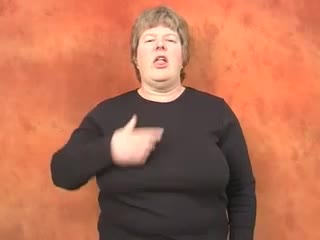
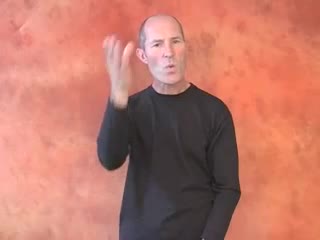
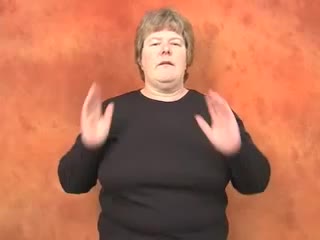
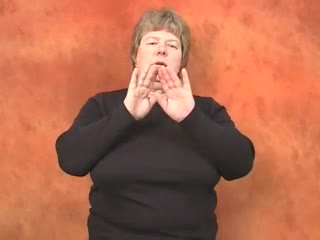
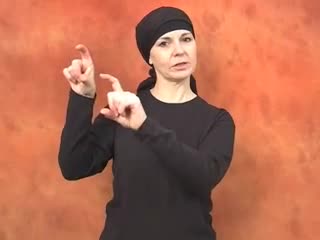
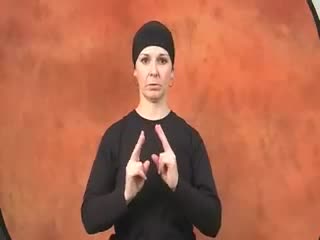
Begin by forming both your dominant and non-dominant hands into a flat 'B' handshape. This means all four fingers are extended and held tightly together, while the thumb rests alongside the palm. The fingers remain straight, creating a flat, paddle-like appearance for each hand.
Step 2: Hand Placement and Location
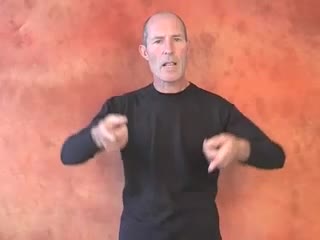
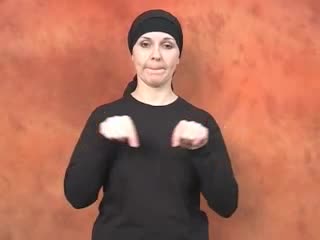
Position your non-dominant hand flat, with its palm facing upwards, held steady slightly in front of your body at approximately waist height. This stable base represents the foundational 'mat'. Your dominant hand, also in a flat 'B' handshape, hovers just above the non-dominant palm, with its own palm facing downwards.
Step 3: Movement
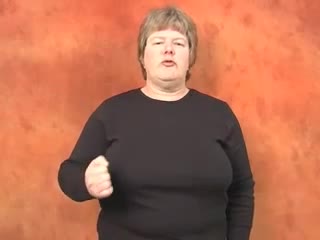
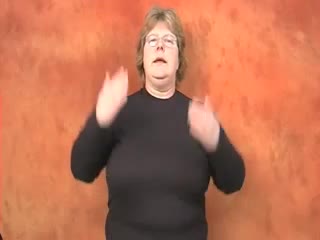
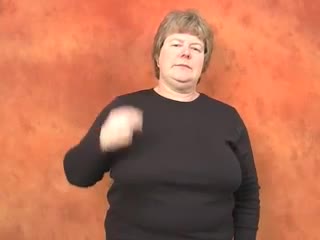
The dominant hand initiates a small, quick, and repetitive criss-cross motion directly over the non-dominant palm, mimicking the interwoven pattern of a mesh. This movement is contained within a small area, suggesting the intricate grid. Immediately after completing the mesh pattern, the dominant hand firmly descends and makes a brief, solid tap or light press onto the non-dominant palm, signifying 'reinforced' strength. Subsequently, the dominant hand, maintaining its flat 'B' shape, performs a short, deliberate sweep outwards and slightly downwards, as if spreading or laying out a flexible surface.
Step 4: Facial Expression and Mouthing
A neutral yet focused facial expression typically accompanies this sign, reflecting the functional and robust nature of the item. Simultaneously, mouth the words "mesh reinforced mat" clearly and naturally, without voice, to provide additional clarity and reinforce the lexical item being conveyed. This mouthing is a vital non-manual component, enhancing both understanding and grammatical structure within British Sign Language.
Step 5: Palm Orientation
The non-dominant hand maintains a consistent palm-up orientation throughout the entire sign, acting as the stable ground. Your dominant hand begins with its palm facing downwards, directed towards the non-dominant hand, and sustains this downward orientation during both the criss-cross 'mesh' movement and the subsequent 'reinforced' press. It concludes with the palm still facing downwards as it performs the outward 'mat' sweep. This consistent palm direction visually reinforces the concept of an item being laid out or covering a surface.
"mesh reinforced mat" in BSL - Quick Reference Snapshot
- Handshape: Both hands in a flat 'B' shape (extended, joined fingers, thumb alongside).
- Location: Non-dominant hand palm-up at waist level; dominant hand above it.
- Movement: Dominant hand performs small criss-cross over non-dominant, then firmly taps, then sweeps outwards.
- Facial Expression: Neutral, focused.
- Dominant Hand: Performs the active mesh, reinforced, and mat spreading movements.
- Palm Orientation: Non-dominant palm up; dominant palm down throughout.
5 Memorisation Tricks for the BSL Sign "mesh reinforced mat"
- Visualise the criss-cross movement of your dominant hand as literally drawing the 'mesh' pattern directly onto the 'mat' surface represented by your non-dominant hand. This direct visual connection helps solidify the 'mesh' component.
- Practice the firm tap or press of your dominant hand onto your non-dominant palm, focusing on the feeling of solid impact; this muscle memory will strongly link the physical sensation to the concept of 'reinforcement' and durability.
- Connect the entire sign to its function: imagine laying down a strong, flexible ground cover for a garden path or construction site, making the multi-part movement logical and purposeful.
- Be mindful not to let the dominant hand stray too far from the non-dominant hand during the 'mesh' part, as a common mistake is making the pattern too large or vague; keep it compact and precise.
- Incorporate this sign into your daily vocabulary by pointing out actual mesh-reinforced items around you, even if just in your mind, and mentally signing "mesh reinforced mat" whenever you encounter them.
Real-Life Situations to Use the BSL Sign for "mesh reinforced mat"
- When discussing garden landscaping plans, you might sign, "WE NEED MESH REINFORCED MAT PATH" (WE NEED MESH-REINFORCED-MAT PATH). The sign functions as a clear noun within a topic-comment structure.
- Asking a friend about their building project, you could inquire, "YOU USE MESH REINFORCED MAT?" (YOU USE MESH-REINFORCED-MAT?), where the sign is part of a yes/no question indicated by a raised eyebrow and leaning forward.
- Describing a safety measure on a construction site, one might explain, "WORKERS PUT DOWN MESH REINFORCED MAT PREVENT SLIP" (WORKERS PUT-DOWN MESH-REINFORCED-MAT PREVENT SLIP), using the sign to specify the protective material.
- During a conversation about outdoor event setup, you could mention, "THEY LAY MESH REINFORCED MAT FOR TENT FLOOR" (THEY LAY MESH-REINFORCED-MAT FOR TENT FLOOR), illustrating the sign's utility in describing specific ground coverings.
Top 3 Mistakes Learners Make Signing "mesh reinforced mat" in BSL
- **Mistake 1: Incorrect Criss-Cross Motion.** Learners often make the 'mesh' movement too broad, too slow, or too abstract, rather than a tight, quick, and distinct criss-cross directly over the non-dominant palm. This happens because they might not fully grasp the precise, contained nature of the 'mesh' representation. To correct this, focus on keeping the dominant hand's movement small, sharp, and confined to the area just above the non-dominant palm, ensuring the criss-cross pattern is evident and swift.
- **Mistake 2: Missing the 'Reinforced' Press.** Some beginners omit the firm tap or press of the dominant hand onto the non-dominant palm, moving directly from the mesh pattern to the mat sweep. This oversight typically occurs when the learner doesn't fully understand the compound nature of the sign, neglecting the 'strength' component. The accurate correction involves deliberately and distinctly bringing the dominant hand down with a light but firm press onto the non-dominant hand immediately after the mesh motion, before the final sweep, to convey robustness.
- **Mistake 3: Inconsistent Palm Orientation.** A frequent error involves the dominant hand's palm rotating or shifting away from the downward orientation during the 'mesh' or 'mat' sweeping movements. This usually stems from a lack of awareness regarding how palm orientation conveys meaning and stability in BSL. To rectify this, consciously maintain the dominant hand's palm facing consistently downwards throughout all three parts of the sign-mesh, reinforced, and mat-ensuring the sign remains visually clear and linguistically correct.
Fascinating Facts About the BSL Sign for "mesh reinforced mat"
- While a direct historical origin for this highly specific compound sign is not documented due to its technical nature, its formation exemplifies BSL's productive capacity to create new signs by combining descriptive elements.
- The structure of this sign illustrates BSL's iconic motivation, where the movements visually represent aspects of the object: the criss-cross for 'mesh', the firm tap for 'reinforced' strength, and the sweep for 'mat'.
- Regional variations within the BSL-using community might see slightly different emphasis on the 'reinforced' component, perhaps a more pronounced double tap or a stronger pressure, though the core 'mesh' and 'mat' elements would likely remain consistent.
- This sign is an excellent example of BSL's compounding process, where multiple conceptual components (mesh, reinforced, mat) are integrated into a single, fluid sign, rather than being signed separately.
- The use of both hands, with the non-dominant hand serving as a stable base for the dominant hand's actions, is a common linguistic feature in BSL for depicting objects or surfaces upon which actions occur.
"mesh reinforced mat" in Deaf Culture - Community and Identity
The ability to precisely describe materials like a mesh reinforced mat within the Deaf community fosters a sense of shared understanding and practical communication, especially in fields like construction, gardening, or event management. When Deaf individuals discuss home improvements or community projects, having a clear sign for such specific items ensures everyone is on the same page, preventing misinterpretations and facilitating collaborative efforts. This shared vocabulary strengthens bonds and promotes efficient planning, allowing community members to articulate their needs and ideas with confidence and clarity. It highlights the Deaf community's capacity to adapt and expand its language to encompass increasingly technical and modern concepts, affirming the richness and adaptability of British Sign Language as a living language.
Example Conversations Using "mesh reinforced mat" in BSL
English: We need to buy a large mesh reinforced mat for the garden path. - BSL structure: WE NEED BUY LARGE MESH-REINFORCED-MAT GARDEN PATH.
English: Have you ever worked with mesh reinforced mats before? - BSL structure: YOU EVER WORK MESH-REINFORCED-MAT BEFORE? (Question expressed with raised eyebrows).
English: The new playground has a soft mesh reinforced mat under the swings. - BSL structure: NEW PLAYGROUND UNDER SWINGS HAVE SOFT MESH-REINFORCED-MAT.
English: This mesh reinforced mat is too small; we require a bigger one. - BSL structure: THIS MESH-REINFORCED-MAT TOO SMALL, WE NEED BIGGER ONE.
English: They decided to use a durable mesh reinforced mat for the temporary flooring. - BSL structure: THEY DECIDE USE DURABLE MESH-REINFORCED-MAT TEMPORARY FLOORING.
Frequently Asked Questions: The BSL Sign for "mesh reinforced mat"
Is the BSL sign for mesh reinforced mat widely recognised across all regions?
Yes, while minor stylistic variations might exist, the core components of the British Sign Language sign for mesh reinforced mat, including its handshapes and descriptive movements for mesh, reinforcement, and mat, are generally understood throughout the BSL-using community. Its iconic nature makes it quite transparent.
Are there any similar signs in BSL that I should be careful not to confuse with mesh reinforced mat?
Learners should avoid confusing this sign with general signs for 'carpet' or 'rug' (which typically involve a single flat hand sweeping) or signs for 'net' or 'grid' (which focus solely on the criss-cross without the mat or reinforced elements). The unique combination of all three descriptive movements distinguishes the sign for mesh reinforced mat.
Is the BSL sign for mesh reinforced mat suitable for beginner learners?
Absolutely, the British Sign Language sign for mesh reinforced mat is suitable for beginners because its construction is highly iconic and descriptive. Breaking down the sign into its 'mesh', 'reinforced', and 'mat' components makes it logical and easier to remember than abstract signs.
Can children easily learn and use the BSL sign for mesh reinforced mat?
Children can certainly learn the sign for mesh reinforced mat, especially if it's introduced in a playful context, such as discussing construction toys or garden projects. Its visual and tactile elements are engaging for younger learners, making it accessible.
How does the BSL sign for mesh reinforced mat compare to its equivalent in another sign language, like American Sign Language (ASL)?
In American Sign Language (ASL), a specific compound sign for "mesh reinforced mat" would also likely be descriptive, potentially combining signs for 'mesh/net', 'strong', and 'mat'. While the underlying concepts are similar, the specific handshapes, movements, and spatial grammar would differ, reflecting the distinct linguistic structures of ASL compared to BSL.
Signs That Pair Naturally with "mesh reinforced mat" in BSL
- GROUND: This sign naturally pairs as a mesh reinforced mat is typically placed on the ground, linking the item to its common location.
- LAY/SPREAD: Since mats are often laid out, the sign for 'lay' or 'spread' complements "mesh reinforced mat" by describing the action associated with it.
- STRONG/DURABLE: These signs logically connect to "mesh reinforced mat" as its defining characteristic is its strength and resistance to wear, reinforcing its purpose.
- GARDEN/PATH: Often used in landscaping, "mesh reinforced mat" frequently appears in discussions about gardens or creating defined paths.
- BUILD/CONSTRUCT: This sign cluster is relevant because mesh reinforced mats are commonly employed in various building and construction applications for support and stability.
- WATERPROOF: Many mesh reinforced mats possess waterproof properties, making this a relevant descriptive sign to use in conjunction.
Building Fluency: How to Practise "mesh reinforced mat" in BSL
To truly embed the British Sign Language sign for mesh reinforced mat into your active vocabulary, dedicate time to deliberate practice. Begin by utilising a mirror, allowing you to observe your handshapes and movements, ensuring the criss-cross for 'mesh' is clear, the tap for 'reinforced' is distinct, and the sweep for 'mat' is smooth. Integrate this sign into imaginary conversations about home improvement, gardening, or construction, making it part of a narrative rather than an isolated gesture. Filming yourself signing this word in various sentence structures provides invaluable feedback, helping you identify areas for refinement in your execution. Seek opportunities to discuss practical items with a Deaf conversation partner, allowing them to provide authentic context and correct any nuances in your signing. Crucially, spaced repetition-practising the sign briefly each day over several days-will solidify the muscle memory and ensure it becomes a natural part of your BSL communication.