What Is the BSL Sign for "hollow block"?
Unlocking the expressive power of British Sign Language often means delving into specific, visual vocabulary, and the BSL sign for hollow block presents a wonderful example of iconic signing. This isn't just any building material; it's a fundamental component in construction, and its sign beautifully captures both its form and function. When you learn hollow block BSL, you’re not just memorising a movement; you're gaining insight into how the Deaf community visually conceptualises everyday objects. It’s a truly practical sign, especially for anyone in a related profession or simply discussing construction projects, making it a valuable addition to your British Sign Language hollow block vocabulary.
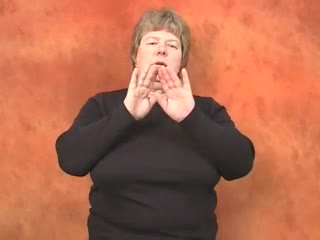
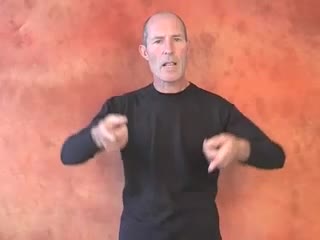
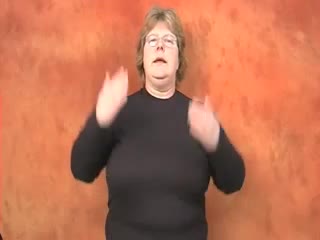
How to Sign "hollow block" in British Sign Language - Step-by-Step
Let's break down this two-part sign with precision, ensuring each element clearly conveys both the "hollow" and "block" aspects.
Step 1: Handshape
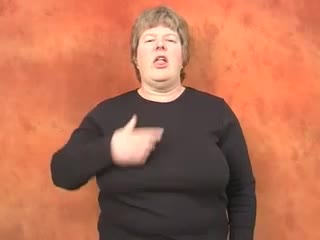
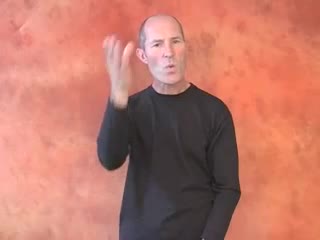
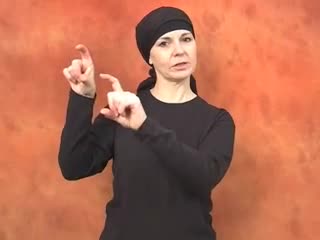
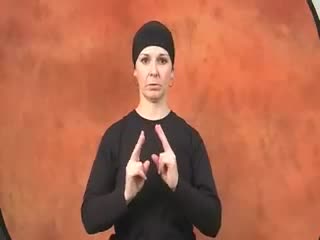
For the initial "hollow" component, your dominant hand forms a 'G' handshape. This means you'll extend your index finger straight out, keeping your thumb extended and parallel to the index finger, while your remaining three fingers (middle, ring, pinky) curl tightly into your palm. Meanwhile, your non-dominant hand adopts a flat 'B' handshape: all five fingers are extended straight and held together, forming a flat plane.
Step 2: Hand Placement and Location
You'll begin by positioning your non-dominant hand steady in the neutral signing space directly in front of your body, roughly at chest height. Its palm should face slightly towards you and to the left (if you're right-handed), with the fingertips pointing forward. Your dominant 'G' hand starts positioned behind your non-dominant hand, with its index finger and thumb aligned as if preparing to pass through the space between your non-dominant hand's palm and its fingers.
Step 3: Movement
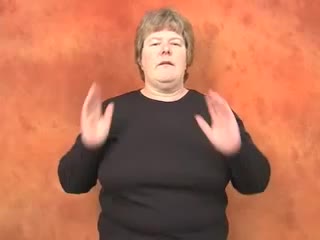
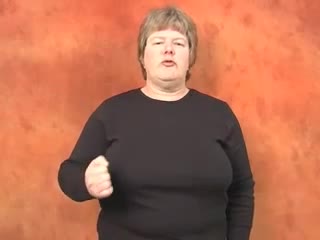
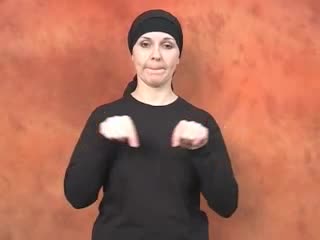
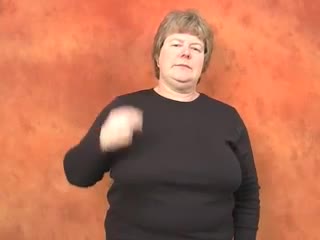
The first part of the sign involves your dominant 'G' hand moving forward smoothly. The extended index finger and thumb pass directly through the small gap created by your non-dominant flat hand, emerging clearly on the other side. This motion represents the "hollow" or "through" aspect. Immediately after this, without pausing, your dominant hand quickly changes from the 'G' handshape to a flat 'B' handshape, matching your non-dominant hand. Now, your dominant flat hand makes one distinct, downward tap onto the palm of your non-dominant hand, indicating the solid, flat surface of a block, then lifts slightly away.
Step 4: Facial Expression and Mouthing
A neutral, focused facial expression is typically appropriate when signing "hollow block"; there isn't a specific emotional or grammatical non-manual feature intrinsically tied to this noun itself. However, you'll naturally mouth the word "hollow block" as you sign it. Mouthing provides crucial phonetic information for lip-readers within the Deaf community and reinforces the lexical item for both the signer and the receiver. It's a vital part of BSL's grammatical structure, aiding clarity and ensuring complete communication.
Step 5: Palm Orientation
Throughout the initial 'hollow' movement, your dominant 'G' hand's palm faces inward, towards your body, allowing the index finger and thumb to clearly delineate the 'hole' passing through. Your non-dominant 'B' hand maintains its palm orientation, facing slightly towards you. As your dominant hand transitions to the flat 'B' handshape for the 'block' part, its palm rotates to face downwards, directly meeting the upward-facing palm of your non-dominant hand during the tap. This shift in palm orientation is essential; it transforms the representation from an opening to a solid surface.
"hollow block" in BSL - Quick Reference Snapshot
- Handshape: Dominant 'G' hand then flat 'B'; Non-dominant flat 'B'.
- Location: Neutral space in front of the body, non-dominant hand held steady.
- Movement: Dominant 'G' passes through non-dominant, then dominant 'B' taps non-dominant palm.
- Facial Expression: Neutral, consistent with naming an object.
- Dominant Hand: Performs both the 'hollow' and 'block' actions.
- Palm Orientation: Dominant 'G' palm faces inward; Dominant 'B' palm faces down to meet non-dominant palm.
5 Memorisation Tricks for the BSL Sign "hollow block"
Learning new signs effectively means connecting them deeply in your mind. Here are some tailored tips for "hollow block."
- Visual Mnemonic: The 'Hole' and the 'Hit': Picture your dominant 'G' hand as a finger and thumb forming a small "hole" or space, literally passing *through* a wall represented by your non-dominant hand. Immediately after, imagine that same hand flattening out to become a heavy "block" that you're tapping into place. This two-part imagery strongly links the concept to the motion.
- Muscle-Memory Drill: Repetitive Flow: Focus on the smooth transition between the 'G' handshape passing through and then flattening to tap. Practice this sequence slowly at first, emphasising the handshape change, then gradually increase speed. Your muscles will quickly learn the precise flow needed for this sign.
- Connect to Meaning: Form and Function: Think about a hollow block's essential characteristics: it has a void inside (represented by the 'through' movement) and it's a solid, stackable unit (represented by the flat hand tap). The sign perfectly mirrors these two key aspects, making it easier to recall once you understand its visual motivation.
- Common Confusion Tip: Avoid 'Wall' or 'Door': Be careful not to confuse the initial 'through' movement with signs like 'wall' or 'door', which often involve two flat hands forming a barrier or opening. The distinctive 'G' handshape passing through is crucial for "hollow block" and clearly differentiates it from other structural terms.
- Daily-Life Practice: See It, Sign It: Whenever you see a construction site, a garden wall, or even a picture of a hollow block, take a moment to perform the sign. Integrating it into your daily visual landscape helps solidify the connection between the real-world object and its BSL representation.
Real-Life Situations to Use the BSL Sign for "hollow block"
Knowing a sign is one thing; knowing when and how to use it grammatically in conversation is another entirely. Here are some practical scenarios for "hollow block."
- Imagine you're discussing a DIY project with a Deaf friend. You might sign, "WE NEED HOLLOW BLOCK MANY," indicating a quantity. The sign for "many" would follow "hollow block," demonstrating BSL's flexible word order.
- Perhaps you're at a hardware store, asking for assistance. You could point to the general area and then sign "HOLLOW BLOCK WHERE?", using a questioning facial expression and eyebrow raise to form a clear BSL question.
- If you're explaining a building's construction to someone, you might sign, "HOUSE BUILD HOLLOW BLOCK USED," showing how the sign functions as a clear noun within a descriptive sentence structure.
- When describing a specific feature, you could sign, "WALL HOLLOW BLOCK MADE-OF," clearly stating the material. Here, "made-of" (often signed as a form of "build" or "from") would logically follow the noun.
Top 3 Mistakes Learners Make Signing "hollow block" in BSL
Every learner encounters hurdles, and this sign has a few common pitfalls. Let's make sure you avoid them.
- Missing the 'G' Handshape for 'Hollow': A frequent error is using a flat hand or a different handshape for the initial 'through' movement, rather than the specific 'G'. This omission means the crucial concept of "hollow" or "void" isn't properly conveyed, making the sign unclear or ambiguous. The correction is simple: always ensure your dominant hand forms a precise 'G' handshape with parallel thumb and index finger for the first part of the sign.
- Incomplete or Incorrect Movement Sequence: Some learners might only perform the 'tap' part, or they might perform the 'through' part but then hesitate or use an awkward transition to the 'tap'. The sign for "hollow block" is a fluid, two-stage motion. The solution involves meticulously practicing the continuous flow: the 'G' hand smoothly passes through, immediately changes to a flat 'B', and then decisively taps the non-dominant hand.
- Confusing Palm Orientations: Incorrect palm orientations, especially for the dominant hand, can dramatically alter a sign's meaning. If the dominant 'G' hand's palm faces outward instead of inward during the 'through' movement, or if the dominant 'B' hand's palm doesn't face down to meet the non-dominant's during the tap, the visual information becomes garbled. Always confirm your dominant hand's palm is inward for the 'G' and then downward for the 'B' tap to ensure accurate communication.
Fascinating Facts About the BSL Sign for "hollow block"
Beyond just the movements, signs often carry layers of linguistic and cultural richness. Here are some intriguing insights into "hollow block."
- This sign is beautifully iconic, meaning its form directly mimics the object it represents. The first movement visually represents the empty space or "hollow" nature, while the second part clearly illustrates the solid, flat surface of a "block," providing a clear visual-linguistic link.
- While BSL often features regional variations, the core concept of "hollow block" tends to be fairly consistent across the UK. The fundamental idea of a void combined with a solid form is so visually strong that it tends to stabilise the sign's structure.
- The sequential nature of this sign, moving from 'hollow' to 'block', showcases a common BSL linguistic strategy where descriptive elements are combined to create a compound noun. This reflects how complex concepts are often broken down into their constituent visual properties.
- Notice how the non-dominant hand acts as a stable reference point, a "canvas" against which the dominant hand performs its actions. This use of a non-dominant hand for spatial anchoring is a hallmark of many BSL signs and is crucial for creating clear, three-dimensional meaning.
- The specific handshape transition from 'G' to flat 'B' is highly motivated; the 'G' often denotes a slender opening or line, perfect for the "hollow" aspect, while the flat 'B' is a common classifier for flat surfaces or solid objects. This makes the sign very efficient in its information conveyance.
"hollow block" in Deaf Culture - Community and Identity
While "hollow block" might seem like a purely practical, utilitarian sign, its place within the Deaf community subtly reflects aspects of shared experience and communication. The ability to clearly and efficiently discuss construction, home improvement, or urban development is important for everyone, including Deaf individuals. For those working in trades, or simply engaging in everyday conversations about their environment, having such a precise and descriptive sign enhances their ability to participate fully. It underscores the practical ingenuity of BSL, how it adapts to represent the modern world, ensuring that Deaf people have access to a rich and complete vocabulary for every facet of life. The clarity of signs like this empowers communication, reinforcing a sense of collective identity through a language that truly captures the world visually.
Example Conversations Using "hollow block" in BSL
Let's see "hollow block" in action with some practical BSL sentence structures.
English: We need to order more hollow blocks for the foundation. - BSL structure: TOPIC-COMMENT (FOUNDATION HOLLOW BLOCK MORE ORDER NEED).
English: Are these hollow blocks strong enough for the wall? - BSL structure: QUESTION (WALL HOLLOW BLOCK STRONG ENOUGH?)
English: The builder said he used specific hollow blocks with extra insulation. - BSL structure: COMMENT (BUILDER SAY HOLLOW BLOCK SPECIAL INSULATION EXTRA USED).
English: Can you show me how to lay a hollow block properly? - BSL structure: REQUEST (YOU SHOW ME HOLLOW BLOCK LAY HOW PROPERLY?)
English: Be careful, those hollow blocks are quite heavy. - BSL structure: WARNING (BE CAREFUL, THOSE HOLLOW BLOCK HEAVY QUITE).
Frequently Asked Questions: The BSL Sign for "hollow block"
Is there regional variation for the BSL sign for hollow block across the UK?
Generally, the sign for hollow block is fairly consistent throughout the United Kingdom. While some signs have distinct regional variations, the iconic nature of this particular sign, which directly represents the object's physical characteristics, tends to minimise significant differences. You'll find it's widely understood wherever BSL is used.
Are there similar BSL signs I should be careful not to confuse with hollow block?
Yes, you should be mindful of signs for 'brick', 'wall', or 'concrete'. 'Brick' typically involves a smaller, more compact tapping motion, often with 'A' handshapes. 'Wall' usually depicts a solid barrier with two flat hands. 'Concrete' might involve a mixing or pouring motion. The unique two-part structure (hollow-through then solid-tap) of "hollow block" helps distinguish it.
Is the BSL sign for hollow block suitable for beginners to learn?
Absolutely, the BSL sign for hollow block is a great sign for beginners. Its iconic nature makes it quite intuitive, and the two distinct parts of the sign are easy to remember. Mastering this sign will also help you understand how compound concepts are formed in BSL, which is a valuable foundation.
Can children easily learn and use the BSL sign for hollow block?
Yes, children can certainly learn this sign. The visual representation of a 'hole through' and a 'block tap' is clear and engaging for young learners. It's a useful sign for discussing building, playing with blocks, or observing construction sites, making it very relevant to a child's world.
How does the BSL sign for hollow block compare to other international sign languages?
While specific handshapes and movements will differ, many sign languages around the world often develop iconic signs for common objects like building materials. It's highly probable that other sign languages would also use a two-part or compound sign that somehow depicts both the "hollow" aspect and the "block" form, though the exact execution would be unique to each language's phonology.
Signs That Pair Naturally with "hollow block" in BSL
Building your vocabulary means understanding how signs connect and cluster together conceptually. Here are some signs that naturally complement "hollow block."
- BUILD: This sign involves stacking motions, directly relating to the use of hollow blocks in construction, linking the material to the action.
- BRICK: Another fundamental building material, signing 'brick' alongside 'hollow block' helps distinguish between different types of construction units.
- WALL: As hollow blocks are used to construct walls, learning this sign together provides immediate context for the material's application.
- CEMENT/CONCRETE: These binding materials are essential when working with hollow blocks, so understanding them together completes the construction vocabulary.
- HOUSE/BUILDING: These broader terms provide the overarching context for where hollow blocks are employed, helping you discuss entire structures.
- FOUNDATION: A crucial part of any structure, the foundation often incorporates hollow blocks, making this a natural pairing for practical discussion.
Building Fluency: How to Practise "hollow block" in BSL
Developing fluency in any sign, including "hollow block," comes down to consistent, thoughtful practice. Here’s how you can really master this sign. Start by using a mirror; observe your dominant hand’s 'G' handshape as it passes through, then watch the smooth transition to the flat 'B' and the precise tap. Pay close attention to your palm orientations and ensure your non-dominant hand remains steady throughout the process. Integrate "hollow block" into your daily BSL conversations by actively seeking opportunities to describe objects or scenarios involving construction; you might talk about a garden project or a new building going up. Don't shy away from filming yourself signing this word occasionally; watching playback allows you to spot any subtle inaccuracies in handshape, movement, or timing that you might not notice in the moment. The most effective way to truly build fluency is by finding a Deaf conversation partner or joining a BSL club; they can offer invaluable feedback and real-world usage examples. Finally, remember to practise the sign for "hollow block" not just in one long session, but spaced out over several days to reinforce muscle memory and long-term retention.