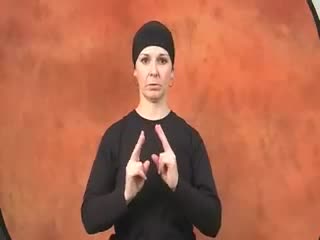
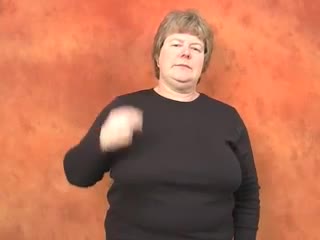
What Is the BSL Sign for "emergency stop device"?
Picture a moment where immediate action is essential, a critical halt to prevent danger. That's precisely the powerful concept encapsulated by the BSL sign for "emergency stop device." This particular sign represents not just a piece of equipment, but the urgent, decisive action associated with it, serving as a vital communication tool within British Sign Language. You'll find this sign incredibly direct and impactful, embodying the very essence of a sudden, necessary cessation of activity. Understanding this important sign helps you communicate effectively about safety and control within the BSL-using community.
How to Sign "emergency stop device" in British Sign Language - Step-by-Step
Mastering this sign involves a precise combination of handshape, movement, and expression, all working together to convey its urgent meaning.
Step 1: Handshape
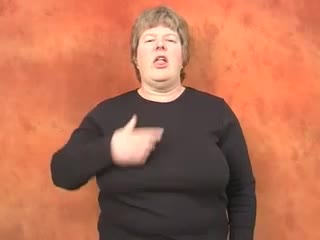
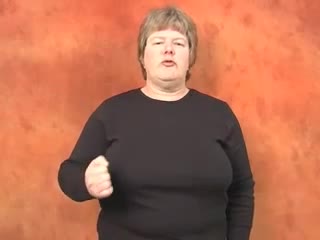
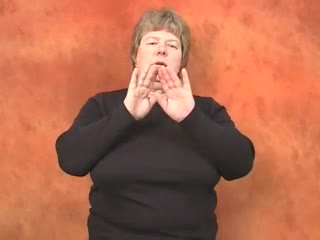
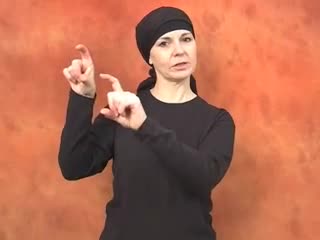
For this sign, your dominant hand will form what we often call a 'flat O' handshape. To achieve this, gently bring your fingertips to meet your thumb, creating a circle, but keep your fingers and thumb relatively straight and flattened rather than tightly curled. It's as if you're holding a very thin, wide disc or preparing to press a large, flat button. All your fingers remain together, and your thumb rests against the side of your index finger.
Step 2: Hand Placement and Location
You'll begin with your dominant hand positioned in the neutral signing space, roughly level with the front of your chest and slightly to your dominant side. Imagine there's a control panel right there in front of you, and this is where the device would be located. Your non-dominant hand remains relaxed at your side for this sign; it's a one-handed action.
Step 3: Movement
The movement here is sharp and decisive, mirroring the urgency of the device itself. From its initial position, your hand executes a forceful, direct thrust forward and slightly downward, as if you're pressing a prominent button or engaging a lever. The motion isn't long or sweeping; instead, it's an abrupt, controlled push that immediately stops. Think of it as a single, firm press that brings something to an instant halt.
Step 4: Facial Expression and Mouthing
Non-manual features are incredibly important in British Sign Language, and for "emergency stop device," your facial expression is key to conveying the seriousness and urgency. You'll typically adopt a focused, slightly tense look. Your eyebrows might be slightly furrowed, and your lips will often mouth the word "stop" or a non-specific, sharp exhalation like "pah!" to reinforce the suddenness and impact. This non-manual element is not just an add-on; it's a grammatical part of the sign, adding crucial contextual information about the action's intensity.
Step 5: Palm Orientation
Initially, as you prepare to make the sign, your dominant hand's palm will face slightly downward and forward. As you execute the sharp, pressing movement, your palm orientation will shift to face more directly downward. This downward orientation throughout the movement helps to visually reinforce the action of pressing down on a surface or engaging a mechanism, making the sign clearer and more iconic. Maintaining this palm direction is crucial for the sign's accurate interpretation.
"emergency stop device" in BSL - Quick Reference Snapshot
- Handshape: Dominant hand in a 'flat O' shape (fingertips meet thumb, fingers flattened).
- Location: Neutral space, in front of the dominant side of the chest.
- Movement: Sharp, decisive forward and slightly downward thrust, immediate stop.
- Facial Expression: Focused, tense, possibly mouthing "stop" or "pah!".
- Dominant Hand: Used exclusively for this sign.
- Palm Orientation: Starts slightly downward/forward, shifts to directly downward during movement.
5 Memorisation Tricks for the BSL Sign "emergency stop device"
Learning new signs can feel like a challenge, but with a few clever tricks, you'll have this one down in no time. Here are some ideas to help you commit "emergency stop device" to memory.
- Visual Mnemonic: Picture your hand making that 'flat O' shape, then pressing down firmly. Think of it like you're smashing a big, red emergency button, the kind you see on machinery that instantly cuts power. That vivid image of a specific action will help your brain recall the handshape and movement.
- Muscle-Memory Drill: Practice the movement of pressing down sharply and stopping abruptly, even without consciously thinking of the word. Repeat this motion five times, focusing on the firmness and the sudden halt. Engaging your muscle memory helps embed the physical action deeply, making recall much faster when you need the sign.
- Connection to Meaning: Consider the purpose of an emergency stop device: to halt something quickly and prevent harm. The sign's swift, decisive movement perfectly mirrors this function. Remembering the "why" behind the sign's form reinforces its meaning in your mind, linking action to concept.
- Common-Confusion Tip: Be careful not to confuse this sign with a simple 'push' or 'press' sign, which might have a softer or more continuous movement. The key difference here is the *urgency* and *abruptness* of the stop, so always exaggerate that sudden halt in your practice. Emphasising the sharp finish will prevent misinterpretation.
- Daily-Life Practice: Whenever you see an actual emergency stop button in real life – perhaps on a train, in a factory, or on an escalator – mentally (or discreetly) sign "emergency stop device." This real-world association will strengthen your connection to the sign and help you integrate it into your everyday vocabulary naturally.
Real-Life Situations to Use the BSL Sign for "emergency stop device"
Knowing how to sign "emergency stop device" isn't just about the mechanics; it's about using it meaningfully in conversations. Here are a few scenarios where you'd naturally employ this sign.
- Imagine you're discussing workplace safety with a Deaf colleague: you might sign, "FACTORY MACHINE, DANGEROUS. WHERE EMERGENCY STOP DEVICE?" (FACTORY MACHINE DANGEROUS, EMERGENCY STOP DEVICE WHERE?) – using BSL's topic-comment structure and a raised eyebrow for the question.
- Perhaps you're explaining a safety feature on public transport: you could sign, "TRAIN, PROBLEM HAPPEN. YOU CAN USE EMERGENCY STOP DEVICE." (TRAIN PROBLEM HAPPEN, YOU CAN USE EMERGENCY STOP DEVICE.) – clearly indicating a potential solution.
- If someone is misusing equipment, you might sign with a firm expression, "NO! DON'T TOUCH EMERGENCY STOP DEVICE! ONLY FOR REAL EMERGENCY!" (NO! DON'T TOUCH EMERGENCY STOP DEVICE! ONLY FOR REAL EMERGENCY!) – showing negation through headshake and emphasis.
- You might be recounting a story where someone needed to act quickly: "BOAT ENGINE SUDDENLY BROKE. HE QUICKLY EMERGENCY STOP DEVICE HIT." (BOAT ENGINE SUDDENLY BROKE, HE QUICKLY EMERGENCY STOP DEVICE HIT.) – incorporating a spatial reference to the boat.
Top 3 Mistakes Learners Make Signing "emergency stop device" in BSL
It's completely normal to make a few errors when you're first learning a new sign; everyone does! The good news is that by understanding common pitfalls, you can correct them quickly and refine your signing.
- Lack of Decisiveness in Movement: Many beginners perform the movement too softly or with a lingering action, making it look like a general 'push' rather than an 'emergency stop'. This lessens the urgency and can make the sign unclear. The precise correction involves ensuring your forward and downward thrust is sharp, firm, and immediately followed by an abrupt stop, conveying the necessary decisiveness.
- Incorrect Handshape: Sometimes, learners might use a closed fist, a pointing finger, or a loose, splayed hand, rather than the specific 'flat O' handshape. An inaccurate handshape changes the sign entirely, potentially causing confusion. The key to correcting this is focusing on gently bringing your flattened fingers and thumb together to form that distinct 'flat O', ensuring it's not too tight or too open.
- Missing Facial Expression/Mouthing: Failing to include the appropriate tense facial expression or mouthing "stop" can strip the sign of its crucial non-manual grammatical information, making it seem less urgent or even emotionless. This is a common oversight. To fix it, consciously remember to furrow your brows slightly and mouth "stop" or "pah!" with the sign, integrating these non-manual features as you practice.
Fascinating Facts About the BSL Sign for "emergency stop device"
Every sign has its own unique story and linguistic characteristics, and "emergency stop device" is no exception. Here are some intriguing insights into this particular BSL sign.
- While a precise historical origin for every BSL sign is challenging to trace, this sign appears to be largely iconic, meaning its form visually represents its meaning. The action of pressing a button or lever to stop something instantly is clearly depicted, making it relatively intuitive for new learners.
- You might find slight regional variations in the speed or intensity of the movement within different BSL-using communities, but the core handshape and direction remain consistent. Some areas might use a slightly more pronounced downward trajectory, while others might emphasise the sharp halt more.
- The sign's strong iconic motivation is a key linguistic feature; it visually embodies the concept of an immediate, forceful cessation. This makes it a very direct and universally understood sign across the BSL community, regardless of specific contexts where an emergency stop might be found.
- It's interesting to note that this sign stands distinctly on its own and isn't typically derived directly from the manual alphabet (fingerspelling) for "emergency" or "stop." It’s a concept sign, where the action itself is the primary driver of its form, rather than individual letters.
- The emphatic, sudden nature of the sign is a grammatical feature in itself. The abruptness of the movement functions to intensify the meaning, making it clear that this isn't just *any* stop, but an *emergency* one. This inherent intensity saves time and clarifies meaning in BSL communication.
"emergency stop device" in Deaf Culture - Community and Identity
The concept of safety and immediate action, as represented by the "emergency stop device" sign, holds a subtle but significant place within Deaf culture. In many settings, particularly industrial or public spaces, Deaf individuals have historically faced communication barriers regarding safety instructions and warnings. The ability to clearly and quickly identify and communicate about an "emergency stop device" ensures greater autonomy and safety for Deaf people. This sign empowers individuals to understand and act decisively in critical moments, fostering a sense of control and independence. It underscores the Deaf community's emphasis on clear, accessible information for everyone, particularly concerning well-being and security. The sign itself becomes a shared understanding, a universal symbol for taking charge when danger looms, reinforcing community ties through mutual understanding of safety protocols.
Example Conversations Using "emergency stop device" in BSL
Here's how this sign might appear in practical BSL exchanges, showing its versatility in different contexts.
English: Did you see where the emergency stop device is on this machine? - BSL structure: TOPIC (THIS MACHINE) followed by QUESTION (EMERGENCY STOP DEVICE WHERE?)
English: If the conveyor belt jams, quickly hit the emergency stop device. - BSL structure: CONDITIONAL (CONVEYOR BELT JAM), then ACTION (QUICKLY EMERGENCY STOP DEVICE HIT).
English: We need to check if all emergency stop devices are working properly. - BSL structure: STATEMENT (ALL EMERGENCY STOP DEVICE WORKING PROPERLY WE CHECK NEED).
English: Don't play near the emergency stop device; it's dangerous. - BSL structure: NEGATION (DON'T PLAY NEAR EMERGENCY STOP DEVICE), then REASON (DANGEROUS).
English: The operator used the emergency stop device just in time! - BSL structure: NARRATIVE (OPERATOR EMERGENCY STOP DEVICE USE, JUST-IN-TIME!)
Frequently Asked Questions: The BSL Sign for "emergency stop device"
Is the BSL sign for "emergency stop device" the same across all regions of Britain?
Generally, the core handshape, location, and movement for "emergency stop device" are widely understood and consistent throughout the BSL-using community in Britain. While there might be slight nuances in the speed or intensity of the movement depending on local dialects or individual signers, the fundamental form remains recognisable to most BSL users. These minor regional variations usually don't hinder comprehension.
Are there any similar BSL signs I should be careful not to confuse with "emergency stop device"?
Yes, some signs for "push" or "press" can appear visually similar at first glance. However, the key distinction for "emergency stop device" lies in its inherent urgency and the abrupt, decisive halt of the movement, often accompanied by a tense facial expression and mouthing "stop." Signs for a general "push" typically have a less forceful or more continuous movement, lacking that critical immediate stop.
Is this BSL sign suitable for beginners to learn early on?
Absolutely, "emergency stop device" is an excellent sign for beginners! It's highly iconic, meaning its form clearly represents its meaning, which makes it easier to remember and understand. Plus, the concept of an emergency stop is universally relevant, so you'll find plenty of opportunities to practice and use it in real-world contexts, building your confidence from early stages.
Can children learn and use the BSL sign for "emergency stop device"?
Yes, children can certainly learn and use this BSL sign. In fact, teaching them signs for safety-related concepts like "emergency stop device" is an excellent way to introduce them to important safety procedures from a young age. The visual and kinetic nature of signing often appeals to children, helping them grasp and retain such vital information effectively.
How does the BSL sign for "emergency stop device" compare to its equivalent in other sign languages?
While this page focuses exclusively on British Sign Language, it's fascinating to note that sign languages develop independently. Therefore, the sign for "emergency stop device" in another sign language, for example, Australian Sign Language (Auslan) or Irish Sign Language (ISL), would likely have a completely different handshape, location, or movement, reflecting their unique linguistic evolution and cultural influences.
Signs That Pair Naturally with "emergency stop device" in BSL
Building your vocabulary effectively means learning signs in clusters, understanding how different concepts connect. Here are some BSL signs that naturally complement "emergency stop device."
- DANGER / DANGEROUS: This sign, often a dominant 'D' handshape tapping the non-dominant shoulder, is frequently used when discussing situations where an emergency stop might be needed. It links directly to the reason for using the device.
- MACHINE / MECHANISM: Signed with two 'M' handshapes coming together and apart, this sign clearly identifies the type of equipment that would have an emergency stop device. It sets the context for the device's function.
- STOP: A classic sign, often a flat hand hitting the open palm of the non-dominant hand. It shares the core concept of cessation and is a fundamental building block for understanding the "stop" aspect of the emergency device.
- ACCIDENT / CRASH: This sign, often two fists colliding, represents an undesirable event that an emergency stop device is designed to prevent. It highlights the consequence of not having or using the device.
- SAFE / SAFETY: Signed with two 'S' handshapes forming a protective barrier, this sign represents the ultimate goal of employing an emergency stop device. It connects the device to the broader concept of security and well-being.
- BUTTON / LEVER: Depending on the specific device, these signs (often a small 'O' handshape pressing, or a '1' handshape moving up/down) can provide further detail about the physical interface of the emergency stop mechanism. They offer more specific descriptive elements.
Building Fluency: How to Practise "emergency stop device" in BSL
Congratulations on taking this step to learn such an important sign! Regular practice is your best friend when it comes to building fluency in British Sign Language. For "emergency stop device," try practicing in front of a mirror, really focusing on getting that 'flat O' handshape just right and making the movement sharp and decisive. Don't forget to incorporate the tense facial expression and mouthing; it's a vital part of the sign's impact. Try integrating it into your daily conversations: if you're talking about a situation where something suddenly stops or needs to be halted, even if it's just in your head, mentally sign it. Filming yourself can be incredibly helpful too; watching your own signing allows you to spot areas for improvement you might otherwise miss. Most importantly, seek out opportunities to engage with the Deaf community, perhaps through local BSL classes or social events, and practice with Deaf signers. They'll give you invaluable feedback and help you refine your signing in context. Keep up the fantastic work, and you'll be signing "emergency stop device" with confidence and clarity in no time!