Speed
0
Practice reps times watched

Create a free account to keep your watch history and review plan.

Best practice Use mirror mode, then watch the frame breakdown below to catch the start, movement, and finish cleanly.
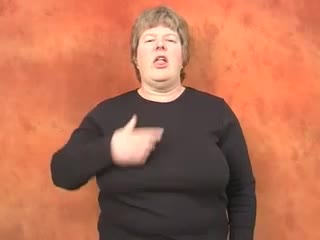
Video via SpreadTheSign  - Free educational resource BSL
Updated April 24, 2026
British Sign Language (BSL) 🟢 Beginner 📊 A1 ⚡ Very Common Noun

e-mail

An electronic message sent between computers or mobile devices

Source-linked video Step-by-step guide Context and safety notes
Synonyms
Email electronic message
Antonyms
Letter phone call
Difficulty
Not rated yet

Create a free account to save this sign, keep your watch history, and unlock a one-note journal preview.

How to sign it
Handshape
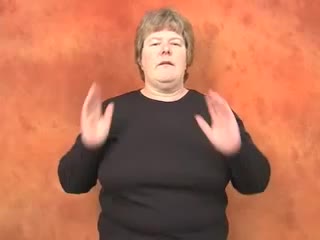
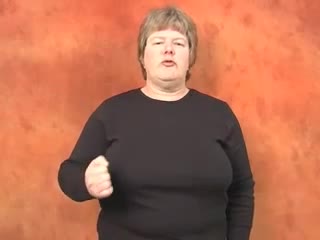
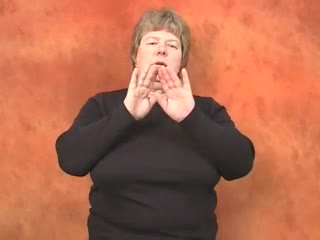
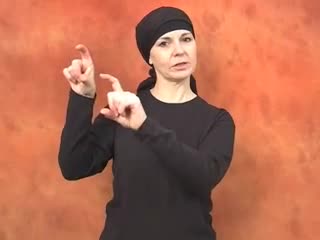
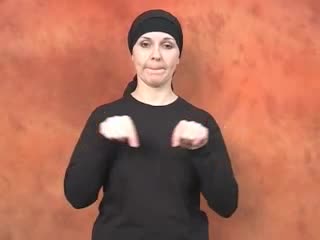
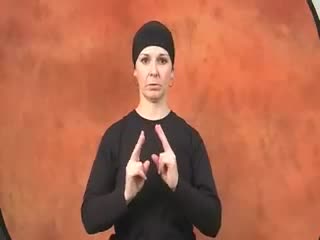
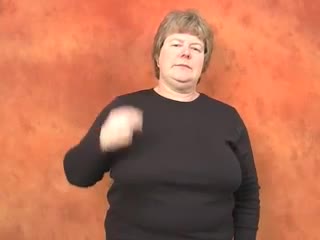
Dominant hand forms 'E', then opens to a flat 'B' hand
Location
Near mouth/side of face
Movement
Starts with 'E' hand near mouth, then opens to flat hand moving forward
Palm Orientation
Forward (final)
Facial Expression
Mouth 'e-mail'
🔁 Spaced Review Try it free

How well do you know this sign?

E-MAIL
Your Progress Live
🌱
Level 1 · BSL Beginner +0 XP today
This sign Not learned yet
0 watches
Mastery 0%
Confidence
How well do you know this sign?
0 🔥 Streak
0 Signs seen
0 Learned
0 Watches
📖 Vocabulary health 🔒 Log in to see score
0 Mastered
0 Confident
0 Practicing
0 Just seen

Create a free account to keep your vocabulary score between sessions

7-day activity 0 of 7 active

Register free to sync activity across devices

Watch signs to see your history here

Tracking locally for now. Create a free account to save your progress and sync across devices.
Free gets you started. Paid adds the repeat-learning layer: review queues, deeper notes, compare mode, and better comeback tools.
My Sign Journal
Personal notes, saved to your account forever
Locked

Write memory tricks, usage examples, and cultural reminders beside each sign. Create a free account to unlock your first saved note preview on this page.

Create free account Already have an account? Log in

What This Sign Means in BSL

The BSL sign for e-mail is a truly intuitive and widely recognised sign that beautifully blends a clear initialism with a meaningful action. It isn't just a label for a digital message; it embodies the very act of composing or sending an email. When you see this sign, you're not just thinking of the abstract concept; you're visualising the communication process itself.

This sign is a workhorse in everyday BSL conversations, whether you're discussing work, social plans, or sharing information. Its directness means there's little room for misinterpretation, making it an incredibly efficient way to communicate about digital correspondence. It's a sign that bridges the gap between the physical act of signing and the digital world it represents.

What makes it particularly noteworthy is how it captures the essence of an "electronic letter" without needing to sign both words separately. It’s a concise, single-movement sign that communicates a whole concept, demonstrating the economy and elegance often found in BSL. Understanding its core meaning helps learners appreciate the design principles behind many BSL signs.

When This Sign Feels Natural

You'll find the BSL sign for e-mail feels completely natural in almost any context where digital messages are discussed. From a casual chat with friends about checking your inbox to a more formal professional discussion about sending a report, this sign fits seamlessly. It's universally understood across the UK Deaf community, making it a reliable choice for clear communication about this specific topic.

This sign is perfect when you're referring to the action of sending or receiving an email, asking someone if they've checked their emails, or mentioning an email address. For instance, if you're coordinating an event, you'd naturally use this sign to suggest, "I'll e-mail you the details." It's precise; it specifies the medium of communication, distinguishing it from a general 'message' or a traditional 'letter'.

However, it's important not to over-apply this sign. While an email is a form of digital communication, the sign "e-mail" specifically refers to that format. You wouldn't typically use it when you mean a general 'online' activity or 'internet' browsing, or even a 'text message' via phone. Knowing when to use it accurately shows a deeper understanding of BSL's nuances and helps you communicate with greater clarity and confidence.

What Learners Usually Miss

One common oversight for learners is the smooth and clear transition of the handshape. The sign starts with a distinct 'E' handshape near the mouth or side of the face. Many learners rush this initial shape or make it a little ambiguous. Ensure your fingers are clearly forming an 'E' before you open your hand. The quality of this initial handshape sets up the whole sign for clarity.

Another subtle but crucial element is the exact starting location and the deliberate nature of the forward movement. The sign begins near the mouth or side of the face, almost as if you're articulating or "speaking" the 'e' of "e-mail" or indicating a form of communication coming from you. The subsequent opening of the hand into a flat 'B' shape and the distinct forward movement should be intentional, not just a flick. It symbolises sending something out into the world, like data being transmitted. Some learners might start too low, too far away from the face, or make the movement too weak, which can make the sign less clear or even confused with other signs.

Finally, learners sometimes overlook the importance of consistency in the 'E' to 'B' transition. It’s not just two separate handshapes, but a dynamic, fluid movement. Imagine the 'E' opening up to "release" the message. Ensure the motion is smooth and controlled, reflecting the seamless flow of digital information. Practising this transition in front of a mirror can help you refine the rhythm and precision.

A Simple Way to Remember It

Remembering the BSL sign for e-mail becomes much easier when you break it down into its logical components. Think of it as a mini-story of sending an email. The sign starts with the initial 'E' of 'electronic' or 'e-mail' near your face, where communication originates. The hand then opens and moves forward, visually representing the message being sent out and delivered. This combination of initialism and action creates a powerful and memorable visual.

  • The 'E' for Electronic: The initial handshape directly links to the first letter of "e-mail," giving you an immediate hook.
  • Speaking into the Digital Void: Starting the sign near your mouth or face symbolises "speaking" or communicating, then "sending" that message out into the digital realm.
  • The Message Unfolds and Travels: The opening of the hand from 'E' to a flat 'B' can be imagined as the message unfolding or being released, and the forward movement signifies its journey to the recipient.

Short Practice Situations

  • "Did you receive my e-mail from yesterday?"
  • "I need to check my e-mail before I leave work."
  • "Could you please e-mail me the meeting agenda?"
  • "My e-mail address is on my business card."
  • "I just got an e-mail notification on my phone."

Signs to Learn Next

  • INTERNET / ONLINE: Since e-mails rely on the internet, learning this sign will allow you to discuss the broader context of digital communication.
  • MESSAGE / TEXT: These signs help you distinguish between different forms of digital communication, making your conversations more precise.
  • COMPUTER / LAPTOP: Often, emails are accessed and sent from these devices, so knowing these signs will naturally complement your vocabulary.
  • PHONE: Many people check their e-mails on their phones, making this a relevant sign for discussing mobile communication.
  • SEND / RECEIVE: These action verbs are fundamental to the process of using e-mail and will allow you to describe specific email-related activities.

🤖 AI Learning Guide for "e-mail"

The sign for 'e-mail' uses the dominant hand to form the letter 'E' near the mouth, then opens it to a flat 'B' hand moving forward. This mimics sending an electronic message

🎯 Practice Challenge

Practice smooth transition from E-hand to flat B-hand. Ensure forward movement

⚠️ Most Common Mistake

Ensure initial E-hand is clear before opening. Maintain consistent forward path

👐 How to Sign "e-mail" in British Sign Language (BSL) (Quick Answer)

Follow these steps to sign e-mail correctly in British Sign Language (BSL):

  1. 1 Form dominant hand into 'E'-handshape
  2. 2 Place 'E'-hand near mouth/side of face
  3. 3 Open 'E'-hand to a flat 'B'-handshape
  4. 4 Move flat 'B'-hand forward away from face

Tip: Watch the video above while following these steps for best results.

🤚 Sign Profile

🤚
Handshape
Dominant hand forms 'E', then opens to a flat 'B' hand
🔣
Handshape Code
E>B-flat
Dominant Hand
Either
🙌
Hand Count
One-handed
📍
Location
Near mouth/side of face
↗️
Movement
Starts with 'E' hand near mouth, then opens to flat hand moving forward
🔄
Movement Type
Linear
👆
Contact
Air
👋
Palm Orientation
Forward (final)
⚖️
Symmetry
Asymmetric

😊 Non-Manual Features

Facial expressions and body language are grammatically essential in British Sign Language (BSL) - not optional!

😊
Facial Expression
Mouth 'e-mail'
🙆
Eyebrows
Neutral
👁️
Eye Gaze
Forward
🙂
Head Movement
None
👄
Mouth Morpheme
Mouth 'e-mail'
🕴️
Body Shift
None

📖 Grammar & Linguistics

Part of Speech Noun
Inflection No
Classifier Usage N/A
Role Shift No

🎓 Learning Context

📌 When to Use: Discussing digital communication, asking for contact details
⚠️ Common Mistake: Incorrect handshapes (E or B), wrong movement path
🚫 When NOT to Use: When referring to physical letters or other communication methods
Context Tags
Technology communication internet

🧪 Practice Lab

Use these tiny checks right after watching the video. Fast feedback is what turns recognition into recall.

Meaning check

Which word matches the sign you just watched?

Usage check

Where would this sign fit most naturally?

Confidence check

How do you feel about e-mail right now?

Pick one so SignDeaf can shape the rest of your session around how this sign actually feels.

🧭 Scenario Drill

One sign gets remembered faster when you attach it to real situations. Try these quick scene prompts.

Work

Stretch practice

Use this sign in a short workplace sentence or meeting exchange.

Family

Stretch practice

Try signing this while talking about family life or something at home.

School

Stretch practice

Imagine teaching this sign to a classmate or using it in a lesson.

Doctor

Stretch practice

Practise it in a healthcare conversation where clarity matters.

Travel

Stretch practice

Use it in a travel scenario like asking for help or directions.

💬 Example Usage

1.[en] I will send you an e-mail. / BSL:[I SEND YOU E-MAIL] | 2.[en] Did you get my e-mail? / BSL:[YOU RECEIVE MY E-MAIL Q-NMS] | 3.[en] What is your e-mail address? / BSL:[YOUR E-MAIL ADDRESS Q-NMS]

1.[en] I will send you an e-mail. / BSL:[I SEND YOU E-MAIL] | 2.[en] Did you get my e-mail? / BSL:[YOU RECEIVE MY E-MAIL Q-NMS] | 3.[en] What is your e-mail address? / BSL:[YOUR E-MAIL ADDRESS Q-NMS]

When to use it

Discussing digital communication, asking for contact details

When not to use it

When referring to physical letters or other communication methods

Register

Neutral

🌍 Cultural Context

Reflects common adoption of English terms for new tech

🗺️ Regional Variations

Minimal, widely understood

⚖️ Similar Signs - What's the Difference?

This sign e-mail
VS
Similar signs Look closely
Compared to 'SEND', 'e-mail' starts with an 'E' handshape near the mouth, transitioning to a flat 'B' hand moving forward. 'SEND' typically starts with a flat 'B' hand near the body. 'MESSAGE' often involves a 'C' or 'O' handshape, sometimes tapping, without the specific 'E' to 'B' transition or mouth location of 'e-mail'

📝 Usage Notes

Often accompanied by mouthing 'email'

Frequently Asked Questions

Common questions about the British Sign Language (BSL) sign for "e-mail".

🏷️ Tags

Handshape

Keywords

💡
Did you know?
BSL is a full, natural language with its own grammar - not just English signed word by word.

📚 Explore More British Sign Language (BSL) Signs

Keep building your British Sign Language (BSL) vocabulary - explore signs by category or browse the full dictionary.