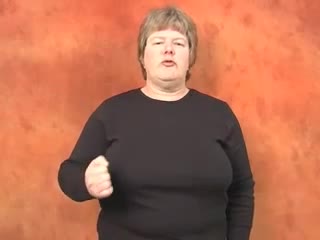
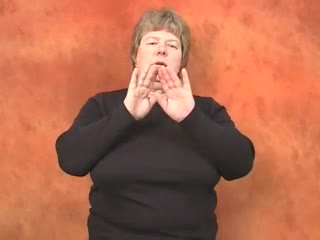
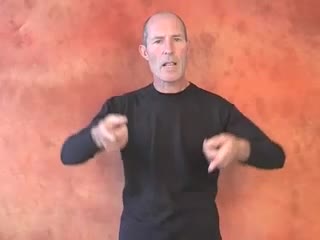
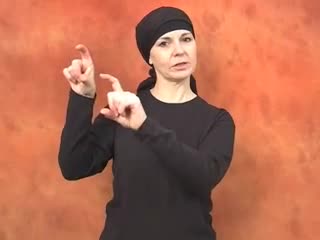
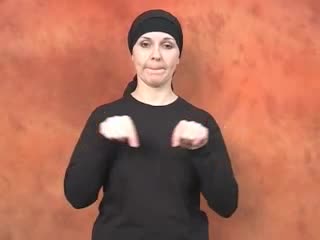
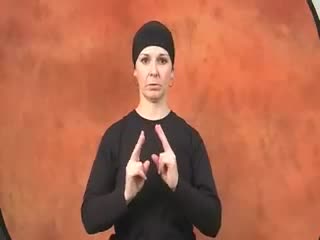
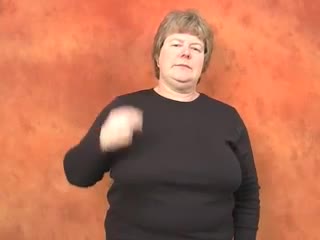
What This Sign Means in BSL
The BSL sign for truth is a foundational concept sign, representing honesty, veracity, and an undeniable fact. When you make this sign, you’re not just conveying information; you’re asserting its authenticity and sincerity. It carries a gravitas, often used in contexts where the speaker wants to emphasize the factual nature or genuine sentiment behind their communication.
Visually, the sign is quite intuitive. It uses a single, extended index finger, which acts almost like a physical pointer of certainty. Starting near the chin or mouth, the movement travels forward into neutral space. This outward motion embodies the idea of "speaking the truth," "revealing the truth," or "bringing the truth out into the open." It's a clear, direct sign that leaves little room for ambiguity.
The sign's tone is typically earnest and serious. While it can be used in casual conversation, it often signals a moment of emphasis. Think of it as a sign that asks you to pay attention, because what's being communicated holds significant weight and is presented as indisputable fact. It’s a powerful sign that reinforces trust and clarity in your communication.
When This Sign Feels Natural
You'll find the BSL sign for truth feels most natural when you are affirming a fact, making a sincere statement, or asking for genuine information. Imagine a conversation where someone is questioning a situation, and you want to reassure them that what you're sharing is absolutely correct – this is where "truth" shines. It's suitable for both formal discussions, like a serious debate or giving evidence, and more personal, heartfelt conversations where honesty is paramount.
Consider using this sign when you want to distinguish between what is fact and what might be opinion or speculation. For instance, if you're recounting an event, signing "truth" afterwards can underscore that your version is exactly what happened, not an embellished story. It’s a good choice when you want to be utterly transparent and ensure your audience understands you are speaking with full integrity.
However, it’s worth noting when you might choose a different sign. If you’re simply talking about something being "real" or "actual" in a less emphatic way, other signs might fit better. "Truth" carries a slightly heavier connotation of honesty and sincerity. It's less about general reality and more about the *veracity* of a statement or the *honesty* of a person. Use it when that specific nuance of truthfulness is precisely what you intend to convey.
What Learners Usually Miss
One common subtlety learners often miss with the BSL sign for truth is the exact firmness and trajectory of the movement. It’s not a gentle flick or a vague wave. The movement should be deliberate and relatively straight or with a slight, controlled arc forward. Sometimes learners make the movement too weak, too short, or too erratic, which can diminish the sign's impact and clarity. Think of it as a confident assertion, not a hesitant suggestion.
Another frequently overlooked aspect is the role of facial expression. While the handshape and movement are key, the face adds crucial context. For "truth," your expression should convey sincerity, seriousness, or conviction. A neutral or overly relaxed face can make the sign feel less authentic. Practise signing "truth" while maintaining eye contact and a focused, earnest expression – this truly brings the sign to life and reinforces its meaning.
Finally, the precise starting location is important. The sign begins quite close to the chin or mouth. Some learners start it too far away from the face, which can make it look like a different sign or lose its connection to "speaking" the truth. Ensure your index finger is clearly originating from that chin/mouth area before moving forward. This slight adjustment makes a significant difference in the sign's accuracy and natural flow within BSL conversation.
A Simple Way to Remember It
Imagine your extended index finger as a laser beam of honesty, shooting straight out from your mouth to declare what is undeniably factual. This sign is about directness and certainty, like pointing exactly to what is correct.
- The Point of Truth: Your index finger is the ultimate pointer, indicating precisely what is true. It’s direct, unambiguous, and firm.
- Speaking from the Source: Starting near your chin/mouth visually connects the sign to the act of speaking or declaring something with integrity.
- Projecting Certainty: The straight, forward movement isn’t hesitant. It’s a projection of confidence and certainty into the space in front of you.
Short Practice Situations
- You're explaining something important to a friend and want to emphasize your honesty: "I promise you, this is the truth."
- Someone asks if you're serious about a commitment: "Yes, I really mean it. That's the truth."
- You're discussing a news story and want to assert a particular fact: "According to the report, the actual truth of the matter is..."
- Asking for honest feedback: "Please tell me the absolute truth about what you think."
- Admitting something difficult but necessary: "It was hard to say, but I had to speak the truth."
Signs to Learn Next
- HONEST: While similar in meaning, "honest" (often a dominant hand "H" or open hand brushing the chest) focuses more on the quality of being sincere and trustworthy, whereas "truth" is about the veracity of a statement or fact itself. They often go hand-in-hand.
- LIE: This is a direct opposite, typically signed with the index finger brushing across the mouth, indicating a deviation from truth. Learning it next helps to understand the semantic field.
- BELIEVE: This sign, often signed with an open B-hand at the forehead and moving down to the dominant hand clasping it, connects to truth as it's about accepting something as true or real.
- FACT: Often signed with an 'F' handshape making contact. "Fact" relates closely to "truth" as facts are established truths. Understanding the distinction helps in precise communication.
- REAL/ACTUAL: This sign, often a dominant 'R' hand twisting forward, indicates something exists or is authentic. It's related to truth in that something real is typically true, but "truth" specifically carries the nuance of veracity and sincerity.