Speed
0
Practice reps times watched

Create a free account to keep your watch history and review plan.

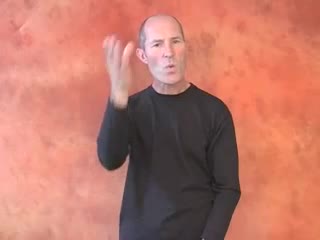
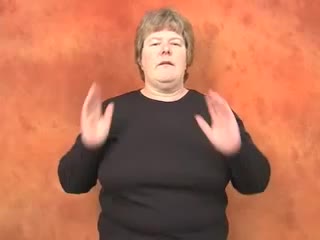
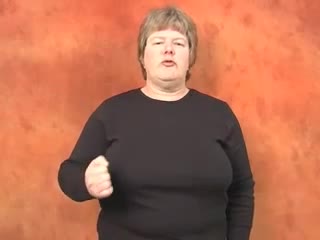
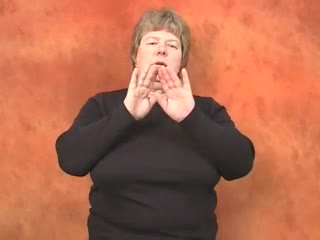
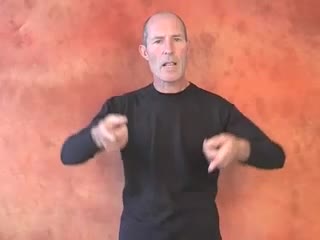
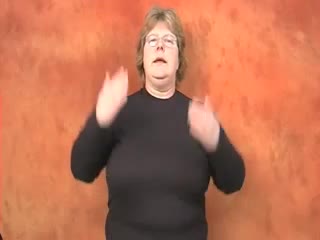
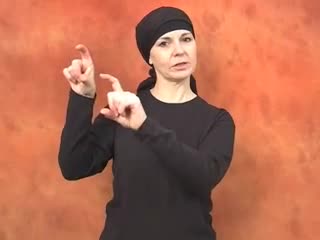
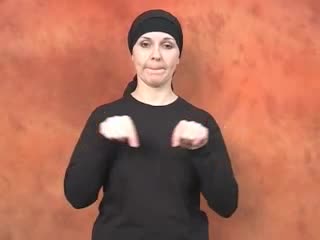
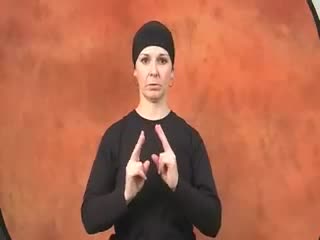
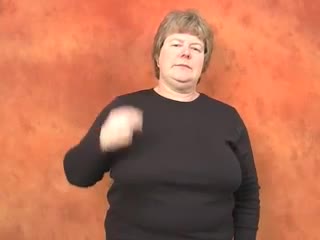
Best practice Use mirror mode, then watch the frame breakdown below to catch the start, movement, and finish cleanly.
Video via SpreadTheSign  - Free educational resource BSL
Updated April 22, 2026
British Sign Language (BSL) 🟢 Beginner 📊 B1 ⚡ Uncommon Noun

bolt

A metal bar or pin used to secure a door or gate

Source-linked video Step-by-step guide Context and safety notes
Synonyms
Fastener latch lock (noun)
Antonyms
Unlock open
Difficulty
Not rated yet

Create a free account to save this sign, keep your watch history, and unlock a one-note journal preview.

How to sign it
Handshape
Dominant hand forms a G-handshape, with the index finger extended
Location
Near the non-dominant hand (representing a doorframe) or in mid-air
Movement
A straight, horizontal sliding motion forward
Palm Orientation
Downwards or slightly inwards
Facial Expression
None
🔁 Spaced Review Try it free

How well do you know this sign?

BOLT
Your Progress Live
🌱
Level 1 · BSL Beginner +0 XP today
This sign Not learned yet
0 watches
Mastery 0%
Confidence
How well do you know this sign?
0 🔥 Streak
0 Signs seen
0 Learned
0 Watches
📖 Vocabulary health 🔒 Log in to see score
0 Mastered
0 Confident
0 Practicing
0 Just seen

Create a free account to keep your vocabulary score between sessions

7-day activity 0 of 7 active

Register free to sync activity across devices

Watch signs to see your history here

Tracking locally for now. Create a free account to save your progress and sync across devices.
Free gets you started. Paid adds the repeat-learning layer: review queues, deeper notes, compare mode, and better comeback tools.
My Sign Journal
Personal notes, saved to your account forever
Locked

Write memory tricks, usage examples, and cultural reminders beside each sign. Create a free account to unlock your first saved note preview on this page.

Create free account Already have an account? Log in

What This Sign Means in BSL

The BSL sign for bolt is wonderfully direct and visual. It represents the physical fastening device used to secure a door, window, or gate. When you see this sign, you're looking at a clear, iconic representation of a solid piece of metal being slid into place. It's a functional sign, immediately conveying the concept of securing something firmly.

This sign doesn't carry a lot of abstract meaning; its strength lies in its literal interpretation. It’s about creating a physical barrier, adding an extra layer of security, or simply closing something definitively. You’ll use it when discussing the actual component that keeps things shut, not for the act of locking in a general sense, which might have a slightly different sign or context.

What makes this sign particularly valuable is its precision. It distinguishes itself from broader concepts like 'lock' or 'close' by focusing on this specific type of mechanism. It’s a sign that brings clarity and detail to your BSL communication, allowing you to specify exactly how something is being secured or what part of a fastening system you're referring to.

When This Sign Feels Natural

This sign feels most natural and appropriate when you're referring to the actual hardware – the metal bar or pin – that slides into place to secure something. Imagine you're describing the parts of a door, explaining how to make a shed more secure, or pointing out a feature on a window. In these practical, descriptive scenarios, using the sign for bolt is perfectly suited.

You'd typically use it in contexts where the physical action of engaging a bolt is relevant. For example, if you're instructing someone to "slide the bolt across," or if you're talking about the need to "install a new bolt" on a garden gate. It's a sign that grounds your conversation in the tangible world, making your meaning unambiguous for the people you're signing with.

It's important to remember that this sign specifically refers to the noun "bolt" as a securing device. You wouldn't use it for the verb "to bolt" in the sense of running away quickly, nor for a "bolt of lightning" or a "bolt of fabric." For those concepts, BSL offers entirely different signs. Sticking to its core meaning as a physical fastener will ensure your communication remains clear and accurate within BSL.

What Learners Usually Miss

One common area where learners might miss the nuance with the BSL sign for bolt is in the precision of the dominant hand's shape. It’s not just a general pointing gesture. You need a clear G-handshape, where your index finger is extended straight, and your thumb is held alongside it, often lightly resting on the side of your middle finger. If the index finger isn't distinctly extended or if other fingers are splayed, it can lose its iconic representation of the bolt itself.

Another subtle point learners sometimes overlook is the quality of the movement. The sign calls for a straight, horizontal sliding motion forward. It's a decisive push, not a wobbly, curved, or hesitant movement. Think about the firm, deliberate action of pushing a heavy bolt into its receiver. The movement should convey that same sense of finality and security. Any deviation, such as pushing downwards or upwards, changes the visual metaphor and can make the sign less clear.

Finally, while the sign can be performed near the non-dominant hand (representing a doorframe), it’s often done clearly in mid-air when the context is already understood. However, for maximum clarity, especially when introducing the concept or if the context isn't obvious, using your non-dominant hand as a stationary "doorframe" or "receiver" against which your dominant hand performs the "bolting" action can significantly enhance understanding. Missing this contextual setup can sometimes lead to a less impactful or harder-to-interpret sign for those who are newer to BSL.

A Simple Way to Remember It

Think of the sign for bolt as literally enacting the function of the object itself. Your dominant index finger isn't just pointing; it is the bolt, ready to slide into place and secure something. This direct visual connection makes it incredibly memorable.

  • Your extended index finger (the G-handshape) represents the shape of a physical bolt itself – a long, solid piece.
  • The straight, forward sliding motion mimics the action of pushing a bolt into its housing to secure it.
  • The firm, controlled movement conveys the security and finality that a bolt provides when engaged.

Short Practice Situations

  • "Could you please ensure the **bolt** on the garden gate is fully engaged before you leave?"
  • "They decided to install a stronger **bolt** on the shed door to deter potential intruders."
  • "The old window had a small, rusty **bolt** that was quite stiff to operate."
  • "I noticed a new safety **bolt** had been fitted to the inside of the cupboard."
  • "Before we go, let's double-check the front door **bolt** is securely in place."

Signs to Learn Next

  • LOCK (noun/verb): This is a natural next step, as "bolt" is a specific type of locking mechanism. Understanding the general sign for "lock" will help you distinguish between the specific and the general, enriching your vocabulary for security.
  • DOOR: Since bolts are most commonly found on doors, learning the sign for "door" provides essential context and allows you to create more complete sentences and scenarios using "bolt."
  • SECURE / SAFE: A bolt's primary purpose is to make something secure or safe. Learning these related concepts will help you express the outcome or intention behind using a bolt, broadening your ability to communicate about safety.
  • KEY: Often, a bolt works in conjunction with a key (or a locking mechanism that uses one). Understanding "key" helps you discuss the full process of locking and unlocking.
  • CLOSE (verb): While "bolt" is about securing, "close" is about the initial action. Knowing both allows you to differentiate between merely closing something and then actively bolting it shut.

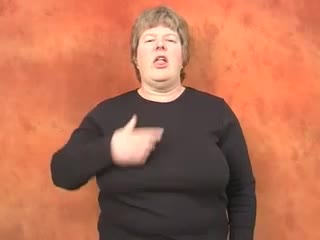
🤖 AI Learning Guide for "bolt"

The sign visually mimics the action of sliding a physical bolt into place

🎯 Practice Challenge

Practice the G-handshape. Focus on the straight, forward sliding motion

⚠️ Most Common Mistake

Ensure movement is linear, not a twist. Keep index finger extended

👐 How to Sign "bolt" in British Sign Language (BSL) (Quick Answer)

Follow these steps to sign bolt correctly in British Sign Language (BSL):

  1. 1 Form dominant G-hand
  2. 2 Position hand near non-dominant
  3. 3 Slide dominant hand straight forward
  4. 4 Stop abruptly, simulating latching

Tip: Watch the video above while following these steps for best results.

🤚 Sign Profile

🤚
Handshape
Dominant hand forms a G-handshape, with the index finger extended
🔣
Handshape Code
G
Dominant Hand
Either
🙌
Hand Count
One-handed
📍
Location
Near the non-dominant hand (representing a doorframe) or in mid-air
↗️
Movement
A straight, horizontal sliding motion forward
🔄
Movement Type
Linear
👆
Contact
Near
👋
Palm Orientation
Downwards or slightly inwards

😊 Non-Manual Features

Facial expressions and body language are grammatically essential in British Sign Language (BSL) - not optional!

😊
Facial Expression
None
🙆
Eyebrows
Neutral
👁️
Eye Gaze
At referent
🙂
Head Movement
None
👄
Mouth Morpheme
None
🕴️
Body Shift
None

📖 Grammar & Linguistics

Part of Speech Noun
Inflection No
Classifier Usage N/A
Role Shift No

🎓 Learning Context

📌 When to Use: Discussing door security, hardware, or construction
⚠️ Common Mistake: Confusing with "key" or "lock"; incorrect movement direction
🚫 When NOT to Use: For "lightning bolt" or "bolt (run away)"
Context Tags
Security Fastener Door Hardware

🧪 Practice Lab

Use these tiny checks right after watching the video. Fast feedback is what turns recognition into recall.

Meaning check

Which word matches the sign you just watched?

Usage check

Where would this sign fit most naturally?

Confidence check

How do you feel about bolt right now?

Pick one so SignDeaf can shape the rest of your session around how this sign actually feels.

🧭 Scenario Drill

One sign gets remembered faster when you attach it to real situations. Try these quick scene prompts.

Work

Stretch practice

Use this sign in a short workplace sentence or meeting exchange.

Family

Stretch practice

Try signing this while talking about family life or something at home.

School

Stretch practice

Imagine teaching this sign to a classmate or using it in a lesson.

Doctor

Stretch practice

Practise it in a healthcare conversation where clarity matters.

Travel

Stretch practice

Use it in a travel scenario like asking for help or directions.

💬 Example Usage

1.[en] The door has a strong bolt. / BSL:[Sign 'DOOR' then 'BOLT'] | 2.[en] Please check the bolt. / BSL:[Sign 'PLEASE' 'CHECK' 'BOLT'] | 3.[en] Install a new bolt. / BSL:[Sign 'INSTALL' 'NEW' 'BOLT']

1.[en] The door has a strong bolt. / BSL:[Sign 'DOOR' then 'BOLT'] | 2.[en] Please check the bolt. / BSL:[Sign 'PLEASE' 'CHECK' 'BOLT'] | 3.[en] Install a new bolt. / BSL:[Sign 'INSTALL' 'NEW' 'BOLT']

When to use it

Discussing door security, hardware, or construction

When not to use it

For "lightning bolt" or "bolt (run away)"

Register

Neutral

🌍 Cultural Context

None

🗺️ Regional Variations

None reported for this basic sign

⚖️ Similar Signs - What's the Difference?

This sign bolt
VS
Similar signs Look closely
The BSL sign for "bolt" (noun) uses a G-hand sliding straight forward. This differs from "key" (noun), which uses a G-hand but performs a distinct twisting motion as if turning a key. It also differs from "lock" (noun), which often involves two S-hands or C-hands coming together or a single hand twisting, not a straight slide

📝 Usage Notes

Represents the physical locking mechanism or the act of securing

🏷️ Tags

Handshape

Keywords

💡
Did you know?
In BSL, non-manual features (facial expressions, mouthing) are as important as the hand movements.

📚 Explore More British Sign Language (BSL) Signs

Keep building your British Sign Language (BSL) vocabulary - explore signs by category or browse the full dictionary.