What Is the BSL Sign for "chemistry"?
Ever wondered how to unlock the fascinating world of scientific reactions and interpersonal connections through British Sign Language chemistry? You're in the right place! The BSL sign for chemistry brilliantly encapsulates both the academic discipline and the abstract concept of two things combining, offering a truly versatile piece of vocabulary for your signing journey. This sign represents a fundamental concept in our world, whether we're talking about molecules or human interactions, and it's a wonderfully expressive sign that you'll use frequently once you learn it.
How to Sign "chemistry" in British Sign Language - Step-by-Step
Let's carefully break down each element of this dynamic sign, ensuring you grasp every detail for accurate communication.
Step 1: Handshape
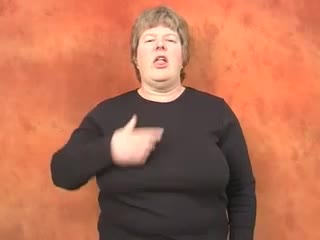
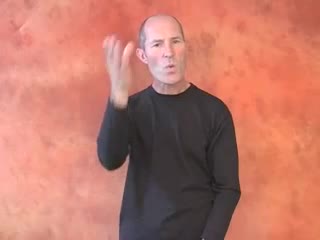
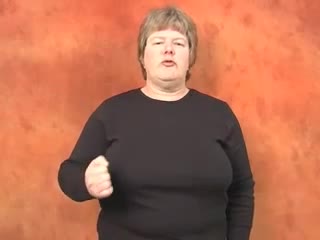
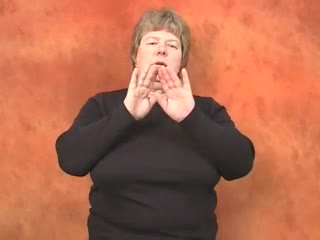
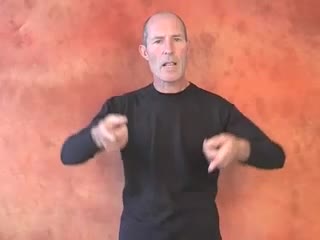
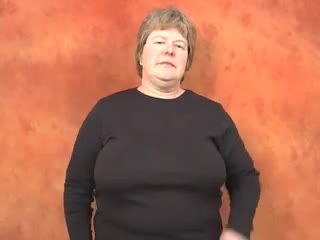
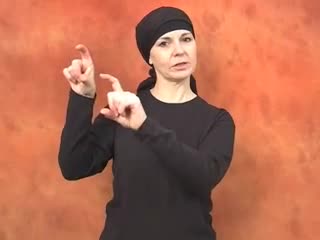
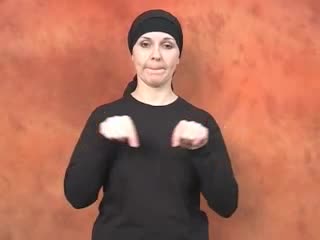
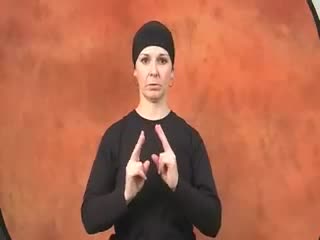
For the BSL sign for "chemistry," you'll form a specific handshape with your dominant hand. Start by extending your index finger, then bend it sharply at the knuckle, creating a hook-like shape, almost resembling a bent 'X'. Your thumb should rest across your palm, lightly touching the side of your curled middle finger, while your remaining fingers curl down into your palm, keeping them relaxed. This precise formation is crucial for clarity.
Step 2: Hand Placement and Location
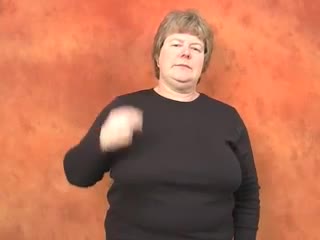
Next, bring your dominant hand, with its established hook-like handshape, to the side of your head. The bent knuckle of your index finger should gently make contact with your temple, just above and slightly in front of your ear. This specific facial location grounds the sign and distinguishes it from others that might share similar handshapes or movements.
Step 3: Movement
With your index finger's knuckle touching your temple, perform a small, subtle twisting motion with your wrist. You'll complete this twisting movement two or three times in quick succession, creating a distinct, repetitive action. Think of a tiny, controlled rotation, as if you're turning a very small dial or key at your temple, maintaining light contact throughout.
Step 4: Facial Expression and Mouthing
Non-manual features are absolutely vital in British Sign Language, and for "chemistry," a neutral or slightly thoughtful facial expression is generally appropriate. You should also mouth the word "chemistry" without vocalising it; this clear mouthing provides an important linguistic cue, aiding comprehension and adding grammatical completeness to your signed message. Integrating this subtle mouthing helps ensure your meaning is perfectly clear within any BSL conversation.
Step 5: Palm Orientation
As you begin the sign, your palm will generally face towards your non-dominant side, or slightly outward. During the twisting movement at your temple, you'll notice a slight rotation in your palm orientation, moving it subtly back and forth. This shift is integral to the sign's movement and contributes to its overall visual form, adding another layer of precision to your signing.
"chemistry" in BSL - Quick Reference Snapshot
- Handshape: Dominant hand, index finger bent at the knuckle (hook-like 'X' shape), other fingers curled, thumb rests across palm.
- Location: Bent knuckle of index finger touches the temple.
- Movement: Small, quick twisting rotation at the wrist, repeated 2-3 times.
- Facial Expression: Neutral or thoughtful, accompanied by mouthing "chemistry."
- Dominant Hand: Only the dominant hand performs the sign.
- Palm Orientation: Initially faces non-dominant side, then rotates slightly with the twisting motion.
5 Memorisation Tricks for the BSL Sign "chemistry"
- Visual Mnemonic: Picture the bent index finger as a tiny stirring rod, mixing chemicals in a beaker or test tube inside your head. The twisting motion then becomes the act of stirring, bringing elements together, which helps you recall the sign's movement and its connection to the science.
- Muscle-Memory Drill: Try signing "chemistry" ten times in a row, focusing intensely on the precise handshape and the subtle wrist twist. Then, after a short break, repeat the drill; this spaced repetition really helps embed the physical action into your muscle memory, making the sign feel natural.
- Connection to Meaning: Think about the core meaning of chemistry – combining, reacting, transforming. The sign's placement at the temple can suggest 'thinking' about these reactions or the intellectual process involved, which provides a deeper conceptual link to the word itself.
- Common-Confusion Tip: Be careful not to confuse this sign with generic 'thinking' signs that might involve a similar handshape at the temple but lack the specific twisting motion. Remember, the distinctive small rotation is key to identifying "chemistry," so focus on that precise movement to differentiate it.
- Daily-Life Practice Idea: Whenever you hear or read the word "chemistry" during your day, take a moment to visualise or perform the sign. Perhaps you're watching a documentary, reading an article, or even just making a cup of tea (which involves chemistry!); integrate the sign into these everyday moments.
Real-Life Situations to Use the BSL Sign for "chemistry"
- Imagine you're discussing subjects at school with a Deaf friend; you might sign, "YOU STUDY CHEMISTRY?" asking about their academic pursuits. Here, the sign fits into a topical question structure.
- Perhaps you're at a social gathering and observe two people getting along wonderfully. You could sign to another friend, "THEY HAVE GOOD CHEMISTRY!" using the sign to describe an interpersonal connection.
- During a science fair, pointing to an experiment, you might comment, "THIS SHOWS MANY INTERESTING CHEMISTRY REACTIONS," incorporating the sign into a descriptive BSL sentence.
- If you're explaining a complex scientific concept, you could sign, "UNDERSTANDING CHEMISTRY IS DIFFICULT BUT IMPORTANT," placing the sign within a more abstract statement.
Top 3 Mistakes Learners Make Signing "chemistry" in BSL
-
Incorrect Handshape: A common error involves using a fully extended index finger or a flat hand at the temple instead of the precise hooked 'X' shape. This happens because learners might generalise from other signs or not pay enough attention to the subtle curl. The correction is to consciously bend that index finger sharply at the knuckle, making sure it forms a distinct hook, which defines the sign's identity.
-
Lack of Movement or Wrong Movement: Sometimes learners either touch the temple without any movement, or they use a large, sweeping motion instead of the small, contained twist. This mistake often stems from not fully appreciating the specific dynamic element of the sign. To correct this, focus on initiating the movement from the wrist, performing two or three tight, quick rotations, keeping the hand in continuous, light contact with the temple.
-
Missing Mouthing: Beginners frequently omit the mouthing of the word "chemistry" altogether, relying solely on the hand sign. While the hand sign conveys the concept, the accompanying mouthing is an essential non-manual feature in BSL that significantly enhances clarity and is a core part of the sign's grammatical structure. The fix is simply to consciously mouth "chemistry" every time you produce the sign, ensuring your lips form the word silently as you sign.
Fascinating Facts About the BSL Sign for "chemistry"
- The sign for "chemistry" in BSL is often considered somewhat iconic, with the twisting motion at the temple perhaps subtly evoking the idea of mixing, processing, or a "heady" scientific thought. This visual connection helps many learners remember it more easily.
- While the 'X' handshape at the temple is widely recognised and used across the United Kingdom, some regional variations might exist, occasionally employing a different handshape or a slightly altered movement, which highlights the rich diversity within BSL itself.
- Interestingly, the sign isn't directly derived from fingerspelling the letters C-H-E-M-I-S-T-R-Y, but rather stands as a distinct, lexical sign with its own unique form and meaning. This shows how BSL is a natural language with its own vocabulary, not just a manual representation of English.
- Its placement at the temple, a common location for signs related to thought, knowledge, or intellectual pursuits, subtly reinforces its connection to a field of study. Many BSL signs for academic subjects or mental processes share this location.
- The specific combination of handshape, location, and a small, repetitive twisting movement makes "chemistry" a highly distinctive sign in BSL, unlikely to be easily confused with many other signs once mastered.
"chemistry" in Deaf Culture - Community and Identity
Within the Deaf community, the concept of "chemistry" extends beyond the laboratory, often resonating with the vital connection and shared understanding among individuals. Just as elements react, people form bonds, and the idea of having "good chemistry" with another Deaf person, or indeed a hearing person who signs fluently, speaks to a deeply valued sense of rapport and seamless communication. The pursuit of science, including chemistry, is also an important pathway for Deaf individuals, with many advocating for greater accessibility in STEM fields. This sign, therefore, isn't just about compounds; it also touches upon the powerful, often unspoken, connections that strengthen community and identity.
Example Conversations Using "chemistry" in BSL
English: Our chemistry teacher is excellent. - BSL structure: OUR CHEMISTRY TEACHER EXCELLENT.
English: I don't understand the chemistry behind this reaction. - BSL structure: THIS REACTION CHEMISTRY I DON'T UNDERSTAND.
English: Do you enjoy studying chemistry at university? - BSL structure: UNIVERSITY YOU STUDY CHEMISTRY ENJOY YOU?
English: There's a strong chemistry between the two lead actors. - BSL structure: TWO LEAD ACTORS BETWEEN THEM STRONG CHEMISTRY HAVE.
English: What kind of chemistry experiments are we doing today? - BSL structure: TODAY WE DO WHAT KIND CHEMISTRY EXPERIMENTS?
Frequently Asked Questions: The BSL Sign for "chemistry"
Is the BSL sign for chemistry consistent across all regions of the UK?
While the hooked 'X' handshape at the temple with a twisting motion is widely understood and common throughout the UK, minor regional variations in BSL do exist. You might encounter slightly different handshapes or movements in specific areas, but the core meaning will generally remain clear, demonstrating BSL's regional diversity.
Are there any BSL signs similar to "chemistry" that I should be careful not to confuse it with?
Yes, learners sometimes confuse "chemistry" with signs for "science" or "experiment," which might involve similar handshapes or locations on the head. The key differentiator for "chemistry" is its specific hooked 'X' handshape combined with the distinct, small twisting motion at the temple, so concentrate on that precise movement.
Is the BSL sign for chemistry suitable for absolute beginners?
Absolutely! The BSL sign for "chemistry" is a relatively straightforward single-handed sign with a clear movement, making it very accessible for beginners. Focusing on the precise handshape and the small wrist twist will help you master it quickly, providing a solid foundation for more complex vocabulary.
Can children easily learn and use the BSL sign for chemistry?
Children can definitely learn the BSL sign for "chemistry" with ease, especially if it's introduced in a playful and visual context. Its clear, concise movement and distinct handshape make it memorable, and it's a useful sign for discussing school subjects or even the "chemistry" of playtime friendships.
Is this BSL sign for chemistry similar to signs in other sign languages?
Sign languages develop independently, so while some iconic signs might share superficial similarities across different languages, the BSL sign for "chemistry" is unique to British Sign Language. You'll find distinct differences in handshape, location, or movement when comparing it to how other sign languages might express this concept.
Signs That Pair Naturally with "chemistry" in BSL
- SCIENCE: Often signed with 'S' handshapes moving upwards from the chest, learning this alongside "chemistry" helps categorise the subject within the broader academic landscape.
- LABORATORY: Typically signed by showing a 'L' handshape then a 'B' handshape, this word naturally connects to where chemistry often takes place.
- EXPERIMENT: Often uses an 'E' handshape then a handshape indicating investigation or testing, linking directly to the practical application of chemistry.
- REACTION: Usually involves two hands coming together or moving apart, reflecting the concept of chemical changes and interactions.
- ATOM: A more specific scientific term, often signed with a circular motion representing small particles, useful for deeper discussions in chemistry.
- MIX: Involves hands swirling together, a foundational concept within many chemistry processes, making it a natural companion sign.
Building Fluency: How to Practise "chemistry" in BSL
To truly embed the BSL sign for "chemistry" into your signing repertoire, grab a mirror and observe your handshape and movement carefully. Pay close attention to the hooked 'X' and the small, precise twist at your temple, ensuring your mouthing is clear and natural. Try to integrate the sign into your daily BSL conversations by creating simple sentences about science topics or even describing how well people get along. A fantastic way to refine your technique is to film yourself signing and then watch it back, identifying any areas you can improve. Most importantly, seek out opportunities to practise with Deaf individuals or experienced signers; their feedback is invaluable and will significantly boost your confidence and fluency with this fascinating sign.