What Is the BSL Sign for "wardrobe"?
Picture that essential piece of furniture in your bedroom, the one holding all your clothes, keeping everything neat and tidy. That's exactly what we're diving into today! We're exploring the precise
BSL sign for wardrobe
, an incredibly useful sign you'll encounter frequently in everyday communication. Learning the
British Sign Language wardrobe
sign is more than just memorising a movement; it's about connecting with the spatial and descriptive richness that BSL offers. This particular sign beautifully illustrates the concept of a large storage unit, making it quite intuitive once you understand its components.
How to Sign "wardrobe" in British Sign Language - Step-by-Step
Let's get your hands moving and truly grasp how to form this sign correctly, step by careful step.
Step 1: Handshape
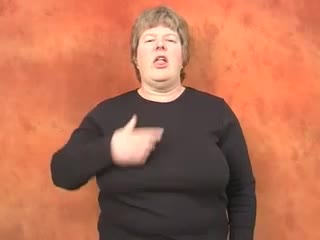
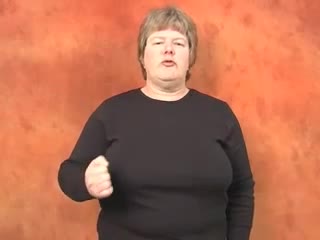
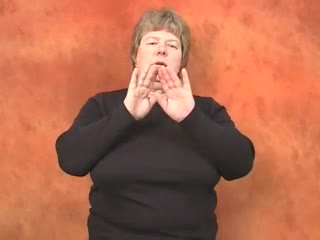
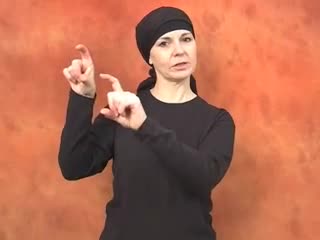
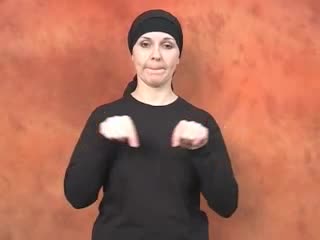
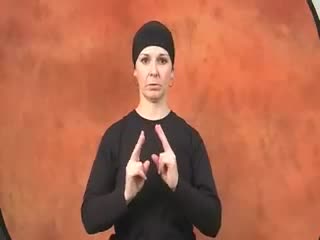
For this sign, you'll want to use both of your hands. Begin by shaping both your dominant and non-dominant hands into what we call a 'flat B' handshape. To achieve this, extend all four fingers together, keeping them straight and pressed against each other. Your thumb will then be tucked against the palm, or lightly resting alongside your index finger. Imagine your hands becoming flat, rigid panels, like the doors of a piece of furniture.
Step 2: Hand Placement and Location
Now that your hands are shaped, position them in front of your chest and upper torso. Your dominant hand should be slightly further out, representing the opening door, while your non-dominant hand remains closer to your body, acting as the stationary frame or the other door. Keep your hands relatively upright, mimicking the vertical nature of a wardrobe.
Step 3: Movement
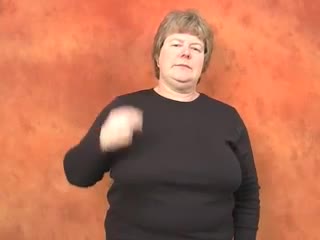
This is where the sign truly comes to life. Starting with your hands in the initial position described, with palms facing each other, you'll move your dominant hand. Swing your dominant hand outwards, away from your body, in an arc, as if you're opening a door. Simultaneously, your non-dominant hand remains relatively still, holding its position. The movement is smooth and deliberate, not rushed, clearly depicting the action of revealing the interior space.
Step 4: Facial Expression and Mouthing
When signing "wardrobe," a neutral or slightly thoughtful facial expression is generally appropriate, reflecting the context of discussing an object. Crucially, you'll mouth the English word "wardrobe" clearly and naturally as you execute the sign. This mouthing, known as a non-manual feature, provides vital grammatical information and helps distinguish between similar signs, ensuring absolute clarity in your BSL communication.
Step 5: Palm Orientation
At the beginning of the sign, both your palms should be facing inwards, towards each other, as though they are the closed doors of the wardrobe. As your dominant hand performs its opening movement, its palm will naturally rotate to face outwards, away from your body, signifying the door swinging open. Your non-dominant hand's palm will maintain its inward orientation throughout, reinforcing its role as the static side.
"wardrobe" in BSL - Quick Reference Snapshot
- Handshape: Both hands in a 'flat B' handshape, fingers extended and together, thumb tucked.
- Location: In front of the chest/upper torso.
- Movement: Dominant hand swings outwards in an arc, away from the body; non-dominant hand remains stationary.
- Facial Expression/Mouthing: Neutral expression, mouth the word "wardrobe."
- Dominant Hand: Performs the opening movement.
- Palm Orientation: Starts inwards, dominant palm rotates outwards during movement, non-dominant palm stays inwards.
5 Memorisation Tricks for the BSL Sign "wardrobe"
Learning new signs effectively means making them stick, and I’ve got some tricks up my sleeve to help you remember 'wardrobe' effortlessly.
- Visualize the actual opening of a double door: The way your dominant hand arcs outwards perfectly mimics one half of a wardrobe door swinging open, while your non-dominant hand holds the line of the other door, or the frame. Picture this every time you practise, and you'll find the movement becomes second nature.
- Engage in a muscle-memory drill by repeatedly performing just the movement for thirty seconds each day: Focus on the smooth, deliberate swing of your dominant hand, ensuring your non-dominant hand provides a stable anchor. This targeted repetition without needing to think about the meaning helps to embed the physical action deeply into your memory.
- Connect the sign directly to the word's function: A wardrobe is designed to open and close to store clothes; this BSL sign directly represents that very action. Understanding the iconic motivation behind the sign makes it far easier to recall, as it's not an arbitrary gesture but a visual representation of the object's purpose.
- Be mindful of not using a single hand for this sign, as that could easily be confused with opening a much smaller cupboard door: The two-handed presentation is crucial for conveying the scale and typical double-door nature of a wardrobe. Always ensure both your hands are involved in their respective roles to avoid miscommunication.
- Integrate the sign into your daily routine by signing it whenever you open your own wardrobe or see one on television: Whenever you're selecting an outfit or simply walking past that piece of furniture, make the sign. This constant, real-world reinforcement will solidify your understanding and recall of the BSL sign for 'wardrobe' in a practical, organic way.
Real-Life Situations to Use the BSL Sign for "wardrobe"
Knowing a sign is one thing; using it naturally in conversation is quite another. Here are a few ways you might weave "wardrobe" into your BSL discussions.
- You could ask a friend, "YOUR WARDROBE WHERE?" signalling with a raised eyebrow for the question, clearly indicating you're inquiring about the location of their clothing storage.
- Perhaps you're describing your new furniture: "I BUY NEW WARDROBE, BIG, WHITE" where the descriptive adjectives like "BIG" and "WHITE" would follow the sign for wardrobe, using appropriate BSL spatial grammar.
- Imagine someone struggling to find space for their clothes; you might sign, "YOUR WARDROBE FULL? NEED NEW?" incorporating a questioning facial expression and body lean to convey concern and suggest a solution.
- When giving directions, you might point and sign, "BEDROOM, WARDROBE BEHIND DOOR," using clear spatial referencing to help someone locate the item within a room.
Top 3 Mistakes Learners Make Signing "wardrobe" in BSL
It’s completely normal to make a few slip-ups when you’re learning, but knowing the common pitfalls can really fast-track your progress with this sign.
- Confusing the handshape: A frequent error involves not keeping the fingers straight and together, sometimes letting them splay or curl too much. This changes the visual representation from a solid door to something less defined. The fix is simple: consciously ensure your fingers are tightly pressed together, forming that distinct 'flat B' shape, which clearly portrays a rigid panel.
- Incorrect dominant hand movement: Some learners might move both hands, or only slide the dominant hand without the distinct outward arc. This can make the sign unclear or even resemble a different piece of furniture. The correction involves focusing precisely on that single, smooth, outward arc of the dominant hand, while the non-dominant hand acts as the steady anchor, perfectly illustrating a single door opening.
- Neglecting the mouthing: Omitting the mouthing of "wardrobe" is a common oversight, particularly for beginners. While the manual sign is strong, BSL relies heavily on non-manual features for full meaning and clarity, especially for nouns. The solution is to consciously practise mouthing "wardrobe" every single time you execute the sign, integrating it as an indispensable part of the overall communication.
Fascinating Facts About the BSL Sign for "wardrobe"
Every sign has a story, a reason for being, and 'wardrobe' is no exception. Here are some interesting tidbits.
- The sign for 'wardrobe' is highly iconic, meaning its form directly mimics the action or appearance of the object it represents. This makes it a very intuitive sign for many learners, as it visually depicts the opening of a cupboard or a large storage unit.
- Historically, this sign’s structure reflects the common design of traditional wardrobes, often featuring two hinged doors that swing open, rather than sliding or folding. This makes it a wonderfully descriptive sign, even for modern furniture.
- While some BSL signs exhibit significant regional variations across the UK, the sign for 'wardrobe' is remarkably consistent. You'll find this particular two-handed, opening-door gesture understood and used widely, which is great news for learners aiming for broad communication.
- This sign shares conceptual elements with other 'opening' signs, such as 'door' or 'cupboard', yet its larger, two-handed execution clearly differentiates it, indicating a larger piece of furniture. It’s a fantastic example of how BSL uses spatial grammar to convey size and context.
- The clear, deliberate movement of the dominant hand, combined with the steady non-dominant hand, beautifully illustrates the object's structure and function. It’s a masterclass in how BSL uses movement to convey inherent characteristics of an item.
"wardrobe" in Deaf Culture - Community and Identity
For Deaf people, discussing one's home and personal space forms a significant part of social interaction and identity. A wardrobe isn't just a place for clothes; it’s a personal item, often holding sentimental value or reflecting individual style. Describing one’s living arrangements, including furniture like a wardrobe, is a common topic in Deaf conversations, allowing individuals to share aspects of their lives, their tastes, and their personal environment. These shared descriptions help build connections, enabling others to visualise and understand their friends' and family's homes. The clear, visual nature of the BSL sign for 'wardrobe' makes these descriptions particularly vivid and engaging, fostering a deeper sense of connection within the Deaf community as people paint pictures with their hands.
Example Conversations Using "wardrobe" in BSL
Here are a few practical examples to help you see "wardrobe" in action within a BSL sentence structure.
English: Where is my black dress in the wardrobe? - BSL structure: TOPIC (WARDROBE, MY BLACK DRESS) LOCATION (WHERE?) - using topic-comment structure and placing the wh-question at the end.
English: This wardrobe is very old, but I love it. - BSL structure: WARDROBE OLD VERY, BUT I LOVE - placing the adjective after the noun for emphasis and using conjunctions effectively.
English: I need to organise my wardrobe this weekend. - BSL structure: WEEKEND, MY WARDROBE ORGANISE NEED I - with the time marker "WEEKEND" set at the beginning of the sentence.
English: Don't forget to close the wardrobe door properly. - BSL structure: WARDROBE DOOR CLOSE PROPERLY, DON'T FORGET - using negation and imperative forms, with specific instructions.
English: She has a huge, colourful wardrobe full of clothes. - BSL structure: HER WARDROBE HUGE COLOURFUL, CLOTHES FULL - demonstrating descriptive adjectives and classifiers (if 'full' is signed iconically).
Frequently Asked Questions: The BSL Sign for "wardrobe"
Is there any regional variation for the BSL sign for "wardrobe" in the UK?
For the most part, the sign for "wardrobe" maintains excellent consistency across the UK. You'll find that the two-handed, opening-door gesture is widely recognised and used by BSL signers in various regions, making it a reliable sign to learn without worrying about significant local differences. This uniformity is quite helpful for learners aiming for broad communication.
Is the BSL sign for "wardrobe" often confused with other signs, and how can I avoid this?
Learners occasionally confuse "wardrobe" with signs for "cupboard" or "door" if the scale or two-handed nature isn't emphasised. The key to avoiding confusion lies in the size and precision of your movement: "wardrobe" typically involves a broader, more deliberate opening motion than a small cupboard, and it's distinctly two-handed, unlike a simple "door" sign. Always ensure your hands clearly convey the larger scale of the furniture.
Is "wardrobe" a good sign for beginners to learn in British Sign Language?
Absolutely, "wardrobe" is an excellent sign for beginners! It's highly iconic, meaning its visual representation directly reflects the object's function, making it intuitive and easy to remember. Furthermore, it's a practical sign that often comes up in daily conversation about home and belongings, giving you plenty of opportunities to practise and reinforce your learning.
How do I sign "walk-in wardrobe" or a 'built-in wardrobe' in BSL?
For a "walk-in wardrobe," you would typically sign "wardrobe" and then add a descriptive element like "GO-IN" or "INSIDE" to convey its spaciousness and the ability to enter it. For a "built-in wardrobe," you might sign "wardrobe" followed by a classifier or descriptive sign indicating it's "FLAT-AGAINST-WALL" or "PART-OF-WALL," showing its integrated nature rather than being a freestanding unit.
Does the BSL sign for "wardrobe" have any connection to the fingerspelled alphabet?
No, the BSL sign for "wardrobe" is a distinct lexical sign, meaning it has its own unique handshape, movement, and location, completely separate from the fingerspelled alphabet. You wouldn't fingerspell "W-A-R-D-R-O-B-E" unless the person you're communicating with didn't know the sign, or if it was for a proper noun or specific brand name related to wardrobes. It’s a core BSL sign in its own right.
Signs That Pair Naturally with "wardrobe" in BSL
Building your BSL vocabulary effectively means learning signs in context, and some signs just naturally go together with "wardrobe."
- CLOTHES: This is a natural pairing, as clothes are what you store inside a wardrobe. Learning these two together creates an immediate practical vocabulary cluster.
- CUPBOARD: Similar in concept but different in scale, 'cupboard' shares the "opening door" motif, making it a good comparison sign to differentiate and understand size implications.
- DOOR: The movement for "wardrobe" often involves an opening action, so understanding the basic sign for 'door' helps reinforce the foundational mechanics.
- ROOM (e.g., BEDROOM): Wardrobes are typically found in specific rooms, so linking it to 'bedroom' or 'dressing room' helps place the object in its common environment.
- FURNITURE: As a piece of furniture, 'wardrobe' fits into this broader category, allowing you to discuss household items more generally.
- DRAWERS/CHEST OF DRAWERS: These are other forms of storage for clothing, providing complementary vocabulary for discussing different ways to organise personal belongings.
Building Fluency: How to Practise "wardrobe" in BSL
You've got the knowledge, now let's get you fluent! Consistent, targeted practice is your best friend when it comes to truly mastering the BSL sign for "wardrobe." Stand in front of a mirror and slowly perform the sign, paying close attention to your handshape, the arc of your dominant hand, and the stillness of your non-dominant hand. Film yourself signing it, then watch it back to catch any subtle differences between your movements and the descriptions we've covered, making adjustments as needed. Try to integrate "wardrobe" into your daily BSL conversations by describing what you wear, where you keep things, or simply pointing to your own wardrobe and signing it aloud. If you have a Deaf conversation partner, ask them to watch you sign and provide feedback; their insights will be invaluable for refining your technique. Remember, spaced repetition over several days will help commit this sign to your long-term memory, ensuring it feels completely natural every time you use it. Keep practising, and you'll be signing about your wardrobe with confidence and ease in no time!