What Is the BSL Sign for "clamp"?
When you're delving into the practical vocabulary of British Sign Language, you'll discover that many signs beautifully capture the essence of their meaning. The BSL sign for clamp offers a fantastic example of this visual ingenuity, representing a tool designed for holding things firmly together. This particular sign is a cornerstone for anyone discussing DIY projects, woodworking, or any situation requiring secure fastening, making it incredibly useful for clear communication within the Deaf community. Learning the British Sign Language clamp sign isn't just about memorising a movement; it's about understanding a visual concept that directly reflects the action of gripping and securing.
How to Sign "clamp" in British Sign Language - Step-by-Step
Let's break down the mechanics of creating this distinctive sign, guiding your hands through each component to ensure accuracy and natural flow.
Step 1: Handshape
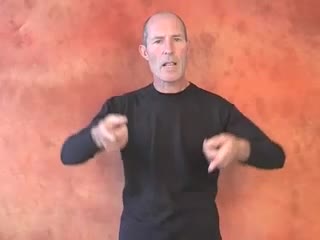
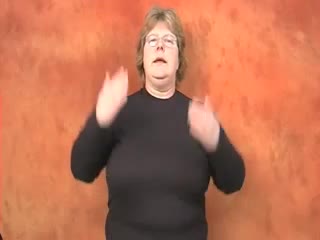
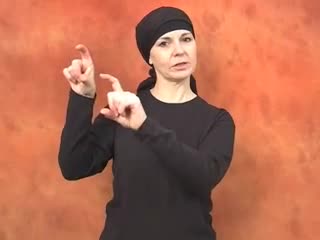
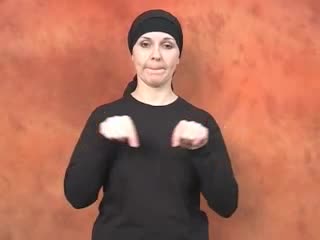
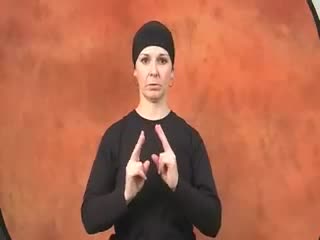
Begin by forming a specific handshape with your dominant hand. You'll want to curl your index, middle, and ring fingers inward towards your palm, creating a somewhat rounded, hook-like shape. Your little finger remains slightly relaxed or gently curved alongside the ring finger, while your thumb extends outwards, positioned opposite your curled fingers. Imagine your hand forming a letter 'C' that's about to close, but with a bit more tension in the curled fingers and the thumb ready to meet them.
Step 2: Hand Placement and Location
Next, position your non-dominant hand in front of your body, usually around chest height, with your palm facing upwards and all fingers extended and held together straight. This flat, open hand will represent the object or material that's about to be held. Your dominant hand, already in its 'C'-like shape, should be hovering directly above your non-dominant hand, with its palm facing towards the left (if you're right-handed) or the right (if left-handed). The initial distance between the two hands should suggest an open clamp, ready to engage.
Step 3: Movement
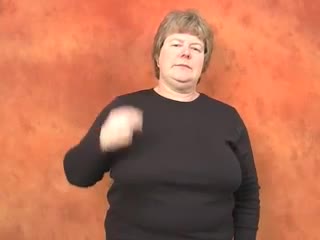
The movement is where the sign truly comes to life, mimicking the action of a clamp tightening. Your dominant hand will descend slightly towards your non-dominant hand. As it moves downwards, simultaneously bring your thumb and your curled fingers together, as if you're closing a grip around an imaginary object. The movement should be quick and decisive, concluding with your dominant hand's thumb and fingers lightly touching or very nearly touching your non-dominant palm, representing the secure hold. This isn't a gentle caress but a firm, controlled closure, executed with a single, downward motion.
Step 4: Facial Expression and Mouthing
Non-manual features are absolutely vital in British Sign Language, carrying grammatical weight and adding crucial layers of meaning to your signs. For "clamp," a focused or slightly determined facial expression is often appropriate, perhaps with a subtle tightening of the lips or a small, pursed mouth. This visual cue helps convey the idea of tightness, security, or the effort involved in fastening something. While you might naturally mouth the word "clamp" as you sign, remember that the facial expression itself provides a deeper linguistic function, reinforcing the action's intensity and purpose.
Step 5: Palm Orientation
The orientation of your dominant palm undergoes a subtle but meaningful shift during this sign. You start with your dominant palm facing roughly towards your non-dominant side (left for right-handers). As you execute the closing movement, your palm will naturally rotate slightly inwards, finishing with the fingertips and thumb aiming towards your non-dominant hand's surface. This inward rotation enhances the visual representation of gripping an object, ensuring the sign accurately conveys the compressive force associated with a clamp.
"clamp" in BSL - Quick Reference Snapshot
- Handshape: Dominant hand forms a 'C' shape with curled fingers and opposing thumb; non-dominant hand is flat and open.
- Location: Dominant hand above non-dominant hand, at chest height in neutral space.
- Movement: Dominant hand descends, thumb and curled fingers close decisively onto non-dominant palm.
- Facial Expression: Focused or slightly determined, possibly with pursed lips.
- Dominant Hand: Executes the 'clamping' action.
- Palm Orientation: Starts facing side, rotates slightly inward during closure.
5 Memorisation Tricks for the BSL Sign "clamp"
- Visual Mnemonic: The Pincer Grip. Picture your dominant hand's 'C' shape as the jaws of a physical clamp, poised to squeeze. When you perform the sign, visualise those jaws closing firmly around an unseen object, really feeling the concept of pressure. This mental image makes the handshape and movement instantly intuitive.
- Muscle-Memory Drill: The Imaginary Workbench. Set up an imaginary workbench in front of you. Practice signing "clamp" repeatedly, pretending to secure different items like a piece of wood, a pipe, or a fabric edge. Vary the "size" of the imaginary object by adjusting how wide you open your dominant hand initially, building a strong physical connection to the action.
- Connection to Meaning: Secure and Hold Tight. Think about the core purpose of a clamp: to hold things securely and prevent movement. As you sign, consciously link the closing motion of your fingers and thumb to the idea of "tightness" and "fixation." This conceptual anchor helps solidify the sign's meaning in your mind.
- Common-Confusion Tip: Not Just "Hold." While "clamp" involves holding, remember its specificity. The key difference lies in the *action* of closing and the *tool-like* nature of the sign. If you find yourself signing a general "hold," remind your hands to perform the distinct, decisive closing motion that characterises a clamp.
- Daily-Life Practice: The Mental Tool Kit. Every time you see a physical clamp in real life-whether in a workshop, on a building site, or even a hair clamp-mentally perform the BSL sign. Incorporate it into your thoughts about fastening things, making it a regular, subconscious part of your inner dialogue.
Real-Life Situations to Use the BSL Sign for "clamp"
You'll find this sign incredibly useful in a variety of practical contexts, bringing precision to your British Sign Language conversations about tools and tasks. Imagine you're at a DIY workshop, and someone asks about securing a piece of wood: you might sign, "WOOD, CLAMP, I NEED" (BSL structure: Topic-Comment, with the object before the action). If you're discussing a project that went wrong, you could explain, "CLAMP, NOT TIGHT, WOOD SLIPPED" (BSL structure: Descriptive statement, focusing on the cause and effect).
Perhaps you're asking a question about a specific tool; you'd sign, "WHERE CLAMP, LARGE?" (BSL structure: Wh-question at the end, using facial expression for the question marker, often with a raised eyebrow). Alternatively, you could be giving instructions, signing, "TAKE CLAMP, PUT ON TABLE HERE" (BSL structure: Imperative, using spatial grammar to indicate placement). These examples show how the sign integrates smoothly into everyday BSL discourse, adapting to various grammatical needs.
Top 3 Mistakes Learners Make Signing "clamp" in BSL
- Mistake 1: Incorrect Handshape or Too Loose a Grip. Many beginners struggle to achieve the precise 'C' handshape with the dominant hand, often making it too open, too flat, or curling all fingers inwards without the opposing thumb readiness. This happens because they might not fully grasp the *tool* aspect of the sign. The correction is to consciously engage your thumb in an opposing position to your curled fingers, creating a firm, ready-to-grip form, ensuring the handshape clearly mimics a mechanical jaw.
- Mistake 2: Missing or Incomplete Closing Movement. Sometimes, learners perform the initial handshape and placement correctly but then omit the decisive closing action or make it too vague, like a gentle touch rather than a firm grip. This often stems from a lack of understanding that the movement *is* the clamping action itself. To correct this, focus on a quick, firm, and complete closure of the dominant hand's thumb and fingers onto the non-dominant palm, making the gripping action undeniable.
- Mistake 3: Neglecting Non-Manual Features. A common oversight is signing "clamp" with a neutral or relaxed facial expression, failing to convey the intensity or purpose of the action. This mistake often occurs when learners focus solely on manual signs without realising the linguistic importance of the face. The precise correction is to intentionally pair the sign with a focused or slightly determined expression, perhaps with a subtle tightening of the mouth, which linguistically marks the sign as an active, purposeful action.
Fascinating Facts About the BSL Sign for "clamp"
- The BSL sign for "clamp" is highly iconic, meaning its form directly resembles the action or object it represents, making it relatively intuitive even for new learners. This visual transparency is a hallmark of many BSL signs for tools.
- While the core sign remains consistent, regional variations might exist in BSL, perhaps in the exact height of the hands or the slight angle of the wrist, reflecting local signing preferences within the diverse Deaf community across the United Kingdom. These subtle differences highlight BSL's organic evolution.
- This sign offers an excellent example of BSL's use of 'classifiers,' where handshapes represent categories of objects. Here, the dominant 'C' handshape functions as a classifier for a gripping tool, allowing for modifications to convey different sizes or types of clamps.
- The sign doesn't directly derive from a fingerspelled initialism, unlike some BSL signs that incorporate a letter from the manual alphabet. Instead, its form is driven by a strong iconic motivation, directly reflecting the physical properties and function of a clamp.
- The linguistic feature of 'compounding' can be observed when combining "clamp" with other signs, such as "WOOD" + "CLAMP" to specify a wood clamp, or "PIPE" + "CLAMP" for a pipe clamp, demonstrating BSL's efficiency in creating precise descriptions.
"clamp" in Deaf Culture - Community and Identity
Tools and practical skills are deeply valued within many communities, and the Deaf community is no exception, where clear communication about such topics is paramount. Discussing items like a "clamp" allows for shared understanding in contexts ranging from carpentry workshops to home repairs, fostering a sense of collaboration and independence. This sign, therefore, isn't just about a piece of equipment; it represents the ability to work, create, and maintain, which are all significant aspects of self-sufficiency and communal support. It highlights how BSL provides a robust and visually rich vocabulary to articulate even the most practical and technical concepts, ensuring that Deaf individuals can fully participate in and contribute to all aspects of life, including hands-on projects and skilled trades. Knowing this sign helps bridge communication gaps and strengthens the fabric of shared experiences.
Example Conversations Using "clamp" in BSL
English: Could you please pass me that clamp from the workbench? - BSL structure: Question marked by facial expression, topic-comment order, with spatial reference for "that clamp from the workbench."
English: We need to clamp this pipe securely before we cut it. - BSL structure: Emphasis on necessity, clear action, and consequence, using the sign for "secure" after "clamp."
English: The old clamp wasn't strong enough to hold the wood in place. - BSL structure: Descriptive statement, indicating the inadequacy of the tool and its effect, using negative facial expression for "not strong enough."
English: Have you seen my small G-clamp anywhere? I can't find it. - BSL structure: Wh-question, incorporating a fingerspelled "G" (if specific type of clamp is unknown) and a sign for "small," with negative search expression.
English: Remember to loosen the clamp gently when you're finished. - BSL structure: Imperative instruction, followed by an adverbial modification for "gently" and a temporal marker for "when finished."
Frequently Asked Questions: The BSL Sign for "clamp"
Are there regional variations for the BSL sign for "clamp" across the UK?
Yes, while the core iconic movement for "clamp" is widely understood across the UK, you might encounter subtle regional differences. These variations often involve minor changes in hand placement, the specific angle of the wrist, or the intensity of the closing movement, reflecting local dialects within British Sign Language. However, the fundamental concept of a gripping action remains consistent.
What are some similar BSL signs that beginners might confuse with "clamp"?
New learners sometimes confuse "clamp" with signs like "HOLD," "GRIP," or "FASTEN." The key distinction for "clamp" lies in its specific, tool-like closing motion and the implied mechanical action, whereas "HOLD" is often more static, and "GRIP" can be more general. Paying close attention to the decisive, mechanical closure will help differentiate it.
Is the BSL sign for "clamp" suitable for young children learning BSL?
Absolutely, the BSL sign for "clamp" is quite suitable for young children. Its iconic nature, directly representing the action of the tool, makes it visually engaging and easy for children to grasp and replicate. It's a great sign to introduce when discussing tools, building, or fixing things in a child-friendly context.
How does the BSL sign for "clamp" compare to equivalent signs in other sign languages?
While specific handshapes and movements will naturally differ, many sign languages around the world often employ iconic signs for tools like "clamp." You'll likely find that other sign languages also use a visual representation of a gripping or closing action, demonstrating a shared human experience of interacting with tools, even if the precise execution varies.
Can the sign for "clamp" be modified to indicate different types of clamps, like a C-clamp or a vice?
Yes, the beauty of BSL is its flexibility. The basic sign for "clamp" can definitely be modified to specify different types. For instance, you could fingerspell "C" before or after the sign to indicate a C-clamp, or use a descriptive classifier to show the larger, more robust action of a vice, demonstrating the versatility of BSL.
Signs That Pair Naturally with "clamp" in BSL
- SCREW: This sign pairs well as both "screw" and "clamp" are common fastening mechanisms, often used together in construction or repair.
- TIGHTEN: "Tighten" naturally follows "clamp," as you would tighten a clamp to secure an object, linking the action of fastening with the tool.
- WOOD: Given that clamps are frequently used in woodworking, "wood" is a highly relevant pairing, allowing for specific discussions about carpentry projects.
- HAMMER: Another fundamental tool, "hammer" forms part of a basic toolkit vocabulary, making it a logical companion sign for "clamp" when discussing practical tasks.
- HOLD: While distinct, "hold" is conceptually related to "clamp" because a clamp serves the purpose of holding something firmly, reinforcing the idea of secure attachment.
- FIX/REPAIR: The sign for "fix" or "repair" often involves using tools like clamps, making this a natural grouping for conversations about maintenance and problem-solving.
Building Fluency: How to Practise "clamp" in BSL
To truly master the BSL sign for "clamp," integrate it into a dynamic practice routine. Start by using a mirror: watch your dominant hand's 'C' shape and its decisive closing movement onto your non-dominant hand, ensuring your handshape is precise and your movement is clean. Next, try incorporating it into short, imagined British Sign Language sentences about fixing things around your house or in a workshop scenario, perhaps discussing how you might "clamp" down a wobbly table leg. Filming yourself practicing the sign is also incredibly helpful; you can review your technique and identify any areas needing refinement, such as the exact palm orientation or the intensity of your facial expression. Finally, the most effective way to build fluency is by finding opportunities to use the sign with a Deaf conversation partner or at a local BSL club, where real-time feedback and natural usage will solidify your understanding and confidence. Keep practicing, and you'll find this practical sign becomes a natural part of your BSL vocabulary in no time!