What Is the BSL Sign for "distribution board"?
Navigating the world of technical vocabulary in British Sign Language can be incredibly rewarding, opening up precise conversations about everything from home repairs to industrial settings. Today, we're diving into a term crucial for many environments: the BSL sign for distribution board. This isn't just a basic concept; it represents a specific piece of electrical equipment, and its sign in British Sign Language provides a clear, visual representation that allows for accurate communication among Deaf people and those who wish to connect with them. Understanding this particular sign empowers you to discuss practical matters with confidence, ensuring clarity whether you're talking about a fuse box at home or a complex electrical panel at work.
How to Sign "distribution board" in British Sign Language - Step-by-Step
Mastering this sign involves a thoughtful combination of distinct handshapes and movements that together convey the full meaning of this essential electrical component.
Step 1: Handshape
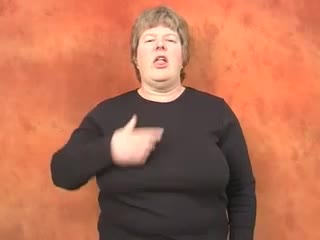
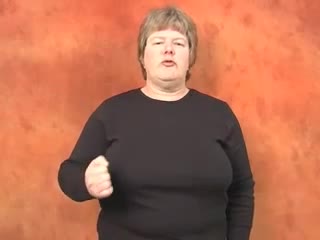
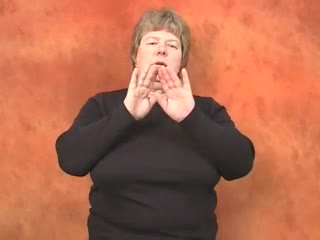
For the initial part of this sign, representing "distribution," form your dominant hand into a precise 'D' handshape. To achieve this, extend your index finger straight upwards, keeping it firm. Curl your remaining three fingers (middle, ring, and pinky) tightly into your palm. Your thumb should rest across your palm, gently pressing against the side of your curled middle finger. This distinct 'D' configuration is fundamental for the sign's first element. Immediately following this, for the "board" aspect, both of your hands transition into a flat handshape: all fingers are extended straight, held together, and the thumb is tucked neatly alongside the palm.
Step 2: Hand Placement and Location
Begin the "distribution" portion of the sign by positioning your dominant hand, already in the 'D' handshape, near the upper-right side of your chest if you're right-handed, or upper-left if you're left-handed. Your index finger should point generally upwards and slightly outwards from your body. After this initial movement, bring both of your hands forward into the neutral signing space directly in front of your torso, at about chest height, preparing for the "board" component. This neutral area provides ample room for the subsequent outlining motion.
Step 3: Movement
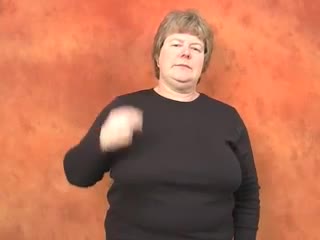
With your dominant hand in the 'D' handshape, start with a small, swift, outward flicking motion from your chest, moving away from your body by a few inches. This quick action suggests the idea of spreading or routing. Immediately after this, transition to the "board" part: bring both flat hands together, palms facing each other, with fingertips almost touching. Then, move both hands downwards simultaneously, creating the vertical sides of an imaginary rectangle. Following this downward sweep, bring your hands inwards towards each other, completing the bottom horizontal line of the board shape. The movement is precise and fluid, painting a clear picture of the object.
Step 4: Facial Expression and Mouthing
Facial expressions in BSL are far from optional; they are a vital grammatical component that contributes significantly to the meaning and context of your signs. For "distribution board," a neutral, attentive facial expression is typically appropriate, reflecting the factual nature of the term. Avoid any exaggerated expressions unless you are conveying a specific emotion or question about the object. Crucially, mouthing the English word "distribution board" silently as you sign is an important non-manual feature. This practice, known as 'mouthing,' helps to clarify the specific term, especially for technical vocabulary, and offers further specificity beyond the visual sign itself. It reinforces the exact word you intend to convey.
Step 5: Palm Orientation
During the initial "distribution" part, with your dominant hand in the 'D' handshape, your palm should face generally inwards towards your chest, or slightly to the side as you make the outward flicking motion. The index finger itself is pointing upwards. For the "board" component, as you outline the rectangle, both palms will face each other, mirroring each other's orientation throughout the downward and inward movements. Maintaining this parallel palm orientation during the outlining action helps to clearly define the two-dimensional shape of the board in the signing space.
"distribution board" in BSL - Quick Reference Snapshot
- Handshape: Dominant hand 'D' handshape, then both hands flat.
- Location: 'D' hand near upper chest, then both hands in neutral space in front of torso.
- Movement: Small outward flick with 'D' hand, followed by outlining a rectangle downwards and inwards with flat hands.
- Facial Expression: Neutral and attentive.
- Mouthing: Silently mouth "distribution board."
- Dominant Hand: Performs 'D' handshape and leads the outlining movement.
- Palm Orientation: 'D' hand palm inward/sideways; flat hands palms facing each other.
5 Memorisation Tricks for the BSL Sign "distribution board"
You'll find these simple tricks incredibly helpful for embedding the BSL sign for "distribution board" firmly in your memory.
- Visual Mnemonic: Picture a skilled electrician, perhaps yourself, pointing to a 'D'ial for *distribution* with an extended index finger, then immediately turning to outline the flat, rectangular *board* on the wall where all the power lines converge. This two-part image directly connects the handshapes and movements to the object's function.
- Muscle-Memory Drill: Practice the complete sign sequence-the 'D' hand flick, then the dual-hand rectangle outline-ten times in a row, focusing intensely on the transition between the handshapes and the fluidity of the movement. Repeat this short drill several times throughout your day; consistent physical repetition helps your muscles remember the precise actions.
- Connect to Meaning: Think about what a distribution board actually does: it takes a single power source and *distributes* it to various circuits, housed within a sturdy *board* or panel. The 'D' handshape visually alludes to the "distribution" aspect, while the subsequent rectangular outline clearly depicts the physical "board."
- Common-Confusion Tip: Be mindful not to confuse the second part of this sign with general signs for "table" or "panel." While "table" often involves flat hands, its movement is typically a single flat surface being represented, whereas "distribution board" specifically outlines a closed, rectangular shape that is usually vertical. The preceding 'D' handshape is key to distinguishing it.
- Daily-Life Practice Idea: Next time you encounter an actual distribution board, perhaps in your home, at work, or even on television, pause for a moment and mentally (or physically, if appropriate) practise the sign. This real-world association strengthens your recall by linking the sign directly to its referent in your environment.
Real-Life Situations to Use the BSL Sign for "distribution board"
Incorporating new signs into practical conversations is the best way to solidify your learning, and this particular sign offers many opportunities.
- You might use this sign when discussing household repairs: "The *distribution board* needs checking, the power keeps tripping." (BSL grammatical structure might place "distribution board" as a topic first, then comment on its condition.)
- Imagine you're at work and a colleague asks about an electrical issue; you could sign, "Is the problem with the main *distribution board*?" (Questions in BSL are often indicated by raised eyebrows and leaning forward, with the sign maintaining its core structure.)
- Perhaps you're explaining a safety procedure: "Remember to always turn off the main switch at the *distribution board* before starting any work." (This involves a clear imperative, often with direct eye contact and a firm signing motion.)
- When describing a new building's infrastructure, you could sign, "They installed a large *distribution board* on the ground floor for all the apartments." (Here, spatial grammar would be used to indicate the location, perhaps signing "ground floor" then pointing to the imagined location of the board.)
Top 3 Mistakes Learners Make Signing "distribution board" in BSL
It's completely normal to make a few errors when learning a new sign, and recognising common pitfalls actually speeds up your progress.
- Incorrect 'D' Handshape: Many beginners struggle to isolate the index finger while keeping the others curled tightly, often letting the middle finger extend slightly or the thumb stray. This blurs the distinct 'D' shape. The precise correction is to consciously curl all three non-index fingers into a tight fist and ensure the thumb firmly presses against the side of the middle finger, making the index finger stand out clearly.
- Incomplete or Sloppy "Board" Outlining: Learners sometimes rush the second part, either just making a vague gesture or failing to complete the full rectangular shape. This results in the sign looking like "panel" or just a flat surface rather than a specific board. To correct this, focus on deliberately outlining all four sides of a distinct rectangle, ensuring your hands move downwards then inwards to clearly define the bottom edge.
- Missing the Initial Flick Movement: Overlooking the subtle, quick outward flick with the 'D' hand is a common error, causing the sign to lose its "distribution" nuance and just become a static 'D' before the board. The right way to do it is to include that small, decisive flick from the chest area, indicating the concept of spreading or routing, before transitioning smoothly into outlining the board.
Fascinating Facts About the BSL Sign for "distribution board"
Delving into the unique characteristics of signs often reveals deeper insights into the language itself.
- The sign for "distribution board" is a fantastic example of BSL's iconic nature, where its form directly mimics the appearance and function of the object it represents, combining a sense of 'distributing' with the 'board's' physical shape.
- While not a historically ancient sign, its composition reflects how BSL effectively creates new vocabulary for technical concepts, often by combining existing elements or adopting descriptive, visual representations.
- Unlike some more abstract signs, the visual clarity of "distribution board" makes it relatively easy to understand for new learners, even if they haven't explicitly learned it, due to its strong resemblance to the physical object.
- Regional variations for highly specific technical terms like this are less common than for everyday vocabulary, meaning you're likely to see this sign used consistently across the BSL-using community in the United Kingdom.
- The two-part structure of this sign, first conveying "distribution" and then "board," highlights BSL's capability to convey complex, compound ideas through sequential signing elements, building meaning incrementally.
"distribution board" in Deaf Culture - Community and Identity
Understanding signs for practical objects like a distribution board plays a significant role in fostering independence and full participation within the Deaf community. Having a clear, established sign for such a technical component means Deaf individuals can engage directly and confidently in discussions about household maintenance, electrical safety, or vocational training without relying solely on fingerspelling or lengthy explanations. It’s about more than just a word; it’s about accessibility to information and the ability to articulate needs and concerns efficiently in real-world scenarios. This empowers individuals to manage their homes, excel in careers that involve technical skills, and ensure their safety, strengthening their autonomy and connection within the wider community.
Example Conversations Using "distribution board" in BSL
Seeing how a sign functions in natural conversation truly brings it to life and helps you understand its practical applications.
English: Can you show me where the main distribution board is in this building? - BSL structure: Question marker (raised eyebrows), "MAIN DISTRIBUTION-BOARD WHERE?" utilising spatial grammar for "where".
English: We need to check the distribution board; I think a fuse has blown. - BSL structure: Topic-comment order, "DISTRIBUTION-BOARD CHECK NECESSARY, FUSE BLOWN I-THINK."
English: The electrician said he would upgrade our old distribution board next week. - BSL structure: Time marker first, "NEXT-WEEK, ELECTRICIAN OUR OLD DISTRIBUTION-BOARD UPGRADE WILL-DO HE-SAID."
English: Always remember to be careful near the distribution board, it's very dangerous. - BSL structure: Emphasis on caution, "DISTRIBUTION-BOARD NEAR ALWAYS CAREFUL REMEMBER, DANGEROUS VERY."
English: Is the new wiring connected directly to the distribution board? - BSL structure: Question with spatial reference, "NEW WIRING DISTRIBUTION-BOARD CONNECT DIRECTLY IS-IT?"
Frequently Asked Questions: The BSL Sign for "distribution board"
Here are some common questions that often arise when learners encounter this specific BSL sign.
Is the BSL sign for distribution board commonly understood across the UK?
Yes, this specific BSL sign for distribution board is generally well-understood throughout the British Deaf community. While minor individual signing styles might vary, the core handshapes, location, and movement are consistent, ensuring widespread comprehension of this technical term.
Are there any similar signs in BSL that I should avoid confusing with "distribution board"?
You should be careful not to confuse the second part of this sign with general signs for "panel" or "wall." While the rectangular outlining is present in some similar concepts, the preceding 'D' handshape and flick motion are unique to "distribution board" and prevent misinterpretation.
Is the BSL sign for distribution board suitable for beginners?
Absolutely, this sign is suitable for beginners because its iconic nature makes it quite intuitive and memorable. The distinct two-part structure helps new learners grasp both the concept and the visual representation effectively, making it a valuable addition to early vocabulary.
Can children easily learn the BSL sign for distribution board?
Children can certainly learn this sign, especially if it's introduced within a relevant context, such as discussing safety around electrical items in the home. Its visual simplicity and clear connection to the physical object aid in their retention and understanding.
Is fingerspelling ever an option for "distribution board" in BSL?
While a specific sign exists, fingerspelling "distribution board" can be used if you're unsure of the sign, or when the sign might be less familiar to your conversational partner. However, using the established sign is always preferred for fluency and efficiency in BSL communication.
Signs That Pair Naturally with "distribution board" in BSL
Building your BSL vocabulary around related concepts helps you discuss topics more comprehensively and naturally.
- ELECTRICITY: This sign is a natural partner, as a distribution board manages electrical power; signing them together allows you to specify the type of energy involved.
- FUSE: Fuses are often found within distribution boards, so learning this sign enables discussions about specific components and troubleshooting.
- REPAIR: When talking about issues with a distribution board, the sign for "repair" becomes indispensable for expressing the need for maintenance or fixing.
- HOUSE/HOME: Many distribution boards are located in residential properties, making "house" or "home" a relevant contextual sign for discussing domestic electrical systems.
- SWITCH/OFF: These signs are crucial for explaining how to operate a distribution board, particularly regarding safety procedures and cutting power.
- WIRE/CABLE: Since wires lead into and out of a distribution board, knowing the sign for "wire" allows for detailed explanations of connections and circuitry.
Building Fluency: How to Practise "distribution board" in BSL
Consistent, focused practice is your best friend when aiming for fluency, and here’s how to really nail the BSL sign for "distribution board." Start by utilising a mirror: carefully watch your dominant hand’s 'D' handshape and that crucial outward flick, then observe both hands as they precisely outline the rectangle, ensuring your palm orientation remains correct. Integrate this sign into your daily BSL conversations by actively looking for opportunities to use it, even if it means rephrasing a sentence to include it. Consider filming yourself signing and then reviewing the footage; this provides invaluable self-correction, helping you refine your handshapes and movements. The ultimate step is to find a Deaf conversation partner; interacting in real-time offers authentic feedback and helps you internalise the rhythm and natural flow of the sign. Remember, spaced repetition over several days will solidify this sign in your long-term memory, making it second nature.