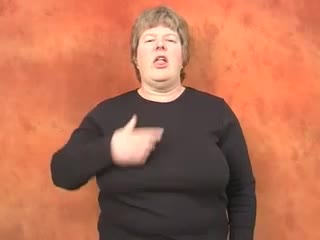
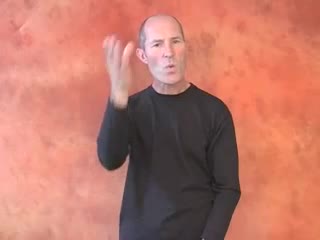
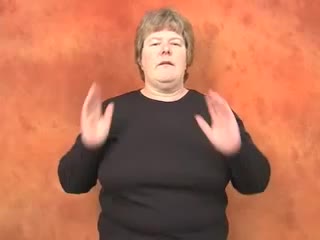
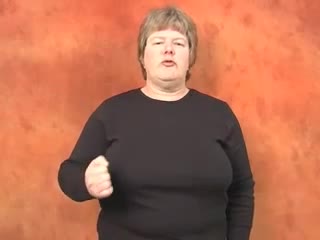
What Is the BSL Sign for "major road"?
When you're navigating the world, whether in conversation or physically, sometimes you need to talk about the really important pathways. So, what is the BSL sign for major road, that essential thoroughfare connecting towns and cities across the UK? This particular sign in British Sign Language beautifully captures the visual essence of a significant, wide route, helping you convey the idea of a prominent highway or A-road with clarity. You’ll find it invaluable for discussing travel plans, giving directions, or even just describing your journey to a friend. Learning this sign connects you directly to how Deaf people in the UK conceptualise and communicate about key infrastructure, making your British Sign Language major road vocabulary both practical and culturally relevant.
How to Sign "major road" in British Sign Language - Step-by-Step
Let's break down the precise movements and shapes that bring this important BSL concept to life, guiding your hands and expression.
Step 1: Handshape
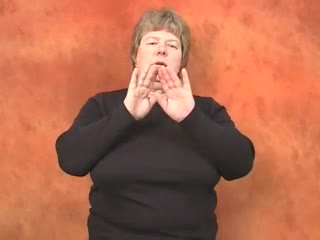
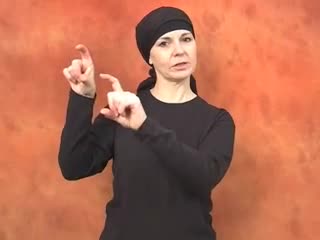
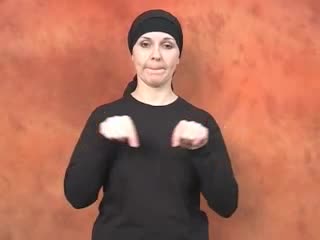
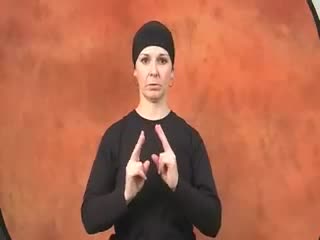
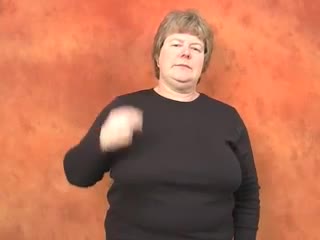
For this sign, both of your hands will form what we call a 'flat B' handshape. To achieve this, extend all four fingers of each hand straight out, keeping them pressed tightly together. Your thumb should be tucked in alongside the palm, resting gently against your index finger. Imagine you're holding a very thin, flat book with each hand; that's the shape you're aiming for. This hand configuration creates a clear, flat surface, essential for representing the expansive nature of a significant roadway.
Step 2: Hand Placement and Location
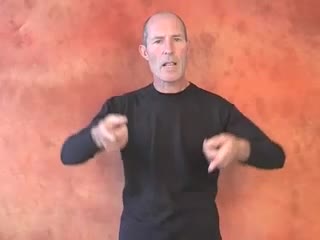
Start by positioning both hands in front of your body, approximately at chest height. They should be held about shoulder-width apart, with your palms facing each other directly. Ensure your fingertips point straight forward, away from your body. Think of this initial placement as setting the stage for the road ahead, creating a natural starting point for the visual journey your hands will take. Neither hand is truly dominant in its placement here; they work in tandem to establish the sign's foundation.
Step 3: Movement
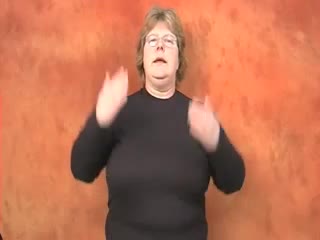
Now, from that starting position, both hands simultaneously move forward away from your chest. As they advance, let them subtly diverge horizontally, moving slightly apart from each other. This outward sweep extends smoothly to about arm's length. The movement should be continuous and steady, not jerky, illustrating the long, flowing nature of a major thoroughfare. It's this expansive, forward-and-outward motion that visually conveys both the length and the notable width of a prominent route.
Step 4: Facial Expression and Mouthing
Non-manual features are absolutely vital in British Sign Language, and while "major road" might often use a neutral expression, for emphasis or clarity, you might adopt a slightly more determined or serious look. Some signers might subtly mouth the words "major road" or "big road" without voice, which can add an extra layer of clarity, especially for beginners or in contexts where precision is paramount. This mouthing acts as a visual cue, reinforcing the manual sign and ensuring your message is understood effectively.
Step 5: Palm Orientation
Throughout the entire movement, from start to finish, the palms of both your hands should remain consistently facing each other. Your fingertips will continue to point forward. This stable palm orientation is critical because it maintains the visual representation of the road's edges or boundaries as it stretches out before you. Any significant rotation could alter the meaning, so keeping those palms inward-facing is key to accurately conveying the concept of a "major road."
"major road" in BSL - Quick Reference Snapshot
- Handshape: Both hands in flat B-shape (fingers extended, together; thumb tucked).
- Location: Chest height, shoulder-width apart, in front of the body.
- Movement: Both hands move forward and slightly apart, extending to arm's length.
- Facial Expression: Neutral, possibly subtle mouthing of "major road."
- Dominant Hand: Both hands function equally in a symmetrical movement.
- Palm Orientation: Palms face each other, fingertips point forward throughout.
5 Memorisation Tricks for the BSL Sign "major road"
Learning new signs can feel like a big journey, but with a few clever tricks, you'll have "major road" locked into your memory in no time.
- Visual Mnemonic: The Dual Carriageway Stretch. Picture your two flat hands as the two lanes of a wide, busy major road. As you sign, imagine them physically expanding and stretching out into the distance, symbolising the sheer length and breadth of a significant route. This visual connection directly links the hand movement to the concept of a broad, extended roadway.
- Muscle-Memory Drill: The Road Builder. Stand in front of a mirror and slowly repeat the sign ten times, focusing intently on the smooth, deliberate forward-and-outward motion of your hands. Really feel the stretch in your arms and the symmetrical action of both hands; this physical repetition builds a strong connection between the movement and the idea, embedding it deep into your muscle memory.
- Meaning Connection: The Path Ahead. Think about the core meaning of a "major road" – it's a significant path that takes you somewhere important. The sign literally shows a path opening up and extending forward, mirroring the concept of a journey unfolding before you. Connecting the visual action to the purposeful nature of such a road will make it stick.
- Common-Confusion Tip: Not Just "Road." Remember that this specific sign includes the 'major' aspect through its two-handed, expansive movement. A simpler 'road' sign might just involve one hand moving forward. So, if you're talking about a significant highway, ensure both hands are actively involved, moving apart to convey that crucial sense of width and importance.
- Daily-Life Practice: Navigate Your Day. As you commute or travel, consciously point out major roads you see and sign the word. When you're planning a trip, practice signing "major road" as you look at maps. Integrating the sign into your everyday observations and conversations about travel will make it feel natural and reinforce its usage.
Real-Life Situations to Use the BSL Sign for "major road"
Understanding how to use "major road" in actual conversations is key to fluency; here are a few scenarios where this sign shines.
- When discussing travel plans: "Are we taking the major road or the smaller country lanes to get there?" You'd sign "WE GO MAJOR ROAD OR SMALL ROAD?" with a question face.
- Giving directions: "Turn right at the roundabout, and then you'll be on the major road towards London." Here, "TURN RIGHT ROUNDABOUT, THEN YOU SEE MAJOR ROAD LONDON" would be a clear instruction.
- Describing an accident: "There was a huge traffic jam on the major road this morning." You might sign "THIS MORNING MAJOR ROAD TRAFFIC JAM BIG."
- Talking about infrastructure: "The government is planning to build a new major road through the valley." This could be communicated as "GOVERNMENT PLAN BUILD NEW MAJOR ROAD THROUGH VALLEY."
Top 3 Mistakes Learners Make Signing "major road" in BSL
It's completely normal to make a few errors when learning any sign language; here are the most frequent missteps with "major road" and how to easily fix them.
- Mistake 1: Insufficient Divergence of Hands. Many learners keep their hands too close together throughout the movement, making the sign appear like a narrow path rather than a wide, significant road. This happens because they might focus solely on the forward motion, neglecting the crucial horizontal expansion. The precise correction is to consciously allow your hands to move outwards, gradually increasing the distance between them as they sweep forward, truly illustrating the breadth of a major thoroughfare.
- Mistake 2: Incorrect Palm Orientation. Sometimes, beginners inadvertently let their palms turn downwards or outwards during the sign, which can change its meaning or make it unclear. This often stems from a lack of awareness of the subtle but critical role of palm direction in BSL. To correct this, actively focus on keeping your palms facing each other, as if delineating the two sides of the road, maintaining that consistent inward orientation from start to finish.
- Mistake 3: Jerky or Abbreviated Movement. Rushing the sign or making the movement too short and abrupt diminishes its impact, failing to convey the expansive nature of a major road. This error typically occurs when learners are trying to sign quickly or haven't fully internalised the sign's flowing character. The solution is to practice a smooth, continuous, and full extension of the arms, ensuring the movement is deliberate and illustrates a clear, unhurried progression, just like a long, stretching road.
Fascinating Facts About the BSL Sign for "major road"
Every sign has its own story and linguistic quirks; let's uncover some intriguing details about this particular BSL sign.
- The iconic motivation behind the sign for "major road" is quite strong, as it visually mirrors the physical experience of a road stretching out before you, emphasizing its width and length.
- While the core concept is universal, slight regional variations might exist in BSL, where some communities might use a slightly different hand position or movement emphasis, though the two-handed, forward-sweeping motion remains common.
- This sign is an excellent example of a classifier-like element within a lexical sign, where the hands themselves act as classifiers to describe the attributes (width, direction) of the road.
- Interestingly, the concept of "major" isn't always a separate sign; it's often incorporated directly into the movement of the base sign, making this a compound idea conveyed through a single action.
- The sign's clear, directional movement makes it highly adaptable for use with spatial grammar, allowing signers to indicate the direction of the major road relative to other locations without needing additional directional signs.
"major road" in Deaf Culture - Community and Identity
For Deaf people, discussing travel and navigation is a fundamental part of daily life, just as it is for hearing individuals. The sign for "major road" becomes more than just a descriptive term; it's part of the fabric of how the Deaf community shares experiences, gives advice, and plans gatherings. Think about how many times you’ve talked about driving to a Deaf event, visiting family, or simply describing a journey; this sign is crucial for those narratives. It helps build a collective understanding of shared geography and movement, fostering connections as people describe their routes to meet up or recall memorable trips across the country. Through these shared communications, the sign reinforces the community's identity, especially in a country like the UK with its extensive network of significant roadways.
Example Conversations Using "major road" in BSL
Seeing how a sign integrates into full sentences truly brings it to life. Here are five practical examples.
English: We need to find the major road to Manchester. - BSL structure: MANCHESTER, MAJOR ROAD, WE FIND NEED.
English: Is this the major road that goes through the city centre? - BSL structure: CITY CENTRE, THROUGH, MAJOR ROAD THIS, Q?
English: Last week, the major road was closed due to flooding. - BSL structure: LAST WEEK, MAJOR ROAD, FLOODING, CLOSED.
English: My house is just off the major road, so it's easy to find. - BSL structure: MY HOUSE, MAJOR ROAD, OFF CLOSE, EASY FIND.
English: There's a new major road being built near the coast. - BSL structure: NEW MAJOR ROAD, COAST NEAR, BUILD, (present continuous classifier).
Frequently Asked Questions: The BSL Sign for "major road"
Is there a different BSL sign for "major road" in Scotland compared to England?
Typically, the core sign for "major road" remains largely consistent across the UK, employing the two-handed, forward-and-outward sweeping motion. While there might be minor stylistic differences or slight regional preferences in hand placement or the exact angle, the fundamental visual representation of a wide, significant pathway is generally understood and used by Deaf communities throughout both Scotland and England.
What are some similar signs that I should avoid confusing with the BSL sign for "major road"?
Be careful not to confuse "major road" with simpler signs for "road" (which might use just one hand moving forward) or "street" (often a more confined, often two-handed sign indicating parallel lines). Additionally, take care not to confuse it with "path" or "lane," which typically involve narrower handshapes or movements, as the expansive two-handed motion of "major road" specifically denotes its significant width.
Is "major road" an easy sign for beginners to learn in BSL?
Yes, "major road" is generally considered quite accessible for beginners in British Sign Language. Its iconic nature, where the sign visually represents the concept, makes it relatively intuitive to grasp. The symmetrical handshape and clear, linear movement are straightforward, providing a good foundation for understanding how BSL conveys spatial and descriptive information.
Can children easily learn and use the BSL sign for "major road"?
Absolutely, children pick up the BSL sign for "major road" with great ease. Its clear visual representation makes it engaging for young learners, and they can readily connect the hand movements to the concept of a big road they see every day. Using it while playing with toy cars or drawing maps can be a fun and effective way for them to practice and internalise the sign.
How does the BSL sign for "major road" compare to a similar sign in American Sign Language (ASL)?
While both British Sign Language and American Sign Language are distinct languages, you'll often find conceptual similarities in how they represent concepts like "major road," though the actual signs differ. ASL often uses a sign for "highway" or "freeway" that involves two 'H' handshapes moving forward, or flat hands moving forward in a slightly different configuration, but the underlying idea of depicting a wide, forward-moving path is a common thread across sign languages.
Signs That Pair Naturally with "major road" in BSL
Building your vocabulary means understanding how signs connect; here are some BSL signs that naturally complement "major road."
- CAR: You'll often discuss travelling on a major road by car, making this an essential pairing for journey-related conversations.
- DRIVE: Describing the action of moving along a major road directly links to the sign for driving, forming a natural conceptual cluster.
- TRAFFIC: Major roads are frequently associated with traffic, so learning this sign alongside helps you talk about congestion or flow.
- MAP: When planning routes or giving directions involving a major road, referring to a map becomes highly relevant.
- ROUNDABOUT: Many major roads feature roundabouts for navigating intersections, making this a useful directional sign to learn in conjunction.
- JUNCTION: Understanding where major roads meet or diverge is crucial, so the sign for a junction naturally fits into this vocabulary group.
Building Fluency: How to Practise "major road" in BSL
Now that you've got the sign down, let's talk about integrating "major road" into your signing repertoire so it feels completely natural. Stand in front of a mirror and practice the symmetrical movement of your hands, making sure they diverge smoothly and reach full extension; watching yourself helps refine the precision of the handshape and movement. Challenge yourself to describe your daily commute or a recent trip using this sign within full sentences, perhaps even filming yourself to review your flow and expression. Don't just isolate the sign; try to integrate it into discussions about travel, directions, or city planning with a Deaf conversation partner, as genuine interaction is the fastest route to fluency. Remember, consistent, spaced repetition over several days will solidify your muscle memory and ensure this useful sign becomes a comfortable part of your British Sign Language vocabulary. Keep practicing, keep connecting, and you'll be signing "major road" with confidence in no time!