What Is the BSL Sign for "glass fibre"?
Understanding materials in British Sign Language requires a blend of descriptive and iconic signing, and the BSL sign for glass fibre offers a fantastic example of this. When you're discussing specific construction or engineering components, knowing how to accurately convey "glass fibre" in British Sign Language becomes incredibly useful. It's a sign that visually communicates the material's core properties, ensuring your message is clear and concise within the Deaf community. This particular BSL sign for glass fibre bridges the gap between a highly technical term and intuitive visual communication, making it an essential addition to your vocabulary.
How to Sign "glass fibre" in British Sign Language - Step-by-Step
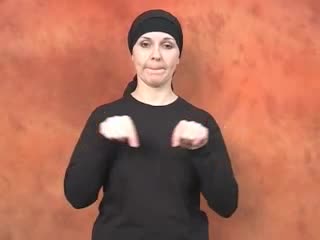
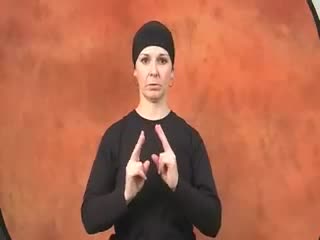
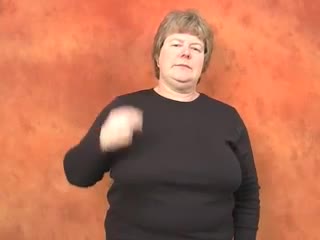
Let's break down the precise movements and handshapes involved in signing "glass fibre," guiding you through each element to ensure you master this nuanced BSL expression.
Step 1: Handshape
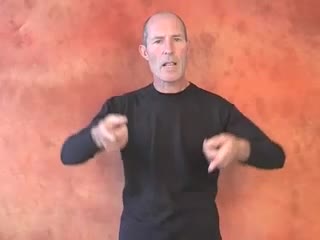
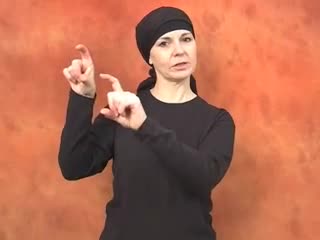
You'll begin with your dominant hand forming a distinct 'G' handshape. To achieve this, extend your index finger straight upward, keeping your thumb positioned against its side, while your remaining three fingers (middle, ring, and pinky) are comfortably curled into your palm. This precise 'G' configuration lays the foundation for the initial "glass" component of the sign.
Step 2: Hand Placement and Location
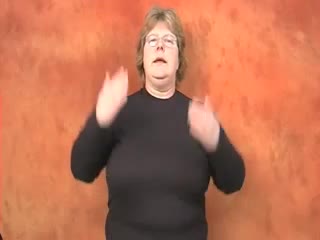
Initiate the sign by placing your dominant hand, holding that 'G' handshape, near the side of your mouth, specifically around the corner of your lips. This starting point subtly references the concept of clarity or transparency, often associated with glass in BSL. From there, your hand will move slightly forward, away from your face, preparing for the next phase of the sign in the neutral signing space.
Step 3: Movement
After establishing the initial 'G' handshape at the side of your mouth, you'll execute a fluid, continuous movement. Pivot your wrist slightly forward and outward from your body. As your hand moves, smoothly transition your handshape from the 'G' to an 'F' handshape: your index finger and thumb tips will gently touch, forming a small, precise circle, while your other three fingers extend straight upwards. This transition and outward movement, reminiscent of pulling a fine strand, visually represents the "fibre" aspect of the material.
Step 4: Facial Expression and Mouthing
Maintaining a neutral, engaged facial expression is appropriate for this specific sign, as it primarily conveys factual information rather than emotion. Simultaneously, you should mouth the words "glass fibre" clearly and naturally. In BSL, mouthing serves as a crucial non-manual feature, aiding in disambiguation and providing phonological information, which ensures the precise word is understood, especially for signs that might have visual similarities to others. This mouthing acts as an integral grammatical component, enhancing the sign's overall clarity.
Step 5: Palm Orientation
Initially, as you form the 'G' handshape at your mouth, your palm will generally face towards your face, or slightly inward. As you transition into the 'F' handshape and move your hand forward and outward, your palm orientation will shift to face slightly forward or downward. This change in palm orientation during the movement is vital; it visually reinforces the idea of extending or presenting the fine, strand-like quality of the fibre, distinguishing it from other signs that might involve similar handshapes but different spatial dynamics.
"glass fibre" in BSL - Quick Reference Snapshot
- Handshape: Starts as a 'G', transitions to an 'F' (index & thumb tips touching, other fingers extended).
- Location: Begins at the side of the mouth, moves slightly forward into neutral space.
- Movement: Wrist pivots forward and outward, smooth handshape change.
- Facial Expression: Neutral, with clear mouthing of "glass fibre."
- Dominant Hand: Always performed with your dominant hand.
- Palm Orientation: Starts facing inward/towards face, shifts to facing slightly forward/downward.
5 Memorisation Tricks for the BSL Sign "glass fibre"
- Visual Mnemonic: Picture the 'G' for "glass" starting at your mouth, where you'd hold a glass, then imagine pulling a fine, strong "fibre" strand away with your 'F' handshape. The movement from a solid container to a delicate thread truly helps visualise the material's transformation.
- Muscle-Memory Drill: Perform the 'G' to 'F' transition ten times in a row, focusing intensely on the smooth pivot of your wrist and the precise contact of your index finger and thumb. This repetitive, deliberate practice builds the kinesthetic memory needed for effortless recall, making the handshape change feel completely natural.
- Connection to the Word's Meaning: Think about the properties of glass fibre itself – it's both transparent (like glass, hence the mouth placement for 'G') and composed of incredibly thin, strong strands (represented by the 'F' and the pulling motion). Associating the sign's components directly with the material's characteristics helps embed it more deeply in your mind.
- Common-Confusion Tip: Be mindful not to confuse this sign with 'GLASS' (which might be just the 'G' at the mouth or a different iconic sign for a drinking glass) or 'THREAD' (which uses different handshapes and movements to depict winding). The unique combination of the 'G' to 'F' transition and the specific mouth-to-outward movement is what defines "glass fibre."
- Daily-Life Practice Idea: Whenever you encounter objects made from or containing glass fibre – perhaps a boat hull, a surfing board, or even some types of insulation – consciously sign "glass fibre" to yourself. This real-world application strengthens your recognition and recall, integrating the sign into your everyday observations.
Real-Life Situations to Use the BSL Sign for "glass fibre"
- Imagine you're at a DIY workshop, discussing repair materials for a broken fibreglass canoe; you might sign, "WE NEED GLASS FIBRE FOR BOAT REPAIR," using spatial grammar to indicate the location of the repair.
- If a friend asks about the composition of a new, lightweight car part, you could respond, "THIS MATERIAL, IS IT GLASS FIBRE, YES?" employing a question-mark facial expression and BSL's topic-comment structure.
- Perhaps you're explaining building insulation to someone, saying, "FOR HOUSE INSULATION, OFTEN USE GLASS FIBRE, VERY EFFECTIVE," demonstrating the sign within a descriptive statement about its function.
- Consider a scenario where you're warning someone about sharp edges on a composite material, signing, "BE CAREFUL, THAT EDGE, GLASS FIBRE, SHARP," incorporating a cautionary non-manual marker.
Top 3 Mistakes Learners Make Signing "glass fibre" in BSL
- Incorrect 'G' Handshape Formation: Many beginners struggle with the precise 'G' handshape, often forming a full fist or letting other fingers slightly extend. This happens because maintaining finger isolation requires fine motor control. The correct approach is to ensure only your index finger is extended straight up, with your thumb pressed firmly against its side, keeping all other fingers tightly curled into your palm.
- Missing the 'F' Handshape Transition: Learners frequently omit the crucial transition to the 'F' handshape or form an inaccurate 'F', perhaps making a loose circle with thumb and index or using a different finger. This often occurs due to rushing the movement or not understanding the specific representation of "fibre." To correct this, consciously focus on bringing the very tips of your index finger and thumb together to form a clear, small circle, while keeping the other three fingers extended vertically, making sure the transition feels deliberate and distinct.
- Neglecting Facial Expression and Mouthing: A common oversight involves signing "glass fibre" with a blank face and no mouthing, which diminishes clarity. This happens because non-manual features are often underestimated in their linguistic importance. Remember, mouthing "glass fibre" and maintaining a neutral, attentive facial expression are integral parts of the sign; consciously practice coordinating these elements with your hand movements until they become a natural, unified action.
Fascinating Facts About the BSL Sign for "glass fibre"
- While a relatively modern technical term, the BSL sign for "glass fibre" likely developed through a combination of existing signs for "glass" and "material" or "thread," evolving organically within the community to create a compound-like, iconic representation.
- Within the diverse BSL-using community, you might encounter slight regional variations in how "glass fibre" is signed; some areas might emphasise the "strength" aspect more, while others focus on its "strand" quality, though the core 'G' to 'F' concept generally remains consistent.
- The sign's iconic motivation is quite strong, directly depicting the transparency and form of glass (the 'G' at the mouth) and the fine, extended strands of fibre (the 'F' and the outward movement), making its meaning highly intuitive.
- The incorporation of the 'G' and 'F' handshapes directly links this sign to the BSL manual alphabet, subtly reinforcing letter recognition while simultaneously conveying a complex concept, a clever linguistic shortcut.
- What makes this sign linguistically distinctive is its two-part structure, moving from an initial representation of the base material ("glass") to its processed, fibrous form ("fibre"), illustrating a process or transformation within a single, fluid sign.
"glass fibre" in Deaf Culture - Community and Identity
While "glass fibre" might seem like a purely technical term, its presence in BSL, like many signs for materials and tools, highlights the Deaf community's practical engagement with the world. Deaf individuals, like anyone else, are involved in construction, engineering, hobbies, and DIY projects, where understanding and discussing materials like glass fibre is essential. The existence and use of such specific signs underscore the community's need and ability to communicate about any topic, fostering independence and full participation in all aspects of life. It speaks to the ingenuity of BSL in adapting to new concepts, ensuring that no subject is out of reach for clear, signed communication. This sign, therefore, represents a facet of cultural self-sufficiency and the continuous evolution of BSL as a living, comprehensive language.
Example Conversations Using "glass fibre" in BSL
English: Is this boat hull made of glass fibre? - BSL structure: BOAT HULL THIS, GLASS FIBRE MADE-OF, YES?
English: We need to buy more glass fibre for the project. - BSL structure: PROJECT FOR, GLASS FIBRE MORE BUY, NEED.
English: Glass fibre is very strong but can be brittle. - BSL structure: GLASS FIBRE, VERY STRONG, BUT BREAK-EASILY.
English: My new fishing rod is surprisingly light because it's glass fibre. - BSL structure: MY NEW FISHING-ROD, LIGHT SURPRISINGLY, BECAUSE GLASS FIBRE.
English: They use glass fibre to reinforce plastic components. - BSL structure: PLASTIC PARTS REINFORCE, THEY USE GLASS FIBRE.
Frequently Asked Questions: The BSL Sign for "glass fibre"
Are there regional variations for the BSL sign for glass fibre?
Yes, minor regional nuances can sometimes be found within BSL, even for technical terms like "glass fibre." While the core concept of combining "glass" and "fibre" is widely understood, some areas might slightly modify the movement or handshape emphasis. However, the 'G' to 'F' transition at the mouth area is generally quite consistent, ensuring broad comprehension across the UK.
What BSL signs are easily confused with glass fibre?
Learners often confuse "glass fibre" with signs for "glass" (the drinking vessel or material) or "thread" and "material." The distinction lies in the precise combination of the initial 'G' handshape at the mouth and the specific 'F' handshape with its outward pulling motion, which sets "glass fibre" apart from similar concepts. Pay close attention to the full sequence.
Is the BSL sign for glass fibre suitable for beginners?
Absolutely, the BSL sign for "glass fibre" is quite suitable for beginners because it's largely iconic and combines familiar handshapes ('G' and 'F'). Its visual logic makes it relatively easy to grasp once you understand the components. Focusing on the step-by-step breakdown will help you master it quickly, even if you're just starting your BSL journey.
Can children learn the BSL sign for glass fibre easily?
Children often find iconic signs like "glass fibre" quite intuitive to learn due to their visual nature. The clear representation of "glass" and "fibre" through distinct handshapes and movements resonates well with young learners. Breaking it down into the 'G' part and the 'F' part can make it even more accessible for them.
How does the BSL sign for glass fibre compare to other sign languages?
Every sign language possesses its own unique lexicon and grammatical structure, meaning the sign for "glass fibre" in BSL will be distinct from its equivalents in other sign languages around the world. While some may share iconic elements, BSL's sign is specific to its own linguistic evolution and cultural context. It's a testament to the independence of BSL as a complete language.
Signs That Pair Naturally with "glass fibre" in BSL
- MATERIAL: This general sign is a perfect pairing, allowing you to specify "glass fibre material" or discuss various types of construction elements.
- STRONG: Given glass fibre's primary characteristic, signing "STRONG" immediately after "glass fibre" enhances descriptive clarity.
- REPAIR: When talking about fixing things, "glass fibre" often comes up as a strong, lightweight option for mending objects.
- BOAT: Many boats, especially smaller ones, are constructed from fibreglass, making this a highly relevant contextual sign.
- INSULATION: Glass fibre is a common insulating material, so this sign naturally links to discussions about home or building efficiency.
- BUILD: Whether constructing new items or fabricating parts, "BUILD" connects directly to the application of this versatile material.
Building Fluency: How to Practise "glass fibre" in BSL
To truly embed the BSL sign for "glass fibre" into your active vocabulary, dedicate time to focused, varied practice. Stand in front of a mirror and meticulously observe your dominant hand's transition from the 'G' to the 'F' handshape, ensuring your wrist pivot is smooth and the palm orientation shifts correctly. Try incorporating the sign into spontaneous BSL conversation by describing objects around you, perhaps pointing out a fibreglass planter or a composite panel and signing its material. Filming yourself signing allows for critical self-correction, helping you identify and refine any subtle inconsistencies in your handshapes or movement. For authentic feedback, seek opportunities to practise with a Deaf conversation partner; their insights are invaluable for naturalising your signing. Finally, remember that spaced repetition works wonders: revisit "glass fibre" multiple times over several days, rather than cramming, to solidify it in your long-term memory.