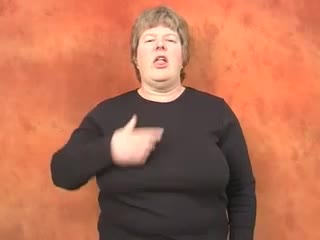
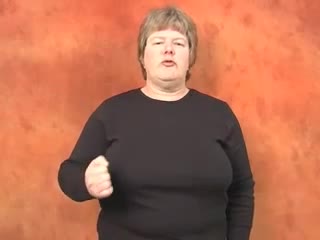
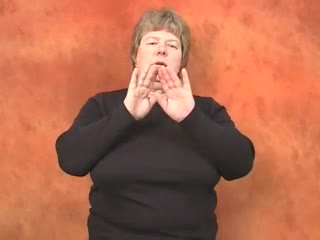
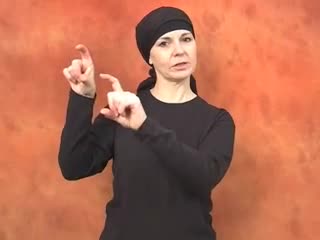
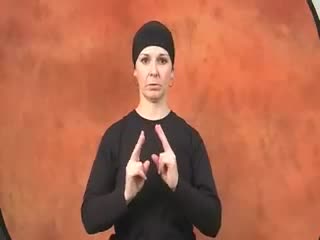
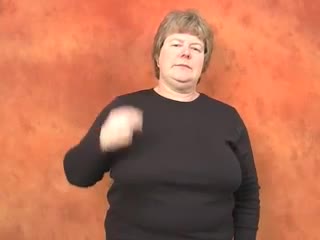
What Is the BSL Sign for "pit hole"?
Ever found yourself walking along, perhaps engrossed in thought, only to suddenly stumble over an unexpected divot in the pavement? That frustrating dip in the ground, that bothersome cavity, has a distinct way of being expressed within British Sign Language. Unpacking the BSL sign for pit hole offers a fascinating glimpse into how visual language captures both the physical reality and the slightly inconvenient nature of such an obstacle. This particular British Sign Language pit hole sign visually conveys the concept of an opening and its accompanying depth, becoming a really useful piece of vocabulary for discussing everyday hazards or even metaphorical challenges.
How to Sign "pit hole" in British Sign Language - Step-by-Step
Learning to execute this sign with precision means breaking down its visual components into manageable parts, ensuring you capture its essence.
Step 1: Handshape
For this sign, your dominant hand will form a loose 'C' shape, where your fingers and thumb are gently curved as if you're about to hold the rim of a small teacup. Meanwhile, your non-dominant hand will adopt a flat 'B' handshape; simply extend your fingers straight and together, keeping your palm facing upwards, ready to represent the ground.
Step 2: Hand Placement and Location
Position your non-dominant hand steadily in front of your torso, somewhere between your waist and chest height, keeping its palm facing the ceiling. Your dominant 'C' hand then settles directly above the centre of your non-dominant palm, hovering there as if poised over an opening.
Step 3: Movement
Initiate the movement by bringing your dominant 'C' hand down with a swift, controlled motion, allowing it to pass *through* the imaginary surface of your non-dominant palm. Once it's descended below your non-dominant hand, perform a slight, small circular jiggle or wiggle motion with your dominant hand, suggesting the irregular, internal space and depth of the hole.
Step 4: Facial Expression and Mouthing
Non-manual features are truly integral to BSL, adding layers of meaning to your signs. For "pit hole," you'll want a slight furrowing of your brow, conveying a sense of mild surprise or minor annoyance, much like you'd feel if you unexpectedly encountered such a feature. Accompany this with a mouthing of the word "pit-hole" or even a soft "oh-dear," which clearly articulates the English equivalent while reinforcing the sign's intended meaning.
Step 5: Palm Orientation
Initially, your dominant hand's palm faces directly downwards, pointing towards your non-dominant hand. As it performs the descending and wiggling motion, the palm might subtly rotate slightly inwards, towards your body, which helps to visually represent the internal contours and depth of the hole. This shifting orientation is key to portraying the three-dimensional nature of the pit.
"pit hole" in BSL - Quick Reference Snapshot
- Handshape: Dominant hand a loose 'C'; non-dominant hand a flat 'B'.
- Location: Dominant hand above non-dominant palm, held mid-torso.
- Movement: Dominant 'C' hand descends through non-dominant palm, then wiggles below.
- Facial Expression: Slight furrowed brow, mouthing "pit-hole" or "oh-dear."
- Dominant Hand: Used for the 'C' handshape and movement.
- Palm Orientation: Dominant hand's palm starts downward, subtly rotating inward during movement.
5 Memorisation Tricks for the BSL Sign "pit hole"
- Visual Mnemonic: Picture your dominant 'C' hand as the exact rim of a small, round hole in the ground, ready to drop something into it. The way your fingers curve really helps you visualise that circular edge, making the connection between the handshape and the concept instant.
- Muscle-Memory Drill: Try holding your non-dominant hand flat, then repeatedly bring your dominant 'C' hand down through it, performing that little wiggle underneath. Do this ten times in a row, focusing on the fluidity of the motion; your muscles will quickly remember the sequence and embed the sign.
- Connection to Meaning: Think about the feeling of stepping into a pit hole – that sudden drop. The downward movement of your dominant hand perfectly mimics that sensation of descent, while the wiggle adds the idea of unevenness or a problematic space.
- Common-Confusion Tip: Be careful not to let your dominant 'C' hand stay too wide open, as it could be mistaken for the sign for "round" or "circle" without the crucial downward movement and wiggle. Remember, the descent and the small jiggle are what truly define the "hole" and its depth here.
- Daily-Life Practice: Each time you see a real pit hole, whether it's on the pavement or in a garden, pause and practise the sign. You could even narrate your observations in your head using the sign, like "Oh, look, a [pit hole]!" This contextual learning reinforces the sign's relevance.
Real-Life Situations to Use the BSL Sign for "pit hole"
- You might use this sign when warning a friend about an uneven patch of ground ahead, signing "WATCH OUT, [pit hole] THERE!" The visual nature of BSL allows you to point to the actual hazard after signing the word, creating a clear spatial reference.
- Imagine you're discussing a walk you took and describing a challenging part of the path; you could explain, "THE PATH HAD MANY [pit hole] AND WAS DIFFICULT." Here, the sign becomes part of a narrative, expressing a past experience.
- Perhaps you're explaining to a child why they need to be careful while playing outside: "BE CAREFUL, YOU MIGHT FALL IN A [pit hole]!" The sign's visual representation makes the warning more concrete and understandable for young learners.
- You might even use it metaphorically in BSL conversation, asking "IS THIS PROJECT A [pit hole]?" when referring to a problem that seems endless or a trap, demonstrating the sign's flexibility beyond its literal meaning.
Top 3 Mistakes Learners Make Signing "pit hole" in BSL
- Incorrect Handshape Consistency: Many beginners tend to let their dominant 'C' hand either flatten too much or become too closed, resembling an 'O' shape. This alters the visual representation of the hole's rim. The precise correction involves consciously maintaining that loose, open 'C' curve throughout the entire sign, ensuring the fingers and thumb remain gently curved and not too stiff.
- Missing the Downward Movement and Wiggle: A frequent error is to simply make the 'C' handshape and place it over the non-dominant palm without executing the crucial descent and subsequent jiggle. This omission removes the core meaning of "depth" and "irregularity." To correct this, focus on a distinct, swift downward motion followed by a small, controlled circular movement *below* the non-dominant hand, as if exploring the inside of the hole.
- Neglecting Non-Manual Features: Sometimes learners focus solely on the hand movements and forget that the facial expression and mouthing are grammatical necessities in BSL. Signing "pit hole" with a neutral face can make the sign feel incomplete or less impactful. The simple fix is to consciously pair the hand movements with a slight furrowed brow and mouth the word "pit-hole" or a mild "oh-dear," which adds the critical layer of contextual meaning and emotion.
Fascinating Facts About the BSL Sign for "pit hole"
- While the exact historical origin of every BSL sign can be elusive, the sign for "pit hole" likely evolved iconically, meaning its form directly mimics the concept it represents, making it intuitive for new learners.
- You might encounter slight regional variations in the BSL-using community, where the exact speed or size of the wiggle motion could differ subtly between areas, reflecting local signing preferences.
- The sign's iconic motivation is very strong; the dominant hand literally "becomes" the opening and then shows the "depth" by moving through the non-dominant "ground," making its meaning visually transparent.
- Unlike many signs that might derive components from the manual alphabet, the sign for "pit hole" is primarily a natural, conceptual sign, relying on visual representation rather than letter-based formation.
- What makes this sign linguistically distinctive is its use of both hands to create a complete spatial representation – one hand sets the ground, and the other defines the cavity – an elegant example of BSL's three-dimensional grammar.
"pit hole" in Deaf Culture - Community and Identity
Within Deaf culture, clear communication about one's environment is paramount, and signs like "pit hole" underscore the community's practical approach to shared experiences. Sharing observations about the physical world, including potential hazards, helps foster a sense of collective awareness and mutual care. This sign isn't just about a physical depression; it becomes a tool for sharing narratives, warning friends, or even expressing frustration with poorly maintained infrastructure. The ability to articulate such details with precision in BSL strengthens social bonds and enhances the richness of everyday conversations within the Deaf community, reflecting a deep connection to shared experience and environmental understanding.
Example Conversations Using "pit hole" in BSL
English: There's a big pit hole in the road near my house. - BSL structure: Topic-comment order, spatial reference to location for the pit hole.
English: Did you see that pit hole? It was deep! - BSL structure: Question formation with raised brows, then an emphatic sign for 'deep' following 'pit hole'.
English: We need to avoid that pit hole when we cycle. - BSL structure: Expressing necessity ('NEED'), then 'AVOID' combined with the spatial awareness of the 'pit hole'.
English: That pit hole almost made me trip. - BSL structure: Demonstrating cause and effect, using the 'pit hole' sign before showing the near-trip action.
English: The council should fix the pit holes in the car park. - BSL structure: Articulating responsibility ('COUNCIL') and the action required ('FIX') for the 'pit hole' problem.
Frequently Asked Questions: The BSL Sign for "pit hole"
Is the BSL sign for "pit hole" used differently in various regions of the UK?
While the core handshapes and movement for the BSL sign "pit hole" remain generally consistent across the United Kingdom, you might observe minor stylistic differences. Some regions could use a slightly more pronounced wiggle, or the initial 'C' handshape might be marginally wider, but the fundamental visual representation of a hole and its depth is universally understood.
Are there any similar BSL signs I might confuse with "pit hole"?
Learners occasionally confuse the initial 'C' handshape of "pit hole" with signs for "circle" or "round" if they don't complete the crucial downward movement. Another potential mix-up could be with signs for "dig" if the dominant hand's action becomes too forceful or repetitive without the clear "ground" provided by the non-dominant hand. Always remember the distinct descent and wiggle for "pit hole" to maintain clarity.
Is the BSL sign for "pit hole" suitable for beginners to learn early on?
Absolutely, the sign for "pit hole" is quite accessible for beginners! Its iconic nature, directly mimicking the concept, makes it relatively easy to grasp and remember. Incorporating it into your early vocabulary helps build foundational visual-spatial skills essential for developing BSL fluency.
Can children easily learn and use the BSL sign for "pit hole"?
Yes, children often pick up the sign for "pit hole" very quickly due to its highly visual and tangible representation. The clear action of a hand moving into a space resonates well with their understanding of the physical world, making it a fun and practical sign for them to use when exploring or describing their environment.
Is the sign for "pit hole" the same in other signing communities around the world?
No, it's highly unlikely that the sign for "pit hole" would be identical in other signing communities globally. Each signing community, like those in different countries, develops its own unique lexicon and grammar, meaning signs for the same concept will vary significantly from one signed language to another.
Signs That Pair Naturally with "pit hole" in BSL
- FALL: This sign naturally complements "pit hole," as encountering a pit hole often leads to the risk or action of falling, making them useful to learn together for storytelling.
- CAREFUL: When you sign "pit hole," you'll frequently want to follow it with "CAREFUL," providing a crucial warning or advice related to the hazard.
- DANGER: The concept of a "pit hole" can often represent a "DANGER," linking these two signs in discussions about safety and risks in an environment.
- GROUND/FLOOR: Since a "pit hole" is a feature of the "GROUND" or "FLOOR," learning these signs concurrently helps establish the spatial context of the pit.
- PROBLEM: In a more abstract sense, a "pit hole" can symbolise a "PROBLEM" or an obstacle, allowing you to use the sign metaphorically in broader conversations.
- ROUGH/UNEVEN: Describing the surface around a "pit hole" often involves the sign for "ROUGH" or "UNEVEN," enhancing the descriptive power of your BSL.
Building Fluency: How to Practise "pit hole" in BSL
To truly embed the sign for "pit hole" into your BSL repertoire, start by using a mirror; observe your handshapes and movements closely, making sure your 'C' hand is just right and that little wiggle is clear. Try integrating this sign into your daily BSL conversations by actively looking for opportunities to mention uneven surfaces or unexpected dips, perhaps when talking about your walk or planning an outing. Don't shy away from filming yourself as you sign; watching your own performance can reveal areas for improvement, helping you refine your motion and expression. Most importantly, seek out a Deaf conversation partner; they'll offer invaluable feedback and provide real-world context for using the sign naturally. Remember to space out your practice over several days rather than cramming it all into one session; consistent, deliberate repetition is the key to mastering "pit hole" and building your overall BSL fluency.