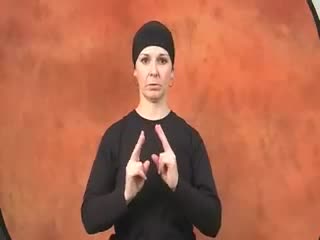
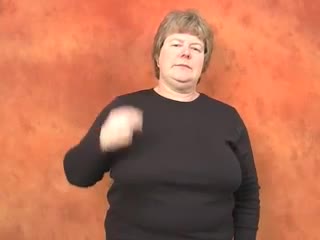
What Is the BSL Sign for "emergency stop device"?
Picture a moment when everything needs to halt instantly, a critical safety measure demanding immediate attention; that urgent feeling is precisely what the BSL sign for emergency stop device captures in British Sign Language. This specific sign brings to life the decisive action of pushing that crucial button or pulling a lever designed to avert danger. It’s a beautifully clear visual representation within BSL, making it highly intuitive for many learners. Understanding the emergency stop device British Sign Language sign helps you communicate vital safety information with precision and clarity.
How to Sign "emergency stop device" in British Sign Language - Step-by-Step
Let's break down this powerful and essential sign, focusing on each precise element that makes it so effective in communication.
Step 1: Handshape
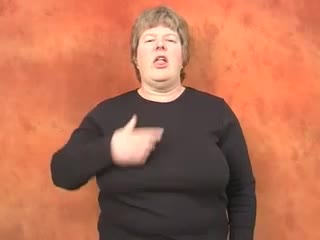
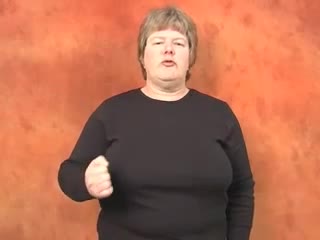
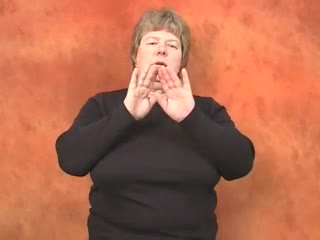
For the dominant hand, you'll form a loose 'C' shape, as if your fingers are gently curved and poised to press a prominent button. Keep your fingers together, with your thumb resting naturally alongside them. Your non-dominant hand will create a flat, open palm, keeping all fingers neatly together and your thumb tucked alongside your palm.
Step 2: Hand Placement and Location
Position your non-dominant hand steady and still, holding it directly in front of your chest, slightly shifted towards your dominant side. This hand serves as the surface or 'device' you’re interacting with. Your dominant hand should begin just above and a tiny bit behind the centre of that non-dominant palm, ready for action.
Step 3: Movement
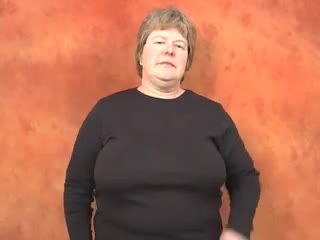
Now, execute a quick, firm, and purposeful downward movement with your dominant hand, pressing it decisively into the very centre of your non-dominant palm. This is a single, sharp, percussive action, and after the press, your hand should hold that contact for a brief, impactful moment. Think of the swift force required to activate a real emergency stop mechanism.
Step 4: Facial Expression and Mouthing
A sharp, concentrated facial expression accompanies this sign, often involving a slight widening of the eyes or a quick furrowing of the brows, perfectly conveying the urgency and decisiveness of an emergency. When you sign "emergency stop device," you'll typically mouth "emergency stop" or simply "stop" with clear, firm articulation, which adds a crucial layer of grammatical meaning in BSL, clarifying the specific concept.
Step 5: Palm Orientation
As your dominant hand completes its pressing movement, its palm will naturally face downwards, directly towards your non-dominant hand. Conversely, your non-dominant hand maintains an upward-facing palm throughout, providing the stable surface for the action. This specific orientation is vital because it clearly illustrates the action of pressing *into* something, which is fundamental to the meaning of "emergency stop device."
"emergency stop device" in BSL - Quick Reference Snapshot
- Handshape: Dominant hand a loose 'C', non-dominant a flat open palm.
- Location: Dominant hand presses into non-dominant palm held in front of chest.
- Movement: Single, quick, firm downward press of dominant hand into non-dominant palm.
- Facial Expression: Focused, urgent, decisive expression (e.g., widened eyes, furrowed brow).
- Dominant Hand: Performs the pressing action.
- Palm Orientation: Dominant palm downwards, non-dominant palm upwards, during the press.
5 Memorisation Tricks for the BSL Sign "emergency stop device"
- **Visual Mnemonic:** Imagine your dominant 'C' handshape as the very finger about to press a big, red emergency button, with your non-dominant palm being that button itself. The sudden, firm press vividly recreates the real-world action, embedding the movement in your visual memory.
- **Muscle-Memory Drill:** Practice the sharp, decisive pressing movement ten times in a row, focusing on the speed and firmness of the dominant hand's action. Really feel the impact as your dominant hand meets your non-dominant palm; this repetition helps your muscles remember the exact motion for when you need it.
- **Connection to Meaning:** Link the sign directly to its purpose: stopping something quickly and decisively to prevent harm. The abruptness of the sign's movement perfectly mirrors the sudden necessity of activating an emergency stop device, strengthening the association in your mind.
- **Common-Confusion Tip:** Be careful not to make the pressing movement too soft or hesitant; that would imply a gentle tap rather than an urgent halt. Ensure your press is quick and firm, reflecting the critical nature of an actual emergency stop.
- **Daily-Life Practice Idea:** Each time you see a physical emergency stop button in a public place-on a bus, train, or a factory wall-mentally (or subtly) perform the sign. This constant reinforcement in relevant contexts will solidify the BSL sign emergency stop device in your memory.
Real-Life Situations to Use the BSL Sign for "emergency stop device"
- Imagine you're on a factory tour, and you want to ask your Deaf friend, "WHERE emergency stop device?" You would sign "WHERE" followed by the sign, perhaps leaning forward slightly with raised eyebrows to indicate a question in BSL.
- You might be discussing safety procedures in a workshop and explain, "THIS MACHINE NEED emergency stop device." The sign clearly identifies the crucial safety feature in relation to the machine.
- Perhaps you're recounting a near-miss story, signing, "QUICKLY I PRESS emergency stop device!" This shows immediate, decisive action, and you'd likely use a slightly faster, more emphatic sign to convey the urgency of the moment.
- In a conversation about a new piece of equipment, you could sign, "IS emergency stop device CLEARLY VISIBLE?" Here, the sign fits naturally into a question about accessibility and safety, with your facial expression and eyebrow raise marking the interrogative.
Top 3 Mistakes Learners Make Signing "emergency stop device" in BSL
- **Mistake 1: Insufficiently Firm Movement:** Many beginners make the pressing movement too light or hesitant, resembling a gentle touch rather than a forceful press. This happens because they might not fully grasp the urgency inherent in the concept. The correction is to ensure the dominant hand’s movement is quick, sharp, and resolute, mimicking the decisive action of activating a critical safety control.
- **Mistake 2: Incorrect Handshape for the Dominant Hand:** Learners sometimes use a flat palm or a fully closed fist for the dominant hand, which deviates from the intended 'C' shape. This error often arises from a lack of precision in replicating the initial posture. To fix this, always start with that slightly curved 'C' handshape, as it represents the natural readiness to press a button effectively.
- **Mistake 3: Neglecting Facial Expression and Mouthing:** Some learners focus only on the hands, forgetting that facial expression and mouthing are integral parts of BSL grammar and meaning. Without the urgent facial expression and mouthing "emergency stop," the sign can lose its critical contextual nuance, appearing generic. Always remember to pair the physical sign with a focused, urgent expression and mouth the corresponding words for full clarity.
Fascinating Facts About the BSL Sign for "emergency stop device"
- This sign is highly iconic, meaning its form directly resembles the action it describes: pressing a button or lever. This strong visual motivation makes the BSL emergency stop device sign intuitively understandable even for those new to the language.
- While the core movement of pressing is universal, subtle regional variations might occur in the exact handshape or the intensity of the press across different BSL-using communities in the UK. These slight differences usually don't hinder comprehension, but it’s interesting to observe local flavours.
- The sign doesn't derive directly from the manual alphabet, but its clear, direct representation of a safety mechanism highlights how BSL often prioritises visual clarity for concepts that require quick and unambiguous communication.
- Its directness and immediate visual impact make it one of those signs that often cross language barriers, even to people unfamiliar with sign language, due to the universal understanding of pressing a "stop" button.
- The combination of a specific handshape, location, and a single, sharp movement makes this sign linguistically efficient, conveying a complex concept in a brief, powerful action.
"emergency stop device" in Deaf Culture - Community and Identity
The concept of safety, and specifically emergency stops, holds significant importance within the Deaf community, especially in workplaces or public spaces where clear communication is paramount. This sign for emergency stop device becomes a crucial tool for ensuring accessibility and safety discussions are inclusive for everyone. When discussing industrial safety, machinery operation, or even public transport, the ability to clearly and quickly refer to an emergency stop device in sign language empowers Deaf individuals to advocate for their safety needs and participate fully in critical conversations. It underscores the community's commitment to ensuring environments are designed with everyone in mind, where the means to halt danger is universally understood.
Example Conversations Using "emergency stop device" in BSL
English: Where is the emergency stop device on this machine? - BSL structure: MACHINE THIS emergency stop device WHERE?
English: You must always know how to use the emergency stop device. - BSL structure: YOU ALWAYS KNOW USE emergency stop device MUST.
English: The operator pressed the emergency stop device just in time. - BSL structure: OPERATOR emergency stop device PRESS JUST-IN-TIME.
English: Is there an emergency stop device on this escalator? - BSL structure: ESCALATOR THIS emergency stop device THERE? (with question facial expression)
English: They need to install another emergency stop device over here. - BSL structure: THEY NEED INSTALL ANOTHER emergency stop device HERE.
Frequently Asked Questions: The BSL Sign for "emergency stop device"
Is there any regional variation for the BSL sign for emergency stop device?
You'll generally find the core concept of pressing a button for an emergency stop device remains consistent across the UK. While slight stylistic differences in the firmness or exact angle of the hand might appear in various regions, the fundamental handshape and movement are widely understood. It's a very clear and iconic sign, which helps maintain its uniformity.
Are there similar signs to avoid confusing with BSL emergency stop device?
Indeed, you'll want to differentiate it from general "STOP" or "PUSH" signs. The sign for "STOP" (dominant flat hand hitting non-dominant flat hand) is usually flatter and less about a *device*, while "PUSH" might involve a single hand pushing forward. The BSL emergency stop device sign is unique because of its specific handshape (the 'C' for the button-presser) and the decisive, almost percussive action into the non-dominant palm, which specifically represents the mechanism.
Is the BSL sign for emergency stop device suitable for beginners?
Absolutely, this is an excellent sign for beginners to learn early on! Its iconic nature means it’s relatively easy to grasp and remember, as it directly mimics a real-world action. Mastering how to sign emergency stop device in BSL provides a practical and important vocabulary word that can be used in many safety-related conversations right away.
Can children learn to use the emergency stop device British Sign Language sign?
Yes, children can certainly learn this sign, and it's a valuable one for them, particularly if they are taught about safety in school or at home. Teaching them the sign empowers them to communicate about important safety features, reinforcing their understanding of how to react in an urgent situation. The visual nature of the sign makes it very accessible for young learners.
How does the British Sign Language emergency stop device sign compare to other sign languages' equivalents?
Many sign languages around the world will have an equivalent sign that often shares an iconic quality, mirroring the action of pressing a stop button. However, the specific handshapes, exact location, and precise movements for the sign for "emergency stop device" can vary significantly from one sign language to another, reflecting their unique linguistic structures and cultural nuances. It’s always fascinating to see how different languages represent the same concept!
Signs That Pair Naturally with "emergency stop device" in BSL
- **DANGER:** This sign immediately establishes the context, linking the need for an emergency stop to a potential threat or hazard.
- **MACHINE:** Often, an emergency stop device is found on machinery, so knowing this sign helps specify *what* needs stopping.
- **STOP:** While distinct, the general concept of "stop" is closely related, offering a broader term if the specific device isn't the focus.
- **SAFETY:** This sign provides the overarching theme, as the emergency stop device is fundamentally a safety feature.
- **ACCIDENT:** Signing "accident" alongside "emergency stop device" explains *why* the device might be needed or was used.
- **BUTTON:** Many emergency stops are buttons, so this sign specifies the type of device, adding precision to your communication.
Building Fluency: How to Practise "emergency stop device" in BSL
To truly embed the BSL sign for emergency stop device into your active vocabulary, dedicate time to consistent practice. Start by using a mirror to observe your dominant hand's 'C' shape and the decisive press into your non-dominant palm, ensuring your movement is sharp and your facial expression conveys urgency. Try to integrate the sign naturally into imagined daily conversations about safety or machinery, perhaps by narrating your environment in BSL as you walk through a space. Filming yourself executing the sign allows you to review your technique critically, identifying any areas for refinement in handshape or movement. Most importantly, seek opportunities to use the sign with a Deaf conversation partner; their feedback will be invaluable for refining your accuracy and natural flow. Remember, spaced repetition over several days will help solidify this vital sign in your long-term memory.