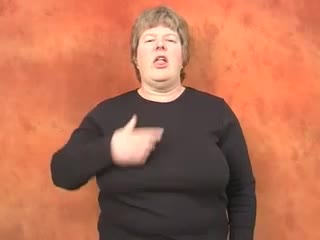
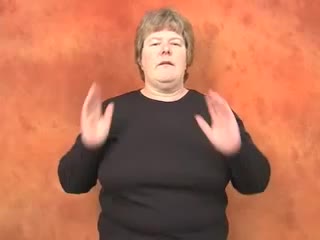
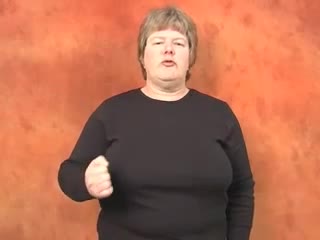
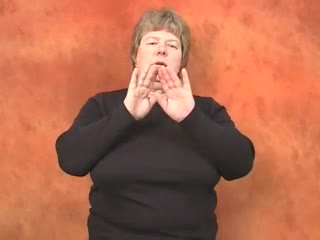
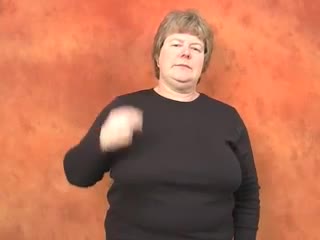
What Is the BSL Sign for "dowel"?
Ever wondered how to talk about those small, unassuming cylindrical rods that hold so much together, whether in furniture or DIY projects? Understanding the BSL sign for dowel opens up a whole new realm of practical conversation for British Sign Language users. This particular sign provides a clear, visual representation of the object's function and form, making it instantly recognisable once you've learned it. Knowing the British Sign Language dowel sign empowers you to discuss repairs, construction, and crafts with fluency within the Deaf community.
How to Sign "dowel" in British Sign Language - Step-by-Step
Learning to sign "dowel" involves a concise and iconic motion that truly captures the essence of this small but mighty connector.
Step 1: Handshape
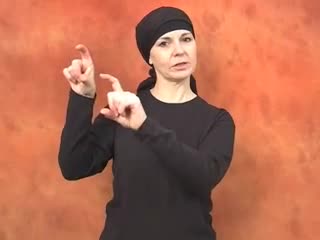
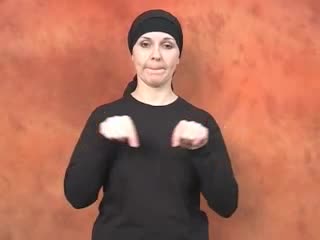
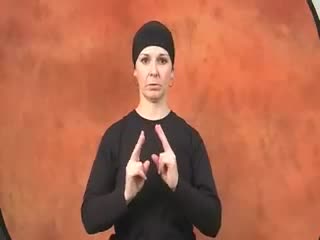
For the BSL sign for dowel, you'll begin with your dominant hand forming a tight fist, known in linguistics as an 'S' handshape. Your thumb should rest firmly on the side of your index finger, not tucked inside. Meanwhile, your non-dominant hand remains open and flat, with all fingers pressed together and your thumb comfortably tucked in alongside your palm.
Step 2: Hand Placement and Location
Position your non-dominant hand with its palm facing upwards, held steady in the neutral signing space directly in front of your chest. Now, place your dominant hand, the fist you've formed, directly above the centre of your non-dominant palm, hovering just a few centimetres above it.
Step 3: Movement
The movement for this sign is quite straightforward and highly illustrative. Bring your dominant fist down in a short, firm, and controlled pressing motion, making light contact with the centre of your non-dominant palm. You'll execute this pressing action once, perhaps twice, simulating the action of inserting or pushing a dowel into a surface. The motion is deliberate and direct, without any sweeping or circular movements.
Step 4: Facial Expression and Mouthing
While signing "dowel" in BSL, a neutral and focused facial expression is typically appropriate, reflecting the practical nature of the item. It's crucial to mouth the word "dowel" clearly and naturally as you execute the sign. This mouthing acts as a vital non-manual feature, providing additional linguistic information and aiding comprehension, just as intonation does in spoken English.
Step 5: Palm Orientation
Throughout the execution of the sign, your dominant hand's palm will consistently face downwards, aligning with the action of pressing or pushing. Your non-dominant hand's palm will remain facing upwards, serving as the stable surface into which the 'dowel' is being inserted. Maintaining these specific palm orientations ensures the sign accurately conveys its intended meaning and doesn't get confused with other similar BSL gestures.
"dowel" in BSL - Quick Reference Snapshot
- **Handshape:** Dominant hand forms an 'S' fist; non-dominant hand is an open, flat palm.
- **Location:** Dominant fist hovers above the non-dominant palm, held in front of the chest.
- **Movement:** Dominant fist presses down to lightly contact the non-dominant palm once or twice.
- **Facial Expression:** Neutral, focused, accompanied by clear mouthing of "dowel".
- **Dominant Hand:** The hand you write with, forming the fist and performing the movement.
- **Palm Orientation:** Dominant palm faces down; non-dominant palm faces up.
5 Memorisation Tricks for the BSL Sign "dowel"
Here are some clever ways to help you commit the BSL dowel sign to memory and ensure it sticks.
- **Visual Mnemonic:** Picture yourself physically pushing a dowel into a piece of wood. The strong, firm fist pushing down into the flat hand perfectly mimics this action, creating a vivid mental image you can recall instantly. This visual connection makes the how to sign dowel in BSL process intuitive.
- **Muscle-Memory Drill:** Engage in repeated practice of the sign, focusing intently on the sensation of the dominant fist making contact with your non-dominant palm. Concentrating on the tactile feedback helps embed the precise movement into your muscle memory, making it feel natural over time.
- **Connection to Function:** Consider the purpose of a dowel – it connects two pieces. The sign's action of pushing one 'piece' (your fist) into another 'piece' (your palm) directly illustrates this function. Understanding the 'why' behind the sign's form reinforces its meaning in your mind, aiding in learning the dowel in sign language.
- **Common Confusion Tip:** Be mindful not to confuse this sign with a general 'push' or 'hammer' sign. The key differentiation lies in the specific 'S' fist handshape and the controlled, single or double downward press, which is distinct from a broader forceful push or the repeated striking of a hammer.
- **Daily-Life Practice:** As you assemble flat-pack furniture, or even just look at wooden objects around your home, consciously think about where dowels might be used. Practice the BSL dowel sign mentally or physically whenever you encounter such items, integrating it into your everyday observations.
Real-Life Situations to Use the BSL Sign for "dowel"
Knowing the what is the sign for dowel allows for practical communication in various everyday scenarios, from home improvement to simple conversations.
- Imagine you're at a hardware store explaining a DIY project to a Deaf friend; you might sign, "I NEED DOWEL, SHORT, THIN," incorporating spatial grammar to indicate the size.
- When assembling a new bookshelf, you could point to the parts and sign, "INSERT DOWEL HERE," using your signing space to show exactly where the dowel goes.
- If a piece of furniture breaks and needs repair, you might tell someone, "FURNITURE BROKE, DOWEL GONE," using a head shake to indicate the absence.
- Discussing a craft project, a Deaf person might ask you, "YOU USE DOWEL?" with raised eyebrows to signify a question, inquiring about your materials.
Top 3 Mistakes Learners Make Signing "dowel" in BSL
Even experienced learners sometimes trip up with certain signs, and here are the most common pitfalls when learning to sign "dowel" in British Sign Language.
- **Incorrect Handshape Variation:** A very common error involves using an open 'A' handshape (a fist with the thumb alongside the fingers, but not tightly gripping) or an open flat hand instead of the specific 'S' fist. This alters the visual representation of the dowel's sturdy, cylindrical end. The precise correction is to ensure your dominant hand forms a truly closed fist, with the thumb resting firmly on the index finger, accurately depicting the solid nature of the dowel.
- **Exaggerated or Wrong Movement:** Some learners might perform a broad sweeping motion or a vigorous hammering action, deviating from the sign's intended subtlety. The dowel sign isn't about brute force but precise insertion. To fix this, concentrate on a short, firm, and controlled downward press from your dominant fist, making light, deliberate contact with the non-dominant palm, mirroring the careful placement of a dowel.
- **Neglecting Non-Manual Features:** Many beginners often forget the crucial aspect of mouthing the English word "dowel" while signing, or they maintain a blank facial expression. While the hand movement is primary, BSL is a full visual language, and non-manual features are integral. The solution is to consciously and clearly mouth "dowel" as you sign, ensuring your facial expression is neutral and engaged, which adds vital clarity and completes the sign's linguistic package.
Fascinating Facts About the BSL Sign for "dowel"
Uncovering the deeper layers of signs like "dowel" helps cement your understanding and appreciation for British Sign Language.
- The BSL sign for dowel is highly iconic, meaning its form directly resembles the object or action it represents. It visually communicates the act of a cylindrical object being pressed or inserted into a surface, making it relatively intuitive to grasp.
- While core BSL signs often have widespread recognition, signs for specific, practical objects like 'dowel' may exhibit minor regional variations within the UK's diverse Deaf community. However, the core concept of a solid object being inserted generally remains consistent.
- This sign's form is less about its initial letter (D) in the manual alphabet and more about its functional representation, a common characteristic for many object-based signs in BSL. Its 'S' handshape primarily conveys solidity and the blunt end of the rod.
- In BSL, this sign can function both as a noun ("the dowel") and, through contextual modification, can imply the verb "to dowel" or "to insert a dowel." The linguistic flexibility showcases BSL's efficiency in conveying complex ideas visually.
- The specific choice of an 'S' handshape (fist) for the dominant hand reinforces the idea of a solid, sturdy piece. If it were a more open hand, it might imply something flexible or flat, demonstrating the subtle yet significant role of precise handshapes in BSL.
"dowel" in Deaf Culture - Community and Identity
While "dowel" might seem like a simple technical term, its presence in BSL conversation highlights the shared experiences and practicalities within the Deaf community. Deaf individuals, like anyone, engage in home improvement, craft, and building projects, often demonstrating remarkable self-reliance and ingenuity. Signs like this facilitate discussions about collaborative projects, sharing skills, or simply asking for help with a broken piece of furniture. It reinforces a community where communication about practical matters is fluid and accessible, fostering a sense of shared problem-solving and mutual support. This ability to discuss tools and materials directly in BSL strengthens bonds and promotes independence, ensuring everyone can participate fully in the everyday aspects of life.
Example Conversations Using "dowel" in BSL
Here are a few ways you might encounter or use the learn dowel BSL sign in real conversational settings.
English: Do you have any wooden dowels? - BSL structure: YOU HAVE DOWEL, WOOD, (question with raised eyebrows)
English: We need a longer dowel for this project. - BSL structure: PROJECT, THIS, DOWEL, NEED, LONG, (indicating length with space)
English: Be careful not to break the dowel when assembling. - BSL structure: ASSEMBLE, DOWEL, CAREFUL, DON'T BREAK (negative head shake)
English: She used a small dowel to fix the chair. - BSL structure: CHAIR, BROKE, SHE FIX, DOWEL, SMALL, (using classifier for size)
English: Where can I buy dowels around here? - BSL structure: DOWEL, BUY, WHERE? (question with raised eyebrows, pointing to local area)
Frequently Asked Questions: The BSL Sign for "dowel"
Are there different ways to sign "dowel" in BSL across the UK?
For less common, highly specific object signs like 'dowel', significant regional variations are less likely compared to more frequently used or abstract vocabulary. While subtle individual differences in execution might occur, the core iconic handshape and movement for British Sign Language dowel are generally well-understood throughout the UK. The visual representation of inserting a cylindrical object is quite universal.
What signs should I avoid confusing with "dowel"?
You'll want to differentiate the dowel sign from signs like 'push' or 'hammer'. While both involve a downward motion, 'push' often uses a flatter hand or open palm, and 'hammer' typically involves a different handshape (like an 'A' hand or a 'fist' with a specific wrist action) and a repeated, more forceful strike. The BSL dowel sign is distinguished by its specific 'S' fist handshape and the controlled, single or double press against the non-dominant palm.
Is "dowel" a good sign for BSL beginners to learn early?
While "dowel" isn't one of the foundational vocabulary words like 'hello' or 'thank you', it's an excellent sign for beginners interested in practical, descriptive BSL. It helps develop specific handshapes and iconic representation skills. Learning what is the sign for dowel broadens your vocabulary beyond basic conversation, which is a great step for any learner.
How can I teach the BSL sign for "dowel" to children?
Teaching the BSL sign for "dowel" to children can be incredibly fun through play. Use building blocks, toy furniture, or even craft sticks. Demonstrate the sign as you pretend to 'dowel' pieces together, making it a hands-on, interactive learning experience. Associate the sign with the action of making things strong or connecting them, helping them learn dowel BSL naturally.
How does the BSL sign for "dowel" compare to other sign languages' equivalents?
Different sign languages develop their signs independently, so while the BSL sign for "dowel" is iconic, representing the action of insertion, another sign language might have an entirely different visual representation. It might focus on the shape, the material, or even a different type of connecting action. Each sign language offers a unique linguistic perspective on describing the same concept.
Signs That Pair Naturally with "dowel" in BSL
Building your BSL vocabulary effectively means learning signs in clusters that naturally relate to one another. Here are some signs that complement the BSL sign for dowel, helping you expand your communicative range.
- **WOOD:** This is essential, as dowels are almost always made of wood. Learning to sign WOOD alongside dowel helps contextualise its use.
- **FURNITURE:** Dowels are integral to furniture construction, so this sign creates a natural thematic link. You might discuss assembling furniture with dowels.
- **BUILD:** The action of building often involves using dowels to connect pieces. This sign connects the object to its primary function.
- **FIX/REPAIR:** When something is broken, dowels are frequently used in the repair process. Pairing this sign helps discuss practical solutions.
- **MEASURE:** Working with dowels requires precise measurement, making this a crucial related sign for any DIY or craft discussion.
- **GLUE:** Often, dowels are secured with glue, so this sign naturally follows in conversations about assembly and construction.
Building Fluency: How to Practise "dowel" in BSL
To truly master the BSL dowel sign and integrate it into your everyday British Sign Language communication, consistent and varied practice is key. Stand in front of a mirror and meticulously practice the handshape, placement, and movement, paying close attention to the precision of your 'S' fist and the firm, single press. Try to incorporate the sign into describing objects around your house – point to furniture and sign "DOWEL" while mouthing the word, even if you're just talking to yourself! Filming yourself signing can provide invaluable feedback, allowing you to catch any subtle deviations from the correct form. Most importantly, seek out opportunities to use "dowel" in genuine conversations with Deaf individuals or fellow BSL learners. The more you use it in context, the more natural and fluent it will become, making you a confident communicator.