What Is the BSL Sign for "workbench"?
Picture a sturdy, flat surface where all the serious making happens, a place of creation and practical craftsmanship. That's precisely the visual essence captured by the BSL sign for workbench, a wonderfully descriptive sign in British Sign Language workbench that immediately conveys its purpose. This particular sign serves as a vital piece of vocabulary for anyone discussing tools, workshops, or the satisfaction of building something with your own hands. Mastering the BSL sign for workbench opens up conversations about hobbies, professions, and the physical spaces where work comes to life within the Deaf community.
How to Sign "workbench" in British Sign Language - Step-by-Step
Let's break down the movements for "workbench" into clear, manageable steps, allowing you to build this sign with precision.
Step 1: Handshape
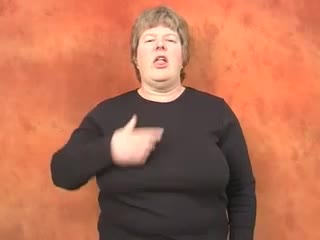
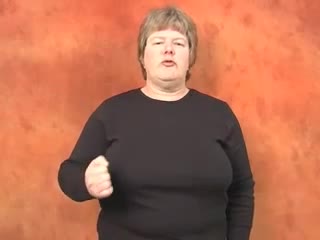
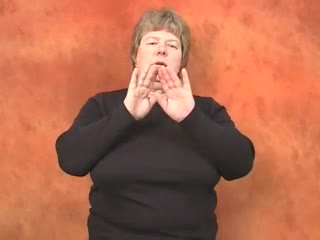
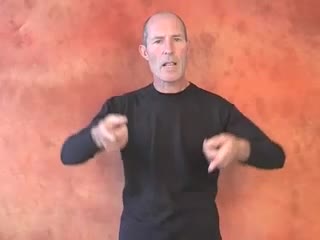
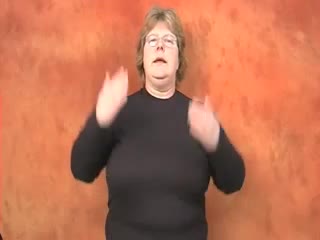
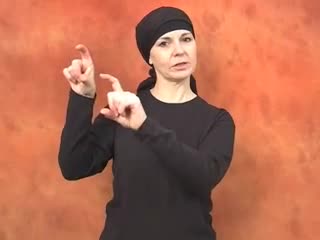
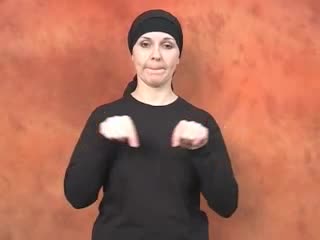
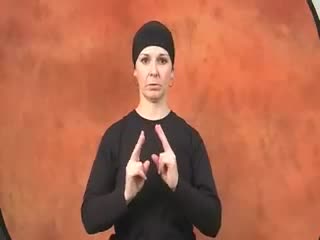
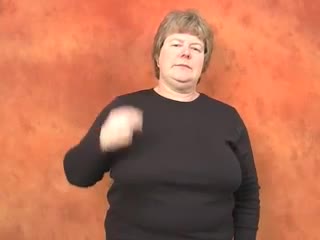
You'll begin with your dominant hand forming what we call an "S" handshape, which means your hand is closed into a fist with your thumb resting across the front of your curled fingers. Ensure your knuckles are slightly bent, and your fingertips firmly touch the palm, creating a solid, compact fist. This represents the robust, unyielding nature of a workbench's surface.
Step 2: Hand Placement and Location
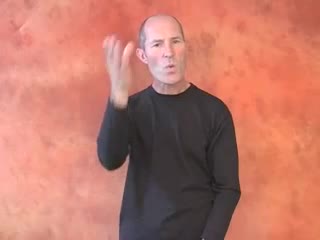
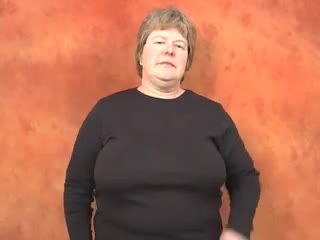
Position your dominant hand, still in that tight "S" handshape, in front of your body at about waist height, slightly to the side of your dominant hip. Your knuckles should face forward, and your arm should be relaxed, held comfortably away from your torso, establishing the general area where a workbench would be.
Step 3: Movement
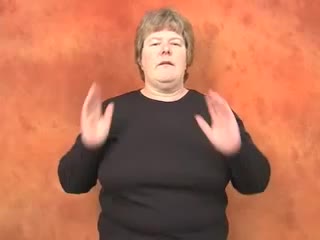
From its initial position, move your dominant hand forward and horizontally in a short, firm, sweeping motion across your body, as if tracing the edge of a flat surface. This movement should be smooth and decisive, travelling a short distance, perhaps twelve to fifteen centimetres, before stopping. Imagine your hand gliding along the top of a sturdy table, emphasising its flat and expansive quality.
Step 4: Facial Expression and Mouthing
A neutral facial expression generally accompanies this sign, as "workbench" describes an object rather than conveying an emotion. However, mouthing the English word "workbench" clearly and naturally, without voice, is a crucial non-manual feature. This mouthing aids clarity, especially when discussing a specific type of workbench or when the context might be ambiguous, reinforcing the intended meaning with precise articulation.
Step 5: Palm Orientation
Your palm will consistently face downwards throughout the entire signing process. This downward orientation is fundamental, directly representing the flat, horizontal surface of a workbench. Maintaining this orientation ensures the sign clearly depicts a level platform, differentiating it from signs that might represent vertical structures or different objects entirely.
"workbench" in BSL - Quick Reference Snapshot
- Handshape: Dominant hand forms a closed "S" fist.
- Location: In front of the body, around waist height, near the dominant hip.
- Movement: A single, firm, horizontal sweep forward and across the body.
- Facial Expression: Typically neutral.
- Dominant Hand: Used alone for this sign.
- Palm Orientation: Consistently facing downwards.
5 Memorisation Tricks for the BSL Sign "workbench"
- Visual Mnemonic: Picture a carpenter firmly wiping down the top of their workspace. The "S" handshape can be seen as the compressed mass of the bench, and the sweeping motion is the clear, decisive action of using its surface. Think of the solid, weighty feel of the bench itself.
- Muscle-Memory Drill: Practice the sweeping motion ten times without thinking, focusing on the fluidity and firm stop. This repetition helps engrain the specific path and speed into your motor memory, making the sign feel natural and effortless over time. Keep your handshape locked firmly in that "S" shape throughout the exercise.
- Connection to the Word's Meaning: Consider the purpose of a workbench: a flat, stable surface for manual labour. The sign physically imitates this flatness and stability, with the hand gliding across an imaginary plane. Understanding this iconic link makes the sign intuitive rather than an arbitrary movement.
- Common-Confusion Tip: Be mindful not to confuse the "S" handshape with a loose "A" handshape, where the thumb is often tucked *inside* the fist. For "workbench," your thumb must rest *across* your fingers, creating a tighter, more substantial fist, essential for conveying the solidity.
- Daily-Life Practice Idea: Every time you see a table, a desk, or any flat surface where work happens, mentally (or physically, if appropriate!) sign "workbench" in BSL. This contextual association strengthens your recall by linking the sign directly to objects in your environment.
Real-Life Situations to Use the BSL Sign for "workbench"
- You might use this sign when asking a friend, "Do you have a large workbench in your new garage?" Here, the sign would integrate into a question about possessions, often accompanied by a raised eyebrow for the interrogative.
- Imagine describing your DIY project to a colleague; you could sign, "I need to build a new workbench for my tools." The sign becomes part of a statement detailing a construction goal, perhaps with a slight nod of determination.
- If you're explaining a repair process, you might indicate, "I put the broken item on the workbench," utilising spatial grammar by pointing to the location where the imaginary workbench was just signed.
- When discussing safety in a workshop, one could sign, "Always keep your workbench clear of clutter," reinforcing the importance of an organised work area with a serious facial expression.
Top 3 Mistakes Learners Make Signing "workbench" in BSL
- Incorrect Handshape: A frequent error involves using a loose handshape where the thumb is either inside the fist or not firmly pressed against the fingers. This often results in a less defined "S" shape, which can make the sign look ambiguous or resemble other signs. The correction is to ensure your thumb lies firmly *across* your fingers, creating a truly solid, compact fist, enhancing the visual representation of strength.
- Wobbly or Arcing Movement: Some learners inadvertently introduce an arc or an uneven trajectory into the horizontal sweep, making the movement less precise. This can suggest an unstable surface or an object with a curved top. To fix this, consciously focus on maintaining a perfectly straight, level path as your hand moves forward and across, accurately depicting the flat, even surface of a workbench.
- Lifting the Palm: Another common pitfall is allowing the palm to turn upwards slightly during the movement, losing that consistent downward orientation. This can alter the meaning, implying something other than a flat, horizontal plane. The solution is to be vigilant about keeping your palm facing the floor throughout the entire sign, reinforcing the iconic representation of a solid, flat surface.
Fascinating Facts About the BSL Sign for "workbench"
- The BSL sign for "workbench" is highly iconic, meaning it visually resembles the object it describes, directly mirroring the flat, sturdy surface where work takes place. This makes it quite intuitive for new learners to grasp, as its form instantly suggests its function.
- While its precise historical origin isn't meticulously documented, the sign's simple, practical nature suggests a relatively stable form within BSL, likely developing from early descriptive gestures associated with craftsmanship and tools. It's a sign that just makes sense.
- Regional variations for "workbench" in BSL are relatively minor, a testament to the strong iconic motivation behind the sign. Most variations might involve slight differences in the length of the sweep or the exact height of the hand, but the core handshape and downward palm orientation remain consistent across the UK.
- This sign does not directly derive from the manual alphabet, nor does it incorporate specific letter forms. Instead, its construction relies entirely on its visual representation, making it an excellent example of a non-fingerspelled, concept-driven BSL sign.
- The singular, firm movement of "workbench" is linguistically interesting because it efficiently conveys both the object's form and its functional stability within a single, brief gesture. It's a great demonstration of BSL's economy of movement.
"workbench" in Deaf Culture - Community and Identity
Workbenches, and the activities they represent, hold a significant place within Deaf culture, reflecting a strong tradition of practical skills, engineering, and craftsmanship. Many Deaf individuals have historically found fulfilling careers and hobbies in trades that involve manual dexterity and problem-solving, areas where communication barriers often pose less of an obstacle than in spoken-language-dependent professions. This isn't just about jobs; it's about a deep satisfaction derived from creating, repairing, and innovating, often with meticulous attention to detail. Discussions around workshops and tools foster a sense of shared interest and capability within the community, highlighting the ingenuity and self-reliance that are highly valued. The sign itself, sturdy and descriptive, embodies this spirit of tangible achievement and hands-on engagement.
Example Conversations Using "workbench" in BSL
English: Where is your new workbench? - BSL structure: YOUR NEW WORKBENCH WHERE?
English: I need a bigger workbench for my projects. - BSL structure: MY PROJECTS, I NEED WORKBENCH BIGGER.
English: He built the workbench himself. - BSL structure: WORKBENCH HE BUILD SELF.
English: The tools are on the workbench. - BSL structure: TOOLS WORKBENCH ON.
English: Can you help me move this heavy workbench? - BSL structure: WORKBENCH HEAVY THIS, YOU HELP ME MOVE? (with question facial expression)
Frequently Asked Questions: The BSL Sign for "workbench"
Is the BSL sign for "workbench" the same across all regions of the UK?
Generally, the core BSL sign for "workbench" remains quite consistent throughout the UK due to its iconic nature. While minor stylistic differences in movement length or hand height might exist, the fundamental "S" handshape and downward sweeping motion are widely understood and used across different BSL-using communities, ensuring clear communication.
Are there any similar BSL signs I should be careful not to confuse with "workbench"?
You'll want to avoid confusing "workbench" with signs for "table" or "desk," which often involve two hands depicting a flat surface from above or making a wider, more encompassing movement. "Workbench" is uniquely characterised by its single-hand "S" shape and specific forward sweep, representing a more robust and purpose-built surface.
Is the BSL sign for "workbench" suitable for beginners?
Absolutely, the BSL sign for "workbench" is an excellent sign for beginners! Its iconic nature means it visually represents the object, making it intuitive to learn and remember. The handshape is common, and the movement is straightforward, making it very accessible for those just starting their BSL journey.
Can children easily learn and use the BSL sign for "workbench"?
Yes, children can certainly learn and use the BSL sign for "workbench" with ease. Its clear visual representation and simple mechanics make it engaging for young learners. They often enjoy connecting signs to real-world objects, and this sign provides a great opportunity to talk about tools, building, and creative play.
Does the BSL sign for "workbench" resemble signs for similar concepts in other sign languages?
While the concept of a "workbench" is universal, its specific sign form can differ significantly across various sign languages. The BSL sign's unique single-handed "S" shape and horizontal sweep are particular to British Sign Language, often contrasting with how other sign languages might depict a similar object or concept, which might use two hands or different movements.
Signs That Pair Naturally with "workbench" in BSL
- TOOLS: This sign naturally complements "workbench" as tools are invariably found and used on such a surface, forming a logical vocabulary cluster.
- BUILD: When you're talking about building something, the "workbench" is often the central stage for construction, making these signs frequently appear together.
- WORKSHOP: A workbench is a quintessential feature of a workshop, so learning these two signs simultaneously helps you describe the entire environment.
- REPAIR: Many items brought to a workbench are there for repair, creating a direct conceptual link between the action and the location.
- WOOD: Since many workbenches are made of wood and used for woodworking, this material sign often accompanies discussions about the bench itself or projects done on it.
- PROJECT: Any "project" involving manual effort or construction will likely take place on a workbench, making this a natural pairing for conversations about tasks.
Building Fluency: How to Practise "workbench" in BSL
To truly embed the BSL sign for "workbench" into your fluency, start by using a mirror to observe your handshape and movement, paying close attention to that firm "S" hand and the flat, consistent sweep. Integrate this sign into your daily BSL conversation by consciously thinking of scenarios where you might mention a workbench, perhaps describing a dream workshop or a recent DIY task. Consider filming yourself signing the word, then watching it back to critically assess your precision and flow, comparing it against the step-by-step guide. The most impactful practice involves finding a Deaf conversation partner, as their feedback and natural usage will refine your technique and build confidence in real-time communication. Consistent, spaced repetition over several days, rather than intense cramming, will help solidify this sign in your long-term memory, ensuring it becomes a natural part of your BSL vocabulary.