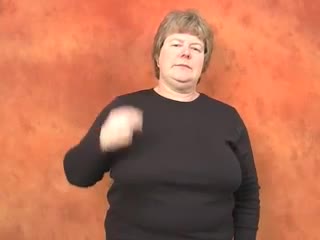
What Is the BSL Sign for "sander"?
When you're discussing DIY projects or woodworking in British Sign Language, you'll inevitably need to refer to specific tools. One such essential item, used for smoothing and finishing surfaces, is the sander. Understanding the BSL sign for sander allows you to communicate efficiently about home improvements, crafts, or professional tasks, bringing clarity to your conversations. This sign vividly represents the tool's primary action, making it intuitively graspable for many learners. Mastering the British Sign Language sander sign connects you directly to practical, everyday communication within the Deaf community.
How to Sign "sander" in British Sign Language - Step-by-Step
Learning the BSL sign for sander involves a series of distinct actions that beautifully depict the tool's function.
Step 1: Handshape
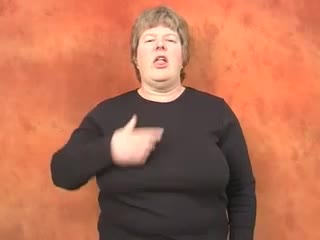
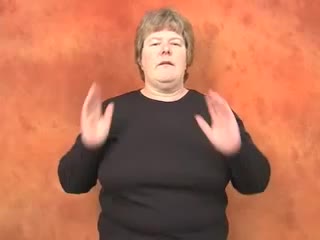
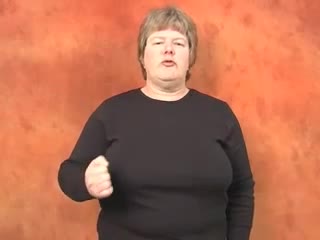
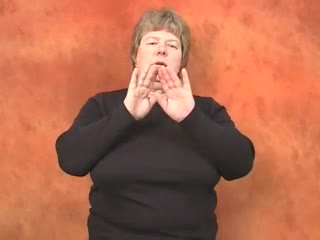
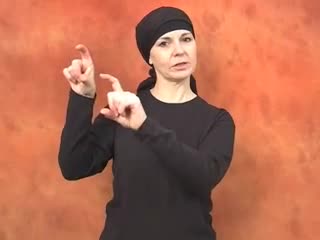
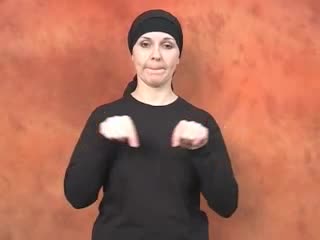
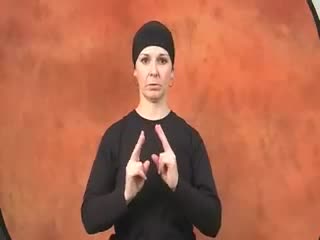
For this sign, you'll primarily use flat 'B' handshapes. Both your dominant and non-dominant hands will form this shape, meaning all your fingers are held together straight and flat, with your thumb tucked alongside your palm. Imagine your hand is a flat paddle or the base of the sanding machine itself.
Step 2: Hand Placement and Location
Position your non-dominant hand flat, palm facing upwards, held steady in front of your body, roughly at chest height. This hand represents the surface being sanded or the stable base of the tool. Your dominant hand, also in the flat 'B' shape, will hover directly above the non-dominant hand, with its palm facing downwards. The gap between your hands should be minimal, just enough to allow for movement without touching.
Step 3: Movement
With your hands in position, the dominant hand executes a rapid, small, back-and-forth or circular motion just above the non-dominant hand. Picture the action of a power sander as it works across a surface, smoothing it out. The movement should be quick and repetitive, reflecting the machine's vibration and grinding action. You'll complete several small, swift movements, perhaps two to three small passes in quick succession.
Step 4: Facial Expression and Mouthing
A neutral, focused facial expression generally accompanies this sign, mirroring the concentration required when using such a tool. As you produce the sign, you should mouth the English word "sander." Mouthing is a crucial non-manual feature in BSL; it provides lexical clarification and integrates spoken language elements, ensuring the precise meaning is conveyed. This visual cue helps disambiguate words that might otherwise share similar manual signs.
Step 5: Palm Orientation
Throughout the sign, your dominant hand's palm remains facing downwards, directed towards the non-dominant hand. The non-dominant hand's palm, conversely, faces upwards. This specific orientation is vital as it directly depicts the action of a sanding pad pressing down onto a surface, clarifying the functional aspect of the tool being described. Altering these palm orientations could inadvertently change the sign's meaning, potentially indicating a different action or object entirely.
"sander" in BSL - Quick Reference Snapshot
- Handshape: Both hands flat 'B' handshapes.
- Location: Dominant hand hovers above stationary non-dominant hand, at chest height.
- Movement: Dominant hand performs small, rapid, repetitive back-and-forth or circular motion.
- Facial Expression: Neutral, focused expression.
- Dominant Hand: Executes the active sanding motion.
- Palm Orientation: Dominant palm down, non-dominant palm up.
5 Memorisation Tricks for the BSL Sign "sander"
Want some clever ways to really make the BSL sander sign stick in your memory? Here are some insights from years of teaching.
- Visualise the Action: Picture a piece of wood on a workbench. Your non-dominant hand is that wood, and your dominant hand is the sander itself, whirring away. This strong visual connection to the tool's actual function makes the repetitive motion highly intuitive and easy to recall.
- Muscle Memory Drill: Set a timer for 30 seconds and just sign "sander" repeatedly, focusing on the quick, small movements. The physical repetition builds a strong neural pathway, making the sign feel natural and automatic. You'll find your hands remember the motion even if your brain temporarily forgets the name.
- Connect to Meaning: Think about what a sander *does* – it smooths surfaces. The sign's action of a flat hand moving over another flat hand directly represents this smoothing. Understanding the iconic link reinforces the sign's form through its purpose.
- Avoid Flat Hand Confusion: Many signs use a flat handshape, so be careful not to confuse "sander" with signs like "book" or "table." The key distinguishing feature here is the *repetitive, small-scale motion* of the dominant hand, which is unique to tools that vibrate or rub.
- Integrate into Daily DIY: Every time you see a sander, hear about sanding, or even just walk past a hardware store, pause and practise the sign. Integrating it into your daily observations and thoughts strengthens its context, making it a more accessible part of your working BSL vocabulary.
Real-Life Situations to Use the BSL Sign for "sander"
Knowing the BSL sander sign is useful in so many practical contexts, helping you discuss everything from home repairs to creative projects.
- Imagine you're at a DIY store with a Deaf friend; you might sign, "DO YOU NEED NEW SANDER?" to help them find the right tool. Here, the question uses a raised eyebrow and slightly forward lean, typical BSL non-manual markers for queries.
- Perhaps you're explaining a weekend project to a family member: "SATURDAY I WILL USE SANDER TO SMOOTH TABLE." This sentence follows a common BSL topic-comment structure, placing the time and action first.
- You could be describing a finished piece of furniture, signing, "I USED SANDER, NOW SURFACE SMOOTH NICE." The adjective "SMOOTH" might be accompanied by an approving facial expression, emphasising the quality of the finish.
- If someone asks about a noisy tool, you might respond, "NO, THAT'S NOT DRILL, THAT'S SANDER" – using a head shake for negation and clear pointing to clarify the specific item.
Top 3 Mistakes Learners Make Signing "sander" in BSL
Even experienced learners can sometimes stumble with signs like "sander." Here are three common pitfalls and how to steer clear of them.
-
Too Large a Movement: Many beginners make the dominant hand's movement too sweeping or expansive. This error can make the sign look like "rub" or "clean" rather than the precise action of a sander. The correction involves keeping the motion very small, contained, and rapid, mimicking the vibration of the tool's pad.
-
Incorrect Hand Orientation: Sometimes, learners inadvertently have both palms facing the same direction, or perhaps the dominant palm faces upwards. This changes the entire meaning. Always ensure your dominant palm faces down, depicting the tool pressing onto a surface, while your non-dominant palm remains up as the surface itself.
-
Lack of Repetition or Speed: A single slow pass of the dominant hand won't convey "sander"; it might look more like "stroke" or "pat." The sign requires multiple, quick, repetitive movements to truly capture the mechanical, vibrating nature of the tool. Practise speeding up those small motions to make the sign instantly recognisable.
Fascinating Facts About the BSL Sign for "sander"
Every sign has a story and unique characteristics. Here are some interesting nuggets about the BSL sign for sander.
- The sign for "sander" is highly iconic, directly reflecting the action of the tool itself, making it one of the more transparent signs for new learners.
- While the core movement of "sander" is quite consistent across the UK, slight regional variations might exist in the exact speed or number of repetitions, though the handshapes and general location remain stable.
- This sign often serves as a base for other related tools; by modifying the movement or adding a subsequent sign, you could specify a 'belt sander' or 'orbital sander'.
- Its strong indexical quality means the sign points directly to the function of the object, rather than relying on abstract representation.
- The sign doesn't derive from the manual alphabet; it's a completely distinct lexical item within BSL's rich vocabulary.
"sander" in Deaf Culture - Community and Identity
Tools like the sander, while seemingly mundane, connect to the practical aspects of Deaf community life, especially among those involved in trades, crafts, or home improvement. Discussions about DIY projects, sharing advice on renovations, or describing professional skills frequently involve signs for tools. When a Deaf person signs "sander," they're not just naming an object; they're engaging in a conversation about work, hobbies, and the tangible world around them. These shared experiences, communicated through the fluidity of BSL, strengthen bonds and foster a sense of collective identity. It's about participation and accessibility in every facet of life, including the workshop.
Example Conversations Using "sander" in BSL
Let's see how the BSL sander sign fits into real communication. Getting a feel for its use in context is incredibly helpful.
English: Do you have a sander I could borrow for my project? - BSL structure: YOU HAVE SANDER, I BORROW FOR MY PROJECT? (Uses eyebrow raise and forward lean for the question; topic-comment structure)
English: This old table needs a good sanding to make it smooth. - BSL structure: THIS TABLE OLD, NEED SANDER, SMOOTH. (Focuses on the state of the table and the required action)
English: Be careful when you're using the sander, it's quite powerful. - BSL structure: CAREFUL YOU USE SANDER, POWERFUL IT IS. (Emphasises caution with a specific warning about the tool's strength)
English: I bought a new electric sander yesterday for my workshop. - BSL structure: YESTERDAY I BOUGHT NEW ELECTRIC SANDER FOR MY WORKSHOP. (Clear chronological order and specification of the type of sander)
English: Which sander do you recommend for fine finishing work? - BSL structure: FINE FINISH WORK, WHICH SANDER YOU RECOMMEND? (Places the specific task first, then the inquiry about recommendation)
Frequently Asked Questions: The BSL Sign for "sander"
Is the BSL sign for sander the same across all regions of the UK?
While the core handshapes and the iconic movement for "sander" are widely understood across the UK, minor regional nuances might exist in terms of speed or how many repetitions are typically performed. The fundamental visual representation, however, remains consistent enough for universal comprehension within British Sign Language.
Are there any similar signs that I might confuse with the BSL sign for sander?
Yes, learners sometimes confuse "sander" with signs for "rub," "clean," or "polish," which can involve flat handshapes and repetitive movements. The key difference lies in the *speed* and *tightness* of the "sander" movement, which is much faster and more confined, representing a vibrating tool rather than a broader manual action.
Is the BSL sign for sander suitable for absolute beginners?
Absolutely, the BSL sign for "sander" is excellent for beginners! Its highly iconic nature, directly mimicking the tool's function, makes it quite intuitive and easy to grasp, providing a tangible connection between the sign and its meaning.
Can children easily learn the BSL sign for sander?
Children pick up iconic signs very quickly, and "sander" is no exception. Its clear visual representation of a commonly seen household or workshop tool makes it engaging and simple for young learners to understand and replicate.
Does the BSL sign for sander have an equivalent in other sign languages?
While other sign languages will certainly have a sign for "sander," its form would likely be distinct from the BSL version. Each sign language develops its own unique vocabulary, reflecting its community's specific cultural and linguistic evolution.
Signs That Pair Naturally with "sander" in BSL
Building your vocabulary means understanding how signs connect. Here are some related BSL signs that naturally complement "sander."
- WOOD: This sign, often made by tapping your dominant index finger against your chin, frequently appears in discussions about materials for sanding.
- SMOOTH: After using a sander, a surface becomes smooth; this sign often involves running a flat hand over another flat hand or a surface.
- TABLE: Many woodworking projects involve tables, so learning "table" (flat hands forming a surface) provides context for what you're sanding.
- TOOL: Signing "tool" (often a 'T' handshape twisting at the wrist) is useful for categorising "sander" within a broader group of implements.
- PROJECT: When you're talking about a "project" (often two 'P' handshapes circling), the sander becomes a necessary item for completion.
- WORKSHOP: This sign, typically two 'W' handshapes moving in a circular motion, creates a spatial context for where a sander would be used.
Building Fluency: How to Practise "sander" in BSL
Getting truly fluent with any BSL sign, including "sander," means consistent, thoughtful practice. Try standing in front of a mirror and watching your hands, making sure your handshapes are precise and the movement is small, quick, and repetitive, just like a real power sander. Integrate the sign into your daily musings; if you see anything that needs smoothing, mentally or physically sign "sander." Filming yourself is a fantastic way to catch any subtle errors in your execution that you might miss otherwise. Most importantly, seek out opportunities to use "sander" in actual conversations with Deaf individuals; their feedback and natural usage will provide invaluable learning experiences, helping you embed this useful sign into your expressive vocabulary.