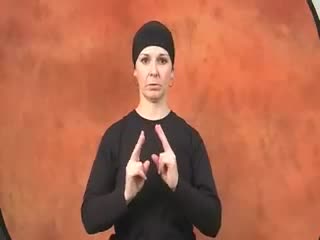
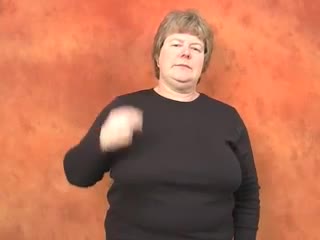
What Is the BSL Sign for "tool box"?
The humble container of implements, so vital for repairs and construction, finds a clear and practical representation within British Sign Language. Mastering the BSL sign for tool box opens up countless everyday conversations about maintenance, DIY projects, and general preparedness. This fundamental sign visually conveys the concept of a dedicated storage unit for various tools, making it instantly recognisable to those familiar with British Sign Language tool box vocabulary. Understanding this sign allows individuals to discuss practical necessities, whether at home, in a workshop, or on a job site.
How to Sign "tool box" in British Sign Language - Step-by-Step
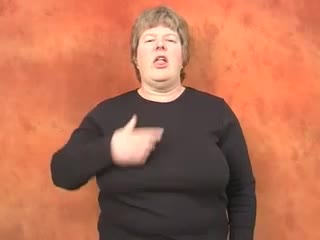
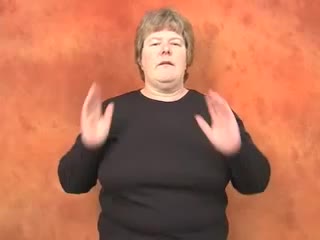
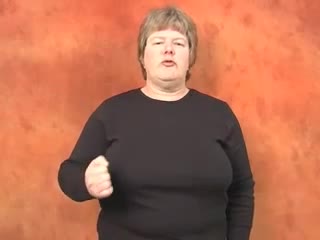
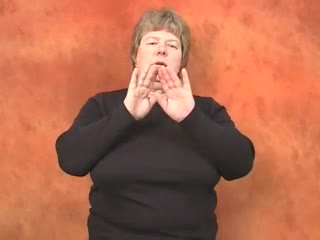
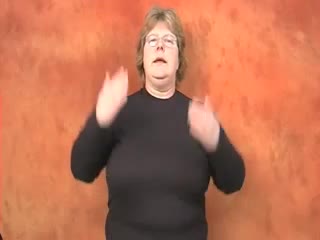
The physical articulation of this sign vividly mimics the action of accessing a functional container.
Step 1: Handshape
For the non-dominant hand, adopt a flat handshape with fingers extended and joined, palm facing upwards, creating a stable base. The dominant hand begins with a closed 'S' or 'A' handshape, forming a fist with the thumb resting alongside the index finger, representing the closed lid.
Step 2: Hand Placement and Location
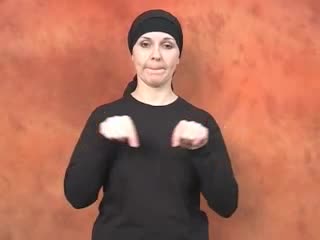
Position the non-dominant hand, palm up, in the neutral signing space directly in front of your chest, slightly below shoulder height. Place the dominant hand (the closed fist) on top of the non-dominant palm, aligning the knuckle side of the dominant hand with the heel of the non-dominant palm, indicating the closed lid resting on the box.
Step 3: Movement
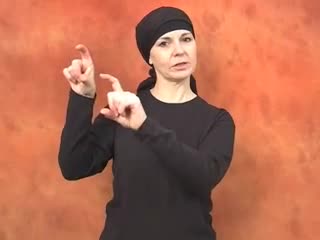
From its initial resting position, the dominant hand lifts upwards and arcs away from the body, pivoting at the wrist, as if opening a hinged lid. This movement is smooth and deliberate, extending slightly outwards and upwards, revealing the "contents" of the box. The non-dominant hand remains stationary throughout the motion.
Step 4: Facial Expression and Mouthing
Maintain a neutral and engaged facial expression while producing this sign, as the concept itself does not inherently carry strong emotion. Accompany the manual sign by mouthing the words "tool box" clearly, ensuring complete communication and reinforcing the specific lexical item being conveyed. This non-manual feature is a crucial component for precise BSL communication, aiding both comprehension and natural flow.
Step 5: Palm Orientation
The non-dominant hand's palm orientation remains consistently upward, serving as the stable base. The dominant hand starts with its knuckles facing upwards (or slightly towards the body) and rotates, so its palm faces more forward and slightly upward as it completes the arc of the "opening" movement. This shift in palm orientation is integral to depicting the lid's motion.
"tool box" in BSL - Quick Reference Snapshot
- Handshape: Non-dominant flat hand (base), dominant 'S' or 'A' hand (lid).
- Location: Neutral signing space, in front of the chest.
- Movement: Dominant hand lifts and arcs open from non-dominant base.
- Facial Expression: Neutral.
- Dominant Hand: Performs the opening action.
- Palm Orientation: Non-dominant palm up; dominant knuckles up then palm forward/up.
5 Memorisation Tricks for the BSL Sign "tool box"
- Visual Mnemonic: Imagine a classic hinged tool box; the non-dominant hand forms the base, while your dominant hand literally lifts and opens the lid, just like the real object. This direct iconic representation makes the BSL tool box sign highly memorable.
- Muscle-Memory Drill: Perform the sign ten times slowly, focusing on the smooth arc of the dominant hand, then gradually increase speed while maintaining precision. Consistent, deliberate repetition of how to sign tool box in BSL helps embed the movement into your motor memory.
- Connection to Meaning: Reflect on the purpose of a tool box – it holds essential items. The sign itself reveals these items by opening, creating a strong conceptual link between the action and its lexical meaning. This association strengthens your recall of the British Sign Language tool box gesture.
- Common-Confusion Tip: Be careful not to confuse this sign with generic "open" (which often uses both hands separating) or "box" (which might involve outlining a square). The specific base-and-lid action of the tool box sign sets it apart, ensuring clarity when you learn tool box BSL.
- Daily-Life Practice: Whenever you see a physical tool box, or even think about needing a wrench or hammer, practice the sign. Integrate the action into your everyday thoughts, reinforcing your ability to recall what is the sign for tool box with ease.
Real-Life Situations to Use the BSL Sign for "tool box"
- When asking a friend, "Do you have a tool box I could borrow?" the sign for "tool box" would be followed by a questioning facial expression and a sign for "have" or "possess," often with a slight lean forward to indicate the interrogative nature.
- You might sign, "I need my tool box to fix the chair," where the sign for "tool box" is placed before "fix" in a topic-comment structure, clearly establishing the subject of your sentence.
- Describing where an item is, such as "The hammer is in the tool box," would involve signing "hammer," then "tool box," potentially using spatial grammar to indicate the location by pointing towards the conceptual "inside" of the signed box.
- If you are explaining, "My tool box is too heavy to carry," you would sign "my," then "tool box," followed by "heavy" and "cannot carry," using appropriate non-manual features to convey the burden.
Top 3 Mistakes Learners Make Signing "tool box" in BSL
- Inaccurate Handshape for the Lid: A frequent error involves not forming the dominant hand into a proper 'S' or 'A' handshape, instead using a loose 'C' or simply an open hand. This misrepresents the solid nature of a tool box lid; the correct handshape should convey a firm, closed top, ensuring the BSL tool box sign is clearly understood.
- Incorrect Movement or Pivot Point: Learners sometimes move the dominant hand without a clear pivot, or they lift it straight up rather than in an arc. The essential movement is a hinged opening, meaning the dominant hand should pivot from the wrist or the base of the fingers, creating a distinct arc upwards and outwards, depicting the lid's motion precisely.
- Neglecting the Non-Dominant Base: Some beginners omit the non-dominant flat hand or position it incorrectly, making the dominant hand's movement seem to float in space. The non-dominant hand is crucial for establishing the "body" of the box, providing the necessary context and foundation for the "lid" to open from, thus completing the visual representation of the tool box in sign language.
Fascinating Facts About the BSL Sign for "tool box"
- The BSL sign for tool box is highly iconic, meaning its form directly resembles the physical object it represents. This visual transparency makes it relatively easy for new learners to grasp and remember its meaning, linking the action of opening a box to the item itself.
- While some BSL signs exhibit significant regional variations, the sign for "tool box" is remarkably consistent across different parts of the UK where British Sign Language is used. Its clear iconic nature likely contributes to this widespread uniformity, facilitating understanding across diverse Deaf communities.
- This sign effectively functions as a compound concept, combining the idea of a "box" with the implicit understanding of "tools" through its context and common usage. It streamlines communication by not requiring separate signs for "tool" and "box" to convey the specific item.
- Linguistically, the sign demonstrates a clear example of 'instrumental' or 'action' motivation, where the action associated with an object (opening its lid) becomes the primary visual representation of the noun itself. This makes the BSL sign for tool box very descriptive.
- The sign's construction highlights the importance of three-dimensional space in BSL. By using both hands to create a conceptual object and then manipulating it, signers convey depth and form that are integral to the sign's meaning, much like interacting with a real tool box.
"tool box" in Deaf Culture - Community and Identity
The concept of a "tool box" resonates deeply within Deaf culture, often symbolising resourcefulness and self-reliance, qualities highly valued within the community. Historically, Deaf individuals frequently faced barriers to accessing mainstream services, fostering a strong tradition of mutual support and practical skills. Discussing a tool box in BSL might evoke stories of community members helping each other with repairs or building projects, strengthening social bonds. It represents preparedness for practical challenges, a common thread in communities that have often had to adapt and innovate. The clear, descriptive sign for "tool box" facilitates seamless communication around practical tasks, underpinning the collaborative spirit often found in Deaf community gatherings.
Example Conversations Using "tool box" in BSL
English: Where is the red tool box? - BSL structure: TOOL BOX RED WHERE?
English: I need to get my tool box from the shed. - BSL structure: SHED MY TOOL BOX NEED TAKE-OUT.
English: Can you pass me the small tool box, please? - BSL structure: TOOL BOX SMALL YOU PASS PLEASE?
English: This old tool box is broken, I need a new one. - BSL structure: TOOL BOX OLD BROKEN NEW NEED.
English: My tool box contains all the essential tools. - BSL structure: MY TOOL BOX INSIDE ALL ESSENTIAL TOOLS.
Frequently Asked Questions: The BSL Sign for "tool box"
Are there regional variations for the BSL sign for "tool box"?
The BSL sign for tool box is largely consistent across different regions of the UK, owing to its highly iconic and descriptive nature. While minor stylistic differences in execution might occur, the core handshapes, location, and movement generally remain recognisable, ensuring clear communication regardless of specific regional dialect. This uniformity helps learners communicate effectively throughout the British Isles.
Are there similar BSL signs that could be confused with "tool box"?
Learners might occasionally confuse the sign for tool box with generic "open" or "box." However, the distinctive feature of the non-dominant hand forming the base and the dominant hand's specific arc to represent a hinged lid differentiates it. The mouthing of "tool box" also provides a crucial disambiguating cue, helping to distinguish it from related but distinct concepts.
Is the BSL sign for "tool box" suitable for beginners?
Absolutely, the BSL sign for tool box is an excellent sign for beginners due to its clear iconic representation. Its direct visual connection to the object makes it intuitive to learn and remember, offering an early success for those just starting their British Sign Language journey. It provides a solid foundation for understanding how BSL often uses visual imagery.
Can children easily learn and use the BSL sign for "tool box"?
Yes, children typically pick up the BSL sign for tool box very quickly because of its concrete and visual nature. The action of opening a box is familiar to most children, making it engaging and easy for them to replicate and incorporate into their early vocabulary. This sign supports the development of practical communication skills from a young age.
Why is the BSL sign for "tool box" constructed in this particular way?
The construction of the BSL sign for tool box is motivated by its physical form and function, directly representing the action of opening a traditional hinged tool box. This iconic representation allows for immediate recognition and understanding, making the sign highly efficient. It visually communicates the container's purpose and how one would interact with it.
Signs That Pair Naturally with "tool box" in BSL
- TOOL: This general sign for any implement naturally follows or precedes "tool box," as the box contains tools.
- FIX/REPAIR: Often, a tool box is needed for these actions, creating a strong contextual link for learners.
- HAMMER: A specific item commonly found inside a tool box, building specific vocabulary around the general concept.
- SCREWDRIVER: Another essential tool, useful for expanding a learner's practical BSL lexicon.
- BUILD: The act of constructing frequently requires the contents of a tool box, making it a logical pairing.
- NEED: Expressing the requirement for a tool box or its contents makes "need" an invaluable accompanying sign.
Building Fluency: How to Practise "tool box" in BSL
To truly master the BSL sign for tool box, consistent and varied practice is essential, moving beyond simple repetition. Stand in front of a mirror and meticulously observe your handshapes and movements, ensuring your dominant hand forms the precise 'S' or 'A' shape and executes the smooth, hinged arc. Integrate the sign into short, spontaneous sentences throughout your day, perhaps by thinking "I need my tool box" and signing it, or mentally narrating when you see one. Record yourself signing "tool box" on your phone; reviewing your own signing provides invaluable feedback on your palm orientation, speed, and overall clarity, helping you refine your execution. Actively seek opportunities to converse with Deaf individuals or experienced BSL signers, as their feedback and natural usage will significantly enhance your understanding and confidence in signing British Sign Language tool box. Regularly revisit the sign over several days or weeks, allowing for spaced repetition to solidify it firmly in your memory, transforming your knowledge into effortless, fluent communication.