What Is the BSL Sign for "tarpaulin"?
Unveiling the sign for "tarpaulin" in British Sign Language provides a wonderful example of how BSL elegantly describes objects through visual representation. This particular sign helps us communicate about those durable, often waterproof sheets we use for covering and protecting things, making it a surprisingly practical addition to your vocabulary. If you're looking to learn the BSL sign for tarpaulin, you'll discover a visually intuitive movement that reflects the object's function. Understanding how to sign tarpaulin in BSL unlocks a descriptive element of communication for countless situations, enriching your ability to converse effectively within the Deaf community.
How to Sign "tarpaulin" in British Sign Language - Step-by-Step
Let's break down the precise movements and features that make up this distinctive sign, guiding you through each element with clarity.
Step 1: Handshape
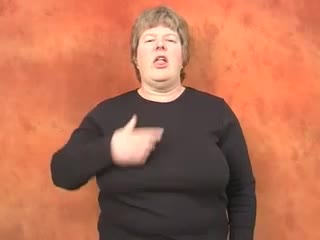
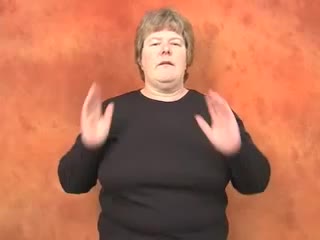
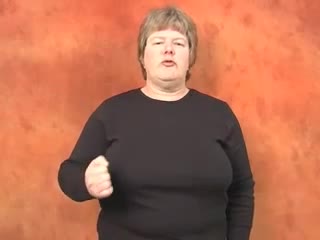
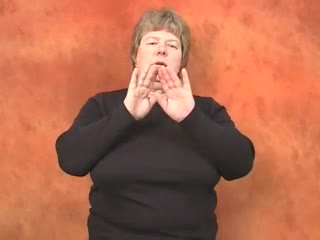
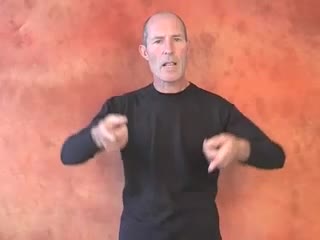
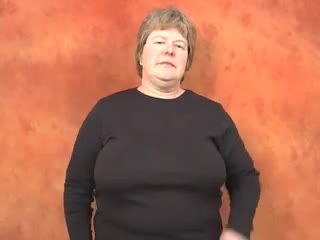
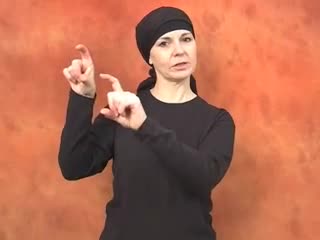
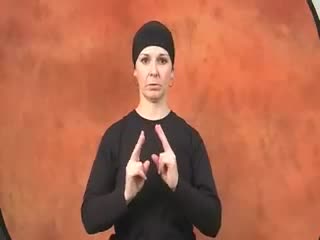
For the BSL sign for "tarpaulin," you'll begin by forming a 'flat hand' shape with both of your hands. This means all your fingers should be extended straight and pressed together, with your thumb resting alongside your palm. Imagine your hands becoming two smooth, flat planes, ready to represent the broad surface of the item itself.
Step 2: Hand Placement and Location
Now, bring both of your flattened hands together, positioning them in front of your chest. Your dominant hand should be slightly above your non-dominant hand, and both palms should face inwards towards each other. They're not quite touching, maintaining a small gap as if holding the edges of something substantial. This initial placement sets the stage for conveying the object's expansive nature.
Step 3: Movement
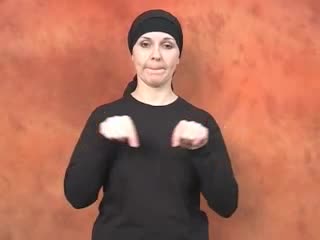
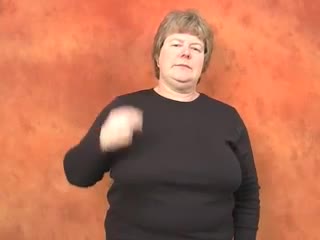
From that initial position, simultaneously move both hands outward and slightly downward in a broad, sweeping motion. Envision pulling a large sheet of material taut, or unfurling it over an area. The movement concludes with your hands positioned further apart, perhaps at shoulder-width, and slightly lower than their starting point, suggesting the spreading out of the item.
Step 4: Facial Expression and Mouthing
While executing the sign for "tarpaulin," maintain a neutral and engaged facial expression. Your brow should be relaxed, reflecting the straightforward nature of the noun you're conveying. Simultaneously, mouth the word "tarpaulin" silently or with a very slight articulation; this non-manual feature helps distinguish the sign and provides context, especially for BSL learners and those unfamiliar with the specific sign.
Step 5: Palm Orientation
Throughout the initial phase of the movement, your palms face each other, mirroring the parallel surfaces of the object. As your hands sweep outward, their orientation subtly shifts, ending with palms facing downwards or slightly angled towards the ground. This final palm orientation effectively depicts the flat, covering nature of the tarpaulin as it settles into place.
"tarpaulin" in BSL - Quick Reference Snapshot
- Handshape: Both hands form a 'flat hand' (fingers extended, together, thumb alongside).
- Location: Starts in front of the chest, hands close, then moves outward and slightly downward.
- Movement: Simultaneous outward and downward sweep, like unfurling a large sheet.
- Facial Expression: Neutral and engaged, accompanied by mouthing "tarpaulin."
- Dominant Hand: Works in conjunction with the non-dominant hand, initiating slightly higher.
- Palm Orientation: Begins palms facing each other, ends palms facing downwards or angled.
5 Memorisation Tricks for the BSL Sign "tarpaulin"
- Picture in your mind the actual action of someone pulling a large, heavy tarpaulin sheet over an object. That broad, expansive movement of your hands directly mimics the physical act, making the sign iconic and easy to recall.
- To embed the sign in your muscle memory, try repeating the movement ten times while saying "tarpaulin" out loud, then ten more times silently. This rhythmic repetition helps solidify the connection between the spoken word, the visual sign, and the physical sensation.
- Connect the 'flat hand' shape to the flat surface of a tarpaulin itself. Your hands become the material, and the outward movement represents its spread, creating a direct visual link to the object's form and function.
- A lot of people miss the subtle downward arc at the end of the movement; remember that a tarpaulin settles down over whatever it covers, so ensure your hands finish slightly lower than where they began. This small detail adds significant accuracy to the BSL tarpaulin sign.
- Integrate the sign into your daily observations: whenever you see a tarpaulin, whether on a building site or covering garden furniture, pause for a moment and mentally or physically practice the sign. This constant reinforcement in real-world contexts greatly aids retention.
Real-Life Situations to Use the BSL Sign for "tarpaulin"
- Imagine you're at a garden centre, and you need to ask a Deaf friend, "Do you have a big tarpaulin to cover this wood pile?" You'd sign 'WOOD PILE' then 'COVER' then 'BIG' and finally the sign for tarpaulin, perhaps with a questioning facial expression.
- Perhaps a storm is coming, and you want to tell someone, "We need to put the tarpaulin over the boat." This uses a simple topic-comment structure: 'BOAT' 'STORM COMING' 'TARPAULIN' 'OVER' 'NEED'.
- Someone might ask you, "Where did you buy that yellow tarpaulin?" In BSL, this could be structured as 'TARPAULIN' (signed with a yellow classifier or just the colour sign 'YELLOW') 'WHERE BUY?' with the appropriate interrogative facial expression.
- You could be describing a camping trip and mention, "The tent leaked, so we used a small tarpaulin as a makeshift roof." Here, you'd sign 'TENT LEAK' 'SO' 'SMALL' 'TARPAULIN' 'ROOF' with a classifier to show the placement.
Top 3 Mistakes Learners Make Signing "tarpaulin" in BSL
- Many beginners forget to use both hands simultaneously, sometimes signing it with one hand or with hands moving sequentially. This error misses the essential two-handed nature of the sign, which conveys the object's breadth; always ensure both hands work in unison, reflecting the large, spread-out quality.
- Another common slip-up involves neglecting the outward and slightly downward sweeping motion, instead making the hands move straight out or just wiggling them. The expansive, controlled arc is crucial for representing the act of unfurling or covering, so practise a deliberate, broad sweep to capture the sign's true form.
- Occasionally, learners fail to maintain the 'flat hand' shape throughout the sign, letting fingers curl or spread inadvertently. Precision in handshape is paramount in British Sign Language; keep your fingers extended and pressed together from start to finish, ensuring your hands truly embody the smooth surface of the tarpaulin.
Fascinating Facts About the BSL Sign for "tarpaulin"
- The BSL sign for "tarpaulin" is highly iconic, meaning its form directly mimics the action or appearance of the object it represents. This visual connection makes it relatively easy for new learners to grasp and remember, as it literally 'shows' the process of spreading a large sheet.
- Interestingly, while a core sign exists, some regional variations within the BSL-using community might slightly alter the exact starting point or the extent of the downward movement. These subtle differences highlight the organic evolution of British Sign Language across various localities.
- The two-handed symmetrical movement is a distinctive linguistic feature of many BSL signs for large, flat objects or actions involving spreading. This sign perfectly demonstrates how BSL uses both hands in concert to convey size and a sense of expanse.
- You won't find a direct connection to the manual alphabet for the sign for "tarpaulin," as it's a conceptually driven sign rather than one derived from finger spelling. Its motivation stems purely from its visual representation of the object.
- This sign effectively uses the 'neutral space' in front of the body to convey information about the object's dimensions. The movement from a central point outwards creates a mental image of the tarpaulin's impressive coverage.
"tarpaulin" in Deaf Culture - Community and Identity
While "tarpaulin" might seem like a straightforward object, its sign, like all BSL signs, is an integral part of how Deaf people interact with their world and each other. Sharing the BSL sign for tarpaulin in conversation reinforces the shared linguistic identity of the Deaf community, allowing for clear, visual communication about practical matters. When you use this sign correctly, you're not just conveying a word; you're participating in a rich visual language that has been passed down through generations. The ability to describe everyday items, from the mundane to the essential, strengthens communal bonds and ensures that no concept remains out of reach. It underscores how every sign, even for something as functional as a tarpaulin, contributes to the vibrant tapestry of Deaf culture.
Example Conversations Using "tarpaulin" in BSL
English: We need a blue tarpaulin for the car. - BSL structure: Focus on the object first, then its attribute and need: CAR BLUE TARPAULIN NEED.
English: Did you see the tarpaulin covering the roof? - BSL structure: Establish the context, then the object and its action: ROOF COVER TARPAULIN YOU SEE? (with questioning facial expression).
English: The tarpaulin tore in the wind. - BSL structure: State the object, then the problem and cause: TARPAULIN WIND TEAR (with appropriate facial expression for damage).
English: Can you help me fold this big tarpaulin? - BSL structure: Direct request, indicating the object and action: BIG TARPAULIN FOLD HELP ME PLEASE?
English: I think the tarpaulin is in the shed. - BSL structure: Subject-verb-object order, with spatial information: TARPAULIN SHED INSIDE I THINK.
Frequently Asked Questions: The BSL Sign for "tarpaulin"
Is the BSL sign for tarpaulin the same across all of the UK?
While the core concept and movement for the BSL sign for tarpaulin remain largely consistent, you might encounter minor regional variations in specific execution. These subtle differences are a natural part of any living language, reflecting local community preferences without significantly impeding understanding across the UK. It's always great to observe and adapt to local signing styles where you are.
Are there any similar signs I might confuse with the BSL tarpaulin sign?
You might initially confuse the BSL sign for tarpaulin with signs for other large, flat objects or actions involving spreading, such as 'BLANKET' or 'COVER'. The key distinction lies in the specific handshape, the exact arc of the movement, and the mouthing; for tarpaulin, the hands maintain a very flat, taut appearance throughout the outward sweep. Pay close attention to these nuances to avoid mix-ups.
Is the BSL sign for tarpaulin suitable for beginners?
Absolutely, the BSL sign for tarpaulin is a fantastic sign for beginners because of its highly iconic nature. Its visual representation of spreading a sheet makes it relatively easy to remember and execute, offering a clear connection between the object and its sign. This makes it an encouraging and accessible sign to add to your foundational BSL vocabulary.
Can children easily learn the British Sign Language tarpaulin sign?
Yes, children typically pick up the British Sign Language tarpaulin sign with great ease due to its descriptive and engaging movement. They often enjoy mimicking the action of spreading something large, which helps them grasp the sign's meaning quickly. Encouraging them to associate the sign with real tarpaulins they see can also boost their learning.
How does the BSL sign for tarpaulin compare to American Sign Language (ASL) for the same concept?
It's important to remember that British Sign Language and American Sign Language are distinct languages with different vocabularies and grammatical structures. While both might use visually descriptive signs, the specific handshapes, movements, and locations for "tarpaulin" in BSL will differ from its ASL counterpart. Each sign language has its unique way of representing concepts.
Signs That Pair Naturally with "tarpaulin" in BSL
- COVER: This sign logically accompanies "tarpaulin," as a tarpaulin's primary function is to cover things, making them a natural conceptual pair.
- RAIN: Often, a tarpaulin is used for protection from the elements, so 'RAIN' is a common contextual partner, linking the purpose of the object.
- PROTECT: Similar to 'COVER', the sign for 'PROTECT' explains the underlying reason for deploying a tarpaulin, building a thematic vocabulary cluster.
- SHED: Tarpaulins are frequently stored in places like a 'SHED' or used to cover items within one, creating a practical association for learners.
- ROPE: To secure a tarpaulin, one often needs 'ROPE', so learning these two signs together helps describe the full process of using the item.
- BIG/SMALL: Describing the size of a tarpaulin with 'BIG' or 'SMALL' is incredibly common, making these descriptive adjectives essential companions for the noun.
Building Fluency: How to Practise "tarpaulin" in BSL
To truly embed the BSL sign for tarpaulin into your active vocabulary, dedicate time to deliberate practice. Stand in front of a mirror and watch your handshape and movement carefully, ensuring your hands form the correct flat shape and execute that broad, sweeping motion accurately. Try integrating the sign into simple BSL sentences throughout your day; for instance, if you see a lorry with a tarpaulin, mentally sign "lorry tarpaulin" to yourself. Filming yourself signing can provide invaluable feedback, allowing you to catch any subtle errors in handshape or movement that you might miss otherwise. Most importantly, seek out opportunities to converse with Deaf individuals, as real-world interaction solidifies your understanding and builds confidence. Remember, consistent, spaced repetition is your best friend when mastering any sign in British Sign Language.