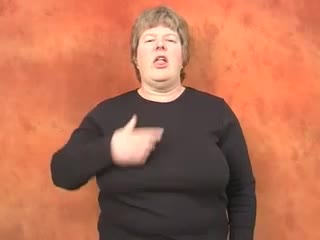
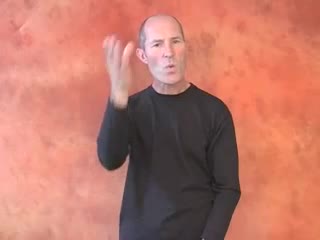
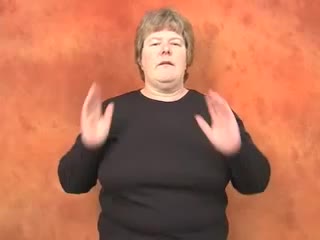
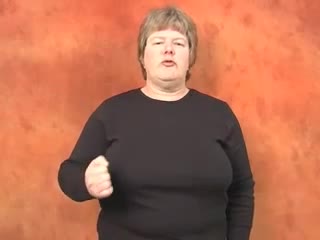
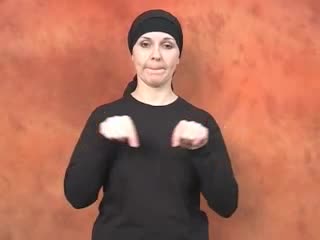
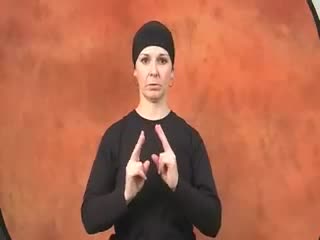
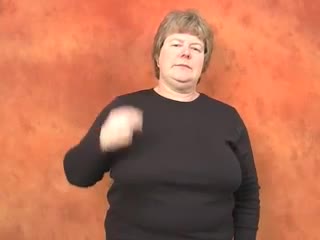
What Is the BSL Sign for "silicon"?
You're diving into the fascinating world of British Sign Language, and today we're tackling a word that powers much of our modern world: "silicon." This isn't just a chemical element; it's the very foundation of technology, from your smartphone to vast computer networks. Understanding the BSL sign for "silicon" opens up conversations about innovation, engineering, and the digital landscape. It's a sign that represents a core material, allowing you to discuss everything from microchips to the very structure of the earth. Learning "silicon British Sign Language" truly bridges technical concepts with visual communication, making complex ideas accessible.
How to Sign "silicon" in British Sign Language - Step-by-Step
Let's break down the precise actions needed to accurately convey "silicon" in BSL, focusing on clarity for every gesture.
Step 1: Handshape
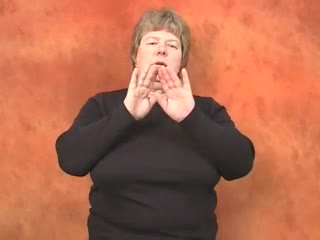
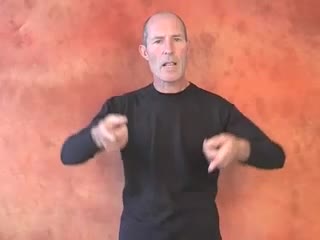
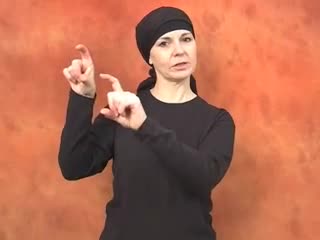
For this sign, your dominant hand will take on the 'S' handshape. To achieve this, simply form a fist, ensuring your thumb tucks neatly over your index, middle, ring, and pinky fingers. Your knuckles should point forward, creating a compact and closed hand position. This specific formation is crucial for the sign's recognition within the BSL lexicon.
Step 2: Hand Placement and Location
Position your dominant hand, already in the 'S' handshape, near your temple. You'll place it slightly forward of your ear, aiming for the area often associated with thought and processing. Your knuckles should generally face forward, with the back of your hand relatively flat against the side of your head. This specific location establishes the initial context for the sign's meaning.
Step 3: Movement
From its starting point at your temple, perform a small, subtle flick of your wrist. This isn't a large, sweeping motion; rather, it's a quick, precise rotation of the wrist, moving your hand slightly outward and then back inward. Think of it as a gentle, activating twist, almost as if you're engaging a tiny, intricate mechanism. This short, sharp action completes the primary kinetic aspect of the sign.
Step 4: Facial Expression and Mouthing
While the sign for "silicon" doesn't demand an exaggerated facial expression, maintaining a neutral or slightly contemplative look is appropriate. Your eyebrows shouldn't be furrowed in confusion, nor should you be beaming with delight; a relaxed, engaged expression communicates seriousness and focus. Crucially, you'll mouth the word "silicon" as you perform the sign. This mouthing acts as a vital non-manual feature in BSL, clarifying the specific English word and preventing ambiguity, especially with signs that might have similar manual components. It’s a grammatical necessity that adds clarity and context.
Step 5: Palm Orientation
Initially, as your hand rests near your temple, your palm should face forward, directed away from your head. As you execute the small wrist flick, your palm will briefly rotate slightly inward, towards your head, before returning to its forward orientation. This subtle shift in palm direction during the movement is integral to the sign’s structure and contributes to its distinct visual character, helping to differentiate it from other signs that might share a handshape or location.
"silicon" in BSL - Quick Reference Snapshot
- Handshape: Dominant hand in an 'S' shape (closed fist, thumb over fingers).
- Location: Near the temple, slightly forward of the ear.
- Movement: Small, precise wrist flick outward and inward.
- Facial Expression: Neutral or mildly contemplative, accompanied by mouthing "silicon".
- Dominant Hand: Always the dominant hand performs the action.
- Palm Orientation: Starts facing forward, briefly rotates inward during movement.
5 Memorisation Tricks for the BSL Sign "silicon"
Here are some unique ways to help you really embed the sign for "silicon" into your BSL vocabulary.
- Visual Mnemonic: The "Smart S" Picture the 'S' handshape at your temple as an acronym for "Smart Science" or "Smart Systems," directly linking silicon to intelligence and technology. The small flick can then represent a tiny, intricate chip firing off a thought or processing data within a computer.
- Muscle-Memory Drill: The "Temple Tap & Twist" Practice the 'S' handshape and bring it to your temple, then perform the subtle wrist flick repeatedly. Focus on the feeling of the small movement and the specific hand position; you're teaching your muscle memory the precise sequence for signing "silicon." Do this ten times, then take a break, and repeat later.
- Connection to Meaning: The "Brainy Bit" Think about how silicon is the "brain" of computers. Placing the 'S' handshape at your temple makes intuitive sense, as the temple is often associated with the brain and thinking. The flick represents the tiny, powerful actions happening inside a silicon chip, making this abstract concept tangible.
- Common-Confusion Tip: Not "Secret" or "Student" Many 'S' handshape signs exist, so distinguish "silicon" from others like 'SECRET' (often a different location or movement) or 'STUDENT' (which usually involves two hands or a different action). The key is the precise temple placement and the specific, small wrist flick; focus on those unique markers.
- Daily-Life Practice: "Tech Check" Whenever you interact with a piece of technology today – your phone, your laptop, even a remote control – pause and sign "silicon." This integration into your everyday routines creates immediate, relevant contexts for the sign, reinforcing its meaning and helping you recall it effortlessly.
Real-Life Situations to Use the BSL Sign for "silicon"
Understanding how to integrate "silicon" into actual conversations is key for fluency. Here are some practical scenarios.
- You might discuss environmental concerns: "TOO MUCH ELECTRONIC WASTE, WHERE DOES SILICON GO?" (BSL structure: often Topic-Comment, "ELECTRONIC WASTE TOO MUCH, SILICON WHERE GO?") The question uses spatial grammar to indicate direction or destination.
- When talking about manufacturing: "THIS FACTORY MAKE SILICON CHIP." (BSL structure: Subject-Verb-Object, possibly with classifiers to show the chip's shape). Here, "make" is a process, and "chip" would follow.
- Perhaps in an educational context: "SCIENCE CLASS, WE LEARN ABOUT SILICON PROPERTIES." (BSL structure: Time-Topic-Comment, "CLASS SCIENCE, SILICON PROPERTIES WE LEARN.") The sign for "properties" would accompany "silicon."
- You could praise an innovative device: "WOW, THIS NEW PHONE, SILICON TECHNOLOGY AMAZING." (BSL structure: Adjective-Noun order for emphasis, "PHONE NEW, SILICON TECHNOLOGY AMAZING WOW.") The expression on your face would convey the "amazing" sentiment.
Top 3 Mistakes Learners Make Signing "silicon" in BSL
It’s completely normal to encounter a few bumps on the road when learning new signs. Here are the most common pitfalls with "silicon" and how to easily correct them.
- Incorrect Handshape: Forgetting the Thumb Tuck. Learners sometimes keep their thumb extended or tucked *inside* the fingers rather than over them, which alters the 'S' handshape. This subtle difference can make the sign look like another letter or an unrecognisable gesture. The correction is simple: always ensure your thumb consistently rests over your curled fingers, creating a neat, compact fist.
- Wrong Location: Signing at the Chin or Forehead. Another frequent error involves placing the hand too low, perhaps at the chin, or too high, directly on the forehead. While these locations are valid for other BSL signs, they're incorrect for "silicon" and could lead to confusion. The precise spot is your temple, slightly forward of your ear; focus on consistently hitting this specific point every time you practise.
- Overly Exaggerated Movement: Too Big a Flick. Sometimes, learners perform a large, sweeping wrist rotation or even move their entire arm, thinking a bigger movement means clearer communication. However, the sign for "silicon" requires a very small, precise flick of the wrist. The correct action is subtle and contained; think of it as a gentle, internal activation, not a grand gesture.
Fascinating Facts About the BSL Sign for "silicon"
Let's uncover some intriguing details about this particular sign and its place within the rich tapestry of BSL.
- The 'S' handshape in "silicon" acts as an initialisation, directly referencing the first letter of the English word. This is a common linguistic strategy in BSL for technical or less iconic concepts, making it instantly relatable to spoken language users.
- While the sign primarily leverages initialisation, the placement at the temple carries an iconic or indexic motivation, connecting "silicon" to thought, processing, and the 'brain' of technology. This clever combination adds depth beyond a simple letter sign.
- Interestingly, some regional variations might substitute the 'S' handshape with a 'C' handshape (for 'chip') or a 'T' handshape (for 'technology') in very specific contexts, though the 'S' at the temple remains the widely accepted and most understood form for the elemental word itself across the BSL-using community.
- The precision of the small wrist flick is a critical phonological feature; changing its speed, size, or direction significantly alters the sign's integrity. It's an example of how subtle kinetic details carry significant meaning in BSL.
- This sign's structure makes it relatively stable across different BSL dialects, meaning you'll find it widely recognised whether you're signing in Glasgow or Brighton, reinforcing its authoritative status within the language.
"silicon" in Deaf Culture - Community and Identity
The concept of "silicon" holds particular resonance within the Deaf community, deeply connected to advancements in technology and communication. For many Deaf individuals, silicon-based technologies, from video phones to accessible apps, have dramatically enhanced connectivity and independence. These innovations, often driven by the very material "silicon" represents, allow for richer interactions, breaking down communication barriers that once seemed insurmountable. When we sign "silicon," we're not just referring to a chemical element; we're acknowledging the digital infrastructure that empowers Deaf people to connect, learn, and thrive in an increasingly visual world. It's a reminder of how technology, built on this fundamental material, facilitates greater inclusion and bolsters the vibrant identity of the Deaf community.
Example Conversations Using "silicon" in BSL
Seeing "silicon" in full conversational flow will really cement your understanding. Here are five examples.
English: We need more silicon for the new circuit boards. - BSL structure: Topic-Comment with quantity and purpose: "CIRCUIT BOARD NEW, SILICON MORE NEED."
English: Is silicon used in making solar panels? - BSL structure: Question formation with subject-verb inversion and concept linking: "SOLAR PANEL MAKE, SILICON USE? YES/NO."
English: My phone's processor uses advanced silicon technology. - BSL structure: Possessive with adjective and noun modification: "MY PHONE PROCESSOR, SILICON TECHNOLOGY ADVANCED USE."
English: The Silicon Valley area is famous for tech companies. - BSL structure: Proper noun and descriptive location: "SILICON VALLEY AREA, TECH COMPANY FAMOUS." (Valley might be fingerspelled or signed iconically for a valley).
English: This new material is stronger than silicon. - BSL structure: Comparative statement with negation: "MATERIAL NEW, SILICON STRONGER NOT."
Frequently Asked Questions: The BSL Sign for "silicon"
Is the BSL sign for "silicon" used in all regions of the UK?
Yes, the BSL sign for "silicon" as described, with the 'S' handshape at the temple and a small wrist flick, is widely understood and used across all regions where British Sign Language is spoken. Its initialised nature and clear iconic connection make it a universally recognised sign within the BSL community. You can be confident using this form whether you're in Scotland or the south of England.
Are there any similar BSL signs I might confuse with "silicon"?
You might occasionally confuse "silicon" with signs that share the 'S' handshape or a similar location, but the specific combination of handshape, placement, and that unique, subtle flick makes "silicon" distinct. For instance, 'SECRET' uses an 'S' but has a different movement and often a different starting point. Always pay close attention to all five parameters of the sign.
Is "silicon" a good sign for BSL beginners to learn?
Absolutely, "silicon" is a great sign for beginners! It uses a common handshape ('S'), has a relatively clear location, and a distinct, though small, movement. Practising it helps reinforce the importance of precision in BSL phonology and gives you a useful, modern vocabulary word early on in your learning journey.
Can children easily learn the BSL sign for "silicon"?
Children can definitely learn the BSL sign for "silicon," especially if it's introduced in a context they understand, like talking about their toys or tablets. The 'S' handshape is easy for small hands to form, and the temple location can be linked to "thinking" or "smart" devices, making it memorable for younger learners. Keep it fun and relevant!
How does the BSL sign for "silicon" compare to the sign for "chip" (as in a computer chip)?
The BSL sign for "silicon" specifically refers to the elemental material, whereas the sign for "chip" (as in a computer chip) usually involves a 'C' handshape or a classifier depicting a small, flat object being placed or inserted. While related in concept, their BSL signs are distinct, reflecting the difference between the raw material and the manufactured component. Learning both will enhance your technical vocabulary.
Signs That Pair Naturally with "silicon" in BSL
Building your vocabulary systematically helps immensely. Here are some signs that naturally cluster with "silicon."
- TECHNOLOGY: This two-handed sign often involves tapping the 'T' handshapes together or a sweeping motion, and it obviously links directly to where silicon is used.
- COMPUTER: Typically a 'C' handshape on the non-dominant palm, representing a screen or keyboard, this is a core partner for "silicon" in discussions about hardware.
- SCIENCE: Usually an 'S' handshape moving in a circular motion near the temple, connecting to discovery and research, a foundational concept for silicon.
- ENGINEERING: Often depicted by two 'E' handshapes interlocking or moving together, reflecting building and design, which is what happens with silicon.
- DEVELOP: A two-handed sign showing growth or expansion, perfect for discussing how silicon technology advances.
- ELECTRONICS: Often signed with an 'E' handshape flicking away from the mouth or temple, it’s the broader field where silicon is a fundamental component.
Building Fluency: How to Practise "silicon" in BSL
Now that you've got the sign down, let's make sure it sticks and flows naturally in your signing. Grab a mirror and use it to observe your 'S' handshape and that precise wrist flick for "silicon," ensuring your palm orientation is correct throughout the movement. Don't be shy about filming yourself; seeing your own signing can reveal small adjustments you might otherwise miss, helping you perfect the subtle flick and consistent temple placement. Try integrating "silicon" into everyday BSL conversations you have with yourself, perhaps narrating your actions as you pick up your phone or use your laptop. The absolute best way to practice, however, is finding a Deaf conversation partner; they'll provide invaluable feedback and context, allowing you to use "silicon" naturally in real-time dialogue. Remember to revisit the sign over several days, spacing out your practice sessions to move it from short-term memory into confident, long-term fluency. You're doing brilliantly!