What Is the BSL Sign for "safety shoes"?
Imagine a construction site or a bustling workshop; you'll undoubtedly picture people wearing sturdy, protective footwear. Understanding how to communicate about essential gear like this is incredibly practical when you're connecting with the Deaf community. The BSL sign for safety shoes isn't just about describing an object; it's about conveying the concept of protection and the context of certain work environments. This specific sign in British Sign Language safety shoes allows you to clearly articulate a type of footwear that’s vital for many professions. It’s a beautifully descriptive sign that immediately paints a picture for your conversational partner.
How to Sign "safety shoes" in British Sign Language - Step-by-Step
Let's break down this practical BSL sign for safety shoes into manageable steps, focusing on precision so you can master it with confidence.
Step 1: Handshape
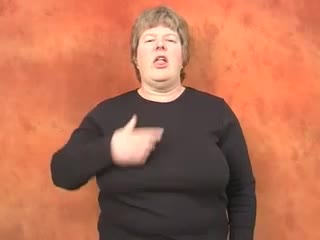
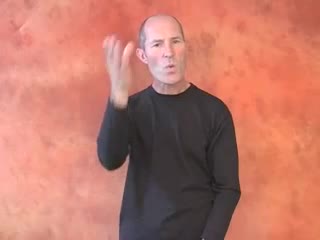
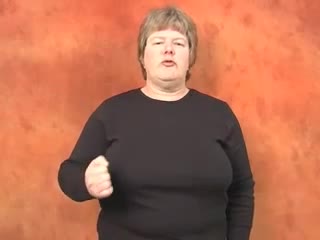
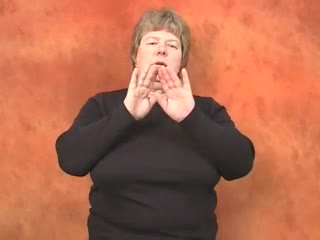
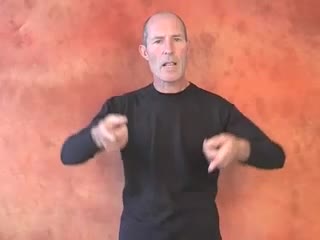
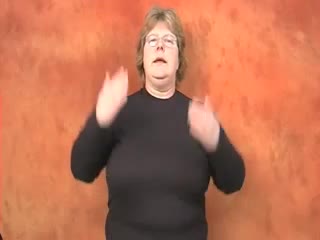
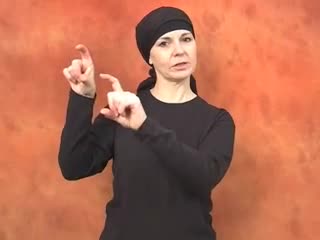
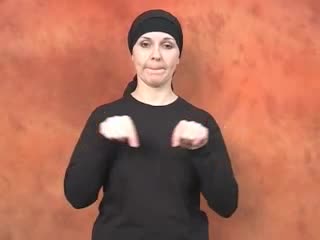
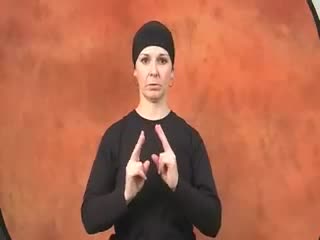
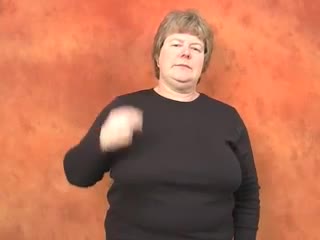
For this sign, you’ll begin by forming a "C" handshape with both of your hands. Your thumb should be extended and slightly curved, while your index finger, middle finger, ring finger, and pinky finger are all curled inward towards your palm, creating an open, cupped shape. Make sure your fingers aren't pressed tightly together; there should be a slight gap as if you're about to grasp something.
Step 2: Hand Placement and Location
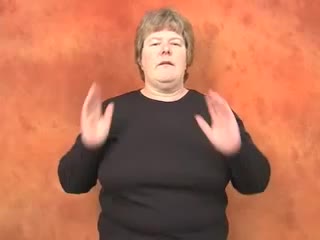
You'll position both of your "C" shaped hands in front of your body, approximately at waist height, mirroring each other. Your dominant hand will be on the outside, and your non-dominant hand slightly closer to your centreline, but both hands should be roughly parallel and positioned as if they’re about to cup something large. Think about where your feet would be if you were standing, as this sign directly relates to that area.
Step 3: Movement
Starting with your hands in the "C" shape, move both hands downwards a short distance, simulating the action of putting on or pulling up a shoe. As your hands descend, slightly close them, bringing the fingertips of your curled fingers closer to your thumb, as if they are tightening around the shape of a shoe. Then, you'll repeat this downward, slightly closing movement once more, giving a clear, deliberate double tap. The motion is smooth and controlled, not rushed.
Step 4: Facial Expression and Mouthing
While signing safety shoes, your facial expression should remain neutral and attentive; there's no specific emotion typically conveyed with this particular sign. Crucially, you should mouth the word "safety shoes" clearly without voicing it. This mouthing, a non-manual feature, provides vital linguistic information in BSL, clarifying the specific English word that corresponds to the sign and preventing potential ambiguity with other visually similar signs.
Step 5: Palm Orientation
Throughout this sign, your palms will face each other, angled slightly downwards. This orientation helps to convey the shape and location of the shoes on your feet. The downward angle reinforces the idea of something being placed on or covering your feet, effectively illustrating the protective nature of the item being discussed. Maintaining this orientation consistently ensures the sign's meaning is clear.
"safety shoes" in BSL - Quick Reference Snapshot
- Handshape: Both hands in a "C" shape, thumb extended, fingers curled.
- Location: In front of the body, around waist height, mirroring each other.
- Movement: Two distinct downward movements, slightly closing hands each time.
- Facial Expression: Neutral, with clear mouthing of "safety shoes."
- Dominant Hand: Both hands are used symmetrically; no specific dominant hand role.
- Palm Orientation: Palms facing each other, angled slightly downwards.
5 Memorisation Tricks for the BSL Sign "safety shoes"
You'll find these tricks incredibly helpful for embedding the BSL sign for safety shoes into your memory, making recall much quicker.
- Visual Mnemonic: Picture your hands forming the "C" shape as if they're cupping the rounded toe of a heavy, protective boot. The downward movement then mimics the motion of putting that sturdy boot onto your foot, making the connection between the sign and its meaning instantly clear.
- Muscle-Memory Drill: Try this: stand up and perform the sign a few times while mentally (or physically!) stamping your foot lightly with each downward movement. This full-body engagement will help your muscles remember the coordinated action of the hands and the concept of footwear.
- Connection to Meaning: Think about the core purpose of safety shoes – protection for your feet. The strong, cupping motion of your hands visually represents the robust, encompassing nature of the footwear, creating a direct link between the physical sign and the safety aspect of the word.
- Common-Confusion Tip: A lot of people initially confuse this sign with generic 'shoe' or 'boot' signs. Remember, the key differentiator for "safety shoes" is the *double, deliberate downward closing motion* with the "C" handshape, conveying a sense of weight and firmness distinct from lighter footwear.
- Daily-Life Practice: Each time you see someone wearing safety shoes – perhaps a builder, a factory worker, or even on TV – perform the sign subtly to yourself. This constant, real-world reinforcement helps you associate the visual input with the BSL sign, making it second nature.
Real-Life Situations to Use the BSL Sign for "safety shoes"
Understanding how to integrate the sign for safety shoes into actual conversations will truly boost your fluency and confidence. Here are some practical scenarios where this sign comes in handy.
- When discussing workplace regulations, you might sign, "WORK SITE, MUST WEAR SAFETY SHOES." Here, "MUST WEAR" functions as a grammatical imperative, clearly stating the requirement for the specific footwear.
- If you're asking a colleague about their gear, you could sign, "YOUR NEW SAFETY SHOES, ARE THEY COMFORTABLE?" The question marker facial expression (raised eyebrows, tilted head) combined with the sign clarifies the interrogative nature of your statement.
- Describing an accident could involve, "FALL, IF HAD SAFETY SHOES, NO INJURY." This uses a conditional structure common in British Sign Language, placing the condition ("IF HAD SAFETY SHOES") before the outcome.
- Perhaps you're pointing out a specific item in a shop: "LOOK! THOSE SAFETY SHOES, GOOD PRICE." You'd use a pointing gesture (index finger) to indicate the shoes, then sign "SAFETY SHOES," followed by the evaluation.
Top 3 Mistakes Learners Make Signing "safety shoes" in BSL
It's completely normal to make a few errors when learning a new sign, but being aware of common pitfalls can really accelerate your progress with "safety shoes."
- Incorrect Handshape or Stiffness: A frequent mistake is either having hands that are too flat (more like a 'B' handshape) or too stiff, lacking the natural curve of the 'C'. This can make the sign look generic or unclear. The correction is to ensure a relaxed, slightly open 'C' handshape with both hands, allowing for a natural closing motion.
- Missing the Double Movement: Learners sometimes perform only one downward movement, or they make the movement too small or indistinct. The sign for safety shoes requires *two clear, deliberate downward motions* where the hands slightly close each time. Without this repetition, the sign loses its specific meaning and can be confused with other related signs for footwear.
- Forgetting the Mouthing: Many beginners focus solely on the manual components and forget the crucial non-manual feature of mouthing the word "safety shoes." Omitting this can lead to ambiguity, as context might not always be enough to differentiate it from other types of boots. Always remember to mouth the English word clearly and naturally without voicing.
Fascinating Facts About the BSL Sign for "safety shoes"
Delving into the unique characteristics of the BSL sign for safety shoes provides a richer understanding of its linguistic nuances and cultural context.
- This sign is highly iconic, meaning its form directly resembles the action or object it represents – specifically, the act of putting on a sturdy, protective boot. The visual connection makes it intuitively understandable even to new learners.
- While the core handshape and movement are consistent across regions where British Sign Language is used, subtle variations in the exact speed or 'firmness' of the movement might be observed in different BSL communities. These are usually minor stylistic differences, not changes in core meaning.
- The deliberate, double downward movement within the sign isn't just for emphasis; it helps to distinguish this specific type of footwear from more general terms like "shoes" (often a single, lighter tap) or "slippers," highlighting the robust and protective nature of safety shoes.
- Unlike some signs which might derive directly from fingerspelling (like 'TEA' from T-E-A), the sign for safety shoes is a lexical sign with its own distinct form, not directly linked to the manual alphabet for its origin. It’s a concept-driven sign.
- The visual distinction embedded in this sign reinforces the importance of safety in many practical, real-world contexts, reflecting how a community values clarity when discussing potentially hazardous environments or necessary protective gear.
"safety shoes" in Deaf Culture - Community and Identity
Within Deaf culture, clear communication about practical, everyday items, especially those related to work and safety, is highly valued. The sign for safety shoes, like many descriptive signs, exemplifies the visual-spatial nature of British Sign Language, which allows for immediate, unambiguous understanding. When Deaf individuals discuss their professions, particularly those in manual trades, having a precise sign for "safety shoes" ensures that conversations about job requirements, workplace safety, and personal protective equipment are efficient and clear. It fosters a sense of shared understanding and pragmatism, reflecting a community that often prioritises direct and effective communication in all aspects of life, including the practicalities of work and well-being. This sign, therefore, isn't just about footwear; it's about empowerment through clear communication in professional and daily contexts.
Example Conversations Using "safety shoes" in BSL
Let's see how you can use the sign for safety shoes in various conversational contexts, giving you a feel for its natural flow within British Sign Language grammar.
English: Do you need to wear safety shoes at your new job? - BSL structure: NEW JOB, YOU NEED WEAR SAFETY SHOES? (Topic-Comment structure, question marker facial expression)
English: My old safety shoes are worn out; I need new ones. - BSL structure: MY OLD SAFETY SHOES WORN-OUT, I NEED NEW. (Subject-Verb-Object order, with 'WORN-OUT' conveying the state)
English: He bought a really good pair of safety shoes yesterday. - BSL structure: YESTERDAY, HE BUY SAFETY SHOES, GOOD QUALITY. (Time marker first, then Subject-Verb-Object, descriptive adjective)
English: Make sure your safety shoes are always clean for work. - BSL structure: WORK, YOUR SAFETY SHOES ALWAYS CLEAN, MAKE-SURE. (Topic first, imperative "MAKE-SURE" at the end)
English: Without safety shoes, you can't enter the factory floor. - BSL structure: FACTORY FLOOR, SAFETY SHOES NO, CAN'T ENTER. (Conditional statement, negative construction)
Frequently Asked Questions: The BSL Sign for "safety shoes"
Here are some common questions learners often have about the BSL sign for safety shoes, along with clear, concise answers.
Is there a regional variation for the BSL sign for safety shoes?
Generally, the core sign for safety shoes remains quite consistent across different regions of the BSL-using community. While you might observe slight stylistic differences in the emphasis or speed of the movement, the fundamental handshape, location, and double downward motion are widely understood. It's a very clear and iconic sign, which helps maintain uniformity.
Are there similar signs I should avoid confusing with "safety shoes" in BSL?
Yes, it's easy to confuse "safety shoes" with the more general sign for "SHOES" or "BOOTS." The key distinction for "safety shoes" is the specific 'C' handshape and the two firm, deliberate downward movements, which convey the sturdiness and protective nature. "SHOES" often uses an 'S' handshape or a single, lighter tapping motion on the foot.
Is the BSL sign for "safety shoes" suitable for beginners?
Absolutely! The sign for safety shoes is an excellent sign for beginners to learn. It's highly iconic, meaning it looks like what it represents, which makes it easier to remember and execute. Mastering this sign early on gives you a practical vocabulary item for discussions about work and safety.
Can children use the BSL sign for "safety shoes"?
Yes, children can definitely use this sign. It’s a very practical sign for explaining what adults wear for certain jobs or when discussing safety around the house or in play areas. Its clear visual nature also makes it easy for young learners to grasp and incorporate into their vocabulary.
How does the BSL sign for "safety shoes" compare to another sign language's equivalent?
While specific comparisons vary, most sign languages will have a distinct sign for "safety shoes" that is often iconic, reflecting the protective nature of the footwear. However, the exact handshapes, movements, and locations would likely differ significantly from the BSL version, as each sign language develops independently with its own unique linguistic structure.
Signs That Pair Naturally with "safety shoes" in BSL
To really build out your BSL vocabulary around work and safety, here are some signs that naturally complement "safety shoes," allowing you to have richer, more contextual conversations.
- WORK: This sign, typically made by tapping one 'S' handshape on top of another 'S' handshape, is a fundamental companion as safety shoes are almost exclusively associated with employment.
- FACTORY: Often signed with both hands moving outwards from the chest as if outlining a building, this pairs well as factories are common environments where safety shoes are required.
- BUILDING/CONSTRUCTION: Made by stacking handshapes to represent layers or structures, this sign connects directly to industries where such protective footwear is essential.
- HELMET: Signed by tapping a 'C' handshape on the head, "helmet" is another piece of personal protective equipment, making it a logical pairing with safety shoes for discussing overall safety gear.
- PROTECT/SAFETY: This sign, typically involving a 'P' or 'S' handshape circling an area, directly relates to the core function of safety shoes.
- MUST/REQUIRED: Signed with a firm downward motion of an 'X' handshape, this sign is crucial for expressing the necessity of wearing safety shoes in certain situations.
Building Fluency: How to Practise "safety shoes" in BSL
Consistent and varied practice is the secret to true fluency, and here’s how you can specifically hone your BSL sign for "safety shoes." Start by performing the sign in front of a mirror, paying close attention to your handshape, the double downward movement, and your mouthing; seeing yourself sign helps you catch and correct any subtle inaccuracies. Try to integrate the sign into your daily BSL conversations by thinking of situations where you might use it – perhaps describing your day, a job someone else has, or even a picture in a book. Filming yourself signing "safety shoes" and then watching it back can provide invaluable insights into your technique and help you refine your movements and facial expressions. The ultimate goal is to find a Deaf conversation partner or join a local BSL group; real-time interaction provides context and feedback that static practice cannot, allowing you to use "safety shoes" naturally and receive guidance. Remember, spaced repetition over several days will solidify this sign in your muscle memory far more effectively than cramming it all into one session. Keep at it, and you'll be signing with confidence in no time!