What Is the BSL Sign for "plug"?
Thinking about getting something powered up? Perhaps you’re needing to connect an appliance, or maybe you're just chatting about household electrics. Knowing the BSL sign for plug is incredibly useful in daily conversation, as it covers that familiar action of connecting things to power. This particular sign effectively illustrates the act it represents, making it quite intuitive once you understand its physical components. For anyone learning British Sign Language plug becomes a key piece of functional vocabulary right away.
How to Sign "plug" in British Sign Language - Step-by-Step
Let's walk through the precise movements for forming this practical sign, guiding you carefully through each component.
Step 1: Handshape
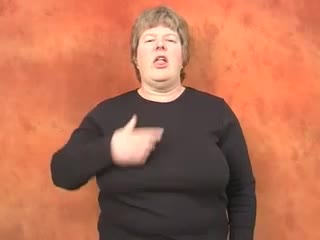
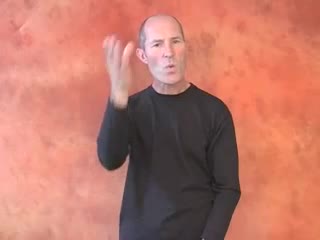
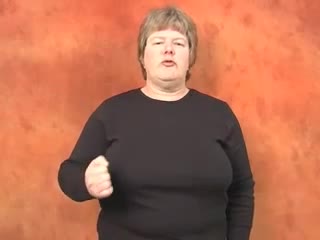
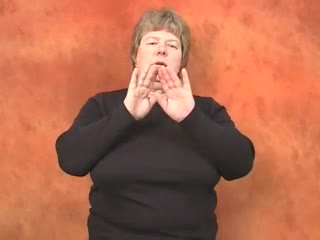
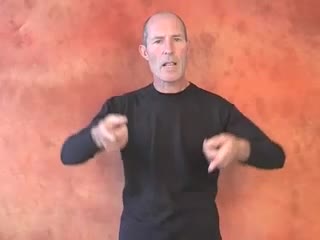
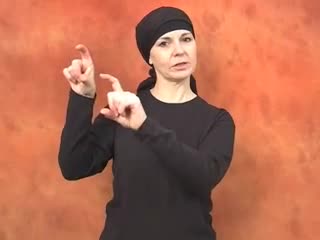
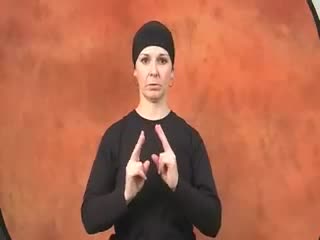
You'll begin with your dominant hand, forming what's often called a 'bent V' handshape. To achieve this, extend your index finger and middle finger, keeping them slightly separated, while your thumb holds down your ring and pinky fingers. Crucially, allow both the extended index and middle fingers to curl gently at their knuckles, creating a slight hook or bend, rather than keeping them poker-straight. This shape visually represents the prongs of an electrical plug.
Step 2: Hand Placement and Location
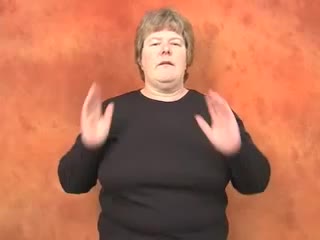
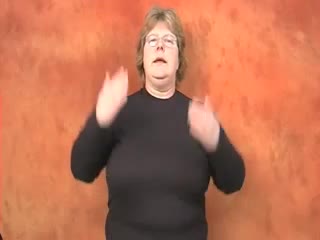
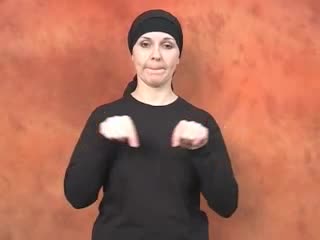
Next, position your non-dominant hand flat, palm facing upwards, with your fingers slightly cupped as if you’re holding a shallow dish. This cupped hand symbolises the electrical socket. You’ll then bring your dominant hand, already in the 'bent V' shape, close to your non-dominant hand, hovering just above it. Maintain this position directly in front of your body, within your natural signing space, often around waist to chest height.
Step 3: Movement
With your dominant hand ready, execute a distinct, short, downward and slightly forward movement, as if you’re inserting the 'plug' into the 'socket' of your non-dominant hand. The movement should be deliberate and firm, not hesitant, mimicking the action of plugging something in. You'll perform this single, clear insertion movement, ensuring the 'prongs' make a soft contact with your non-dominant palm, or come very close to it.
Step 4: Facial Expression and Mouthing
Often, when signing "plug" in BSL, your facial expression remains neutral, reflecting the routine nature of the action. However, a slight look of purpose or concentration might accompany the sign depending on context, such as if you’re asking someone to connect something urgently. Simultaneously, it’s common and grammatically correct to mouth the English word "plug" as you make the sign. This mouthing acts as a non-manual feature, aiding clarity and providing additional grammatical information within the BSL sentence structure.
Step 5: Palm Orientation
Initially, as your dominant hand approaches your non-dominant hand, your palm generally faces downwards or slightly towards your non-dominant hand. As you perform the 'insertion' movement, the palm orientation of your dominant hand remains largely consistent, maintaining that downward-facing angle as the 'prongs' move towards the 'socket'. This consistent orientation ensures the visual metaphor of inserting a plug is clearly conveyed, leaving no ambiguity about the sign's intended meaning.
"plug" in BSL - Quick Reference Snapshot
- Handshape: Dominant hand forms a 'bent V' (index and middle fingers bent, separated).
- Location: Dominant hand moves towards non-dominant cupped palm in front of the body.
- Movement: Single, distinct downward and forward motion, simulating insertion.
- Facial Expression: Neutral, possibly slight concentration, accompanied by mouthing "plug".
- Dominant Hand: The hand you write with performs the 'plug' action.
- Palm Orientation: Dominant hand's palm faces downwards throughout the movement.
5 Memorisation Tricks for the BSL Sign "plug"
- Visual Mnemonic: Picture the two bent fingers of your dominant hand as the metal prongs of a plug, perfectly shaped to slide into a wall socket. Visualise that specific two-pronged form, and you'll easily recall the correct handshape when you need to sign "plug".
- Muscle-Memory Drill: Grab an actual electrical plug and practice the signing movement while you physically plug it into a socket. This kinesthetic connection will embed the motion and feeling into your memory, making the sign feel natural and automatic over time.
- Connection to Word's Meaning: The sign itself is highly iconic, meaning it looks like what it represents. Always remember that your dominant hand is the 'plug' and your non-dominant hand is the 'socket,' a direct representation of the action of connecting power.
- Common-Confusion Tip: Don't confuse the 'bent V' handshape for "plug" with the straight 'V' handshape used in other signs like "victory" or "two". The crucial bend in the fingers for "plug" is what differentiates it, so pay close attention to that subtle but important detail.
- Daily-Life Practice Idea: Every time you plug something into an outlet during your day – your phone charger, the kettle, a lamp – pause for a moment and consciously perform the BSL sign for "plug". Integrating it into these routine actions significantly reinforces your learning.
Real-Life Situations to Use the BSL Sign for "plug"
- You might use this sign to ask someone, "Have you plugged in the kettle yet?" (KETTLE PLUG-IN YOU FINISH?). Here, the sign fits into a question structure, often with a raised eyebrow for the "you finish?" aspect.
- When explaining a problem, you could sign, "The lamp isn't plugged in, that's why it's not working." (LAMP PLUG-IN NOT, WHY NOT WORK). The negative "not" often comes after the main verb or concept in BSL, clearly negating the "plug-in" action.
- Perhaps you need to direct someone: "Could you plug in the hoover over there?" (HOOVER PLUG-IN OVER-THERE YOU-CAN?). The sign for "over-there" would use spatial referencing, pointing towards the specific location of the socket.
- Someone might ask you, "Where's the plug for the TV?" (TV PLUG WHERE?). This simple question demonstrates how "plug" functions as a noun within a direct inquiry, with the "where" sign typically placed at the end.
Top 3 Mistakes Learners Make Signing "plug" in BSL
-
Mistake 1: Straight Fingers Instead of Bent V. Many beginners keep their index and middle fingers straight, forming a standard 'V' handshape, rather than allowing them to bend slightly. This happens because the 'V' handshape is common, and the subtle bend for "plug" is easily overlooked. The precise correction involves consciously flexing those knuckles to create the gentle curve, truly mimicking the prongs.
-
Mistake 2: Insufficient Movement or Location. Learners sometimes sign "plug" with a vague or weak movement, or they perform the sign too high, away from the non-dominant hand. This often occurs when they haven't fully internalised the iconic nature of the sign. To correct this, ensure your non-dominant hand is actively cupped as the 'socket,' and execute a clear, direct downward motion from your dominant hand towards it, within your lower signing space.
-
Mistake 3: Incorrect Palm Orientation. A common error is for the dominant hand's palm to face sideways or even upwards during the movement, losing the visual of prongs being inserted. This can happen if a learner focuses too much on just the handshape without considering the full context of the action. The accurate correction is to maintain the dominant hand's palm facing downwards throughout the insertion, making the 'prongs' appear to enter the 'socket' naturally.
Fascinating Facts About the BSL Sign for "plug"
- The sign for "plug" in BSL is highly iconic, meaning its form directly resembles the action or object it represents, making it relatively easy for new learners to grasp its meaning. This visual motivation is a hallmark of many BSL signs.
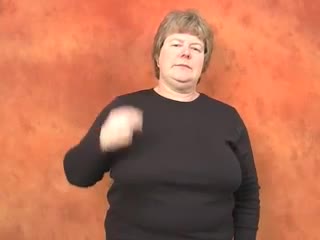
- While the core handshape and movement are generally consistent, slight regional variations might exist in the exact degree of finger bend or the precise contact point, though the overall meaning remains clear across the BSL-using community.
- Historically, signs for newer technologies, like electrical plugs, often develop through a process of 'visual invention' within the Deaf community, reflecting the most prominent visual feature or action associated with the object.
- This sign does not directly derive from the BSL manual alphabet, but rather stands as an independent lexical item, demonstrating the rich and self-contained nature of BSL's vocabulary development.
- The clear distinction between the dominant hand as the 'plug' and the non-dominant hand as the 'socket' highlights BSL's reliance on two-handed signs to convey complex concepts, leveraging spatial grammar effectively.
"plug" in Deaf Culture - Community and Identity
The practical signs we use every day, like "plug," are much more than just individual gestures; they're threads in the rich tapestry of Deaf culture. For many Deaf individuals, BSL isn't just a language for communication; it's a vital part of their identity and connection to a shared cultural heritage. When we learn and use signs like "plug," we're not only acquiring vocabulary but also participating in a linguistic tradition that has been passed down through generations within the Deaf community. Every sign learned strengthens the bridge between hearing and Deaf worlds, fostering greater understanding and inclusion. Using BSL respectfully and accurately demonstrates a genuine appreciation for Deaf people and their vibrant culture.
Example Conversations Using "plug" in BSL
English: Can you help me plug in the new lamp? - BSL structure: LAMP NEW PLUG-IN YOU HELP ME?
English: Oh, the computer isn't working because it's not plugged in. - BSL structure: COMPUTER NOT WORK WHY? PLUG-IN NOT.
English: Is there an available plug socket near the sofa? - BSL structure: SOFA NEAR PLUG-SOCKET AVAILABLE QUESTION?
English: I need to unplug the toaster before I clean it. - BSL structure: TOASTER UNPLUG ME MUST BEFORE CLEAN.
English: Remember to always unplug appliances when you're finished using them. - BSL structure: APPLIANCES FINISH USE ALWAYS REMEMBER UNPLUG.
Frequently Asked Questions: The BSL Sign for "plug"
Is there a specific regional variation for the BSL sign for "plug"?
While the core concept and execution of the BSL sign for "plug" are widely understood across the UK, you might encounter minor stylistic differences. Some areas may have a slightly more pronounced bend in the fingers, or a subtle variation in the non-dominant hand's position, yet the fundamental 'bent V' shape inserting into an open hand remains consistent. These minor nuances rarely impede communication.
Are there any similar signs I should be careful not to confuse with "plug"?
Yes, it's easy to confuse "plug" with signs that use a 'V' handshape but have different meanings or movements, such as "two" or "victory," where the fingers are usually straight. Also, the sign for "switch" or "turn on/off" can sometimes involve a similar hand movement, but the key distinction for "plug" lies in the 'bent V' handshape and the clear insertion action into the non-dominant hand.
Is the BSL sign for "plug" suitable for beginners, or is it more advanced?
The sign for "plug" is definitely suitable for beginners; in fact, it's often taught early on due to its high iconicity and everyday relevance. Its visual nature makes it fairly straightforward to learn and remember, offering a great starting point for understanding how BSL signs represent concepts. You'll quickly find it becomes a natural part of your basic signing vocabulary.
Can children easily learn and use the BSL sign for "plug"?
Absolutely, children pick up the BSL sign for "plug" very quickly, often because it directly mimics an action they see or perform regularly. Its clear visual representation of inserting something into a socket makes it intuitive and engaging for young learners. Encouraging them to sign it while performing the actual action can further cement their understanding.
How does the BSL sign for "plug" compare to signs for "plug" in other sign languages?
Across different sign languages globally, the concept of "plug" is often conveyed through iconic signs that mirror the act of insertion, much like in BSL. While the specific handshapes, orientations, and movements will vary significantly from one language to another, the underlying principle of visually representing the action tends to be a common thread. Each sign language develops its own unique and culturally specific way to express this everyday concept.
Signs That Pair Naturally with "plug" in BSL
- SOCKET: This sign often involves tracing a circular or square shape with an index finger, representing the wall outlet itself, and naturally complements "plug."
- ELECTRICITY / POWER: Usually a '5' handshape wiggling fingers, suggesting a current, which is directly linked to what a "plug" provides.
- APPLIANCE: Often a classifier or a sign for "machine," this connects to the items that need to be "plugged in."
- UNPLUG: The reverse movement of "plug," pulling the 'bent V' handshape away from the non-dominant 'socket' hand, making it an essential opposite.
- CHARGE: Involves rubbing hands together or a specific battery symbol, closely related to plugging in devices to recharge them.
- CABLE / WIRE: A 'C' or 'G' handshape tracing a line, representing the connecting element that leads to a "plug."
Building Fluency: How to Practise "plug" in BSL
To truly make the BSL sign for "plug" yours, consistent and varied practice is absolutely key. Try standing in front of a mirror, watching your dominant hand carefully to ensure your 'bent V' handshape is precise and that your insertion movement is clear and decisive. Integrate this sign into your everyday conversations by actively thinking about it whenever you're around electrical devices; imagine yourself signing "plug" as you connect your phone charger or turn on the lamp. Filming yourself signing can provide invaluable feedback, allowing you to catch any subtle errors in handshape or movement that you might otherwise miss. Most importantly, seek out opportunities to interact with Deaf individuals; nothing beats practising with native signers who can offer authentic context and gentle corrections, making your learning journey far more rewarding and effective.