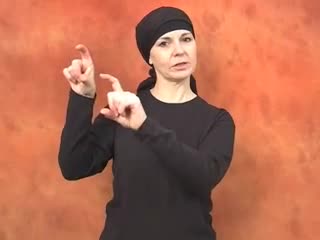
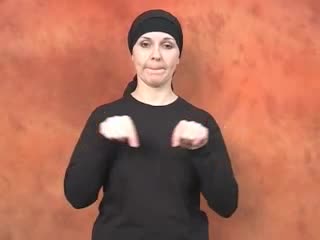
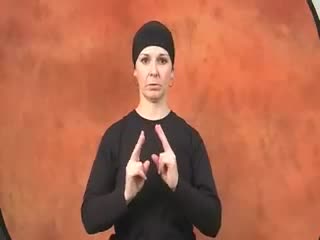
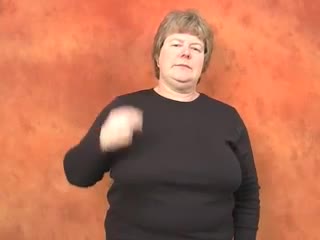
What Is the BSL Sign for "length"?
Understanding the dimensions of objects or distances is fundamental to how we describe the world, and in British Sign Language, expressing "length" carries significant visual weight. This sign beautifully captures the essence of linear measurement, making it a powerful tool for visual communication. It’s one of those foundational signs that you'll discover yourself using across countless everyday scenarios, whether you're discussing fabric, furniture, or journeys. Mastering the BSL sign for length truly unlocks a deeper descriptive capacity in your signing, moving beyond basic nouns to convey specific attributes.
How to Sign "length" in British Sign Language - Step-by-Step
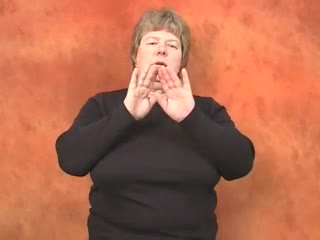
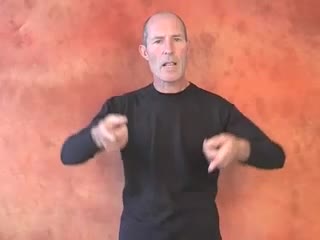
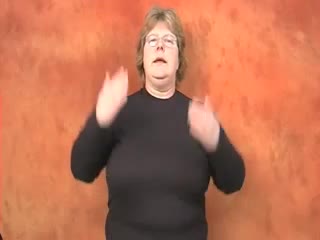
Let's break down the motion for "length," as it's a wonderfully intuitive sign once you understand each component.
Step 1: Handshape
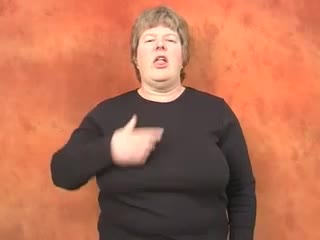
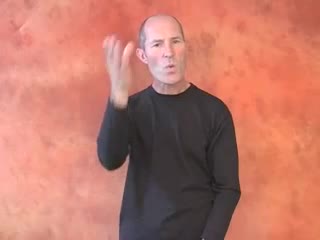
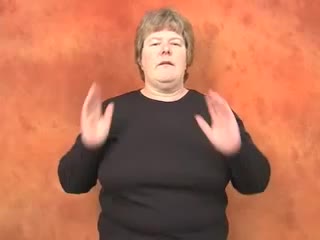
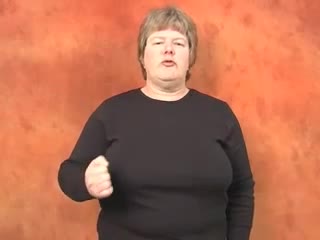
For this sign, you'll extend your dominant hand's index finger straight out, pointing forward, while gently curling your remaining fingers down into your palm. Your thumb should rest across your curled fingers, securing them. Imagine pointing to something directly ahead; that's the precise finger extension you're aiming for.
Step 2: Hand Placement and Location
Begin with your dominant hand positioned in the neutral space directly in front of your chest. The tip of your extended index finger should be pointing forward, away from your body. You're not touching yourself or your non-dominant hand at this starting point; rather, you're setting up a clear, unobstructed path for the upcoming motion.
Step 3: Movement
From your starting point, smoothly move your dominant hand in a straight line directly outwards and slightly forwards. The movement should be continuous and deliberate, like drawing an invisible line through the air. You're not swinging your arm wildly; instead, think of a controlled, steady extension that visually represents the concept of measurement or distance. A single, fluid sweep is characteristic of this particular sign.
Step 4: Facial Expression and Mouthing
A neutral facial expression generally accompanies the sign for "length" when simply stating a measurement. However, if you're asking about a dimension, raising your eyebrows slightly can transform the statement into a question. Simultaneously, mouthing the word "length" is a common non-manual feature in BSL, providing clarity and reinforcing the concept, especially for learners or in ambiguous contexts. These non-manual features are crucial linguistic elements, adding grammatical nuance and enhancing comprehension within a signed conversation.
Step 5: Palm Orientation
Throughout the entire movement, your dominant hand's palm will typically face downwards or slightly towards your non-dominant side. This orientation ensures that your extended index finger remains clearly visible, acting as the primary indicator of the linear measurement. Maintaining this consistent palm direction is important because it prevents ambiguity and reinforces the specific meaning of extending a line or distance.
"length" in BSL - Quick Reference Snapshot
- Handshape: Dominant hand, index finger extended, others curled, thumb across.
- Location: Neutral space in front of the chest.
- Movement: Smooth, straight sweep outwards and slightly forwards.
- Facial Expression: Neutral, or questioning if asking.
- Dominant Hand: Performs the movement.
- Palm Orientation: Downwards or slightly towards the non-dominant side.
5 Memorisation Tricks for the BSL Sign "length"
- Visual Mnemonic: Picture your extended index finger as a ruler or a measuring tape unspooling. As you perform the sign for length, imagine that visible line stretching out, literally creating the measurement in the air. This connection helps solidify the visual representation in your mind.
- Muscle-Memory Drill: Try signing "length" ten times in a row, focusing on the smooth, controlled extension of your dominant index finger. Then, close your eyes and attempt it again, relying purely on the feel of the movement; this builds a strong kinesthetic memory for the sign.
- Connection to Meaning: Think about what "length" actually means – it's the extent of something from end to end. The sign itself mimics this by extending your finger from a perceived starting point outwards, making the action directly analogous to the concept it represents.
- Common-Confusion Tip: Don't confuse "length" with signs for "point" or "straight." While they share the extended index finger handshape, "length" involves a sustained, linear movement over a distance, whereas "point" is a static direction and "straight" often has a different path or repetition.
- Daily-Life Practice: Whenever you encounter something measurable in your day, like the length of a table or a queue, mentally or physically practice the sign for length. This frequent, contextualised recall will embed the sign deeply into your active vocabulary.
Real-Life Situations to Use the BSL Sign for "length"
- Imagine you're at a DIY store discussing materials for a project. You might sign, "WOOD, WHAT IS ITS LENGTH?" The questioning eyebrows and slight head tilt transform the statement into an inquiry about the precise measurement of the timber.
- Perhaps you're describing a scenic walk to a friend. You could sign, "THE RIVER, ITS LENGTH IS VERY LONG," using spatial grammar to show the extended nature of the river, with "LONG" often modifying "LENGTH" for emphasis, possibly with an exaggerated movement of the "length" sign.
- If you're explaining a design idea, you might gesture, "THE SHELF, I NEED THIS LENGTH," demonstrating the desired dimension with the sign, perhaps even using your non-dominant hand to indicate a starting point and your dominant hand sweeping out to the desired endpoint.
- Discussing travel plans, you could ask, "JOURNEY, WHAT LENGTH?" to inquire about the duration or distance of a trip, showing how this sign adapts to abstract concepts of span as well as physical measurements.
Top 3 Mistakes Learners Make Signing "length" in BSL
- Incorrect Movement Direction: Many beginners mistakenly move their hand in an arc or upwards/downwards, rather than the crucial straight, outward path. This happens because they're not fully internalising the linear nature of "length." To correct this, focus on keeping your elbow relatively stable and guiding your index finger directly away from your body, as if tracing a perfect horizontal line in the air.
- Too Short or Abrupt Movement: Another common error is making the movement for "length" too brief or choppy, which can reduce its clarity or alter its meaning to something like "a little bit." This often stems from a lack of confidence or insufficient understanding of the sign's full dynamic range. The correction is to ensure a full, smooth, and deliberate sweep, letting the motion truly represent the idea of extended dimension.
- Inconsistent Palm Orientation: Learners sometimes rotate their wrist during the movement, causing the palm to face inwards or even upwards, rather than maintaining the correct downward or slight side orientation. This can make the sign harder to read and might suggest a different meaning entirely. To fix this, consciously lock your wrist's rotation throughout the movement, ensuring your extended index finger consistently presents itself as the primary visual element.
Fascinating Facts About the BSL Sign for "length"
- While difficult to pinpoint a precise historical origin for every BSL sign, the iconic nature of "length" – literally drawing a line in space – suggests a deeply rooted, perhaps even proto-sign, motivation, making it intuitively understandable across many visual communicators.
- You'll find remarkably little regional variation for the core concept of "length" across the BSL-using community, which speaks to its fundamental nature and strong iconic representation. While minor stylistic differences might exist, the essential handshape and movement remain consistent.
- The sign for "length" is a prime example of an iconic sign, meaning its form directly resembles or acts out its meaning. Your extended finger literally "measures" or indicates an extent, providing a powerful visual metaphor that enhances memorability.
- Interestingly, this sign isn't directly derived from the BSL manual alphabet, but rather stands independently as a concept sign. This independence highlights how BSL builds its vocabulary through both finger-spelled forms and rich, conceptual signs.
- The sign's clear, linear movement makes it highly adaptable for conveying various extents. It can be modified with greater emphasis or speed to indicate "very long" or "short," showing a linguistic feature where the sign's execution directly encodes intensity or degree.
"length" in Deaf Culture - Community and Identity
The concept of "length" in BSL goes beyond simple measurement; it's interwoven into the visual fabric of how Deaf people communicate and describe their world. Imagine describing a story, a journey, or even a period of time; the sign for length becomes a versatile tool, adapting to convey duration, distance, or narrative expanse. It's a sign that empowers detailed descriptions, allowing individuals to paint vivid pictures with their hands and bodies. Within the Deaf community, precise visual communication is paramount, and signs like "length" contribute to that rich linguistic environment, enabling shared understanding and connection through clear, unambiguous spatial language. When a Deaf person signs "length," they're not just conveying a measurement; they're inviting you to visualise that dimension with them, fostering a deeper, more empathetic connection to their experience.
Example Conversations Using "length" in BSL
English: What is the length of this table? - BSL structure: TABLE THIS, LENGTH WHAT?
English: The length of the journey felt incredibly long. - BSL structure: JOURNEY LENGTH, FEEL VERY LONG.
English: We need to cut the rope to a specific length. - BSL structure: ROPE CUT, NEED LENGTH SPECIFIC.
English: Can you measure the length of the fabric for me? - BSL structure: FABRIC LENGTH, MEASURE FOR-ME? (Questioning expression)
English: The length of his patience is truly remarkable. - BSL structure: HE PATIENCE, LENGTH REMARKABLE TRULY. (Metaphorical use)
Frequently Asked Questions: The BSL Sign for "length"
Is there any regional variation for the BSL sign for length?
You'll be pleased to know that the fundamental sign for length is quite consistent across regions where British Sign Language is used. While individual signers might have slight stylistic differences, the core handshape, movement, and location remain largely the same, ensuring broad understanding throughout the Deaf community.
What are some similar BSL signs I should be careful not to confuse with length?
You should be mindful not to confuse "length" with signs like "straight," "line," or "point." While they might share the extended index finger handshape, "straight" usually involves a more deliberate two-handed action or a specific movement, "line" often implies a drawn or marked path, and "point" is a static directional indicator, not a movement representing extent.
Is the BSL sign for length suitable for beginners?
Absolutely, the BSL sign for length is an excellent sign for beginners to learn. It's highly iconic, meaning its visual form directly relates to its meaning, making it intuitive and easy to remember. Mastering this sign early on will significantly boost your descriptive vocabulary.
Can children easily learn and use the BSL sign for length?
Yes, children pick up the BSL sign for length quite naturally. Its clear visual representation of measuring something makes it very accessible for young learners. They can readily use it to describe toys, drawings, or distances in their play, integrating it into their early communication.
How does the BSL sign for length compare to the equivalent sign in another sign language?
While specific handshapes and movements vary significantly between different sign languages, the underlying concept of using a linear motion to represent "length" is quite common across many. However, the exact execution, including handshape, palm orientation, and specific movement path, will be unique to British Sign Language and other individual sign languages.
Signs That Pair Naturally with "length" in BSL
- SHORT: This sign, often a dominant hand 'G' or 'P' handshape tapping the non-dominant palm, naturally pairs with "length" as its direct opposite, helping to describe comparative dimensions.
- LONG: Typically an extended index finger moving even further, "long" directly modifies or enhances "length," allowing you to specify greater extent.
- MEASURE: The sign for "measure" (often two 'F' handshapes moving back and forth) belongs here because it's the action you perform to determine "length," creating a logical cluster of related vocabulary.
- WIDTH: Describing the extent from side to side, "width" (often two 'G' handshapes moving apart) is a complementary dimension to "length," essential for describing objects fully.
- HEIGHT: The vertical dimension, "height" (often an upward movement of the 'G' handshape) completes the triumvirate of basic spatial measurements alongside length and width.
- DISTANCE: While similar, "distance" (often two 'D' handshapes moving apart) relates to the space between two points, a concept closely allied with the idea of "length" or extent.
Building Fluency: How to Practise "length" in BSL
To really make the sign for "length" your own, grab a mirror and watch your dominant hand as you practise the sweeping motion, ensuring your index finger is perfectly straight and your palm orientation is consistent. Integrate it into your daily conversations by consciously thinking about the "length" of everything around you, from your phone to your commute, and then silently or overtly signing it. Filming yourself can be incredibly insightful; you'll immediately spot any hesitation or deviation from the smooth, linear movement, allowing for precise self-correction. What truly accelerates fluency, though, is finding a Deaf conversation partner; they'll provide invaluable feedback and context, showing you how "length" is used naturally in dynamic BSL. Remember, spaced repetition over several days will solidify this sign in your memory far more effectively than one intense session.