What Is the BSL Sign for "height"?
Ever needed to describe someone's stature or measure something tall? British Sign Language offers a wonderfully intuitive way to convey this concept, bringing a real visual dimension to communication. The BSL sign for height doesn't just represent the word; it vividly illustrates the very idea of vertical measurement, a fundamental aspect of how we perceive the world around us. It's a sign you'll find incredibly useful, whether you're talking about a person's stature or the elevation of a building. Mastering the height sign language helps you paint clearer pictures in your conversations, making your BSL more expressive and precise.
How to Sign "height" in British Sign Language - Step-by-Step
Let's break down the movements for "height" in BSL, guiding your hands and body into the correct form.
Step 1: Handshape
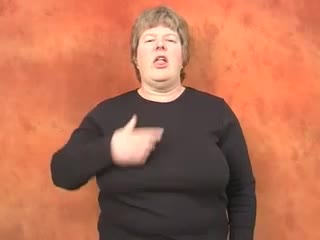
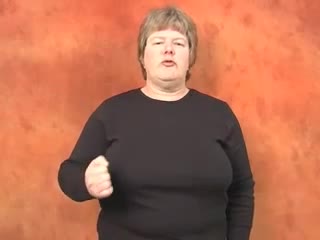
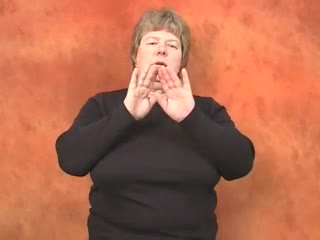
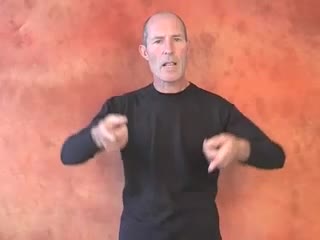
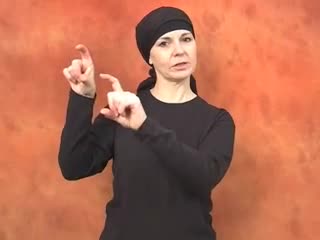
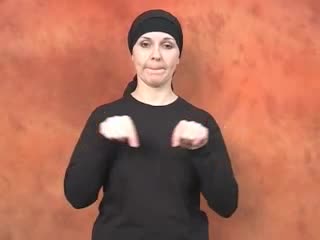
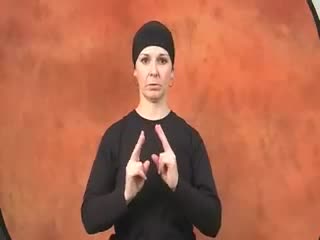
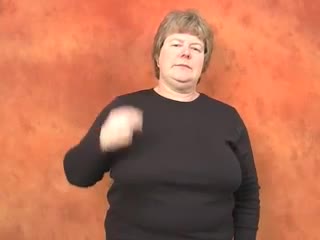
For this sign, you'll want to form a specific handshape with your dominant hand. Start by extending your index finger straight upwards, keeping it firm and pointed. All your other fingers, the middle, ring, and pinky, should be gently curled down into your palm, with your thumb resting across them to hold them in place. Your index finger becomes the primary marker, a clear visual indicator.
Step 2: Hand Placement and Location
You'll position your dominant hand, with its extended index finger, starting roughly at your chest level. Hold it comfortably in front of your body, ensuring there's enough space to perform the movement without touching your torso. Your non-dominant hand remains relaxed at your side or can slightly rest on your forearm if it feels more natural, staying out of the way for this particular sign.
Step 3: Movement
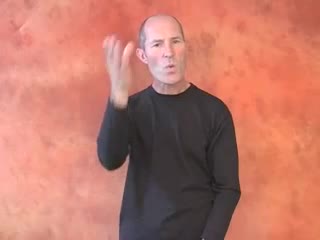
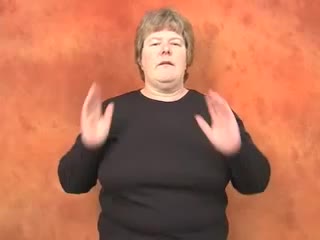
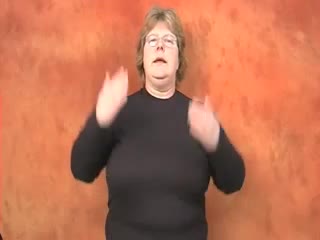
From its starting position at your chest, your dominant hand, with that upright index finger, travels steadily upwards. The movement should be a smooth, continuous sweep, as if you're indicating a rising line. It finishes somewhere above your head, reaching its highest comfortable point. This upward trajectory visually signifies the concept of increasing measure or stature.
Step 4: Facial Expression and Mouthing
Non-manual features are often just as crucial as the manual sign itself in British Sign Language. For 'height,' a neutral or slightly inquisitive facial expression generally accompanies the sign if you're asking about it. If you're stating a height, your expression might reflect the actual measure, perhaps a slight furrow of the brow for something very tall. Additionally, mouthing the English word "height" subtly as you sign helps clarify meaning and provides a phonological cue for many BSL users, especially those who are speech-savvy.
Step 5: Palm Orientation
Throughout the upward movement, your palm will generally face towards your body or slightly to the side. The key is that your extended index finger should be clearly pointing upwards. This orientation reinforces the vertical nature of the sign, making it unambiguous that you are referring to a measurement from bottom to top.
"height" in BSL - Quick Reference Snapshot
- Handshape: Dominant hand, index finger extended, other fingers curled down.
- Location: Starts at chest level, moves upwards.
- Movement: Smooth, continuous upward sweep past the head.
- Facial Expression: Neutral or inquisitive, depending on context.
- Dominant Hand: Used for the primary movement.
- Palm Orientation: Towards the body or slightly sideways, index finger pointing up.
5 Memorisation Tricks for the BSL Sign "height"
- Picture a measuring tape unfurling upwards: Imagine your index finger is the end of a long tape measure, starting low and extending as high as it can go to gauge something's stature. This visual mnemonic directly connects the sign's movement to its meaning, making it easier to recall.
- The "tall tree" drill: Stand in front of a mirror and sign "height" while visualising a tall tree growing from the ground up, making your hand reach higher and higher. This muscle-memory exercise reinforces the upward motion and helps solidify the sign in your mind.
- Connect to the question "How tall?": Think of the sign for "height" as the action you'd make when asking someone about their stature or the elevation of something. The simple upward sweep inherently embodies the concept of 'how far up does it go?', directly linking it to the word's essence.
- Avoid confusing it with "number one": A lot of people initially make the mistake of dropping their other fingers, making it look like the sign for 'one'. Remember to keep those curled fingers gently tucked in by your thumb; this distinction is crucial for clear communication.
- Daily life observation practice: Whenever you see something exceptionally tall, like a skyscraper or a particularly high shelf, make the sign for "height" in your mind or subtly with your hand. Integrating it into your everyday observations strengthens your recall and contextual understanding.
Real-Life Situations to Use the BSL Sign for "height"
- Describing a person's stature: "YOUR BROTHER, HEIGHT WHAT?" (Asking about someone's height). Here, the sign for "height" often follows the topic, "YOUR BROTHER," and precedes the question word "WHAT," typical of BSL's topic-comment structure.
- Referring to an object's elevation: "THAT BUILDING, HEIGHT HUGE!" (Commenting on a building's immense height). The sign might be modified to show the scale, perhaps a slower, more deliberate upward movement to convey "huge."
- Discussing growth: "CHILD GROW, HEIGHT CHANGING" (Observing a child's changing height). You might pair "height" with the sign for "GROW" to emphasize the increase over time, potentially using a repeating upward movement to show continuous change.
- Comparing measurements: "MY TABLE, HEIGHT DIFFERENT YOURS" (Comparing the height of two tables). Spatial grammar is key here; you'd establish the location of "MY TABLE" and "YOURS" in your signing space, then use the "height" sign in relation to those established points.
Top 3 Mistakes Learners Make Signing "height" in BSL
- Confusing it with the number "ONE": Many beginners accidentally sign "ONE" instead of "height" because both signs involve an extended index finger. The core difference is in the non-dominant fingers; for "height," they are gently curled down, whereas for "ONE," they are often splayed or held less rigidly. Remember to keep those other fingers tucked in.
- Insufficient upward movement: Some learners only move their hand slightly upwards, not fully conveying the concept of vertical measure. The correction involves ensuring your dominant hand starts lower and sweeps distinctly above your head, representing the full extent of a significant stature or elevation.
- Incorrect palm orientation: Occasionally, people will sign "height" with their palm facing forward or backward, which can alter the sign's clarity. To fix this, always aim to keep your palm facing towards your body or slightly to the side, ensuring the index finger is the clear vertical indicator.
Fascinating Facts About the BSL Sign for "height"
- The iconic nature of this sign is remarkable; it's a direct visual representation of measurement, reflecting how BSL often uses observable actions to convey meaning. This makes it quite intuitive for new learners, as you're literally tracing the concept of 'upwards'.
- While the core movement of an upward-pointing index finger remains consistent across the BSL-using community, you might occasionally observe slight regional variations in the starting or ending point of the hand's trajectory. These minor differences rarely impede understanding and are part of the natural linguistic diversity within BSL.
- This sign is an example of an 'indexic' sign, meaning it points or indicates directly to the concept it represents, much like pointing to a person. Your finger acts as a pointer, sweeping through the space to denote vertical extent.
- Unlike some signs which might have evolved from fingerspelling, the sign for "height" is considered a 'pure sign', meaning its form is intrinsically motivated by the concept rather than being derived from a letter. It stands on its own as a direct visual metaphor.
- Its clear, linear movement makes it particularly versatile for modifying with non-manual features; a slow, deliberate upward motion can indicate "very tall," while a quick flick might suggest "not much height," adding layers of semantic information.
"height" in Deaf Culture - Community and Identity
Describing someone's stature or the elevation of something plays a vital role in everyday conversations within the Deaf community, just as it does in any language. The visual nature of BSL allows for a very direct and often more nuanced portrayal of height, which can be particularly engaging. When people meet, observing and discussing characteristics like height can be a natural part of getting to know each other, fostering connection. It's a sign that often comes up in stories, anecdotes, or when sharing personal experiences, helping to build a vivid picture of individuals and environments. This simple sign, therefore, contributes to the rich tapestry of descriptions that strengthen bonds and shared understanding.
Example Conversations Using "height" in BSL
English: How tall is your father? - BSL structure: YOUR FATHER, HEIGHT WHAT? (Topic-comment structure, with the question word "WHAT" at the end).
English: That tree is incredibly tall. - BSL structure: THAT TREE, HEIGHT VERY-TALL (Using a modifier like "VERY-TALL" to intensify the meaning of height, often accompanied by exaggerated facial expression).
English: My child's height has really shot up this year. - BSL structure: MY CHILD, THIS YEAR, HEIGHT SHOOT-UP (Temporal marker "THIS YEAR" first, followed by the topic, then the sign for "height" with a quick, emphatic upward movement).
English: What's the height limit for that ride? - BSL structure: THAT RIDE, HEIGHT LIMIT WHAT? (Clear topic "THAT RIDE," then "height" followed by the concept of "LIMIT" or "MAXIMUM," and finally the question word).
English: He's about the same height as me. - BSL structure: HE, ME, HEIGHT SAME (Establishing two referents, "HE" and "ME," then using the sign for "height" followed by "SAME" to indicate comparison).
Frequently Asked Questions: The BSL Sign for "height"
Is there a specific BSL sign for "height" that varies regionally?
While the core concept of showing vertical measure with an upward-pointing index finger is universal in BSL, you might occasionally encounter subtle regional variations in the exact starting point or the arc of the movement. These are usually minor differences, however, and the fundamental meaning of the BSL sign for height remains widely understood across the UK. It's more about slight stylistic nuances than entirely different signs.
Are there any similar BSL signs I might confuse with "height"?
Yes, learners often initially confuse "height" with the sign for the number "ONE" or sometimes "TALL." The crucial distinction for "height" is that the other fingers (middle, ring, pinky) are deliberately curled down and often held in place by the thumb, creating a more defined "pointing up" shape rather than just an isolated index finger. "TALL" often involves a more sweeping motion up the side of the body, indicating a person's stature specifically.
Is the BSL sign for "height" suitable for beginners?
Absolutely, the BSL sign for height is an excellent sign for beginners to learn early on! Its iconic nature, directly representing the concept of vertical measurement, makes it quite intuitive and easy to grasp. It's frequently used in everyday conversations, meaning you'll have plenty of opportunities to practice and reinforce your understanding.
Can children easily learn and use the BSL sign for "height"?
Children pick up the BSL sign for height very quickly, often because its visual simplicity resonates with their concrete understanding of the world. It’s a very practical sign for them to describe people, toys, or even how much they've grown. You'll find it integrates seamlessly into their play and communication about their environment.
How does the BSL sign for "height" compare to similar concepts in other sign languages?
Across different sign languages globally, the concept of 'height' is often represented through iconic gestures involving an upward movement, frequently utilising an extended index finger or a flat hand. While the specific handshape, placement, and exact movement will vary significantly between languages, the underlying visual metaphor of 'upwards' for 'height' is a common thread in many signed forms. This universality stems from the inherent visual nature of sign languages.
Signs That Pair Naturally with "height" in BSL
- TALL: This sign specifically refers to the stature of a person or object, making it a natural companion to "height" when describing individuals. You often use "height" as a general concept, and "TALL" for specific instances of being tall.
- SHORT (stature): The opposite of "TALL," this sign is used to describe a lack of vertical elevation, frequently paired with "height" for comparisons or discussions about differing statures.
- MEASURE: When you're discussing the act of finding out someone's or something's "height," the sign for "MEASURE" becomes highly relevant, often preceding or following "height" in a sentence.
- GROW: Particularly useful when talking about increasing "height," such as a child growing or a plant getting taller. The sign for "GROW" often visually represents an upward expansion.
- COMPARE: If you're talking about the "height" of two different things or people, the sign for "COMPARE" naturally fits into the discussion, helping to frame the contrast.
- BUILDING: When discussing the "height" of structures, the sign for "BUILDING" provides essential context, letting you talk about architectural elevation.
Building Fluency: How to Practise "height" in BSL
To truly embed the BSL sign for height into your signing vocabulary, try standing in front of a mirror and practicing the motion, paying close attention to your handshape and the smooth upward sweep. Integrate "height" into simple BSL sentences throughout your day; for example, when you see a tall person, mentally sign "PERSON TALL HEIGHT." Try filming yourself performing the sign a few times, then watch it back to refine your handshape and movement; you'll notice small adjustments that make a big difference. The best way to build genuine fluency is by finding a Deaf conversation partner or joining a local BSL group; they can provide invaluable feedback and give you real-world practice discussing things like people's statures or the height of buildings. Keep revisiting the sign over several days, rather than just one session, to really solidify it in your memory.