What Is the BSL Sign for "expansion-shell anchor bolt"?
You know, learning BSL isn't just about everyday chat; it's also about mastering specific, technical vocabulary that truly enriches your ability to communicate about the world around us. For those in construction, DIY enthusiasts, or anyone needing to articulate precise hardware, understanding the BSL sign for expansion-shell anchor bolt becomes absolutely indispensable. This particular sign beautifully encapsulates the function of a vital fastening component, making it instantly recognisable for a fluent communicator. When you learn expansion-shell anchor bolt British Sign Language, you're grasping a sign that visually describes a crucial piece of engineering. It allows you to clearly refer to this specialised fixing without resorting to finger-spelling, which can be time-consuming and cumbersome.
How to Sign "expansion-shell anchor bolt" in British Sign Language - Step-by-Step
Let's break down the movements for this rather descriptive sign, guiding your hands as if you're right here with me in the classroom.
Step 1: Handshape
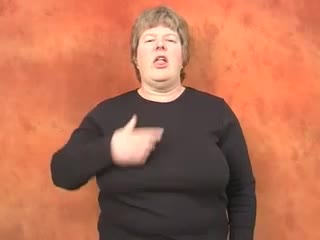
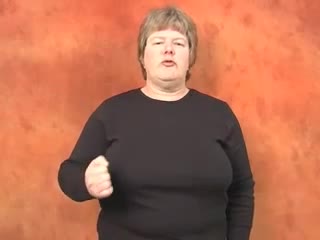
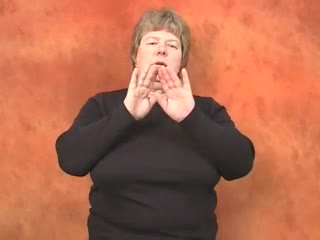
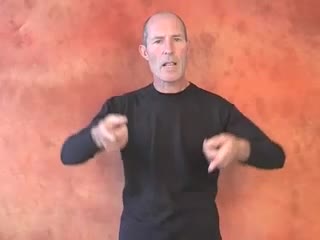
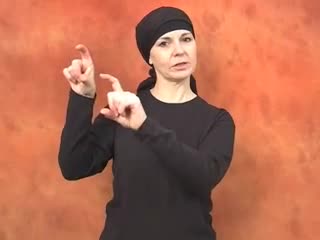
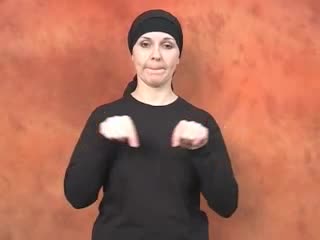
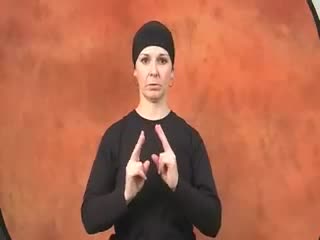
Begin by forming an 'S' handshape with your dominant hand. What does that mean? Simply curl all your fingers tightly into a fist, with your thumb resting over the top of your index and middle fingers. This solid, compact handshape represents the sturdy body of the anchor bolt itself. Simultaneously, your non-dominant hand should form an open 'C' handshape. To achieve this, curve your fingers and thumb to create an open circle, as if you're gently holding a small pipe or representing the hole in the material where the bolt will go. Keep the non-dominant palm facing towards your dominant hand.
Step 2: Hand Placement and Location
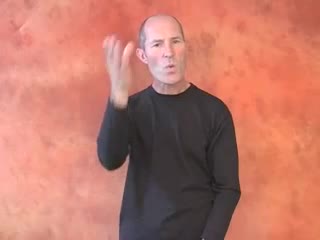
Position your non-dominant 'C' hand horizontally in the neutral signing space directly in front of your body, roughly at chest height. Ensure the opening of the 'C' faces left if you're right-handed, or right if you're left-handed. Now, bring your dominant 'S' hand (the fist) up to meet the non-dominant hand. You're going to place the knuckles of your dominant fist just inside the opening of your non-dominant 'C' hand, as if the bolt is about to enter the shell or material.
Step 3: Movement
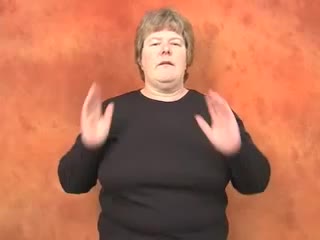
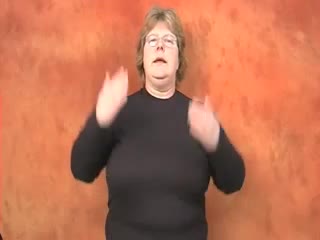
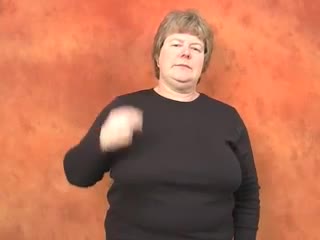
With your hands in position, execute a two-part movement. First, firmly push your dominant 'S' hand forward and slightly downwards through the opening of your non-dominant 'C' hand. This pushing action mimics the bolt being driven or screwed into place. Immediately after pushing through, as your dominant hand emerges past your non-dominant hand, rapidly splay your dominant hand's fingers outwards from the fist. Your fingers should spread wide and slightly curl, illustrating the "expansion" of the shell as it secures itself within the material. The whole sequence should feel decisive and deliberate, conveying the mechanical action.
Step 4: Facial Expression and Mouthing
Non-manual features are absolutely crucial in BSL, adding layers of grammatical meaning and context. For "expansion-shell anchor bolt," you'll want to use a firm, determined facial expression throughout the sign, mirroring the effort involved in securing a heavy-duty fastening. You might also subtly mouth the words "firm" or "secure" to further reinforce the sign's meaning. The clarity of your non-manual signals truly enhances how to sign expansion-shell anchor bolt in BSL, ensuring your message is fully understood.
Step 5: Palm Orientation
As you begin the sign, your dominant 'S' hand will have its knuckles facing forward, with the palm facing towards your body. During the push-through movement, this orientation largely remains. However, when your fingers splay outwards for the expansion, your palm will naturally reorient to face slightly downwards and forwards as the fingers spread, opening towards the imagined wall or surface. Your non-dominant 'C' hand maintains its palm orientation facing your dominant hand throughout the entire sign, acting as the stable receiving element. This consistent orientation helps to clearly define the interaction between the two hands.
"expansion-shell anchor bolt" in BSL - Quick Reference Snapshot
- Handshape: Dominant hand 'S' (fist), non-dominant hand 'C' (curved fingers)
- Location: Neutral space, chest height, non-dominant hand acts as a base
- Movement: Dominant hand pushes through non-dominant 'C', then fingers splay outwards
- Facial Expression: Firm, determined, possibly mouthing "secure"
- Dominant Hand: Executes the push and splay action
- Palm Orientation: Dominant palm starts inward, shifts to slightly downward/forward on splay; non-dominant palm faces dominant
5 Memorisation Tricks for the BSL Sign "expansion-shell anchor bolt"
Here are some clever ways to really make this sign stick in your memory.
- Visualise the Action: Picture a carpenter pushing a bolt into a wall, and then *see* the internal mechanism spreading out to grip. Your dominant fist is the bolt, the non-dominant 'C' is the wall opening, and the final finger splay is the internal expansion. This direct connection to the object's function makes the sign incredibly iconic and easier to recall.
- The "Tightening Grip" Muscle Memory: Practice the forceful push and then the sudden, firm splay of your fingers. Really feel the tension in your hand as it "grips" the air. Repeating this physical sensation will embed the movement into your muscle memory, making the BSL expansion-shell anchor bolt sign feel natural and automatic over time.
- Connect to the Name: Break the English term down: "expansion," "shell," "anchor," "bolt." The sign clearly shows the "bolt" entering a "shell" (the 'C' hand) and then "expanding" to "anchor" it. Understanding how each part of the sign aligns with the word's meaning helps solidify the concept, linking the visual to the verbal.
- Distinguish from "Screw": A lot of people initially confuse this with the general sign for "SCREW," which typically involves a twisting motion. Remember, "expansion-shell anchor bolt" is about a straight push and a splay, not a rotation. Focusing on the distinct linear push and outward expansion will help you avoid this common mix-up.
- "DIY Project" Daily Practice: Think about every time you see a shelf, a picture, or anything mounted on a wall. Imagine how it's attached and mentally or physically sign "expansion-shell anchor bolt" while you're looking at it. Integrating the sign into your daily observations about how things are built will reinforce its usage.
Real-Life Situations to Use the BSL Sign for "expansion-shell anchor bolt"
Knowing a sign is one thing; knowing how to weave it into a conversation is quite another. Let's explore practical applications for this specific sign.
- When discussing home renovations, you might sign, "WE NEED MORE expansion-shell anchor bolt FOR THE NEW SHELVES," clearly indicating the exact type of fastener required for a robust installation.
- Explaining a construction plan on a job site could involve signing, "THE BEAM WILL BE SECURED WITH FIVE expansion-shell anchor bolt HERE," using spatial grammar to point to the precise location while signing the object.
- If someone asks about a strong fixing method, you could reply, "FOR HEAVY LOADS, expansion-shell anchor bolt IS BEST," employing a topic-comment structure to offer advice.
- Imagining a scenario where a fastening has failed, you might comment, "THE OLD expansion-shell anchor bolt WASN'T STRONG ENOUGH," using a negative particle to express the inadequacy.
Top 3 Mistakes Learners Make Signing "expansion-shell anchor bolt" in BSL
Every learner encounters hurdles, and that's perfectly normal! Being aware of common pitfalls helps you overcome them quickly.
- Insufficient "Expansion" Movement: Many beginners correctly form the 'S' hand and push it, but then their fingers only partially open or spread too slowly. This diminishes the core meaning of "expansion." The fix is to ensure a *rapid*, decisive splay of the fingers immediately after the push, making the expansion very clear and energetic.
- Incorrect Non-Dominant Handshape: Sometimes, learners use a flat 'B' hand or an 'O' hand for the non-dominant hand instead of the 'C' shape. The 'C' hand specifically represents the tubular shell or the hole the bolt enters. To correct this, consciously form a distinct 'C' shape, ensuring your thumb and fingers create an open, curved space, which provides the correct visual context for the bolt's entry.
- Missing the Facial Expression: The determined facial expression and subtle mouthing are often overlooked, yet they convey the strength and purpose of this particular anchor bolt. Without it, the sign can appear somewhat flat or generic. Remember to engage your facial muscles, showing a firm resolve that matches the physical action, perhaps subtly mouthing "strong" or "secure" to enhance the sign's impact.
Fascinating Facts About the BSL Sign for "expansion-shell anchor bolt"
Let's delve into some intriguing aspects of this specific sign within the rich tapestry of British Sign Language.
- This sign is a fantastic example of BSL's iconic nature, where the form of the sign directly mimics the action or appearance of the object it represents – in this case, the literal expansion of the bolt.
- While not an ancient sign, its necessity has emerged with modern construction and DIY culture, reflecting how BSL continuously evolves to incorporate new vocabulary for technical items.
- The specific handshapes and movements are carefully chosen to avoid confusion with other, more general 'fixing' or 'attaching' signs, highlighting BSL's precision even for niche concepts.
- You might encounter slight regional variations in the speed or emphasis of the expansion part of the sign; some areas might have a more pronounced splay, while others are quicker, yet the core mechanics remain consistent across the BSL-using community.
- Its structure makes it a compound sign in a sense, combining elements of 'inserting' and 'spreading,' which demonstrates how BSL efficiently conveys complex ideas through concise visual metaphors.
"expansion-shell anchor bolt" in Deaf Culture - Community and Identity
The ability to communicate technical terms like "expansion-shell anchor bolt" is more than just practical; it’s a testament to the comprehensive nature of BSL and its crucial role in empowering Deaf individuals across all aspects of life. In professions like engineering, construction, or even simply pursuing hobbies like home improvement, having precise signs ensures full participation and understanding. When a Deaf person can clearly articulate the exact type of fastener needed for a project, it eliminates communication barriers and fosters independence. It underscores the importance of a rich, nuanced sign language that serves its community in every context, from casual conversation to highly specialised technical discussions, affirming that Deaf people are integral to every field and interest.
Example Conversations Using "expansion-shell anchor bolt" in BSL
Learning how to sign expansion-shell anchor bolt means you can integrate it into a variety of real-world contexts.
English: Did you remember to buy the expansion-shell anchor bolts for the new railing? - BSL structure: Topic-comment, incorporating a question marker at the end: NEW RAILING, expansion-shell anchor bolt, YOU BUY, REMEMBER? (raise eyebrows for question)
English: We need strong expansion-shell anchor bolts to secure this heavy machinery. - BSL structure: Object-subject-verb, emphasizing the quality: HEAVY MACHINE, SECURE, WE NEED, STRONG expansion-shell anchor bolt.
English: The old expansion-shell anchor bolt rusted and broke, so we must replace it. - BSL structure: Time-topic-comment, indicating past tense: OLD expansion-shell anchor bolt, RUST, BREAK, SO WE MUST REPLACE.
English: How many expansion-shell anchor bolts will be required for this installation? - BSL structure: Question-word at end, spatial reference: THIS INSTALLATION, expansion-shell anchor bolt, HOW MANY? (furrow brows for question)
English: I’ve got plenty of expansion-shell anchor bolts in my toolbox, don't worry. - BSL structure: Subject-verb-object, reassuring: MY TOOLBOX, expansion-shell anchor bolt, PLENTY HAVE, DON'T WORRY.
Frequently Asked Questions: The BSL Sign for "expansion-shell anchor bolt"
Let's tackle some common queries you might have about this particular sign.
Is there a common regional variation for the BSL sign for expansion-shell anchor bolt?
While the core handshapes and movements for expansion-shell anchor bolt are largely consistent across the BSL community due to its iconic nature, you might observe slight differences in the speed or the emphasis on the 'expansion' part of the sign. Some signers may make the splay of the fingers more pronounced, while others might execute it with a quicker, more subtle flick, but the underlying meaning remains perfectly clear.
Are there any similar signs in BSL that I should be careful not to confuse with expansion-shell anchor bolt?
Yes, learners sometimes confuse this sign with general signs for "SCREW" or "BOLT." The key differentiator for expansion-shell anchor bolt is the distinct two-part action: the initial push (like a bolt) *followed by* the definitive outward splay of the fingers that clearly represents the "expansion." Always remember that unique splaying movement to distinguish it.
Is the sign for expansion-shell anchor bolt suitable for beginner BSL learners?
Absolutely! While it's a specific technical term, the sign for expansion-shell anchor bolt is quite iconic and visually descriptive, making it relatively straightforward for beginners to grasp. Its clear representation of the object's function helps in memorisation, so don't shy away from adding it to your early vocabulary if it's relevant to your interests.
Can children understand and use the BSL sign for expansion-shell anchor bolt?
Children can certainly learn this sign, especially if they are involved in activities like building with their parents, playing with construction toys, or simply showing curiosity about how things are fastened. Its highly visual nature makes it accessible, though the context might need to be simplified to match a child's understanding of the object itself.
Why are specific technical signs like expansion-shell anchor bolt so important in BSL?
Specific technical signs are vital because they enable precise and unambiguous communication within professional, educational, and everyday contexts. They prevent the need for lengthy finger-spelling, which can interrupt the flow of conversation, ensuring that Deaf individuals have full access to detailed information and can express complex ideas with efficiency and accuracy.
Signs That Pair Naturally with "expansion-shell anchor bolt" in BSL
To truly build your vocabulary, it's helpful to learn signs in clusters, understanding how they relate to one another.
- SCREW: This sign, often a twisting motion with the dominant index finger, naturally pairs as another common fastener, allowing you to differentiate between types of fixings.
- DRILL: The sign for DRILL, typically involving a hand shape mimicking holding a drill and a forward, rotating movement, connects directly to the preparation needed before inserting an anchor bolt.
- WALL: Represented by an upright flat hand, WALL is a crucial sign as anchor bolts are almost always inserted into a wall or similar solid structure, providing context.
- FIX / REPAIR: Often a two-handed sign showing hands coming together or performing a mending action, it links conceptually to the purpose of an anchor bolt – to secure or mend something.
- BUILD: This sign, often two 'A' handshapes stacking or interlocking, pairs well as anchor bolts are fundamental components in many construction and building projects.
- TOOL: A general sign often represented by two 'T' handshapes tapping or a dominant 'A' handshape, it provides the broader category to which an expansion-shell anchor bolt belongs.
Building Fluency: How to Practise "expansion-shell anchor bolt" in BSL
You've learned the steps; now let's make that sign truly yours through effective practice. Start by standing in front of a mirror and slowly executing the sign for expansion-shell anchor bolt, paying close attention to your handshapes and the distinct two-part movement – the push, then the emphatic finger splay. Focus on making the 'expansion' clear and dynamic. Then, integrate it into short, imaginative sentences about things you see around your home or workplace; think "That shelf needs a strong expansion-shell anchor bolt!" Record yourself signing it on your phone, then watch it back to spot any areas where your handshape or movement could be clearer. Finally, and this is truly invaluable, try to use this new sign with a Deaf conversation partner; their feedback will be the most authentic guide to your progress.