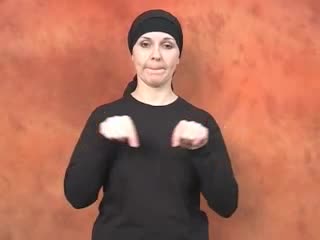
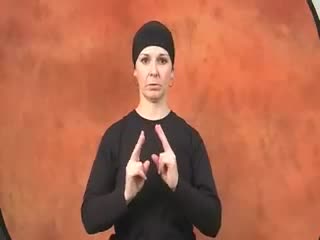
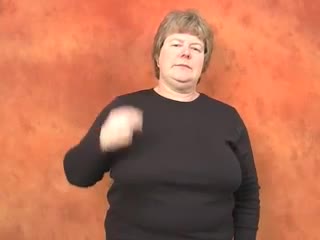
What Is the BSL Sign for "decimetre"?
Stepping into the fascinating world of British Sign Language, you'll discover how every concept, even precise measurements, finds its unique visual expression. The BSL sign for decimetre beautifully encapsulates the idea of a specific, smaller unit of length, distinguishing it from general measurement terms. It’s more than just a gesture; this sign conveys an exact portion, crucial for clarity in many practical conversations. Mastering the decimetre British Sign Language representation means you’re adding another valuable tool to your communication toolkit, enabling you to discuss dimensions with confidence and precision within the Deaf community.
How to Sign "decimetre" in British Sign Language - Step-by-Step
Learning to sign "decimetre" involves a smooth, intentional sequence of movements that build upon each other to form a clear visual concept.
Step 1: Handshape
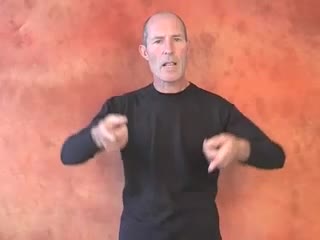
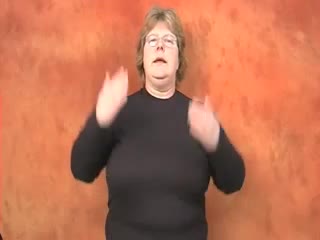
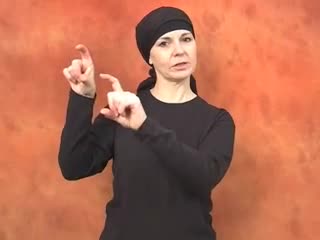
Begin by forming your dominant hand into a 'D' handshape. To achieve this, extend your index finger straight upwards, while keeping your middle finger, ring finger, and little finger curled down into your palm. Your thumb should tuck neatly against the side of your middle finger, supporting the extended index finger. Picture holding an imaginary small, slender object between your thumb and extended index finger, with your palm facing forward.
Step 2: Hand Placement and Location
Position your dominant hand, now in the 'D' handshape, in the neutral signing space directly in front of your body, around chest height. It should be comfortably extended, not too close to your chest nor too far away, allowing for clear movement. Your non-dominant hand remains relaxed, perhaps resting gently by your side or in a neutral preparatory position, as this particular sign is primarily one-handed.
Step 3: Movement
From its initial position, move your 'D' handshape in a short, deliberate, downward arc, almost as if you’re tracing a tiny, precise measurement in the air. The movement isn't a large sweep; rather, it's a compact, controlled motion, moving approximately 5-8 centimetres down before returning to the starting point. This small, precise action is then repeated once more, making it two distinct, gentle downward arcs, emphasising the specific, measured quality of a decimetre.
Step 4: Facial Expression and Mouthing
While signing "decimetre," a neutral and focused facial expression is typically maintained, reflecting the precise nature of the unit of measure. Your eyebrows should remain relaxed, without any tensing or furrowing. Crucially, mouthing the word "decimetre" simultaneously is an integral non-manual feature. This isn't just speaking the word; it’s about shaping your mouth as if you were saying it, which provides additional clarity and reinforces the lexical item for your interlocutor. Non-manual features like mouthing are grammatically core to British Sign Language, often distinguishing between homophonous signs or adding specificity.
Step 5: Palm Orientation
Throughout the sign for "decimetre," your dominant hand's palm initially faces forward, towards the person you are communicating with. As you execute the short, downward arc movement, the palm orientation remains consistent, maintaining that forward-facing direction. This stable orientation ensures the 'D' handshape is clearly presented and the movement is unambiguous, reinforcing the sign's meaning as a specific, measured length.
"decimetre" in BSL - Quick Reference Snapshot
- Handshape: Dominant hand forms a 'D' (index finger extended, others curled, thumb tucked).
- Location: Neutral signing space, chest height, directly in front of the body.
- Movement: Two short, controlled downward arcs (approx. 5-8 cm each), returning to the start after each.
- Facial Expression: Neutral, focused expression.
- Dominant Hand: The hand you write with is used for the sign.
- Palm Orientation: Palm consistently faces forward throughout the sign.
5 Memorisation Tricks for the BSL Sign "decimetre"
- Visual Mnemonic: Picture your 'D' handshape like a tiny pointer, precisely measuring a small segment. The two gentle downward movements represent those individual "deci" parts, almost like tapping out ten small segments to make a whole metre.
- Muscle-Memory Drill: Practice the 'D' handshape by holding it firmly for 10 seconds, then release and repeat. Then, slowly perform the two small downward arcs, focusing on the precision of the movement, ensuring your wrist is relaxed but controlled.
- Connection to Meaning: Think of the "D" handshape as standing for "deci," and the small, repeated movement as a visual representation of a tenth of something larger. This direct link between the handshape, movement, and the word's prefix makes recalling the sign much easier.
- Common-Confusion Tip: Be mindful not to make the downward movement too large or sweeping, as this could be confused with signs for "measure" in a more general sense. The key here is the compact, precise repetition, so keep those arcs small and distinct.
- Daily-Life Practice Idea: Whenever you see a ruler or a measuring tape, mentally sign "decimetre" as you look at the 10-centimetre mark. You could even physically trace the sign in the air while thinking about how a decimetre fits into a metre.
Real-Life Situations to Use the BSL Sign for "decimetre"
- Imagine you're discussing a DIY project with a friend and need to specify a small cut: "I need you to cut this wood exactly three decimetres long." Here, the sign for "decimetre" would follow the number 'three', creating a clear quantity.
- Perhaps you're explaining a precise scientific measurement in a BSL lesson: "The beaker contains five decilitres of liquid, which is half a litre." You'd sign 'five' then 'decilitre' (using the base sign for decimetre, adapted for volume if necessary, but the core 'deci' part remains).
- If you're describing the size of a small object, like a particular plant pot, you might say: "The pot's diameter is one decimetre." In BSL, you might sign 'POT' then 'DIAMETER' and then 'ONE DECIMETRE', often using spatial grammar to indicate the dimension directly.
- When contrasting sizes, you could comment, "This piece is much shorter, only a couple of decimetres." The sign for "decimetre" would reinforce the small scale after signing "SHORT" or "SMALL."
Top 3 Mistakes Learners Make Signing "decimetre" in BSL
- Incorrect Handshape: Many beginners initially form a '1' handshape instead of the distinct 'D' handshape. This happens because "deci" implies one-tenth, leading to a natural but incorrect association. The precise correction involves ensuring only the index finger is extended, with the thumb supporting the middle finger, creating that clear 'D'.
- Overly Large or Vague Movement: Learners often make the downward arc too broad or perform only one sweep, losing the specific "measured" quality. This dilutes the meaning, making it seem like a general "small" or "measure" sign. The precise correction is to keep the two downward arcs compact and controlled, each no more than about eight centimetres, clearly reiterating the specific unit.
- Neglecting Mouthing: A common oversight is performing the sign without the accompanying mouthing of "decimetre." While the hand sign is clear, BSL relies heavily on non-manual features for full meaning and disambiguation. To correct this, consciously practise shaping your mouth as if speaking the word every single time you sign it, ensuring linguistic completeness.
Fascinating Facts About the BSL Sign for "decimetre"
- The structure of the sign for "decimetre" reflects a common linguistic strategy in BSL, where a core concept (like 'measure' or a base unit) is modified to denote a smaller fraction or specific quantity. This 'D' handshape acts as a clear modifier.
- While many units of measurement are fingerspelled for absolute precision, this specific sign for "decimetre" is largely iconic, with the 'D' handshape and the small, repetitive movement visually representing the idea of a 'deci' or a 'tenth of a measure'.
- Regional variations in BSL are a rich part of its linguistic landscape; however, for highly technical terms like "decimetre," the sign tends to be more standardised across the BSL-using community, prioritising clarity and universal understanding in precise contexts.
- The repetition in the movement component isn't just for emphasis; it often signals a plural or iterative aspect in BSL, here reinforcing the idea of a distinct, countable unit of measurement, rather than a single, continuous action.
- This sign's reliance on the 'D' handshape connects it to the manual alphabet, making it easier for new learners to remember, as the initial letter of the word is directly incorporated into the sign's form.
"decimetre" in Deaf Culture - Community and Identity
Within Deaf culture, precision in communication holds immense value, and signs like "decimetre" exemplify this commitment to clarity. While not a sign used in everyday casual chat, its presence signifies the Deaf community's full engagement with all aspects of life, including scientific, technical, and practical fields. It underscores the fact that BSL is a comprehensive language, capable of expressing nuanced and specific concepts required in education, work, and personal projects. The ability to articulate precise measurements in BSL reinforces the community's self-sufficiency and its capacity to conduct complex discussions without relying on spoken language interpretation. This sign is a quiet testament to BSL's robustness and the linguistic independence of Deaf individuals.
Example Conversations Using "decimetre" in BSL
English: We need to cut the fabric to four decimetres wide. - BSL structure: TOPIC (FABRIC) - ACTION (CUT) - QUANTITY (FOUR) - MEASUREMENT (DECIMETRE) - DESCRIPTION (WIDE).
English: How many decimetres is that shelf? - BSL structure: OBJECT (SHELF) - QUESTION (HOW MANY DECIMETRE) - often using an interrogative facial expression.
English: It's just under one decimetre, actually. - BSL structure: EMPHASIS (ACTUALLY) - QUANTITY (ONE DECIMETRE) - NEGATION (UNDER/NOT QUITE) - often with a slight head shake for negation.
English: Remember, a decimetre is a tenth of a metre. - BSL structure: REMINDER (REMEMBER) - DEFINITION (DECIMETRE IS ONE-TENTH METRE) - showing the relationship directly.
English: Could you measure this rope for six decimetres? - BSL structure: REQUEST (YOU MEASURE) - OBJECT (ROPE) - QUANTITY (SIX DECIMETRE) - using polite facial expression for a request.
Frequently Asked Questions: The BSL Sign for "decimetre"
Is the BSL sign for decimetre consistent across different regions of the UK?
For technical and specific measurement units like "decimetre," you'll generally find a high degree of consistency across the BSL-using community throughout the UK. While BSL does have regional variations for many common signs, terms requiring precision often maintain a more uniform representation to avoid ambiguity in contexts like education or professional settings. This ensures clear communication, regardless of where you learned to sign.
Are there any similar signs that I should avoid confusing with the BSL sign for decimetre?
Yes, learners sometimes confuse it with general signs for "small" or "measure" if they don't perform the 'D' handshape and the specific double-arc movement accurately. The sign for "centimetre" often involves a 'C' handshape and a similar small movement, so pay attention to the initial handshape to distinguish them clearly. Always remember the 'D' and the precise, repeated short arcs for "decimetre."
Is the BSL sign for decimetre suitable for beginners to learn early on?
Absolutely, it's a perfectly suitable sign for beginners, especially those interested in practical or academic signing. While "decimetre" isn't an everyday conversational sign, learning it helps you grasp the structured nature of BSL signs for units of measure and reinforces the importance of handshape and precise movement. It’s a great way to expand your vocabulary beyond basic greetings and common objects.
Can children easily learn the BSL sign for decimetre, or is it too complex?
Children can certainly learn the BSL sign for decimetre, particularly if taught in context. Its clear handshape and simple, repetitive movement are quite graspable for younger learners. Incorporating it into fun activities, like measuring toys or craft projects, will make it engaging and help them connect the abstract concept of a unit of measure to a tangible action.
How does the BSL sign for decimetre compare to an equivalent sign in another sign language?
Interestingly, many sign languages, when representing precise metric units, will either adapt a sign for "measure" with a specific handshape for the prefix (like 'D' for deci-), or they will fingerspell the word. While the specific handshape and movement might differ, the underlying linguistic principle of using iconic or letter-based cues to represent units of measure is a common strategy across various sign languages.
Signs That Pair Naturally with "decimetre" in BSL
- METRE: This sign naturally pairs with "decimetre" as it represents the larger unit that a decimetre is a tenth of. Learning them together highlights their proportional relationship.
- CENTIMETRE: Understanding "centimetre" alongside "decimetre" helps distinguish between these related, yet distinct, metric subdivisions, often with similar signing structures but different handshapes.
- MEASURE: The general sign for "measure" provides the foundational concept of quantification, from which specific units like "decimetre" branch off, showing how BSL builds complex ideas.
- LONG / SHORT: These descriptive signs for length are frequently used in conjunction with "decimetre" to provide context, explaining if something is several decimetres long or just a short fraction of one.
- WIDTH / HEIGHT: When discussing dimensions, "width" and "height" often precede or follow a specific measurement like "decimetre," allowing you to describe an object's precise size in various planes.
Building Fluency: How to Practise "decimetre" in BSL
To truly embed the BSL sign for "decimetre" into your signing repertoire, consistent and varied practice is key. Start by using a mirror to observe your handshape; ensure your 'D' is crisp and the two short, downward arcs are precise, matching the movement you've learned. Try to integrate the sign into your daily BSL conversation, even if it's just mentally adding it when you see measurements, or physically signing it to yourself. Filming your practice sessions can be incredibly insightful, allowing you to catch any subtle errors in handshape, movement, or mouthing that you might miss otherwise. The best way to achieve fluency is by finding a Deaf conversation partner or joining a local BSL group; they can provide invaluable feedback and context. Remember to space your repetitions over several days rather than cramming, as this significantly boosts long-term recall and muscle memory for this specific, important sign.