What Is the BSL Sign for "crowbar"?
Imagine needing to pry something open, something stubborn that refuses to budge. That's precisely the action and utility captured by the BSL sign for crowbar. This isn't just a label for a tool; it's a dynamic representation within British Sign Language crowbar discussions, illustrating its function through movement and handshape. When you learn how to sign crowbar in BSL, you're embracing the visual power of this beautiful language, adding a practical, action-oriented word to your vocabulary. It's a sign that speaks volumes about the tool's purpose, making it instantly recognisable once you understand its core components.
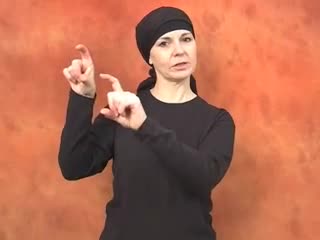
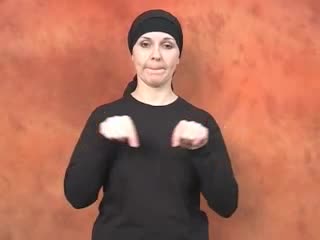
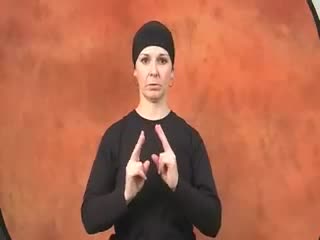
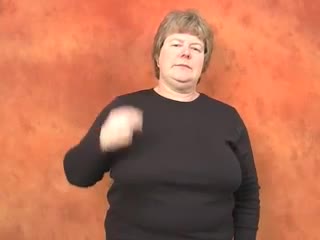
How to Sign "crowbar" in British Sign Language - Step-by-Step
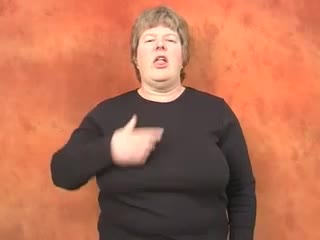
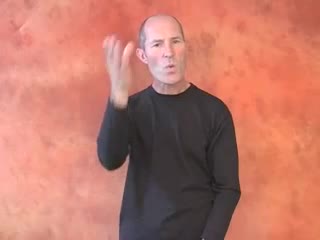
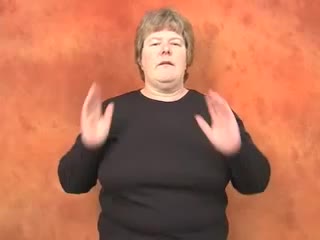
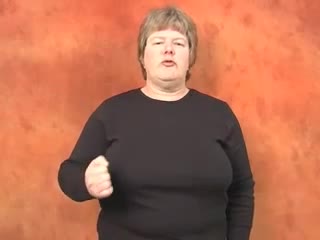
Mastering this sign involves embodying the tool's powerful, levering action with your dominant hand, creating a truly descriptive movement.
Step 1: Handshape
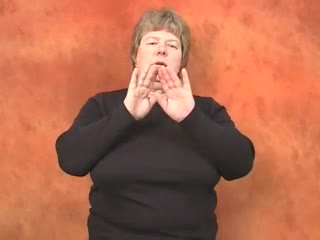
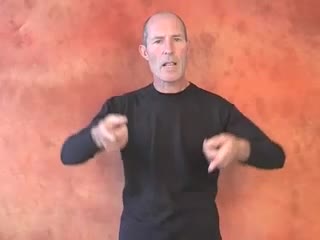
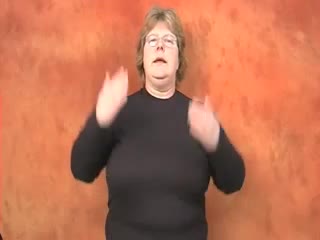
Begin by forming a specific handshape with your dominant hand. You'll want to curl your middle, ring, and little fingers tightly into your palm, creating a strong fist. Simultaneously, extend your index finger outwards, keeping it firm, then slightly bend or hook it at the knuckle, almost like the 'X' handshape but with the finger extended more prominently. Your thumb should rest across the palm, securely holding down the curled fingers.
Step 2: Hand Placement and Location
Position your dominant hand, with its unique hooked handshape, in the neutral signing space directly in front of your chest. Hold it about shoulder-width away from your body, preparing to execute the prying motion. There's no involvement from your non-dominant hand for this particular sign; it relies solely on the action of your working hand.
Step 3: Movement
With your hooked index finger pointing slightly downwards and towards your body, execute a distinct prying motion. You'll move your wrist in a firm, controlled upward arc, as if you're catching an edge and leveraging it upwards. The movement is typically short and sharp, simulating the initial application of force, and it's usually performed just once or twice with clear emphasis.
Step 4: Facial Expression and Mouthing
Often, a determined or concentrated facial expression naturally accompanies this sign, reflecting the effort involved in using such a tool. You might slightly furrow your brow or tighten your lips as if applying force. Simultaneously, you should mouth the word "crowbar" silently, or sometimes a more action-oriented word like "pry," which helps convey the English equivalent and adds essential linguistic context to the sign.
Step 5: Palm Orientation
At the beginning of the sign, your palm will generally face downwards or slightly towards your body, with the hooked index finger pointing in that same direction. As you perform the levering motion, your palm will subtly rotate upwards and outwards, reflecting the way a crowbar's end would twist to lift an object. This shift in orientation is crucial for conveying the functional aspect of the tool.
"crowbar" in BSL - Quick Reference Snapshot
- Handshape: Index finger extended and slightly hooked, other fingers curled into a fist, thumb across palm.
- Location: Neutral signing space in front of the chest.
- Movement: Upward, arc-like prying motion from the wrist.
- Facial Expression: Determined or concentrated, often with mouthing "crowbar."
- Dominant Hand: Performs the entire sign.
- Palm Orientation: Starts downward/inward, rotates upward/outward during the action.
5 Memorisation Tricks for the BSL Sign "crowbar"
-
Picture the exact tool: Envision the hooked end of a crowbar with your index finger; the rest of your hand becomes the sturdy handle. Visualising the physical object directly correlates to the handshape, making it easier to recall.
-
Engage your muscle memory: Practice the prying motion repeatedly, feeling the arc in your wrist as if you're genuinely lifting something heavy. This physical repetition helps solidify the movement in your memory, connecting the action directly to the sign.
-
Connect to its purpose: Think of the word "lever" or "pry" whenever you make the sign, reinforcing the tool's primary function. Understanding the "why" behind the movement greatly aids retention, giving the sign a meaningful context.
-
Distinguish from similar tools: Ensure your handshape is distinctly hooked, avoiding confusion with a flat "blade" for a screwdriver or a general "tool" sign. Focusing on the unique features prevents misinterpretations and reinforces the correct form.
-
Integrate into daily scenarios: Imagine using a crowbar to open a stuck window or lift a heavy lid, then practice the sign in that mental context. Applying the sign to everyday situations helps bridge the gap between abstract learning and practical application.
Real-Life Situations to Use the BSL Sign for "crowbar"
When you're discussing practical tasks, this sign becomes incredibly useful. For instance, if you're asking a friend, "Do you have a crowbar I could borrow?", your BSL structure would place the "crowbar" sign early in the sentence, potentially followed by a question mark facial expression. Perhaps you're narrating a story about a renovation project, saying, "We had to use a crowbar to remove the old floorboards," where the sign would clearly depict the necessary action within your narrative flow. You might also want to warn someone about a dangerous situation, signing, "Be careful, there's a loose crowbar lying on the ground," utilising spatial grammar to indicate its location. Furthermore, describing an object, such as "That heavy box needs a crowbar to open," allows you to integrate the sign naturally into a statement about necessity.
Top 3 Mistakes Learners Make Signing "crowbar" in BSL
-
**Incorrect Handshape:** Many beginners mistakenly use a flat handshape or a general 'L' shape, which doesn't convey the specific hooked end of a crowbar. This happens because they're thinking of "tool" generically rather than the unique form. The correction involves ensuring your index finger is distinctly bent and firm, truly mimicking the tool's prying edge, while the other fingers remain tightly curled.
-
**Missing the Prying Movement:** Another common error is performing a simple up-and-down or side-to-side motion, rather than the characteristic arc of leverage. Learners might simplify the movement, losing the iconic action that gives the sign its meaning. The precise correction is to focus on a clear, controlled upward wrist rotation, as if you're applying real force to lift something.
-
**Forgetting Facial Expression:** Learners often omit the accompanying determined or strained facial expression, making the sign appear bland or uncommitted. This occurs because they sometimes overlook non-manual features as integral parts of BSL grammar. To correct this, consciously add a slight brow furrow or a taut mouth as you sign, conveying the effort and intent that naturally goes with using a crowbar.
Fascinating Facts About the BSL Sign for "crowbar"
This particular sign is highly iconic, meaning its form directly resembles the action or object it represents, making it remarkably intuitive for many learners. You'll notice that the movement and handshape are so descriptive, they almost tell a mini-story about using the tool. While specific historical origins for individual BSL signs can be elusive, the "crowbar" sign's strong iconic nature suggests it developed from a direct observation of the tool's function in everyday life. Within the BSL-using community, you'll find remarkable consistency for this sign, with very few significant regional variations, which is quite interesting for a specific tool. Its clear action differentiates it from other 'tool' signs, emphasizing its unique function rather than just its general category. Furthermore, the sign's robust, single-handed execution highlights the physical strength often associated with this piece of equipment.
"crowbar" in Deaf Culture - Community and Identity
Tools like the crowbar represent ingenuity and the ability to overcome physical challenges, themes that resonate deeply within the Deaf community. Shared experiences of problem-solving, whether in practical tasks or advocating for accessibility, form strong bonds. The visual nature of BSL means that signs for practical objects and actions, like "crowbar," are often immediately understood and appreciated across generations and regions, fostering a common ground in communication. Discussing projects, repairs, or even telling stories that involve such tools becomes a shared visual experience. These signs are a testament to how BSL eloquently describes the physical world around us, reinforcing a collective identity built on visual communication and shared understanding.
Example Conversations Using "crowbar" in BSL
English: Do you have a crowbar? - BSL structure: TOPIC (CROWBAR), QUESTION (HAVE YOU?)
English: We need a crowbar to open this box. - BSL structure: OBJECT (BOX), NEED (CROWBAR), OPEN (ACTION)
English: He used a crowbar to remove the old nails. - BSL structure: PRONOUN (HE), ACTION (REMOVE NAIL), INSTRUMENT (CROWBAR)
English: That's a very heavy crowbar! - BSL structure: DEMONSTRATIVE (THAT), CROWBAR, ADJECTIVE (VERY HEAVY)
English: Be careful with the crowbar near the window. - BSL structure: WARNING (CAREFUL), CROWBAR (LOCATION: NEAR WINDOW)
Frequently Asked Questions: The BSL Sign for "crowbar"
Are there any regional variations for the BSL sign for crowbar?
Generally, the BSL sign for crowbar shows remarkable consistency across different regions where British Sign Language is used. While subtle individual stylistic differences in execution might occur, the core handshape, movement, and location remain largely uniform. This makes it a widely understood and stable sign within the community.
Are there similar signs to the BSL crowbar sign I should avoid confusing?
Yes, learners sometimes confuse it with general "tool" signs or signs for other prying implements like "screwdriver" or "lever." The key difference lies in the specific hooked index finger for "crowbar" and its distinct upward prying motion, which helps differentiate it from the flatter blade of a screwdriver or the more abstract "lever" concept. Focusing on that unique hook is essential.
Is the crowbar sign in BSL suitable for beginners?
Absolutely, the BSL sign for crowbar is quite accessible for beginners! Its highly iconic nature means the sign visually represents the action of the tool, making it relatively intuitive to grasp. The clear handshape and straightforward movement make it an excellent sign for new learners to add to their vocabulary, building confidence early on.
Can children learn the BSL sign for crowbar easily?
Children often pick up iconic signs like "crowbar" very quickly because they can easily connect the visual action to the real-world object and its function. Encouraging them to mimic the prying action and associate it with playtime tools or stories makes learning engaging and memorable. Its directness appeals strongly to younger learners.
How does the British Sign Language crowbar sign compare to other tool signs?
The British Sign Language crowbar sign stands out among other tool signs due to its highly specific, action-oriented depiction. Unlike more generic signs for "tool" or "hammer," the crowbar sign's hooked handshape and levering movement directly illustrate its unique function of prying. This makes it one of the more visually descriptive tool signs in BSL.
Signs That Pair Naturally with "crowbar" in BSL
- **TOOL:** This is a broad category sign, naturally pairing with specific implements like "crowbar" when discussing equipment in general. They belong together because "crowbar" is an instance of a "tool."
- **OPEN:** A crowbar is frequently used to open things, so these two signs often appear in sequence in conversations about gaining access. The conceptual link is the action the crowbar enables.
- **BREAK:** Sometimes, using a crowbar might result in breaking something, linking these signs through a potential consequence. They share a connection through the force applied.
- **HAMMER:** Another common manual tool, "hammer" often appears alongside "crowbar" in discussions about construction, demolition, or repair. Both are essential implements for many practical tasks.
- **LIFT:** A primary function of a crowbar is to lift heavy or stuck objects, making "lift" a very natural companion sign. The shared concept is the upward application of force.
- **REPAIR:** When you're fixing things, a crowbar might be needed for disassembly before reassembly, establishing a contextual connection. Both contribute to the broader theme of maintenance.
Building Fluency: How to Practise "crowbar" in BSL
To truly embed the BSL sign for crowbar into your active vocabulary, dedicate time to focused practice. Stand in front of a mirror and meticulously observe your handshape, ensuring your index finger forms that distinct hook, and your movement accurately reflects the prying action. Try integrating "crowbar" into brief, imaginary BSL conversations throughout your day; perhaps you're "looking for a crowbar" or "describing a job that needs a crowbar." Filming yourself is incredibly helpful, allowing you to review your execution with fresh eyes and refine any subtle aspects of the movement or facial expression. Ultimately, the most effective way to build fluency is by finding a Deaf conversation partner, as they can offer invaluable feedback and contextual usage, making the sign truly come alive in natural dialogue. Remember, consistent, spaced repetition over several days will solidify this sign in your muscle memory, helping you use it confidently and naturally.