What Is the BSL Sign for "clout nail"?
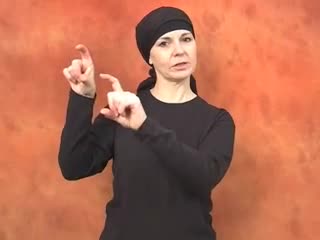
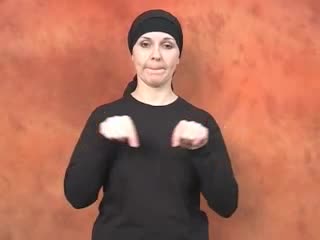
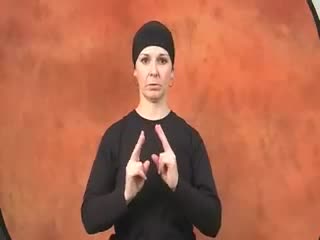
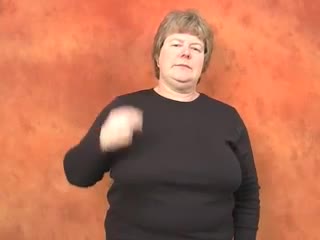
Imagine needing to secure some roofing felt or a piece of sheet material, and you reach for that specific, sturdy fastener with the broad, flat head. That's precisely the visual and functional concept captured by the BSL sign for clout nail. This particular sign isn't just about a generic nail; it distinctly conveys the unique characteristics of this robust building component. Learning how to sign clout nail in British Sign Language unlocks an important piece of practical vocabulary for anyone discussing DIY, construction, or even just explaining a home repair project. It's a sign that truly helps you articulate specific details within a conversation, enhancing clarity and precision in your communication with the Deaf community.
How to Sign "clout nail" in British Sign Language - Step-by-Step
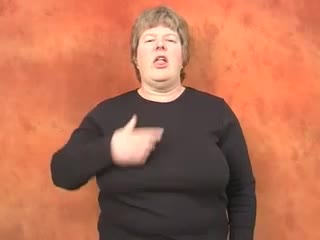
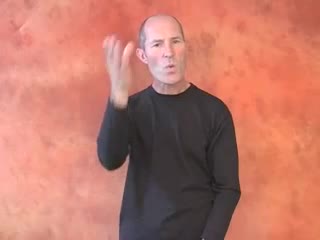
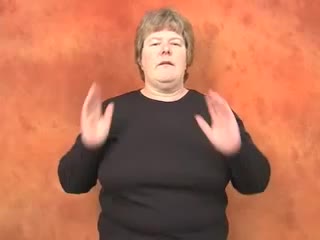
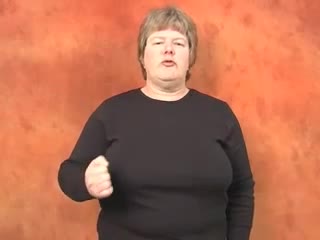
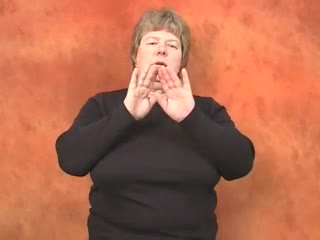
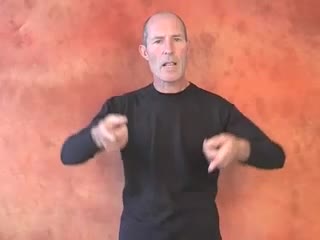
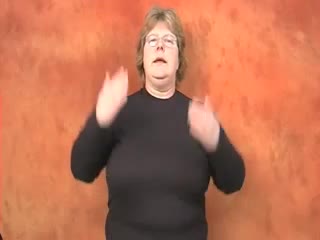
Mastering the BSL sign for clout nail involves a clear sequence of handshapes and movements that are both iconic and distinct.
Step 1: Handshape
You'll primarily use your dominant hand for this sign, starting by bringing your index finger and thumb together at their tips, forming a small, precise circle, while your remaining fingers curl gently into your palm. This hand configuration, often referred to as an 'F' handshape, visually represents the shaft of a small nail or the action of gripping something tiny and precise. Immediately following this, your dominant hand will transition smoothly into a flat handshape: all fingers extend straight and are held together, forming a flat, paddle-like surface with the palm open.
Step 2: Hand Placement and Location
Begin with your dominant 'F' hand held in front of your body, roughly at chest height, with the palm facing slightly inward. At the same time, your non-dominant hand should be held steady, forming a flat palm facing upwards, positioned just below your dominant hand. This non-dominant palm serves as a metaphorical surface into which the clout nail is driven, providing a clear spatial reference for the action that follows.
Step 3: Movement
With your dominant hand in the 'F' handshape, make a short, quick downward tapping motion towards the center of your non-dominant palm, as if you're gently placing the tip of a nail. Directly after this initial tap, smoothly and quickly transition your dominant hand into the flat 'B' handshape described in Step 1. Then, perform a single, firm, downward pressing or tapping movement with the flat palm of your dominant hand onto the non-dominant palm. This second, more forceful action conveys the wide head of the clout nail being driven in and secured.
Step 4: Facial Expression and Mouthing
Non-manual features are absolutely essential for clarity in British Sign Language; for "clout nail," a neutral to slightly concentrated facial expression is appropriate, reflecting the practical nature of the object. While signing, you'll mouth the words "clout nail" without vocalising. This mouthing helps to disambiguate the sign from others that might share similar handshapes or movements, providing crucial phonetic information that complements the manual sign.
Step 5: Palm Orientation
Initially, as your dominant hand forms the 'F' handshape and makes its first small tap, the palm will be oriented slightly towards your body or straight down. As you transition into the flat 'B' handshape for the second, more significant tapping movement, your dominant palm will face directly downwards, pressing firmly onto the upward-facing non-dominant palm. This shift in palm orientation is key, distinctly representing the broad, flat head of the clout nail making contact with the surface.
"clout nail" in BSL - Quick Reference Snapshot
- Handshape: Dominant hand starts as 'F' (thumb and index tip together), transitions to flat 'B' (all fingers extended, together).
- Location: Dominant hand in neutral space, taps towards non-dominant flat palm held at chest height.
- Movement: Small downward tap with 'F' hand, followed by a distinct, firm downward press with flat 'B' hand.
- Facial Expression: Neutral, perhaps slightly concentrated.
- Dominant Hand: Performs both handshapes and movements.
- Palm Orientation: 'F' hand palm slightly inward/downward; 'B' hand palm faces directly down for the press.
5 Memorisation Tricks for the BSL Sign "clout nail"
- Visualise the Nail Itself: Picture the distinct shape of a clout nail in your mind's eye: first, the narrow shaft you'd hold, then its signature wide, flat head. Your 'F' handshape represents gripping the shaft, and the immediate shift to the flat 'B' hand beautifully illustrates that wide, flat head being hammered flush against a surface.
- Muscle Memory Drill: Perform the sign slowly, focusing on the transition from the 'F' hand to the flat 'B' hand. Repeat this transition ten times, feeling how your fingers move, then add the two distinct tapping actions. This physical repetition helps your hands 'learn' the sequence without conscious thought, embedding the movement pattern.
- Connect to its Purpose: Think about *why* you use a clout nail: to firmly secure something flat, like roofing felt. The strong, flat pressing motion of the 'B' hand perfectly embodies this securing action. This functional link makes the sign's form highly logical and easier to recall than arbitrary movements.
- Differentiate from "Nail" (General): Many learners initially confuse "clout nail" with the generic sign for "nail." Remember, the defining feature of "clout nail" is that distinct flat 'B' handshape pressing down – this specifically represents the *wide head*. The general "nail" sign often uses an 'X' handshape or a single index finger tapping, so always ensure you include that final flat press for "clout nail."
- Daily Life Association: Every time you see a shed, a fence, or any roofing material, briefly recall the sign for "clout nail." Imagine yourself signing it while observing these items. Integrating the sign into your everyday visual landscape reinforces its meaning and helps it become a natural part of your BSL vocabulary.
Real-Life Situations to Use the BSL Sign for "clout nail"
- You're explaining a DIY project to a Deaf friend, perhaps showing them how you fixed a loose shingle. You might sign, "YESTERDAY, I ROOF FELT NEW. NEED CLOUT NAIL, MANY." (English: "Yesterday, I put down new roofing felt. I needed many clout nails.") Notice how "MANY" follows "CLOUT NAIL" to indicate quantity.
- During a conversation about building materials at a hardware store, your friend asks what kind of nails you need for a specific job. You could respond, "THIS WORK, I NEED CLOUT NAIL, BIG HEAD." (English: "For this work, I need clout nails, the ones with the big heads.") Here, "BIG HEAD" uses descriptive BSL signs to further specify.
- Perhaps you're discussing tools with a group, and someone points to a bucket of various fasteners. You could ask, "THAT BUCKET, CLOUT NAIL WHERE?" (English: "In that bucket, where are the clout nails?") The question word "WHERE" typically comes at the end of the BSL sentence, accompanied by a raised eyebrow.
- If you're describing how you secured a piece of artwork or a sign to a wooden board, you might sign, "PICTURE, BOARD TO CLOUT NAIL FIX." (English: "I fixed the picture to the board with clout nails.") This demonstrates how the sign can be incorporated into a verb phrase, showing the method of attachment.
Top 3 Mistakes Learners Make Signing "clout nail" in BSL
- Omitting the Initial 'F' Handshape: Many beginners jump straight to the flat 'B' handshape and the pressing motion, forgetting the initial 'F' hand that represents the nail's shaft. This omission makes the sign less specific and could be confused with other flat-pressing actions. The correction is to always start with the precise 'F' handshape, showing you're holding something small, before transitioning to the flat head.
- Lack of Distinction in the Two Movements: Sometimes, learners perform both the initial 'F' hand tap and the subsequent 'B' hand press with similar intensity or speed. The critical difference is that the 'F' tap is a lighter, more suggestive motion of placing the nail, while the 'B' hand press is a distinct, firm, almost thudding action to signify driving thehead flush. Ensure your second movement with the 'B' hand is noticeably more impactful and deliberate.
- Incorrect Palm Orientation for the 'B' Hand: A common error is to have the palm of the 'B' hand facing sideways or at an upward angle during the final press. The sign's meaning relies on the flat head of the nail hitting the surface squarely. Therefore, the dominant palm in the 'B' handshape must face directly downwards, making full contact with the non-dominant palm, accurately depicting the flat head being driven in.
Fascinating Facts About the BSL Sign for "clout nail"
- The BSL sign for "clout nail" is a beautiful example of iconicity, meaning its form directly mimics the object it represents. The initial 'F' handshape visually suggests the act of holding a small nail, while the subsequent flat 'B' handshape vividly portrays the distinctive wide, flat head and the action of fixing it.
- While the core sign is widely understood across the UK, there can be subtle regional variations in BSL. Some areas might emphasise the tapping motion more, while others might focus on the "flatness" of the head with a slightly different hand movement, though the fundamental 'F' to 'B' transition usually remains constant.
- This sign isn't directly derived from the manual alphabet (fingerspelling), which is often used for proper nouns or words without established signs. Instead, it's a lexicalised sign that evolved from the need to clearly differentiate this specific type of nail from general nails or screws.
- The emphasis on a two-part movement – first the shaft, then the head – is a sophisticated linguistic feature. It demonstrates how BSL can break down the characteristics of an object into sequential visual components, providing a richer and more precise description than a single gesture might.
- The sign for "clout nail" highlights the practical, hands-on vocabulary prevalent in BSL. Many signs related to tools, construction, and daily activities are highly visual and action-oriented, reflecting the tangible world and the way people interact with it.
"clout nail" in Deaf Culture - Community and Identity
While "clout nail" might seem like a straightforward, practical sign, its existence in BSL speaks volumes about the Deaf community's shared experiences and the completeness of their language. It reflects a world where all aspects of life, from complex philosophical ideas to the specifics of hardware, are expressible and shared. For many Deaf individuals, BSL isn't just a communication tool; it's a cornerstone of their identity and culture, a language passed down through generations. Learning signs like "clout nail" means you're engaging with a living, evolving language that allows for full participation in conversations about everyday tasks, hobbies, and the practicalities of life, fostering a deeper connection and understanding within the community. It's in these detailed signs that the richness and depth of BSL truly shine, enabling detailed storytelling and clear instructions without relying on spoken language.
Example Conversations Using "clout nail" in BSL
English: We need to buy more clout nails for the shed roof project. - BSL structure: Topic-comment order, with the object "clout nails" introduced early, then the action and location, followed by the quantity. "SHED ROOF PROJECT, CLOUT NAIL, WE NEED MORE."
English: Are these the correct clout nails for felt? - BSL structure: Question marked by raised eyebrows and question word "CORRECT?" at the end. "THESE CLOUT NAIL, FELT FOR, CORRECT?"
English: He used large clout nails to secure the tarpaulin. - BSL structure: Subject-verb-object, with adjectives preceding the noun. "HE TARPAULIN SECURE, CLOUT NAIL LARGE, USED."
English: Don't forget the clout nails when you go to the hardware store. - BSL structure: Negative command, with "DON'T FORGET" often signed after the item. "HARDWARE STORE GO, CLOUT NAIL, DON'T FORGET!"
English: The builder said we require a special type of clout nail for this insulation. - BSL structure: Reporting verb and then the specific detail, with "SPECIAL TYPE" modifying "clout nail." "BUILDER SAID, INSULATION THIS FOR, CLOUT NAIL TYPE SPECIAL, WE REQUIRE."
Frequently Asked Questions: The BSL Sign for "clout nail"
Is the BSL sign for "clout nail" universal across the UK?
While the core concept of the BSL sign for clout nail, involving the 'F' hand to 'B' hand transition, is generally understood throughout the UK, minor regional variations might exist in terms of movement emphasis or exact placement. These differences are usually subtle and won't hinder comprehension, but it's always good to observe local signers if you have the opportunity.
How do I avoid confusing "clout nail" with other BSL signs?
The key to avoiding confusion lies in the distinctive two-part movement and handshape transition: the initial 'F' hand for the shaft, immediately followed by the flat 'B' hand for the head, with a firm press. Many other "nail" signs are more generic or feature a single, pointed action. Always remember that specific flat, broad pressing motion for "clout nail" to differentiate it clearly.
Is the BSL sign for "clout nail" suitable for beginner learners?
Absolutely! The BSL sign for clout nail is an excellent sign for beginners because it's highly iconic and visually logical, making it relatively easy to remember and execute. Practising this sign helps build foundational BSL skills in handshape transitions, movement precision, and understanding how signs can represent specific object features.
Can children easily learn and use the BSL sign for "clout nail"?
Yes, children can certainly learn the BSL sign for clout nail with ease. Its visual nature and the clear action it represents make it accessible for younger learners. Incorporating it into play scenarios, like building a pretend house or fixing toys, can make the learning process engaging and fun for them.
How does BSL express the concept of different types of nails beyond "clout nail"?
BSL expresses different types of nails by combining the general sign for "nail" (often an 'X' handshape tapping or a pointing index finger) with descriptive signs. For instance, you might sign "NAIL LONG THIN" for a finishing nail or "NAIL SCREW" (using the sign for screw) if you're trying to describe a type of screw that functions like a nail. The sign for "clout nail" is unique because it's a specific lexicalised sign for that particular fastener.
Signs That Pair Naturally with "clout nail" in BSL
- HAMMER: This sign, often an 'S' handshape mimicking the striking action, naturally pairs with "clout nail" as it's the primary tool used to drive them in. Learning them together reinforces their functional relationship.
- ROOF: Signed by forming a 'V' handshape with both hands and bringing them together above the head, "roof" is a common context where clout nails are used. This helps associate the nail with its application.
- FELT: Often depicted by sweeping a flat hand across the non-dominant palm, representing a sheet of material. Since clout nails are frequently used for roofing felt, learning this sign alongside "clout nail" builds practical vocabulary.
- FIX/REPAIR: This sign, usually two 'S' handshapes twisting together, signifies making something stable or mending it. It directly relates to the purpose of using a clout nail.
- WOOD: Typically signed by tapping the flat palm of one hand against the side of the other hand, representing the grain or texture of wood. Clout nails are often driven into wooden structures, making this a useful pairing.
- BUILDING: A two-handed sign where flat hands stack upwards, representing construction. "Clout nail" is a foundational component in many building tasks, so this broader term helps contextualise its use.
Building Fluency: How to Practise "clout nail" in BSL
To truly embed the BSL sign for clout nail into your active vocabulary, consistent and varied practice is key. Start by using a mirror; stand in front of it and slowly perform the sign, paying close attention to the precise transition from the 'F' handshape to the flat 'B' hand, ensuring your palm orientation is correct and your movements are distinct. Next, try to integrate "clout nail" into your daily BSL conversations, even if it's just a mental exercise. When you see a construction site or think about a DIY task, consciously recall and practise the sign. A fantastic way to refine your signing is to film yourself; watching your own signing helps you spot any subtle errors in handshape, placement, or movement that you might miss otherwise. Most importantly, seek out opportunities to practise with a Deaf conversation partner; they can provide invaluable feedback and help you use the sign naturally within conversational flow. Remember, fluency isn't about perfection immediately, it's about persistent, thoughtful repetition spaced out over days and weeks, allowing your muscle memory to solidify.