What Is the BSL Sign for "circular saw"?
Ready to dive into the world of practical tools in British Sign Language? Understanding how to talk about everyday objects, especially those used for DIY or construction, forms a vital part of connecting with the Deaf community. This specific sign brings the powerful action of a cutting tool right into your hands, offering a clear visual representation of its function. Learning the
BSL sign for circular saw isn't just about knowing a single word; it's about gaining a piece of the language that beautifully illustrates movement and purpose. Getting to grips with the
British Sign Language circular saw sign opens up conversations about building, making, and fixing, which are incredibly common topics.
How to Sign "circular saw" in British Sign Language - Step-by-Step
Let's break down the mechanics of signing this versatile power tool, ensuring you get every detail just right.
Step 1: Handshape
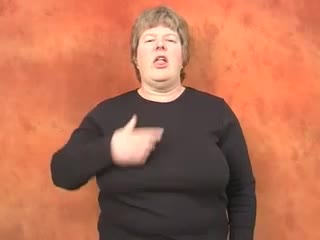
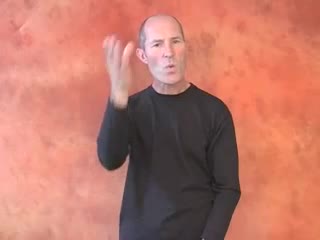
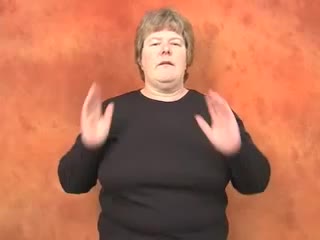
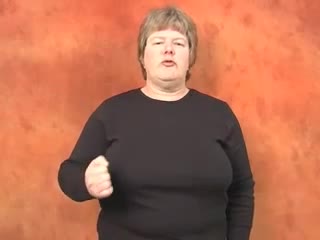
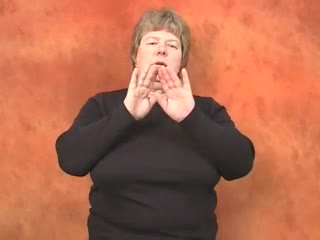
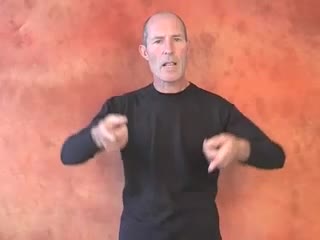
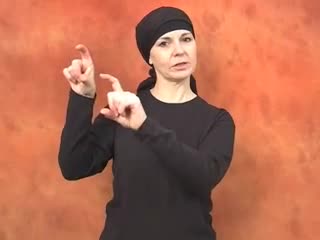
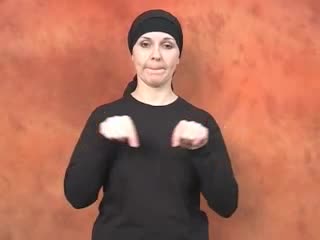
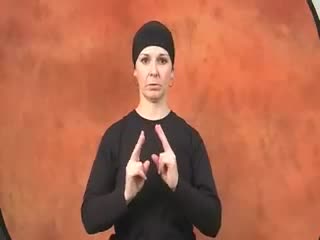
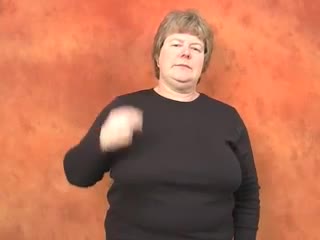
For this sign, your dominant hand forms the primary component, representing the cutting blade and the action it performs. You'll begin by shaping your dominant hand into a loose, slightly curved "C" handshape. Imagine your thumb and index finger creating an almost circular opening, with the remaining three fingers gently curled behind, touching the palm or near it. It isn't a tight fist, nor is it completely flat; think of it as if you're holding the outer edge of a small disc or wheel. The index finger and thumb should have enough space between them to suggest a revolving blade.
Step 2: Hand Placement and Location
Position your dominant hand, already in that "C" handshape, in the neutral signing space directly in front of your chest or slightly to your dominant side. The exact height is roughly at the mid-torso level, comfortably away from your body. Your palm initially faces towards your non-dominant side, or slightly downwards, ready to depict the cutting motion. Your non-dominant hand isn't typically involved in forming the sign itself, it usually remains relaxed or can briefly act as the 'material' being cut if you want to add more context to a sentence, but for the basic sign, it's just your dominant hand.
Step 3: Movement
Now, for the dynamic part of
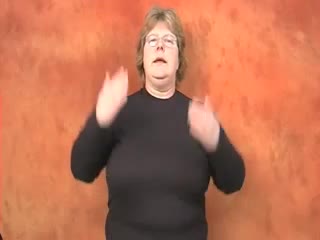
how to sign circular saw in BSL. From its initial position, move your dominant hand forward and slightly downwards in a short, sharp, sweeping arc. As you perform this movement, you'll incorporate a quick, small circular rotation of the wrist, suggesting the spinning action of the saw blade. This motion is not a large, sweeping gesture, but rather a focused, controlled 'cut' that might be repeated two or three times. Each repetition should be distinct, mimicking the blade making contact with material. Think of it as a brief, powerful, forward-and-downwards flick, accompanied by that internal wrist rotation.
Step 4: Facial Expression and Mouthing
Non-manual features are absolutely crucial for clarity and grammatical accuracy in British Sign Language. When signing "circular saw," you'll typically mouth the word "circular saw" or simply "saw" as you perform the manual sign. This helps differentiate it from other tool signs that might share similar handshapes or movements. Your facial expression generally remains neutral, unless the context of your sentence implies effort, danger, or excitement about a project. For instance, if you're describing a difficult cut, you might furrow your brow slightly. Always remember that mouthing provides vital information, especially for homophenous signs or concepts that are visually close.
Step 5: Palm Orientation
The palm orientation is key to conveying the intended meaning. Your dominant hand, in its "C" shape, starts with the palm facing towards your non-dominant side or slightly downwards, as if the saw blade is oriented to cut horizontally or at an angle. As you execute the forward and downward arc with the wrist rotation, the palm's orientation shifts subtly, reflecting the blade's rotation and the angle of the cut. It doesn't radically flip; rather, it maintains a general orientation that allows the "C" shape to clearly represent the cutting edge. This specific orientation helps avoid confusion with signs for other tools like a drill, where the hand might point differently.
"circular saw" in BSL - Quick Reference Snapshot
- Handshape: Dominant hand forms a loose "C" shape, thumb and index finger creating an opening.
- Location: In the neutral signing space, at mid-torso level, slightly to your dominant side.
- Movement: Short, sharp forward and slightly downward arc, accompanied by a quick wrist rotation. Repeated 2-3 times.
- Facial Expression: Neutral, unless context indicates otherwise; mouthing "circular saw" or "saw."
- Dominant Hand: The only hand actively involved in forming the sign.
- Palm Orientation: Initially towards your non-dominant side or slightly downwards, maintaining this general orientation with subtle shifts during movement.
5 Memorisation Tricks for the BSL Sign "circular saw"
Learning new signs effectively means finding ways to make them stick, and here are five fantastic tricks specifically for the
BSL circular saw sign:
Visualise the Blade: Picture the "C" handshape as the actual spinning blade of the saw. Imagine the thumb and index finger as the teeth of the blade, ready to slice through material. This direct visual link to the object's core function helps solidify the handshape in your mind.
Mimic the Action: Practice the movement of the sign with a real or imaginary piece of wood in front of you. Focus on the sharp, controlled arc and the internal wrist rotation, feeling the muscle memory of a saw cutting. This physical enactment deepens your understanding and retention of the sign's dynamic quality.
Connect to the Word's Power: Think about the strong, purposeful action of a circular saw. The sign itself has a certain punchy quality that reflects the tool's power and efficiency. Associate that feeling with the brisk, repeated movement, linking the sign's form directly to its powerful meaning.
Differentiate from "Drill": A common mistake is confusing "circular saw" with "drill" because both involve power tools and hand movements. Remember that "circular saw" uses that distinct "C" handshape moving in an arc, whereas "drill" typically uses a different handshape (often an 'X' or closed fist) with a direct forward pushing and twisting motion. Focusing on this key difference will prevent mix-ups.
Sign It When You See It: Every time you encounter a circular saw in real life, whether it's on a building site, in a DIY store, or even just in a picture, take a moment to perform the sign. This constant reinforcement in relevant contexts helps embed the sign into your active vocabulary. You'll be surprised how quickly this makes the sign second nature.
Real-Life Situations to Use the BSL Sign for "circular saw"
Knowing a sign is one thing; using it naturally in a conversation is another. Here are some scenarios where you'd comfortably use the
circular saw sign language:
- Imagine you're discussing a home renovation project with a Deaf friend. You might sign, "I need CIRCULAR SAW cut WOOD," indicating you'll use the tool to prepare timber. The grammatical structure here is often Topic-Comment, with the emphasis on the tool then the action.
- Perhaps you're at a hardware shop, trying to find a specific tool. You could approach a staff member (if they know BSL) and sign, "WHERE CIRCULAR SAW?" This clearly asks for the location of the item, using spatial grammar if pointing to a general area.
- You might be explaining a safety precaution. You could sign, "WHEN USE CIRCULAR SAW, MUST WEAR EYE PROTECTION." Here, the sign becomes part of a crucial instructional statement, often with a clear, direct BSL sentence structure.
- Someone asks about your weekend plans. You respond, "THIS WEEKEND, I PLAN BUILD SHELF. NEED CIRCULAR SAW BORROW YOU?" This demonstrates asking for a favour, incorporating the tool into a future activity.
Top 3 Mistakes Learners Make Signing "circular saw" in BSL
It's completely normal to make a few errors when you're first learning, so don't worry! Here are the most common pitfalls with the
BSL circular saw sign and how to easily fix them.
Incorrect Handshape: Many beginners tend to make the "C" handshape either too wide, like an open "O," or too flat, losing the circular essence. The 'blade' then looks more like a flat plate than a spinning disc. To correct this, really focus on the thumb and index finger creating that defined, slightly curved opening, keeping the other fingers gently tucked in behind. Think of it as a firm grip around a small, round object.
Missing the Wrist Rotation: Often, learners will get the arc movement right but forget the crucial internal wrist rotation, which signifies the blade's spinning. Without it, the sign can look like a simple cutting motion rather than specifically a *circular* saw. The fix is to consciously add that small, quick twist of the wrist as you make the forward sweep. Practice this component separately until it feels natural, then integrate it into the full movement.
Inconsistent Repetition: Sometimes, people will do the sign once and stop, or repeat it too many times, making it look hesitant. The sign for "circular saw" typically involves 2-3 distinct, sharp repetitions of the movement. If you do it only once, it might lose its impact; if you do it too many times, it can become overly exaggerated. Aim for a clear, confident double or triple 'cut' to convey the sign accurately.
Fascinating Facts About the BSL Sign for "circular saw"
Delving into the background of a sign often reveals so much about the language itself. Here are some intriguing insights regarding the
what is the sign for circular saw:
- The sign for "circular saw" is a beautifully iconic sign, meaning its form directly resembles the object or action it represents. You can clearly see the spinning blade and the motion of cutting. This makes it highly intuitive for new learners and visually descriptive within BSL.
- While BSL doesn't have official "origins" like spoken languages, many tool signs, including this one, likely developed from common visual representations and the practical need to communicate about labour and craftsmanship. It's a testament to the practical nature of BSL.
- Unlike some signs with significant regional variations across the UK, the sign for "circular saw" tends to be quite consistent. The core handshape and movement are widely understood, making it a reliable sign to learn, wherever you are within the BSL-using community.
- The deliberate "C" handshape for the blade is a key linguistic feature. It's not just a random shape; it's chosen to mimic the circular form, demonstrating how BSL uses specific handshapes to convey properties of objects.
- This sign does not typically derive from fingerspelling; it’s a direct visual representation rather than an initialised sign. This highlights how BSL prioritises iconic representation for concrete nouns and actions, making it very accessible.
"circular saw" in Deaf Culture - Community and Identity
The way we talk about tools like the circular saw in BSL goes beyond mere vocabulary; it reflects aspects of Deaf culture and community life. Many Deaf individuals are highly skilled in trades, carpentry, and DIY, often excelling in visual and practical tasks. Having clear, descriptive signs for tools like the circular saw fosters an environment where knowledge and skills can be easily shared and celebrated within the community. It allows for detailed discussions about projects, planning, and problem-solving, without relying on cumbersome explanations or fingerspelling. This shared visual language for practical activities strengthens bonds, enabling Deaf people to connect over common interests and collaborate on projects, underscoring the vital role BSL plays in everyday communication and identity.
Example Conversations Using "circular saw" in BSL
Let's see the
circular saw in sign language in action, within realistic conversational snippets.
English: Do you have a circular saw I could borrow for my project?
BSL structure: YOU HAVE CIRCULAR SAW I BORROW PROJECT MY?
English: I need to buy a new circular saw because my old one broke.
BSL structure: I NEED BUY NEW CIRCULAR SAW OLD ONE BROKE.
English: Be careful when you use the circular saw; it's very powerful.
BSL structure: CIRCULAR SAW USE, BE CAREFUL. VERY POWERFUL.
English: We used the circular saw to cut all the planks for the shed.
BSL structure: WE USE CIRCULAR SAW CUT ALL PLANKS SHED.
English: If the circular saw isn't sharp, the cut won't be clean.
BSL structure: CIRCULAR SAW NOT SHARP, CUT NOT CLEAN.
Frequently Asked Questions: The BSL Sign for "circular saw"
Are there regional variations for the BSL sign for "circular saw"?
Generally speaking, the BSL sign for "circular saw" is quite consistent across the UK. While some signs have distinct regional differences, this particular tool sign maintains a widely understood handshape and movement. You'll find it's a reliable sign to use and understand, regardless of where you are in the British Deaf community.
Are there similar signs to "circular saw" in BSL I should watch out for?
Yes, learners sometimes confuse it with signs for other power tools, particularly "drill" or a general "cut" sign. The key difference lies in the specific "C" handshape and the distinct arc-and-wrist-rotation movement for "circular saw," whereas "drill" often involves a forward push and twist with a different handshape, and a general "cut" might use a "V" handshape or a flat hand across the other. Pay close attention to these details to avoid mix-ups.
Is "circular saw" a good sign for beginners to learn?
Absolutely, it's a fantastic sign for beginners! It’s highly iconic and visually intuitive, meaning it looks very much like what it represents. This makes it easier to remember and helps you grasp how BSL conveys meaning through visual representation. Plus, it's a practical sign for everyday conversations about DIY or construction.
Can children use the sign for "circular saw"?
Of course! Children can definitely learn and use the sign for "circular saw." It's a clear and engaging sign that they'll easily connect to the actual tool. Just ensure they understand the difference between talking about the tool and actually using it, especially when discussing safety, as the sign is quite powerful.
How does the sign for "circular saw" compare to other tool signs in BSL?
The sign for "circular saw" fits within a pattern of many tool signs in BSL which are often highly iconic. You'll notice many signs for tools like "hammer," "drill," or "screwdriver" also visually mimic the action or the main characteristic of the tool. This makes them a coherent group to learn, building on the principle of showing, not just telling.
Signs That Pair Naturally with "circular saw" in BSL
To really build your vocabulary around "circular saw," consider these related signs that often appear in similar contexts:
- WOOD: This is an obvious pairing, as a circular saw is predominantly used for cutting timber. Learning "WOOD" helps you specify what material you're working on.
- CUT: While "circular saw" implies cutting, knowing the general sign for "CUT" (often with a 'V' handshape across the other hand) allows for broader discussion about the action itself, regardless of the tool.
- MEASURE: Before you cut, you usually "MEASURE" (often represented by a flat hand moving across a vertical index finger). This sign naturally precedes the use of a cutting tool.
- BUILD: If you're using a circular saw, chances are you're involved in a "BUILD" (often two 'A' handshapes moving upwards and outwards) project. This puts the tool into a wider constructive context.
- TOOL: The generic sign for "TOOL" (often a 'T' handshape on the palm) helps you categorise the circular saw or ask for any tool in general.
- PROTECTION/SAFETY: Using power tools necessitates "PROTECTION" or "SAFETY" (often a hand covering the eyes for protection, or a 'P' handshape for safety). This is vital for responsible discussions.
Building Fluency: How to Practise "circular saw" in BSL
Developing fluency in BSL takes dedication, and here's how you can specifically hone your
learn circular saw BSL skills. Stand in front of a mirror and practice the sign, focusing intently on your handshape, movement, and that essential wrist rotation. Watch your reflection closely, ensuring your "C" handshape is distinct and the arc is sharp and deliberate, just as described. Try integrating the sign into your daily thoughts; for example, if you see someone doing DIY, silently sign "circular saw" to yourself. Film yourself signing a simple sentence that includes "circular saw" and then review it critically; you'll spot areas for improvement that you might miss otherwise. The ultimate step is to find a Deaf conversation partner or join a local BSL group; they can provide invaluable feedback and help you use the sign naturally in real-time conversation. Remember, consistent, spaced repetition over several days will cement this sign into your long-term memory. Keep practising, and you'll soon be signing with confidence!