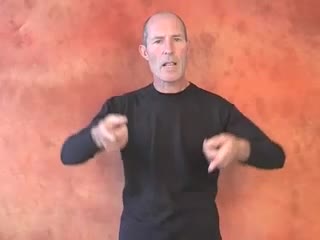
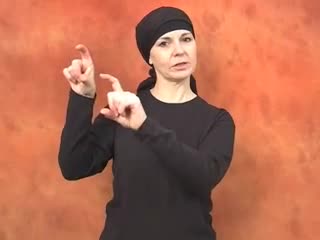
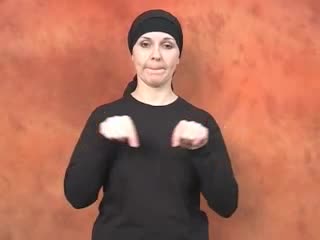
What Is the BSL Sign for "base metal"?
Understanding the BSL sign for "base metal" unlocks a fascinating corner of British Sign Language, connecting you with discussions about materials, chemistry, and craftsmanship. This sign represents those common, less precious metals often used as foundational elements in alloys or everyday items, distinct from their noble counterparts like gold or silver. Learning how to sign "base metal" in British Sign Language empowers you to engage in conversations about everything from jewellery making to industrial processes within the Deaf community. It's a practical sign that speaks volumes about BSL's ability to articulate nuanced, technical concepts clearly and concisely.
How to Sign "base metal" in British Sign Language - Step-by-Step
Let's meticulously unpack the construction of this particular sign, guiding your hands and expressions to master its form and meaning.
Step 1: Handshape
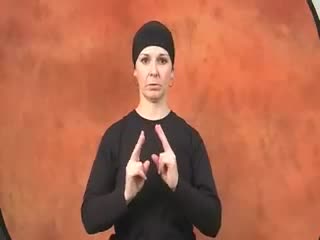
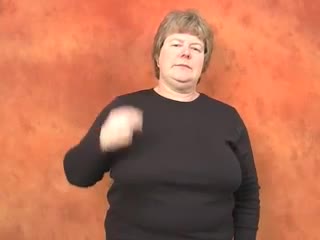
For this sign, your dominant hand will form a distinct 'B' handshape. To achieve this, extend all four fingers upwards and keep them tightly together, pressing them flush against each other. Your thumb should be tucked across your palm, resting against the side of your index finger. This creates a solid, flat-fingered 'B' shape. Meanwhile, your non-dominant hand will form a flat, open palm, with all fingers extended and joined, and the thumb also held close to the palm.
Step 2: Hand Placement and Location
Position your non-dominant hand in front of your body, slightly below your chest level, with its palm facing upwards, forming a stable, flat surface. Your dominant hand, in its 'B' shape, should be held directly above your non-dominant palm, hovering a few inches above it. This setup visually establishes the concept of a "base" or foundation upon which something rests.
Step 3: Movement
Begin by moving your dominant 'B' hand downwards with a firm, short tap onto the palm of your non-dominant hand. This initial downward motion signifies the 'base' aspect of the term. Immediately after this tap, lift your dominant hand slightly and move it forward a short distance, perhaps three to four inches, away from your non-dominant hand. As you move it forward, gently and subtly wiggle your extended fingers a couple of times. This secondary, subtle wiggling motion conveys the 'metal' component, suggesting a material or surface. The entire sequence is smooth and deliberate.
Step 4: Facial Expression and Mouthing
A neutral, contemplative facial expression typically accompanies the BSL sign for "base metal." You'll want to avoid any exaggerated expressions, maintaining a focused look that matches the technical nature of the word. Crucially, your lips should mouth the English words "base metal" as you perform the sign. Mouthing, a vital non-manual feature in British Sign Language, provides clarity and helps distinguish similar signs, acting as a crucial grammatical marker that enriches the overall message.
Step 5: Palm Orientation
Throughout the initial tapping movement, your dominant hand's palm will consistently face downwards, reinforcing the action of coming down onto a base. After the tap, as your hand moves forward and the fingers wiggle, the palm orientation remains generally downwards or slightly forward-facing. Your non-dominant hand's palm, serving as the base, maintains an upward orientation throughout the entire sign. These orientations are key; they visually communicate the interaction of one element (the base metal) with another (the foundation).
"base metal" in BSL - Quick Reference Snapshot
- Handshape: Dominant hand 'B' shape (fingers extended and joined, thumb tucked); Non-dominant hand flat palm (fingers extended and joined).
- Location: Dominant hand above non-dominant flat palm, slightly below chest level.
- Movement: Dominant 'B' hand taps non-dominant palm once, then moves forward slightly with subtle finger wiggling.
- Facial Expression: Neutral, contemplative.
- Mouthing: "base metal" (English).
- Dominant Hand: Used for the active signing component.
- Palm Orientation: Dominant palm down during tap; Non-dominant palm up.
5 Memorisation Tricks for the BSL Sign "base metal"
Here are some clever ways to embed the British Sign Language "base metal" sign firmly in your memory, ensuring it comes to mind readily.
- Visual Mnemonic: Picture your non-dominant hand as a stable workbench or a flat foundation. Your dominant 'B' hand is like a block of "base" material, tapping down firmly onto that surface before revealing its metallic nature with a subtle shimmer. Think "B" for "Base" on a sturdy platform.
- Muscle-Memory Drill: Practice the firm downward tap onto your non-dominant palm repeatedly, feeling the definite contact. Then, focus on the gentle forward movement and the light, almost shimmering, wiggle of your fingers. This sequence builds kinesthetic memory for the distinct two-part motion of the BSL base metal sign.
- Meaning Connection: Relate the initial downward tap to the idea of something being fundamental or 'base,' forming a solid foundation. The subsequent subtle finger wiggle then adds the characteristic of 'metal,' distinguishing it as a material. This logical breakdown helps reinforce the sign's construction.
- Common-Confusion Tip: Be careful not to confuse this with signs for 'foundation' or 'ground,' which might involve a similar tapping motion but often lack the forward movement and finger wiggle. The specific two-part motion of the "base metal" sign is what gives it its unique meaning, so focus on getting both components right.
- Daily-Life Practice: Whenever you encounter objects made of less precious metals – perhaps a copper pipe, an iron railing, or a pewter mug – take a moment to perform the sign for "base metal." Integrating it into your daily observations strengthens your recall and contextual understanding.
Real-Life Situations to Use the BSL Sign for "base metal"
You'll discover many practical opportunities to employ the BSL sign for "base metal" in everyday conversations, enriching your interactions.
- Imagine you're at a craft fair, admiring some jewellery, and you want to ask about the materials used. You might sign, "THIS NECKLACE, GOLD, OR BASE METAL?" using a questioning facial expression at the end.
- Perhaps you're discussing a home improvement project with a Deaf friend. You could explain, "FOR FRAME, WE USE BASE METAL, STRONG." Here, the sign provides clarity on the type of material chosen for its durability.
- During a conversation about recycling or industrial processes, you might need to differentiate between categories. You could sign, "SEPARATE PRECIOUS METAL, THEN BASE METAL," clearly indicating the distinction in materials.
- If you're explaining a concept in a science class or a hobby group, like the composition of certain alloys, you'd find this sign invaluable. For example, "BRASS, IT'S MIX BASE METAL," clearly communicating the alloy's components.
Top 3 Mistakes Learners Make Signing "base metal" in BSL
New learners sometimes stumble over specific aspects of the BSL sign for "base metal"; let's pinpoint these common errors and ensure your signing is crystal clear.
- Incorrect Handshape Consistency: A frequent mistake involves not maintaining the rigid 'B' handshape throughout the dominant hand's movement, allowing fingers to splay or curl. This diminishes the clarity of the initial 'base' component. The precise correction is to consciously keep all four fingers of your dominant hand tightly extended and together, with the thumb securely tucked, from the start of the tap until the end of the wiggle.
- Omitting or Exaggerating the Finger Wiggle: Some learners either forget the subtle finger wiggle entirely after the tap or perform it too broadly, making it look like a different sign. The 'metal' aspect is conveyed by this specific, understated motion. To fix this, practice the distinct two-part movement: a firm tap for 'base,' immediately followed by a slight forward shift and a gentle, quick wiggle of just the fingers to indicate 'metal,' avoiding large, sweeping gestures.
- Neglecting Mouthing: Beginners might focus solely on the hand movements and forget the crucial non-manual feature of mouthing "base metal." Without this, the sign can sometimes be less clear or even misinterpreted in certain contexts. The precise correction is to consciously form the English words "base metal" with your lips as you execute the hand movements, ensuring your facial grammar aligns perfectly with your manual signs for maximum comprehension.
Fascinating Facts About the BSL Sign for "base metal"
Delve into some intriguing details surrounding the BSL sign for "base metal," revealing its linguistic depth and cultural connections.
- The sign for "base metal" possesses strong iconic motivation; the downward tap distinctly symbolises a 'base' or foundation, while the subsequent finger wiggle subtly evokes the visual texture or sheen associated with 'metal.'
- This sign acts as a compound-like structure within BSL, effectively combining elements that represent "base" and "metal" into a single, cohesive unit, showcasing BSL's efficiency in conveying complex terms.
- While the fundamental handshapes and movements for "base metal" are widely recognised across the BSL-using community, you might occasionally observe slight regional variations in the intensity of the tap or the speed of the finger wiggle, a common trait in BSL's rich linguistic tapestry.
- The initial 'B' handshape, though part of a larger concept here, subtly echoes its corresponding letter in the BSL manual alphabet, providing a visual bridge that can aid in memorisation for some learners.
- Its emergence as a distinct sign highlights BSL's continuous evolution to encompass specialised and technical vocabulary, demonstrating its capacity to describe the intricate details of the physical world and modern industries.
"base metal" in Deaf Culture - Community and Identity
While "base metal" might seem like a purely technical term, its presence in BSL reflects the Deaf community's full participation in all facets of life, including trades, crafts, and scientific discourse. Deaf individuals, just like hearing people, engage in professions that require knowledge of materials, whether they're jewellers, engineers, or simply discussing the properties of different objects. The existence of a clear, established sign for "base metal" ensures that these conversations can occur seamlessly and without linguistic barriers, fostering inclusion and shared understanding within Deaf spaces. It underscores BSL's comprehensive nature, capable of expressing the full spectrum of human experience and technical information, vital for a vibrant and connected community.
Example Conversations Using "base metal" in BSL
Witness how the BSL sign for "base metal" integrates into various conversational contexts, providing practical examples for your learning.
English: Is this ring made of real silver, or is it a base metal alloy? - BSL structure: RING THIS SILVER REAL OR BASE METAL ALLOY? (Question involving choices, clear distinction of materials)
English: For the sculpture, we chose a durable base metal that won't tarnish easily. - BSL structure: SCULPTURE FOR, WE CHOOSE BASE METAL DURABLE, WILL NOT TARNISH EASILY. (Descriptive sentence, emphasising material properties)
English: Don't mix the precious metals with the base metals; they need to be recycled separately. - BSL structure: DON'T MIX PRECIOUS METAL WITH BASE METAL; NEED RECYCLE SEPARATE. (Instructional command, highlighting distinct categories)
English: Many industrial components are produced using various types of base metal for strength. - BSL structure: INDUSTRIAL COMPONENT MANY, PRODUCE USE DIFFERENT TYPE BASE METAL FOR STRENGTH. (General statement, explaining common usage in an industrial context)
English: Do you know if this old coin contains a significant amount of base metal? - BSL structure: COIN OLD THIS, CONTAIN BASE METAL MUCH, YOU KNOW? (Direct question about composition, seeking information)
Frequently Asked Questions: The BSL Sign for "base metal"
Are there regional variations for the BSL sign for "base metal"?
The core components of the BSL sign for "base metal" – the handshapes, general location, and two-part movement – are widely understood and consistent across British Sign Language users. While minor stylistic differences, such as the exact force of the tap or the speed of the finger wiggle, might occur regionally, the sign's fundamental structure remains recognisable, ensuring clear communication wherever BSL is used.
Are there any similar signs in BSL I should be careful not to confuse with "base metal"?
Indeed, you'll want to avoid confusing "base metal" with signs like 'foundation' or 'material,' which might share some elements. The key differentiator for "base metal" lies in its specific two-part movement: the initial firm tap for 'base' followed by the distinct forward movement and subtle finger wiggle signifying 'metal.' Focusing on both unique components will prevent misunderstanding.
Is the BSL sign for "base metal" considered beginner-friendly?
Yes, the BSL sign for "base metal" is quite accessible for beginners. Its iconic nature, where the sign visually represents the concept of a 'base' and a 'metal' material, makes it relatively easy to grasp and remember. Practising the distinct handshapes and the two-part movement will quickly build your confidence in using it.
Can children easily learn and use the BSL sign for "base metal"?
Children can absolutely learn this sign with ease! Its visual and tactile components make it engaging for younger learners. The clear distinction between the 'base' tap and the 'metal' wiggle can be a fun concept to teach, helping children expand their vocabulary related to materials and the physical world in BSL.
How does the BSL sign for "base metal" compare to other sign languages' equivalents?
Each sign language develops independently, so while the concept of "base metal" exists globally, the specific sign in another sign language would likely be entirely different. Other sign languages create their signs based on their own unique linguistic structures, cultural contexts, and iconic representations, meaning a direct, word-for-word translation of signs is rarely possible.
Signs That Pair Naturally with "base metal" in BSL
Expanding your vocabulary around "base metal" makes your BSL conversations richer and more precise; here are some signs that complement it beautifully.
- METAL: This general sign for 'metal' naturally pairs with "base metal," allowing you to first establish the broader category before specifying the type. They belong together because "base metal" is a specific kind of metal.
- GOLD: Often used as a contrast, the sign for 'gold' helps you differentiate between precious and common metals, making discussions about value and material composition much clearer. Learning them simultaneously reinforces their distinct meanings.
- SILVER: Like gold, 'silver' serves as another excellent point of comparison, particularly in conversations about jewellery, coinage, or decorative items. Understanding "base metal" alongside 'silver' enriches your ability to describe different materials.
- MATERIAL: The sign for 'material' provides a broader conceptual umbrella under which "base metal" falls. You might use 'material' to introduce a topic, then specify "base metal" as the subject.
- ALLOY: Since base metals are frequently combined to form alloys, knowing this sign is incredibly useful. They link conceptually, as alloys are often the result of mixing various base metals.
- JEWELLERY: This sign is a common contextual partner for "base metal," as many pieces of jewellery are made either entirely of or incorporate base metals. Practising them together helps you discuss everyday objects.
Building Fluency: How to Practise "base metal" in BSL
To truly master the BSL sign for "base metal" and integrate it seamlessly into your communication, deliberate practice is key. Try standing in front of a mirror, carefully observing your dominant 'B' handshape, the precise tap onto your non-dominant palm, and the subtle forward movement with the finger wiggle; this visual feedback helps refine your technique. Make a conscious effort to incorporate "base metal" into your daily BSL conversations, even if it's just signing it to yourself when you see relevant objects around your home or workplace. Film yourself signing the word, then watch it back, checking for accuracy in handshape, movement, and especially your mouthing, which is crucial for clarity. As you grow more confident, seek out a Deaf conversation partner or join a BSL practice group; receiving feedback from fluent signers is invaluable for refining your sign. Remember, consistent repetition spaced out over several days, rather than intense cramming, will cement this sign into your muscle memory and conversational fluency.