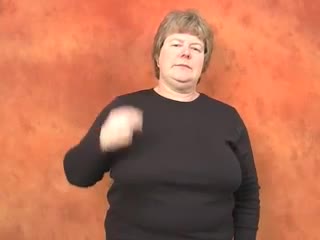
What This Sign Means in BSL
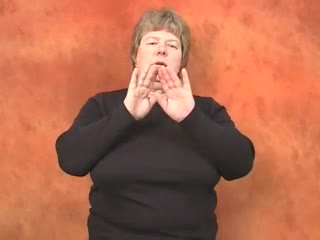
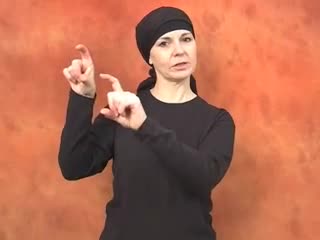
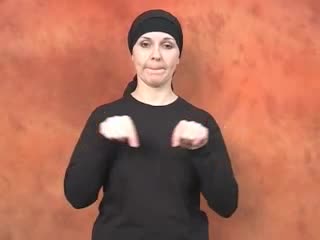
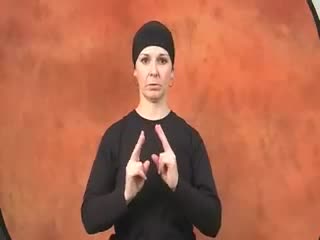
The BSL sign for coil spring is wonderfully descriptive, truly embodying what it represents. It’s an iconic sign, meaning its form directly mimics the object it describes, making it quite intuitive once you see it in action. At its core, this sign meticulously traces the very shape and movement inherent to a coil spring, a component designed for elasticity and shock absorption through its characteristic helical form.
You’ll notice that the sign isn't just about showing a static coil; it implies the potential for extension or compression, reflecting the spring's function. This precision in visual representation makes it a robust and unambiguous sign within BSL, especially useful in contexts where exact meaning is paramount, such as technical discussions or detailed descriptions.
It’s a clear example of how BSL often uses visual metaphor to build its vocabulary. By performing this sign, you're essentially drawing the key characteristic of a coil spring in the air, highlighting its spiral structure and its ability to absorb and release energy. This directness helps solidify its meaning and ensures clarity among signers.
When This Sign Feels Natural
This sign feels most natural and is most commonly used when you need to specify the *type* of spring you are referring to – specifically, one that is coiled. Imagine you're discussing car mechanics, repairing household appliances, or describing the internal workings of a complex toy; this is where the precision of "coil spring" truly shines. It’s perfect for technical conversations, engineering contexts, or whenever the exact physical form of the spring is relevant to the conversation.
You might find yourself using it when explaining a design, pointing out a specific component in a diagram, or even narrating a story where a spring's specific shape is important to the plot, perhaps a faulty mechanism or an innovative invention. It conveys a level of detail that a more general sign for "spring" (which might just show a bouncing motion) wouldn't capture. If you just mean something that is generally springy or elastic, you might opt for a different sign. But for the helical object itself, this is your go-to.
Consider your audience: if you're speaking with fellow engineers, mechanics, or anyone familiar with the internal components of machinery, this sign will be understood precisely. It carries a neutral, informative register, making it suitable for educational settings or professional environments. It’s about clear, factual communication, ensuring that there's no ambiguity about the specific component being discussed.
What Learners Usually Miss
One common subtlety learners often miss with the BSL sign for coil spring is the exactness of the handshape and the control of the movement. The description "Index finger extended, thumb touching side of index, other fingers curled" is quite specific for a reason. Often, learners might relax the other fingers too much, making the hand look less precise, or position the thumb loosely. The key is a firm, almost pointed index finger, with the thumb providing stable support along its side. This handshape helps to clearly represent the single strand of wire forming the coil.
Another frequently overlooked aspect is the smoothness and upward trajectory of the spiral motion. While the movement is an "upward spiral," it's not a frantic twirl. It should be a controlled, deliberate motion, visually tracing the expanding or contracting coil. Some learners might make the spiral too small, too fast, or let it drift too far from the neutral space in front of the torso. The sign should be clear and contained, suggesting the spring's compact yet expandable nature. Practice making a smooth, even spiral that grows gently upwards, keeping your arm relatively still and letting the wrist and fingers do the work.
Finally, remember that this sign is for the *object* itself, not the *action* of springing or bouncing. Sometimes learners might mistakenly imbue the sign with a bouncy rhythm or a facial expression that suggests elasticity. For "coil spring," the appropriate facial expression is typically neutral and focused, reflecting the technical nature of the noun. Over-expressiveness can inadvertently change the sign's meaning or distract from its precise depiction. Focus on the object's form and its contained energy, rather than its dynamic properties when in use.
A Simple Way to Remember It
To really lock in the BSL sign for coil spring, think of it as literally drawing the object in the air. The handshape creates a precise point, like the end of a wire, and the movement then builds that wire into a spring. It’s one of those signs that makes perfect visual sense.
- The Pointed Finger: Imagine your extended index finger as the single strand of metal wire that forms the spring. The thumb supporting it gives that wire strength and direction.
- The Upward Coil: The spiral motion directly mimics the winding, helical shape of a coil spring, suggesting its natural expansion or construction. You're drawing the spring's very essence.
- Invisible Blueprint: Picture yourself drawing a 3D blueprint of a spring right in front of you. Your hand is the pen, and the neutral space is your drawing board.
Short Practice Situations
- "The mechanic showed me the old, rusted coil spring that needed replacing in my car's suspension system."
- "I need to find a specific type of miniature coil spring for this intricate clock mechanism to work again."
- "During the engineering lesson, we discussed how the design of a coil spring impacts its load-bearing capacity."
- "Can you point out the coil spring component in this exploded diagram of the machine?"
- "The old mattress had lost its bounce because many of its internal coil springs were broken."
Signs to Learn Next
- SPRING (general, bouncing): This helps you differentiate. While "coil spring" is for the specific object, the general sign for "spring" often shows a repetitive bouncing or compressing motion, useful when discussing the action or quality of being springy, rather than the coiled object itself.
- WIRE / CABLE: A coil spring is typically made from wire. Learning this sign connects the material to the finished product and allows for more detailed descriptions about how springs are manufactured or what they are composed of.
- SCREW / SPIRAL: While different in purpose, the sign for "screw" (often involving a rotating, driving motion into a surface) shares a similar foundational concept of a spiral or helix. Practicing "screw" can help reinforce smooth, controlled rotational movements in BSL.
- MECHANISM / MACHINE: Coil springs are fundamental components in countless mechanisms and machines. Learning these broader category signs helps you place "coil spring" within a functional context, allowing you to discuss systems and their parts more comprehensively.
- ELASTIC / FLEXIBLE: These signs describe the properties that a coil spring often provides. Understanding "elastic" or "flexible" expands your vocabulary for describing the qualities and functions associated with springs, beyond just their physical form.