What Is the BSL Sign for "test"?
Imagine you're preparing for an important evaluation or discussing a recent assessment; how would you convey that crucial concept without uttering a single sound? For those embarking on their journey to connect with the Deaf community, mastering the BSL sign for test offers incredible utility in countless everyday conversations. This fundamental British Sign Language test sign serves as a vital piece of vocabulary for discussing everything from academic exams to medical screenings. You'll find this particular sign frequently appearing in dialogue, whether you're inquiring about someone's driving assessment or sharing news about a school quiz. Learning how to sign test in BSL truly unlocks a common and indispensable communication point.
How to Sign "test" in British Sign Language - Step-by-Step
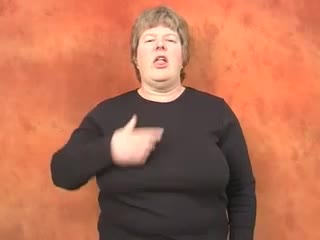
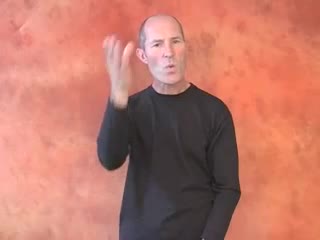
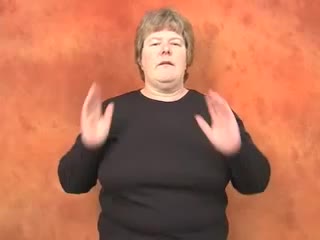
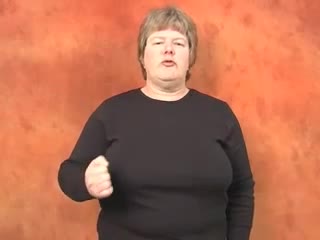
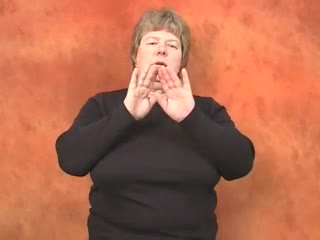
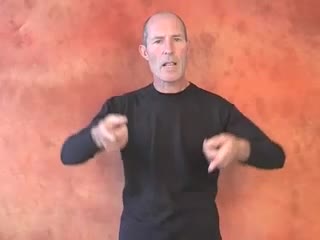
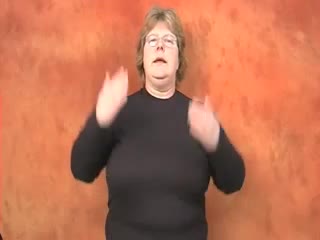
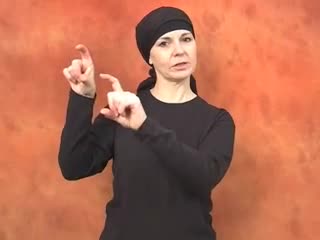
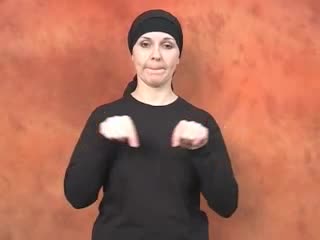
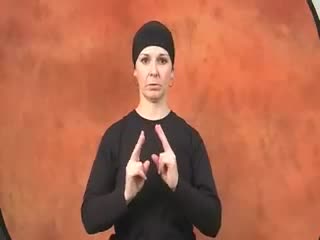
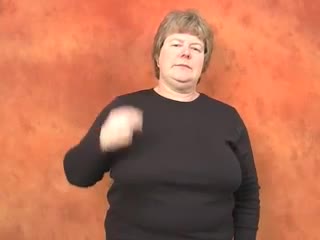
Mastering this particular sign involves a precise coordination of handshape, location, and movement, all contributing to its clear meaning.
Step 1: Handshape
For this sign, your dominant hand forms what we call a 'T' handshape. To achieve this, extend your index finger straight upward, keeping it firm. Next, curl your middle, ring, and pinky fingers down into your palm. Position your thumb snugly between your index and middle fingers, often pressing against the side of your middle finger to maintain stability. This distinct 'T' configuration is critical for accurate communication.
Step 2: Hand Placement and Location
Now, let's consider your non-dominant hand; it acts as the stable surface for the sign. Hold your non-dominant hand open and flat, with its palm facing slightly upwards and its fingers extended, pointing comfortably away from your body. You'll want to position this hand naturally in front of your chest or slightly lower, creating a clear target. Your dominant 'T' hand will then approach the open palm of your non-dominant hand.
Step 3: Movement
With your dominant hand in the 'T' handshape, bring the very tip of your extended index finger down to make a short, firm tap on the approximate center of your non-dominant palm. This is a single, distinct action, not a gentle rub or a repeated series of taps. The movement is decisive and clear, conveying the definitive nature of an assessment.
Step 4: Facial Expression and Mouthing
When you perform this sign, it's generally accompanied by a neutral facial expression, unless the conversational context suggests a different emotion, such as concern over a challenging test or joy about a successful outcome. Crucially, you should mouth the English word "test" clearly and naturally alongside the manual sign. This mouthing isn't merely an English verbalisation; it's a vital non-manual feature in British Sign Language, providing grammatical nuance and helping to clarify the specific meaning within a signed sentence.
Step 5: Palm Orientation
Throughout the execution of this sign, your dominant hand, maintaining its 'T' shape, will have its palm oriented either to the side (towards your non-dominant arm) or slightly downward as its index finger approaches the non-dominant palm. Meanwhile, the non-dominant hand's palm remains facing upwards, ready to receive the tap. This specific orientation ensures a clear and unambiguous point of contact, essential for the sign's accurate reception.
"test" in BSL - Quick Reference Snapshot
- Handshape: Dominant 'T' hand
- Location: Taps non-dominant open palm
- Movement: Single, firm tap
- Facial Expression: Neutral, mouth "test"
- Dominant Hand: Forms a clear 'T' shape
- Palm Orientation: Dominant palm slightly down, non-dominant palm up
5 Memorisation Tricks for the BSL Sign "test"
- Picture your extended index finger as a pen or pencil tapping firmly on a piece of paper, much like how one might check off answers on an exam. The 'T' handshape itself provides a strong visual link to the first letter of the word "test," making the connection instantly recognisable.
- Reinforce the precise muscle memory by performing the 'T' handshape and its characteristic tapping motion twenty times consecutively. Concentrate on achieving a crisp, clear tap, really feeling the contact point against your non-dominant palm to embed the movement in your memory.
- Connect the sharp, definitive tap of the dominant index finger to the conclusive nature of an assessment or examination. This isn't a vague gesture; it's a direct, clear action, mirroring the straightforward results a test provides.
- Be mindful of potential confusion with other similar BSL signs like 'EXAMINE' or 'CHECK'. Remember, the sign for "test" involves a distinct 'T' handshape and a single, firm tap, whereas 'EXAMINE' often features a more scrutinising, repeated movement with different handshapes.
- Integrate the sign for "test" into your daily routine by covertly signing it to yourself whenever the word comes up. Whether it's a mention of a driving test, a medical test, or a product quality test, this consistent, real-world reinforcement significantly boosts your recall.
Real-Life Situations to Use the BSL Sign for "test"
- You might ask a friend, "Are you ready for your driving test next week?" In BSL, this could be structured as: DRIVING TEST NEXT WEEK YOU READY?, employing a clear topic-comment structure with a question marker.
- When discussing medical results, you could sign: "My doctor said the test results were clear." Here, the BSL structure might be: MY DOCTOR TEST RESULTS CLEAR., directly conveying the information.
- Imagine talking about school with a classmate, saying: "We have a history test tomorrow, I need to study." This could translate into BSL as: TOMORROW HISTORY TEST ME NEED STUDY., placing the time element first for emphasis.
- Even in a professional context, you could refer to a product evaluation: "They're doing a quality control test on the new products." The BSL rendition would follow a structure like: NEW PRODUCTS QUALITY CONTROL TEST THEY DOING., highlighting the subject before the action.
Top 3 Mistakes Learners Make Signing "test" in BSL
-
Using a '1' Handshape Instead of 'T': Many beginners intuitively simplify the dominant hand to just an extended index finger, similar to a '1' handshape.
This happens because forming the precise 'T' requires a bit more dexterity and focus than simply pointing.
To correct this, consciously ensure your thumb is firmly tucked between your curled middle and index fingers, pressing against the side of the middle finger to create the authentic 'T' handshape.
-
Multiple Taps or a Scrubbing Motion: Instead of executing a single, firm tap, some learners produce several lighter taps or a gentle rubbing movement.
This often stems from an attempt to make the sign more expressive or a misinterpretation of the contact.
The correct approach involves focusing on one clear, decisive tap to the non-dominant palm, accurately conveying the distinct nature of an assessment.
-
Incorrect Non-Dominant Hand Position: Holding the non-dominant hand too close to the body, too high, or with the palm facing downwards prevents clear contact.
This mistake usually occurs due to a lack of awareness of how the non-dominant hand serves as a crucial base.
Always keep your non-dominant hand open, palm facing slightly upwards, and positioned comfortably in front of your chest to create a consistent, clear target for your dominant hand.
Fascinating Facts About the BSL Sign for "test"
- The sign for "test" exhibits strong iconic motivation, meaning its form visually resembles an action. It's often interpreted as mimicking the act of tapping or checking an item, perhaps like a teacher tapping a pen on a paper during an examination.
- While the dominant 'T' handshape is widely recognised across the United Kingdom, some regional variations within the BSL-using community might employ a '1' handshape (just the index finger extended) for the same meaning, though the core movement and location typically remain consistent.
- Historically, many BSL signs have evolved from more elaborate or descriptive gestures, gradually simplifying over time into more efficient forms. "Test" likely underwent a similar process, condensing the idea of 'checking' or 'assessing' into its current concise movement.
- This sign stands out as a clear example of BSL's efficiency in conveying complex ideas through simple, direct movements. Its iconic nature often makes it one of the more intuitive signs for new learners to grasp early on.
- The clear, decisive tap of the sign for "test" perfectly embodies the concept of a definitive evaluation, a moment of truth, which is quite powerful in its simplicity and directness.
"test" in Deaf Culture - Community and Identity
The concept of "test" holds significant weight within the Deaf community, touching upon various aspects of daily life and identity. For Deaf individuals, navigating assessments, whether for education, driving, or medical purposes, often involves additional layers of complexity related to accessibility and communication. The sign for "test" becomes a practical and essential tool for discussing these vital life events, enabling clear conversations about preparation, experiences, and outcomes. Beyond its practical use, the sign also connects to shared community experiences of overcoming challenges and celebrating achievements. It represents a common ground for discussing progress, validating efforts, and supporting each other through various evaluations.
Example Conversations Using "test" in BSL
English: Are you ready for your driving test next week? - BSL structure: DRIVING TEST NEXT WEEK YOU READY? (This uses a topic-comment structure with a non-manual question marker indicated by raised eyebrows.)
English: My doctor said the test results were clear. - BSL structure: MY DOCTOR TEST RESULTS CLEAR. (A straightforward topic-comment sentence, clearly stating the subject and its outcome.)
English: We have a history test tomorrow, I need to study. - BSL structure: TOMORROW HISTORY TEST ME NEED STUDY. (Here, the time element is often placed first in BSL for emphasis, followed by the topic and action.)
English: They're doing a quality control test on the new products. - BSL structure: NEW PRODUCTS QUALITY CONTROL TEST THEY DOING. (This illustrates how BSL might structure a sentence with an object and an ongoing action, placing the object first.)
English: Did you pass the BSL Level 1 test? - BSL structure: BSL LEVEL 1 TEST YOU PASS? (A direct question, often accompanied by a forward lean and raised eyebrows to indicate interrogation.)
Frequently Asked Questions: The BSL Sign for "test"
Is there a regional variation for the BSL sign for "test"?
Yes, while the 'T' handshape is widely accepted and understood across the UK, you might encounter some regional variations where signers use a '1' handshape (just the index finger extended) for the same sign. However, the fundamental tapping motion and location on the non-dominant palm generally remain consistent regardless of the specific handshape.
What BSL signs are easily confused with "test"?
Learners sometimes confuse "test" with signs like 'CHECK' or 'EXAMINE' due to similar movements or locations. The sign for 'CHECK' typically involves a repeated 'X' handshape (a curled index finger) tapping on the palm, while 'EXAMINE' often features a more scrutinizing, repeated motion. The key differentiator for "test" is its distinct 'T' handshape and single, firm tap.
Is this a beginner-friendly BSL sign to learn?
Absolutely, the sign for "test" is considered quite beginner-friendly. Its clear handshape, straightforward movement, and iconic nature make it relatively easy to grasp and remember, making it an excellent sign for new learners to incorporate into their vocabulary early on in their BSL journey.
Can children use the BSL sign for "test"?
Of course, children readily pick up and use the sign for "test." It's a concrete and clear concept that translates well into sign, making it perfect for discussing school assessments, quizzes, or even incorporating into games that involve checking knowledge or understanding.
How does the BSL sign for "test" compare to the American Sign Language (ASL) equivalent?
The British Sign Language sign for "test" is distinct from its American Sign Language counterpart. In ASL, "test" is often signed using two 'X' handshapes (index fingers curled) that brush against each other. This difference beautifully highlights the unique linguistic structures and forms of each sign language.
Signs That Pair Naturally with "test" in BSL
- LEARN: This sign naturally precedes or follows "test" when discussing the process of acquiring knowledge or skills that will be evaluated.
- STUDY: Directly connected to preparation, "study" is often used in conjunction with "test" when talking about getting ready for an assessment.
- EXAM: As a closely related concept or synonym, "exam" is a natural partner, allowing for varied expressions when referring to assessments.
- PASS/FAIL: These signs represent the direct outcomes of any test, making them indispensable when discussing results.
- QUESTION: Tests are composed of questions, so linking this sign helps convey the content or nature of the assessment.
- RESULT: After taking a test, you'll always be waiting for the "result," making this a logical and frequently paired sign.
Building Fluency: How to Practise "test" in BSL
To truly embed the sign for "test" into your active BSL vocabulary, make sure you dedicate time to focused practice. Start by standing in front of a mirror, carefully watching your dominant hand to refine your 'T' handshape and ensure the tap is clear and distinct. Next, try integrating the sign into simple BSL sentences about your daily life; perhaps you can talk about an upcoming assessment or share how you felt about a recent evaluation. A fantastic way to refine your technique involves filming yourself signing "test" and then reviewing the video critically, paying close attention to your handshape, movement, and especially your non-manual features like mouthing. If you have the opportunity, seek out Deaf individuals or experienced BSL signers and ask for their invaluable feedback on your rendition of "test." Finally, don't try to cram your practice; instead, space out your sessions over several days, as this spaced repetition technique is incredibly effective for solidifying the sign in your long-term memory.