What Is the British Sign Language Sign for "measuring tape"?
Have you ever needed to precisely describe something's dimensions in a conversation? That's where the BSL sign for measuring tape truly shines, offering a clear visual representation of this indispensable tool. This particular sign effortlessly conveys the concept of measuring, making it incredibly intuitive for learners to grasp. Understanding the British Sign Language measuring tape sign helps you discuss everything from home renovations to crafting projects with ease, adding a practical and frequently used word to your vocabulary. It's a prime example of how BSL often mimics the function or form of an object, providing a direct connection to its real-world use.
How to Sign "measuring tape" in British Sign Language - Step-by-Step
Let's unravel the specific actions that bring the sign for "measuring tape" to life in British Sign Language.
Step 1: Handshape
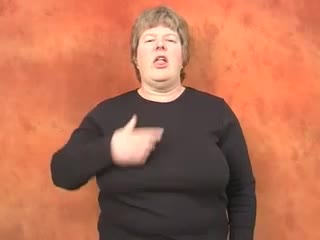
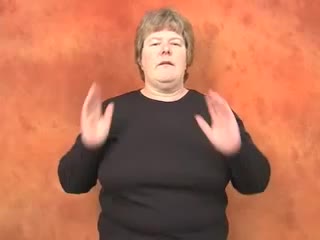
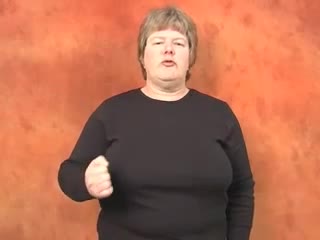
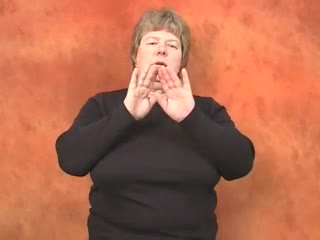
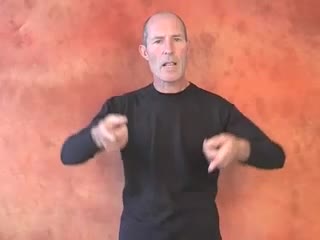
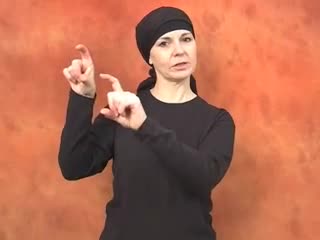
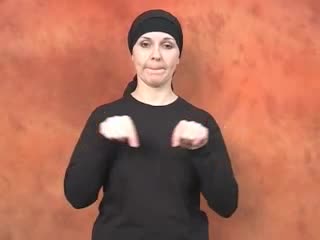
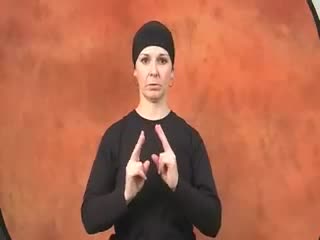
For this sign, you'll primarily use your dominant hand, while your non-dominant hand provides a stable base. Begin by forming what we often call an "F" handshape with your dominant hand; this involves touching your index finger and thumb together, creating a small circle, while your remaining three fingers (middle, ring, and pinky) remain extended and slightly separated. Your non-dominant hand will adopt a flat "B" handshape, meaning all fingers are extended and held together, with the thumb tucked neatly alongside the palm.
Step 2: Hand Placement and Location
Position your non-dominant hand in front of your chest, with its palm facing inward towards your body. This hand acts as the "case" or starting point of the measuring tape. Your dominant hand, in its "F" handshape, then rests its thumb and index finger lightly against the edge of your non-dominant hand, as if you're gripping the end of a tape measure. You're setting the scene for the tape to be pulled out from its housing right here.
Step 3: Movement
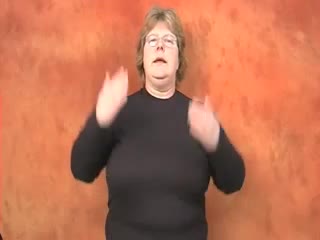
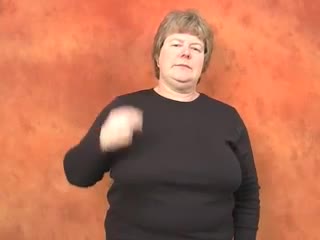
With your non-dominant hand held steady, the dominant hand executes a clear, purposeful motion. You'll move your dominant hand forward and slightly outward from your non-dominant hand, extending your arm a short distance, perhaps twelve to eighteen inches. As it moves, subtly wiggle your dominant hand's extended fingers and wrist, mimicking the visual of a flexible tape measure being unspooled. This movement is typically performed once, smoothly and deliberately, signifying the action of pulling out the tape.
Step 4: Facial Expression and Mouthing
Non-manual features are integral to BSL, and for "measuring tape," your facial expression will generally be neutral and attentive, reflecting the practical nature of the item. Crucially, you should mouth the word "measuring tape" or simply "measure" as you perform the sign. Mouthing provides vital linguistic information, clarifying the specific noun you're referring to and enhancing the overall clarity of your communication within British Sign Language. This silent articulation supports the manual sign, adding another layer of meaning for your interlocutor.
Step 5: Palm Orientation
Throughout the movement, the palm of your dominant hand typically faces downwards, or slightly towards your body, reflecting the natural grip one would have on the end of a tape measure. Your non-dominant hand's palm stays oriented towards your chest. This specific palm orientation is key because it maintains the visual metaphor of the tape extending away from its holder, reinforcing the sign's iconic connection to the actual object and its function.
"measuring tape" in BSL - Quick Reference Snapshot
- Handshape: Dominant hand "F" (thumb and index together), non-dominant hand flat "B".
- Location: Dominant hand starts at the edge of the non-dominant hand, held in front of the chest.
- Movement: Dominant hand moves forward and outward from non-dominant hand with a slight wiggle.
- Facial Expression: Neutral, with mouthing of "measuring tape" or "measure".
- Dominant Hand: Performs the pulling motion.
- Palm Orientation: Dominant hand's palm faces downward or slightly inward during movement.
5 Memorisation Tricks for the BSL Sign "measuring tape"
- Visual Mnemonic: The Unfurling Tape: Picture your dominant hand's "F" handshape as the small metal hook at the end of a real measuring tape. As you pull it away from your non-dominant hand (the tape's case), visualise the actual tape unfurling, with your wiggling fingers showing its flexibility. This mental image makes the entire sign's movement feel incredibly natural and memorable.
- Muscle Memory Drill: Repetitive Pulls: Practice the pulling and wiggling motion with your dominant hand several times in a row, focusing on the smooth, controlled extension. Repeat this sequence ten times daily for a few days; your muscles will quickly learn the precise trajectory and feel of the sign, making it an automatic response when you need it.
- Connect to Meaning: Function First: Think about the core function of a measuring tape: extending to gauge distance. The sign's movement directly embodies this extension. Whenever you see a measuring tape, make the sign, mentally linking the object's purpose to the physical act of signing it.
- Common Confusion Tip: Not "Scissors": A lot of new learners sometimes confuse this with other "opening" or "closing" signs. Remember that "measuring tape" involves a *pulling away* motion with a sustained handshape, not a repetitive opening and closing action like "scissors." Focus on that distinct linear extension.
- Daily Life Practice: Point and Sign: The next time you're measuring something around the house or even just estimating a length with your eyes, perform the sign for "measuring tape." Point to the object you're mentally measuring and then make the sign, integrating it seamlessly into your everyday thoughts and actions.
Real-Life Situations to Use the BSL Sign for "measuring tape"
- Imagine you're helping a Deaf friend with a DIY project. You might sign "NEED MEASURING TAPE" to ask for the tool, using a questioning facial expression and raising your eyebrows. The sign itself becomes part of a direct request.
- Perhaps you're discussing furniture and want to know its dimensions. You could sign "TABLE, MEASURING TAPE, WHAT, LENGTH?" incorporating spatial grammar to indicate the table's position and then asking for its measurement. This shows how you can combine the sign with other BSL elements.
- If you're explaining how to cut fabric for a sewing project, you'd sign "FIRST, USE MEASURING TAPE, THEN CUT." Here, "measuring tape" functions as an instrumental noun within a sequence of actions, providing essential context to the steps.
- You might be showing off a new dress or shirt and explaining how it fits. You could sign "THIS SHIRT, TAILOR, MEASURING TAPE, PERFECT FIT," indicating that a tailor used the tool to get the sizing just right. This demonstrates its use in descriptive narrative.
Top 3 Mistakes Learners Make Signing "measuring tape" in BSL
- Mistake 1: Incorrect Handshape on the Dominant Hand. Many beginners might use a simple "G" handshape (index finger extended) or even a "C" handshape (curved hand) instead of the precise "F" handshape. This error changes the visual meaning, making it look less like the specific end of a tape measure. The precise correction involves ensuring your thumb and index finger meet perfectly, forming that distinct circle, with your other fingers held straight.
- Mistake 2: Missing the Wiggling Movement. Some learners perform a stiff, straight pull without the subtle wiggling or unwinding motion. This makes the sign look less natural and loses the iconic representation of a flexible tape extending. To fix this, consciously add a slight, gentle wrist and finger undulation as your dominant hand moves forward, accurately mimicking the characteristic flex of a tape measure.
- Mistake 3: Forgetting the Non-Dominant Hand's Role. Occasionally, learners will attempt the pulling motion with only their dominant hand, leaving the non-dominant hand inactive or in a different position. This omission removes the crucial visual anchor of the "tape case," making the sign less clear. The correct approach is to always establish the non-dominant flat "B" hand as the stable starting point, allowing the dominant hand to clearly "pull" from it.
Fascinating Facts About the BSL Sign for "measuring tape"
- The sign for "measuring tape" is highly iconic, meaning its form directly resembles the action or appearance of the object it represents. This makes it one of those signs that often feels intuitive, even to those just beginning their BSL journey, because you can literally see the tape extending.
- While the core concept remains consistent, subtle regional variations might exist in the exact length of the pull or the intensity of the wiggle within the BSL-using community. These minor differences are part of BSL's natural linguistic diversity, much like accents in spoken English.
- This sign's form is deeply rooted in the functional design of a traditional retractable measuring tape. The dominant hand's "F" shape perfectly captures the tiny metal hook, while the extension and wiggle vividly portray the tape itself being drawn out from its casing.
- Interestingly, the sign's clear representation makes it easily understood in many contexts, reducing potential ambiguity. Its visual clarity is a hallmark of effective communication in British Sign Language.
- The sign doesn't have a direct correlation to a specific letter in the manual alphabet, but rather it's a compound representation of an object and its action, showcasing BSL's rich capacity for conceptual signing.
"measuring tape" in Deaf Culture - Community and Identity
The practical utility of a measuring tape makes its sign a common feature in many everyday conversations within the Deaf community, reflecting shared experiences of building, making, and creating. Whether it's discussing home improvements, preparing for a community event requiring precise layouts, or engaging in craft workshops, this sign facilitates detailed and practical communication. It's a sign that connects people through shared tasks and projects, reinforcing the collaborative spirit often found in Deaf social circles. The ability to communicate about such tangible tools without relying on spoken language underscores the self-sufficiency and richness of BSL as a complete language. Ultimately, signs like "measuring tape" contribute to the fabric of daily life, enabling Deaf individuals to navigate and shape their world with precision and independence.
Example Conversations Using "measuring tape" in BSL
English: Could you please pass me the measuring tape? - BSL structure: YOU PASS ME MEASURING TAPE PLEASE (facial expression for question, polite mouth shape)
English: We need a measuring tape to check the dimensions of the window. - BSL structure: WINDOW MEASURE CHECK, NEED MEASURING TAPE (topic-comment structure, clear indication of purpose)
English: The carpenter used a measuring tape to mark the wood. - BSL structure: CARPENTER, WOOD MARK, USED MEASURING TAPE (agent-action-instrument order)
English: How long is this piece of fabric? Do you have a measuring tape? - BSL structure: THIS FABRIC LENGTH? MEASURING TAPE, YOU HAVE? (rhetorical question, then direct question)
English: I accidentally left my measuring tape at home today. - BSL structure: MY MEASURING TAPE, TODAY, FORGOT HOME (clear subject, time, and location of the forgotten item)
Frequently Asked Questions: The British Sign Language Sign for "measuring tape"
Is there a regional variation for the British Sign Language measuring tape sign?
While the core concept of pulling out a tape is universally understood across the UK, you might encounter slight regional differences in the exact degree of the dominant hand's wiggle or the length of the outward movement. These are usually minor stylistic variations rather than fundamentally different signs, and any BSL user will readily understand the standard form. Don't worry too much about these small nuances when you're starting out.
Are there any similar signs I should be careful not to confuse with BSL measuring tape?
Yes, some learners occasionally confuse this sign with "ruler" or even certain signs for "cutting" if the movement isn't precise. "Ruler" typically involves a flat hand moving along a surface, while "cutting" uses two "V" handshapes. Remember that "measuring tape" specifically features the dominant "F" handshape pulling away from the non-dominant hand with that distinctive wiggle.
Is the BSL sign for measuring tape suitable for beginners?
Absolutely, this is an excellent sign for beginners! Its iconic nature means it's quite easy to visualise and remember, directly mimicking the action of using the tool. Mastering this sign early on gives you a practical vocabulary item that you'll use surprisingly often in everyday conversations.
Can children easily learn the measuring tape British Sign Language sign?
Children pick up iconic signs like "measuring tape" very quickly due to their visual nature. The action of pulling out the tape is something many children have observed or even tried themselves. Encouraging them to practice with a real tape measure can make the learning process even more engaging and memorable.
How does the British Sign Language measuring tape sign compare to similar concepts in other sign languages?
While we focus exclusively on British Sign Language here, it's fascinating to observe that many sign languages around the world develop iconic signs for common objects. It wouldn't be surprising to find similar visual representations for "measuring tape" in other sign languages, as the physical action of using such a tool is universal, though the specific handshapes or movements would differ based on the language's own phonology.
Signs That Pair Naturally with "measuring tape" in BSL
- Measure: This is a verb sign that naturally follows "measuring tape," as you'd use the tape to perform the action of measuring. They belong together because one is the tool, the other is its application.
- Length: After measuring something with a tape, you'll often discuss its length. This sign connects to "measuring tape" by describing the outcome of using the tool.
- Width: Similar to length, width is another dimension you determine with a measuring tape. Learning both "length" and "width" alongside "measuring tape" builds a comprehensive vocabulary for describing size.
- Cut: Many projects that require measuring tape also involve cutting materials. This sign pairs well as it represents the subsequent action after taking measurements.
- DIY (Do-It-Yourself): Measuring tape is an essential tool for any DIY project. Grouping these signs helps you discuss home improvements and practical tasks.
- Construction: This broader concept often necessitates the use of measuring tapes on a large scale. Learning "construction" with "measuring tape" expands your ability to discuss building and structural work.
Building Fluency: How to Practise "measuring tape" in BSL
To truly embed the BSL sign for "measuring tape" into your signing vocabulary, consistent and varied practice is key. Start by using a mirror; stand in front of it and watch your dominant hand's "F" shape and the precise wiggle as you pull it away, ensuring your non-dominant hand remains steady and correctly positioned. Try to integrate this sign into your daily BSL conversations by thinking about objects around you that need measuring, then making the sign as you mentally note their size. A fantastic tip is to film yourself signing it; watching your own movements allows for self-correction and helps you refine your handshape and flow. Don't be afraid to seek out a Deaf conversation partner or join a local BSL group; real-time interaction provides invaluable feedback and context. Remember, spaced repetition is effective: practice the sign a few times each day over several days rather than cramming it all at once. You'll soon find "measuring tape" flows effortlessly from your hands, becoming a natural part of your British Sign Language communication.