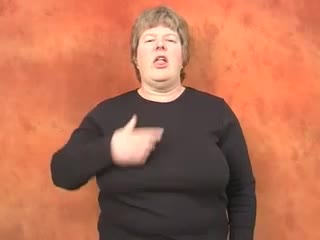
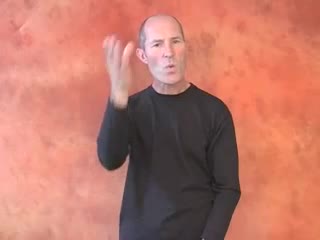
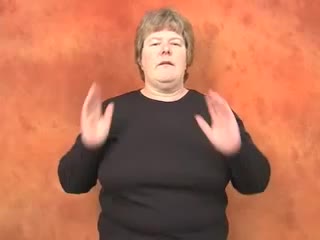
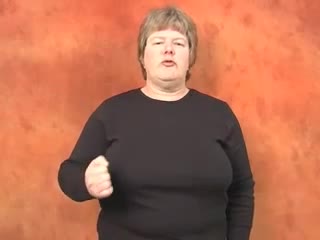
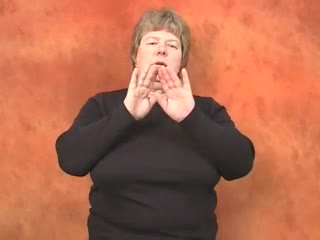
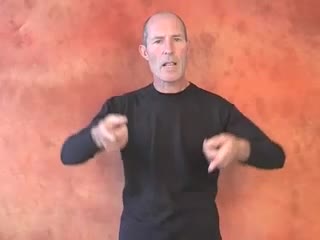
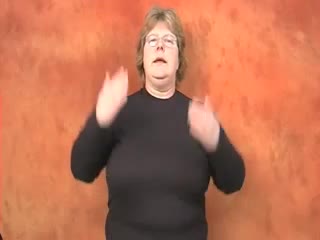
What Is the BSL Sign for "ruler"?
Welcome to SignDeaf.com, your ultimate guide to mastering British Sign Language! Today, we're diving into the essential BSL sign for "ruler" – a fundamental noun that's incredibly useful in various everyday conversations, from education to DIY. Whether you're a Deaf individual looking to share this knowledge, a hearing person eager to connect with the Deaf community, or simply keen to learn ruler BSL, understanding this sign is a valuable step on your BSL journey. This comprehensive guide will teach you exactly how to sign ruler in BSL, ensuring you can communicate this concept clearly and effectively in British Sign Language.
How to Sign "ruler" in British Sign Language - Step-by-Step Guide
Let's break down the BSL sign for "ruler" into easy-to-follow steps, ensuring you grasp every detail for accurate and natural communication.
Step 1: Handshape
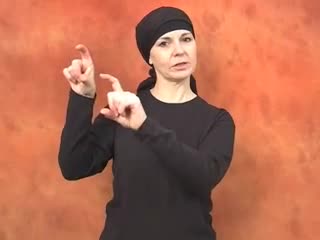
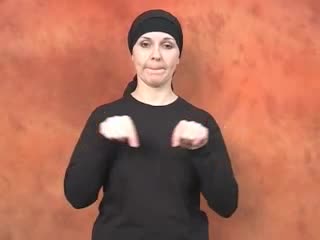
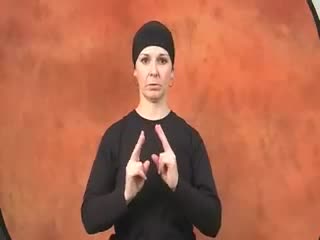
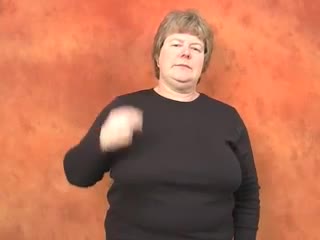
For the BSL sign for "ruler", you will primarily use your dominant hand. Begin by forming a flat, open handshape. This means all your fingers – your index, middle, ring, and little fingers – should be extended straight and held together, touching side-by-side. Your thumb should also be extended, pressed against the side of your palm or slightly tucked in, but not curled into a fist. Imagine your hand is becoming a flat, rigid surface, much like the object it represents. Ensure there is no significant curve or bend in your fingers; they should be as straight as possible, creating a long, flat plane. This precise handshape is crucial for correctly conveying the "ruler" sign language.
Step 2: Hand Position and Location
Once you have the correct handshape, position your dominant hand in front of your body, roughly at chest height or slightly lower. The palm of your hand should initially face inward, towards your chest, with your fingertips pointing forward and slightly downwards. Your non-dominant hand will also play a role here. It should be held flat and stable, with its palm facing upwards, positioned directly in front of your dominant hand, acting as the surface over which the "ruler" will measure. The non-dominant hand provides a stable reference point, enhancing the visual clarity of the BSL ruler sign. Ensure your non-dominant hand is steady and still throughout the movement.
Step 3: Movement
The movement for the British Sign Language ruler is what truly brings the sign to life, mimicking the action of measuring. With your dominant hand in the flat handshape (as described in Step 1) and positioned above your non-dominant hand (as described in Step 2), perform a distinct downward movement. Imagine you are drawing a straight line or measuring a distance. Start with your dominant hand slightly raised above your non-dominant palm. Then, bring your dominant hand down, making light contact with the palm of your non-dominant hand, and sweep it forward and slightly downward across the non-dominant palm. This movement should be smooth and controlled, resembling a measuring action. The motion is typically performed once, decisively, to indicate the act of using a ruler or the object itself.
Step 4: Non-Manual Features (Facial Expression & Mouthing)
Non-manual features (NMFs) are integral to BSL grammar and meaning, and the sign for "ruler" is no exception, though it's less complex than some others. For the BSL sign for ruler, a neutral or slightly thoughtful facial expression is generally appropriate. You might subtly mouth the word "ruler" as you perform the sign. Mouthing helps to clarify the English word associated with the sign, especially for those who are learning BSL or are new to the Deaf community. It aids in bridging the gap between spoken English and BSL concepts. Your head position should remain natural and upright, directly facing the person you are communicating with. While the NMFs for "ruler" are not as grammatically demanding as for questions or negation, their inclusion ensures a complete and natural delivery of the ruler sign language.
Step 5: Palm Orientation
Throughout the movement of the BSL sign for "ruler", the palm orientation of your dominant hand typically remains consistent. It begins with the palm facing towards your body, or slightly downwards, and maintains this general orientation as it moves across your non-dominant palm. The fingertips of your dominant hand will point forward and slightly downwards, mimicking the edge of a ruler. The non-dominant hand's palm will consistently face upwards, providing the 'surface' for the measurement. This stable palm orientation is key to accurately representing the linear, measuring nature of a ruler in British Sign Language.
Quick Reference: "ruler" BSL Sign at a Glance
- Handshape: Flat, extended fingers together, thumb alongside.
- Location: Dominant hand above non-dominant flat palm, chest height.
- Movement: Dominant hand sweeps downward and forward across non-dominant palm, as if measuring.
- Facial Expression: Neutral or slightly thoughtful; often accompanied by mouthing "ruler".
- Dominant Hand: Used for the sweeping, measuring action.
5 Tips to Learn the BSL Sign for "ruler" Quickly
- Visualise the Object: Connect the flat handshape directly to the physical appearance of a ruler. Imagine your hand *is* the ruler – long, flat, and straight. This strong visual link will help you remember the handshape for the BSL sign for ruler more effectively and quickly.
- Mimic the Action: The movement for "ruler" is highly iconic, representing the act of measuring. Practice the sweep across your non-dominant hand while consciously thinking about drawing a line or taking a measurement. This kinesthetic memory aid reinforces how to sign ruler in BSL.
- Practice Mouthing: While mouthing isn't always essential in BSL, for nouns like "ruler," it can be a great memory tool for beginners. Mouth "ruler" clearly as you sign it; this creates a stronger association between the spoken word and the BSL ruler sign.
- Integrate into Sentences: Don't just practice the sign in isolation. Try to create simple sentences in your head where you would use a ruler, such as "I need a ruler" or "The ruler is long." Practising the sign in context helps you remember the British Sign Language ruler more naturally.
- Use Repetition with Purpose: Instead of mindless repetition, focus on each component of the sign – handshape, location, movement, and non-manual features – with every practice. Repeat the full sign for "ruler" BSL 5-10 times, consciously checking each step, to solidify it in your memory.
When and How to Use the BSL Sign for "ruler"
The BSL sign for "ruler" is incredibly versatile and appears in many everyday contexts, making it a valuable addition to your BSL vocabulary. Understanding its usage helps you integrate it naturally into conversations within the Deaf community.
- Educational Settings: This is perhaps the most common context. You might use the sign for "ruler" when discussing school supplies, geometry, drawing, or crafts. For example, a teacher might sign "Please get your ruler" (YOU GET RULER PLEASE).
- DIY and Home Improvement: When talking about building, measuring furniture, cutting materials, or planning a project, the sign for "ruler" will be indispensable. You could sign "I need a ruler to measure the wood" (ME NEED RULER MEASURE WOOD).
- Art and Design: Artists and designers frequently use rulers for precision. You might use the sign when discussing drawing straight lines, creating patterns, or technical illustrations. For instance, "Use a ruler for that straight line" (USE RULER THAT LINE STRAIGHT).
- General Description: The sign can also be used descriptively to refer to anything that is long and straight, or to the act of measuring generally, even if not with a physical ruler. Grammatically, BSL often uses topic-comment structure, so you might establish "RULER" as the topic before commenting on its use or characteristic.
Common Mistakes When Signing "ruler" in BSL - And How to Fix Them
Learning any new language involves making mistakes, and BSL is no different! Here are three common errors beginners make when signing "ruler" in BSL, along with friendly advice on how to refine your technique.
- Incorrect Handshape:
The Error: A common mistake is not keeping the fingers completely straight and together. Learners might accidentally curve their fingers slightly, spread them apart, or even form a loose "B" handshape. This can alter the meaning or make the sign unclear.
Why it Happens: It often occurs because maintaining a perfectly flat, rigid handshape requires muscle memory that takes time to develop, especially if the hand feels tense.
The Correction: Focus on consciously extending all four fingers (index to pinky) and pressing them firmly together, making your hand as flat and unyielding as a wooden or plastic ruler. Practice flattening your hand against a table to feel the correct alignment before attempting the sign. Regularly check your handshape in a mirror to ensure consistency when you learn ruler BSL.
- Inaccurate Movement or Location:
The Error: Some learners might make the movement too small, too large, or perform it in the wrong direction, such as moving vertically instead of sweeping horizontally and slightly downwards across the non-dominant palm. Others might forget to use the non-dominant hand as a base.
Why it Happens: This can be due to not fully understanding the iconic nature of the sign (mimicking measuring) or rushing through the movement without precision.
The Correction: Remember that the BSL sign for ruler is highly descriptive of the action. Envision yourself physically measuring something with a ruler. Your dominant hand should perform a clear, deliberate sweep across the stable, upward-facing palm of your non-dominant hand. The movement should be smooth and controlled, making light contact, not a vigorous chop or a tiny wiggle. Ensure the non-dominant hand is present and stable to provide the necessary context for the measuring action.
- Neglecting Non-Manual Features:
The Error: While less critical for "ruler" than for some other signs, forgetting to include appropriate non-manual features (like mouthing "ruler") can make your sign appear less natural or incomplete.
Why it Happens: Beginners often focus intensely on handshapes and movements, overlooking the subtle yet important role of facial expressions and mouthing in British Sign Language.
The Correction: As you perform the ruler sign language, make a conscious effort to mouth the word "ruler" naturally. This not only aids in clarity for the receiver but also helps you reinforce the sign in your own memory. Maintain a neutral or slightly focused facial expression. Integrating these NMFs will make your BSL communication much more fluent and expressive.
"ruler" in BSL - Fun Facts and History
Dive deeper into the fascinating world of BSL with some intriguing facts about the BSL sign for "ruler" and its place within the language.
- Iconic Representation: The BSL sign for ruler is a prime example of an "iconic" sign. This means its form directly resembles the object or action it represents. The flat handshape clearly depicts a ruler, and the sweeping movement visually illustrates the act of measuring. This makes "ruler" BSL relatively easy for beginners to grasp and remember.
- Consistent Across Regions: Unlike some BSL signs that have significant regional variations (e.g., "holiday" or "purple"), the core BSL sign for ruler is remarkably consistent across the UK. Whether you're in London, Manchester, Glasgow, or Belfast, the fundamental handshape and movement for how to sign ruler in BSL remain largely the same, fostering clear communication nationwide.
- Historical Evolution: While the exact historical origin of every BSL sign is not always meticulously documented, it's highly probable that the ruler sign language developed from a natural, mimetic representation of the object and its use. As tools like rulers became commonplace, the need for a simple, universally understood sign would have emerged, leading to its iconic form.
- Foundation for Other Concepts: The "flat hand" or "B" handshape used in "ruler" is a foundational handshape in BSL. Understanding the BSL ruler sign can help learners recognise and quickly pick up other signs that utilise a similar flat hand, such as "book," "table," or "paper," which often involve the flat hand interacting with a surface or another hand.
- Connection to Measurement: The sign for "ruler" is intrinsically linked to the concept of "measure" or "measurement" in BSL. While there are specific signs for "measure," the "ruler" sign itself often implies the act of measuring, especially when combined with context or non-manual features indicating an action.
"ruler" in Deaf Culture and BSL Community
The concept of a "ruler" holds a practical and everyday place within Deaf culture and the BSL community, just as it does in the wider hearing world. From classrooms in Deaf schools to workshops and homes, the ability to clearly communicate about tools and measurements is essential for daily life and learning. For Deaf children, learning the BSL ruler sign is often one of the early vocabulary items, connecting them to practical skills and educational activities. It fosters independence in tasks like drawing, crafts, and carpentry. Within the community, precise communication about objects like rulers ensures that instructions for projects, descriptions of items, or discussions about design can be conveyed without ambiguity, strengthening social bonds and collaborative efforts. Learning and using the BSL sign for ruler is not just about vocabulary; it's about participating fully and effectively in the rich tapestry of Deaf life and communication.
Example Sentences Using "ruler" in BSL
Here are five practical example sentences demonstrating how the BSL sign for "ruler" can be used in context, alongside notes on BSL grammatical structure.
English sentence: I need a ruler to draw a straight line. - BSL structure: ME NEED RULER DRAW LINE STRAIGHT.
English sentence: Can you pass me the ruler, please? - BSL structure: RULER, YOU GIVE ME PLEASE? (Topic-comment, question conveyed by NMFs)
English sentence: The ruler is on the table. - BSL structure: RULER TABLE ON.
English sentence: How long is this ruler? - BSL structure: THIS RULER LONG HOW? (Question word at the end)
English sentence: We used a ruler to measure the paper. - BSL structure: WE USE RULER MEASURE PAPER.
Frequently Asked Questions About the BSL Sign for "ruler"
Is this sign the same everywhere in the UK?
Yes, for the BSL sign for ruler, the core handshape, location, and movement are remarkably consistent across all regions of the UK. While BSL does have regional variations for many signs, "ruler" is one that maintains a high degree of uniformity, making it universally understood by BSL users throughout England, Scotland, Wales, and Northern Ireland.
How is this sign different from similar signs?
The BSL ruler sign is distinct due to its specific combination of a flat, straight handshape moving across a stable non-dominant palm, mimicking measurement. While other signs might use a flat hand (e.g., "book" or "table"), their movement, location, or interaction with the non-dominant hand will differ significantly. For instance, "book" involves two flat hands opening, while "table" often uses flat hands to depict a surface. The "measuring" action is unique to the ruler sign language.
Is this suitable for beginners?
Absolutely! The BSL sign for ruler is considered an excellent sign for beginners. Its iconic nature (it looks like what it means) makes it intuitive and easy to remember. It's often one of the first nouns taught in introductory BSL courses, providing a solid foundation for understanding handshapes and basic movements in British Sign Language.
Can I use this sign with Deaf children?
Yes, this sign is perfectly suitable and commonly used with Deaf children. It's a practical and everyday word, especially relevant in educational and play contexts. Teaching the BSL sign for ruler to children helps them develop early vocabulary related to objects, measurement, and crafts, fostering their communication skills and understanding of the world around them.
Where can I practise this sign?
You can practise the BSL sign for ruler in several ways! Start by using a mirror to check your handshape and movement. Then, try filming yourself to review your technique. Engage with BSL learning resources online like SignDeaf.com, or ideally, join a local BSL class or a Deaf club. Practising with a Deaf person or an experienced BSL user is invaluable for real-time feedback and conversational context.
Related BSL Signs to Learn Alongside "ruler"
To truly build fluency and a robust BSL vocabulary, it's incredibly helpful to learn signs in thematic clusters. Here are some related BSL signs that naturally complement the BSL sign for "ruler," helping you expand your communication about everyday objects and actions.
- MEASURE: This sign is a direct companion to "ruler," as a ruler's primary function is to measure. Learning both allows you to specify the tool (ruler) and the action (measure) or even just the action itself.
- LINE: Often, a ruler is used to draw or create a straight line. Learning the sign for "line" (typically drawing a line in the air with an extended index finger) will allow you to express the result of using a ruler.
- PEN/PENCIL: These are common tools used in conjunction with a ruler for drawing or writing. Knowing these signs will enable you to talk about the full set of stationery items.
- PAPER: Rulers are frequently used on paper. Learning the sign for "paper" (often two flat hands brushing together) will allow you to discuss the surface you're measuring or drawing on.
- STRAIGHT: The concept of "straight" is intrinsically linked to a ruler. Learning this adjective (typically a dominant index finger moving straight forward from a point) allows you to describe the lines you create or the object itself.
- CUT: If you're using a ruler to measure before cutting materials, this sign (often a 'V' handshape mimicking scissors) becomes highly relevant. It connects the measuring phase to the next action in a project.
How to Practise the BSL Sign for "ruler" Effectively
Consistent and mindful practice is the key to mastering any BSL sign, including the BSL sign for ruler. Start by practising in front of a mirror, paying close attention to your handshape, the precise location of your hands, and the fluidity of the movement. Film yourself performing the sign and then watch it back, comparing your execution to instructional videos or mental images of the correct form – this self-correction is incredibly powerful. The most effective way to solidify your understanding of how to sign ruler in BSL is to incorporate it into real or imagined sentences; try to communicate about measuring, drawing, or school supplies using the sign. Finally, make daily repetition a habit, even for just a few minutes, focusing on all five steps (handshape, position, movement, NMFs, palm orientation) to ensure the sign becomes second nature. Embrace the journey of learning British Sign Language ruler, and celebrate every small step of progress!