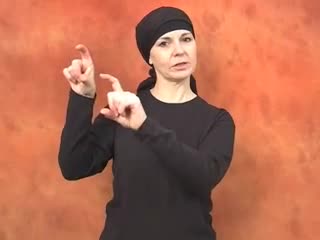
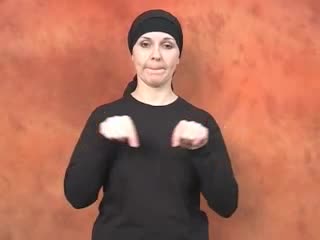
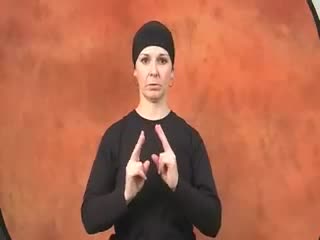
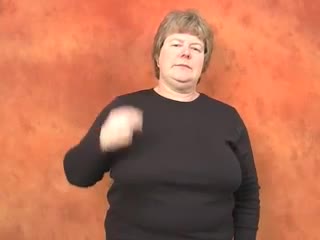
What Is the BSL Sign for "mat"?
Ever wondered how you articulate those everyday objects we often take for granted in British Sign Language? Here's the thing: understanding the BSL sign for mat opens up a simple yet essential piece of vocabulary, allowing you to discuss everything from your front door to a yoga class. This particular sign perfectly illustrates how BSL often visually represents the item it describes, making it quite intuitive to grasp. Learning the mat British Sign Language sign helps you connect with the physical world around you, bridging the gap between spoken concepts and their dynamic, visual counterparts.
How to Sign "mat" in British Sign Language - Step-by-Step
Let's get your hands moving and learn this practical sign, breaking it down into manageable actions so you can master it with ease.
Step 1: Handshape
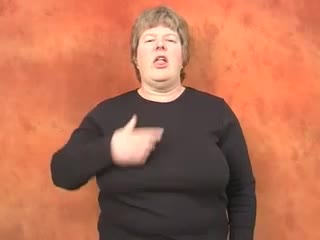
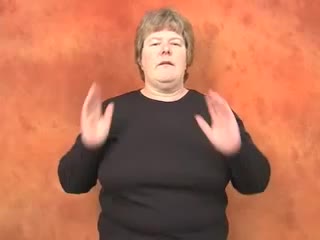
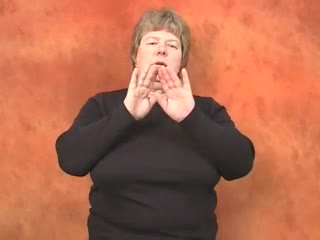
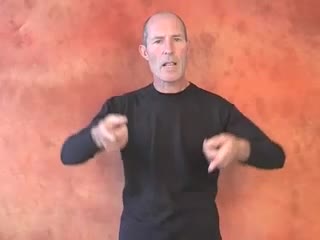
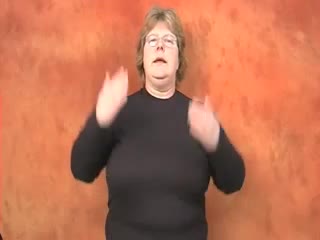
Begin by forming a flat handshape with both your dominant and non-dominant hands. You'll extend all four fingers of each hand, keeping them straight and held tightly together, while your thumbs remain tucked in against the palms or slightly alongside the index fingers. Picture a perfectly flat surface, like a board or a sheet of paper; that's precisely the form your hands should take.
Step 2: Hand Placement and Location
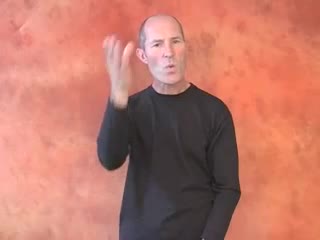
Position both of your flat hands in the neutral signing space directly in front of your body, roughly at waist height. Your non-dominant hand will rest stationary, palm facing downwards, forming the base or the "floor" for the action. Place your dominant hand directly above your non-dominant hand, keeping a small, comfortable gap between them.
Step 3: Movement
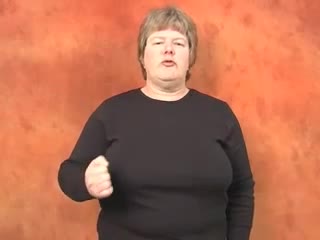
With your non-dominant hand holding steady, take your dominant hand, still in its flat shape, and gently sweep it outwards and slightly downwards over the non-dominant hand. Imagine you are laying something flat onto a surface, or smoothing out a flexible object. The movement is fluid, a single, deliberate sweep that suggests the spreading or placement of a mat.
Step 4: Facial Expression and Mouthing
For the sign "mat," a neutral facial expression is typically appropriate, reflecting the straightforward nature of the object itself. Crucially, you should mouth the word "mat" silently as you perform the sign. Mouthing, a vital non-manual feature in BSL, provides a clear link to the spoken English word, helping to disambiguate the sign from others that might have similar manual components but different meanings. This non-manual element is not just an accessory; it often carries grammatical information and clarifies lexical items within a BSL conversation.
Step 5: Palm Orientation
Throughout the entire signing process for "mat," the palms of both your dominant and non-dominant hands will face downwards. This consistent downward orientation is key, as it visually reinforces the idea of a flat object lying on a surface. Maintaining this palm direction clearly communicates that you are referring to something horizontal and spread out, rather than something vertical or held upright.
"mat" in BSL - Quick Reference Snapshot
- Handshape: Flat hands, fingers extended and together.
- Location: Neutral signing space in front of the body.
- Movement: Dominant hand sweeps outwards and downwards over stationary non-dominant hand.
- Facial Expression: Neutral, accompanied by mouthing "mat".
- Dominant Hand: Performs the sweeping action.
- Palm Orientation: Both palms face downwards throughout the sign.
5 Memorisation Tricks for the BSL Sign "mat"
- **Visual Mnemonic:** Picture your flat dominant hand as the mat itself, unfolding or being laid out onto the floor, represented by your stationary non-dominant hand. This visual connection to the action of placing a physical mat makes the sign instantly logical and easier to recall.
- **Muscle-Memory Drill:** Practice the sweeping motion ten times in a row, focusing on the smooth, controlled spread of your dominant hand. Then, integrate the non-dominant hand as the stable base, ensuring your hands move in harmony, building a strong physical memory of the sign.
- **Connection to Meaning:** Think about how a mat typically lies flat on the ground. The sign for "mat" beautifully imitates this action, where one flat hand "lays" over the other, directly mirroring the object's real-world appearance and function.
- **Common-Confusion Tip:** Be careful not to lift your dominant hand too high off your non-dominant hand, as this might suggest something floating or hovering rather than resting. Keep the gap small and the movement close to the "ground" hand to maintain the intended meaning of a mat.
- **Daily-Life Practice Idea:** Every time you see a mat in your home or out and about, pause for a moment and silently sign "mat," reinforcing the connection between the object and its BSL representation. This frequent, contextual practice anchors the sign firmly in your mind.
Real-Life Situations to Use the BSL Sign for "mat"
- You might ask a friend, "WHERE MAT?" using a questioning facial expression and leaning forward, indicating you're searching for the exact location of the item.
- Someone could tell you, "MAT DIRTY, CLEAN NEED," conveying that the mat requires cleaning, employing topic-comment structure where the mat is introduced before its state and the required action.
- You could instruct a child, "MAT PUT-DOWN," making the sign for "put-down" (often a two-handed downward movement) immediately after "mat" to show where it belongs.
- Imagine describing a new purchase, "NEW MAT, SOFT," where you'd sign "new" and "mat," then use a descriptive sign for "soft" to elaborate on its texture.
- When discussing household items, you might sign, "DOOR MAT," combining the sign for door with "mat" to specify the type, illustrating how BSL can compound concepts.
Top 3 Mistakes Learners Make Signing "mat" in BSL
- **Incorrect Handshape:** A common error is not keeping the fingers tightly together and straight, instead allowing them to splay or curl. This changes the visual representation from a flat surface to something less defined. The precise correction involves consciously ensuring all four fingers are pressed firmly together, creating that clear, flat plane.
- **Inaccurate Movement Direction:** Some beginners might move the dominant hand vertically up and down, or in a circular motion, rather than the intended outward and downward sweep. This misrepresents the action of laying something flat. To correct this, focus on a smooth, horizontal movement that starts directly above the non-dominant hand and extends away from the body.
- **Missing Mouthing or Facial Expression:** Forgetting to mouth "mat" or maintaining an inconsistent facial expression can lead to ambiguity. BSL relies heavily on non-manual features for clarity. The precise correction is to always articulate the word silently with your mouth and ensure your expression remains neutral unless context demands otherwise, reinforcing the specific lexical item.
Fascinating Facts About the BSL Sign for "mat"
- The BSL sign for "mat" is highly iconic, meaning its form directly mimics the action of laying out or smoothing a physical mat, making it visually intuitive for learners.
- While some signs exhibit significant regional variations across the UK, the sign for "mat" tends to be quite consistent, reflecting its status as a common, universally understood object.
- This sign often functions as a type of classifier, where the flat handshape can be adapted to represent other flat, flexible objects being placed or spread out, demonstrating BSL's grammatical efficiency.
- The downward palm orientation of both hands is not arbitrary; it's a fundamental aspect of BSL's spatial grammar, indicating that the object is on a horizontal plane or surface.
- Its simplicity and directness make it an excellent example of how BSL efficiently conveys concrete nouns, relying on visual representation rather than abstract concepts.
"mat" in Deaf Culture - Community and Identity
Everyday signs like "mat" play a quiet yet significant role in fostering a shared experience within the Deaf community. These are the items that furnish our homes, define our welcome spaces, and provide comfort underfoot, and the signs for them create a common visual language for discussing the mundane beauty of daily life. When someone signs "mat," it instantly conjures a collective understanding of home, cleanliness, and the practicalities of domesticity, linking individuals through shared visual concepts. It speaks to the warmth of inviting someone in, or the order of maintaining a space, reinforcing the intricate web of shared cultural meaning found in BSL. This sign, like countless others, helps to build a vibrant and connected world where communication flows effortlessly about the things that truly matter.
Example Conversations Using "mat" in BSL
English: Where is the new welcome mat? - BSL structure: NEW WELCOME MAT, WHERE? (Topic-comment structure, question marker facial expression)
English: My yoga mat is in the car. - BSL structure: MY YOGA MAT, CAR INSIDE. (Pronoun first, then object, followed by location)
English: Please wipe your feet on the mat. - BSL structure: FEET WIPE MAT ON, PLEASE. (Action before object, implied imperative with "please" sign)
English: That rug is bigger than a standard mat. - BSL structure: RUG THAT, MAT COMPARED BIGGER. (Referencing object first, then comparing its size with another object)
English: I need to clean the bath mat this weekend. - BSL structure: BATH MAT, THIS WEEKEND CLEAN NEED. (Object first, then time reference, followed by the action and necessity)
Frequently Asked Questions: The BSL Sign for "mat"
Does the BSL sign for "mat" have regional variations?
Generally speaking, the sign for "mat" is quite consistent across the United Kingdom, which isn't always the case for BSL signs. Because it's a common, everyday object with a very iconic, clear representation, you'll find most BSL users recognise and produce this sign in a similar way, regardless of their specific region. So, you can learn this version with confidence, knowing it's widely understood.
Are there any similar signs to "mat" that learners should be careful not to confuse it with?
You'll want to watch out for signs involving flat hands that might represent other flat surfaces or objects, such as "floor" or "rug." While "floor" often involves a more expansive, two-handed sweep across a wider area, and "rug" might have a slightly different texture or boundary implied, the core flat handshape is shared. Paying close attention to the specific movement, location, and crucially, your mouthing, will help distinguish "mat" from these related signs.
Is the BSL sign for "mat" suitable for beginners?
Absolutely, this is an excellent sign for beginners! Its iconic nature means it's easy to visualise and remember, and the handshape and movement are relatively straightforward to execute. Mastering the BSL sign for "mat" early on provides a solid foundation for understanding how BSL often visually represents concrete nouns.
How can I teach the sign "mat" to children in a fun way?
When teaching children, you could turn it into a game! Ask them to find all the mats in the house and sign "mat" each time they spot one, making the sign as they point. You might also pretend to roll out a tiny mat for their toys and sign "mat" as you do, integrating it into imaginative play.
How does the BSL sign for "mat" compare to other sign languages' equivalents?
Many sign languages around the world have iconic signs for "mat" that visually represent the object being laid flat, but the exact handshapes, movements, and palm orientations will vary. For instance, another sign language might use a single hand or a different sweeping motion to convey the same concept. While the underlying idea of representing a flat object is often universal, the precise execution is unique to each specific sign language's phonology.
Signs That Pair Naturally with "mat" in BSL
- **FLOOR:** Often signed with a broader, two-handed sweep, it conceptually links to "mat" as mats are typically found on floors.
- **RUG:** Similar in concept to "mat" but typically refers to a larger, sometimes thicker floor covering, helping you differentiate between sizes.
- **DOOR:** Because many mats are placed at entrances, the sign for "door" often appears in sentences describing door mats.
- **WELCOME:** A common sign to use in conjunction with "mat" when referring to a "welcome mat," tying into themes of hospitality.
- **CLEAN:** If a mat is dirty, you'll naturally use the sign for "clean" to discuss its maintenance, forming a logical vocabulary cluster.
- **DIRTY:** The opposite of clean, this sign allows you to describe the state of a mat that needs attention, extending your conversational range.
Building Fluency: How to Practise "mat" in BSL
To really make the BSL sign for "mat" stick, practise in front of a mirror, paying close attention to your handshape and the smoothness of your sweeping movement. Watch how your hands articulate the sign and ensure your mouthing is clear and synchronised. Try integrating "mat" into your daily BSL conversations by describing the mats you encounter, whether it's a bath mat, a doormat, or an exercise mat. A great way to refine your technique involves filming yourself signing the word, then watching it back to identify any areas for improvement, just as an athlete reviews their form. If you're fortunate enough to connect with a Deaf conversation partner, ask them for feedback on your rendition; their insights are invaluable for authentic learning. Remember, spaced repetition over several days will solidify this sign in your long-term memory, helping you build confidence and truly own your BSL vocabulary.