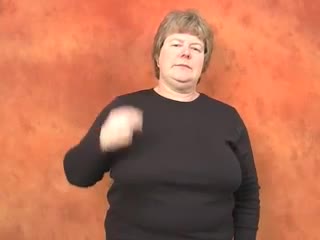
What Is the BSL Sign for "cupboard"?
Imagine a place in your home where everyday treasures, or perhaps just the teacups, are neatly tucked away. That's precisely what we're delving into today: the BSL sign for cupboard, a fundamental piece of vocabulary for discussing home life and storage in British Sign Language. You'll find this sign incredibly useful for communicating about everything from kitchen essentials to bedroom tidiness. Understanding this sign provides a clear, visual representation of a common household item, making your conversations about domestic spaces much richer.
How to Sign "cupboard" in British Sign Language - Step-by-Step
Let's break down this practical sign with clear, actionable steps, guiding you through its formation as though I'm right there showing you.
Step 1: Handshape
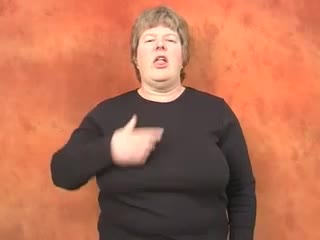
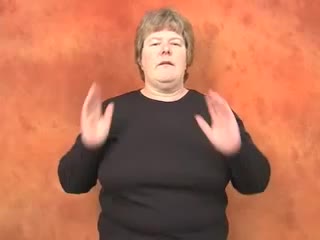
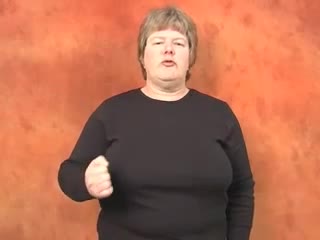
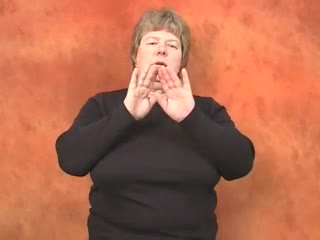
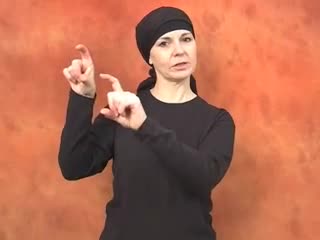
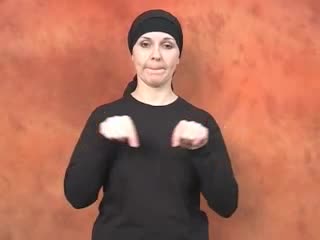
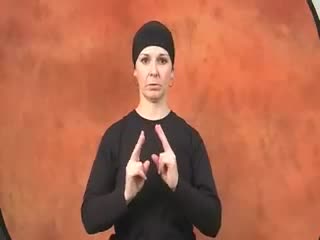
Begin by forming two flat hands, often referred to as a "B" handshape in sign language linguistics. Keep your fingers straight and pressed together, with your thumb tucked alongside the palm. Both your dominant and non-dominant hands will adopt this exact, firm position.
Step 2: Hand Placement and Location
Position both your flat hands in front of your chest, about shoulder-width apart, with your palms facing each other. Your hands should be relatively close to your body, creating a visual space as if you're about to interact with a physical object directly in front of you. This neutral zone in front of the torso is a common starting point for many BSL signs.
Step 3: Movement
From their starting position, simultaneously move both hands outwards and slightly backwards in a smooth, controlled arc. Picture the action of two double doors swinging open. This motion should be fluid and continuous, not jerky, typically performed once to signify the opening of the cupboard.
Step 4: Facial Expression and Mouthing
For the basic sign "cupboard," your facial expression will usually remain neutral, reflecting the factual nature of the word. Simultaneously, you should mouth the English word "cupboard" clearly and naturally. This mouthing is an essential non-manual feature in BSL, supporting the manual sign and providing crucial grammatical clarity.
Step 5: Palm Orientation
At the beginning of the sign, your palms face each other, as if enclosing a space. As your hands move outwards, the palms generally maintain this inward-facing orientation, ensuring the 'opening door' visual remains consistent throughout the motion. This specific orientation helps convey the rectangular, door-like nature of the item you are describing.
"cupboard" in BSL - Quick Reference Snapshot
- Handshape: Both hands flat (B handshape), fingers straight and together.
- Location: In front of the chest, shoulder-width apart.
- Movement: Hands move outwards and slightly back in a smooth arc, mimicking opening doors.
- Facial Expression: Neutral.
- Dominant Hand: Both hands move symmetrically.
- Palm Orientation: Palms face each other throughout the movement.
5 Memorisation Tricks for the BSL Sign "cupboard"
Here are some clever ways to really make this sign stick in your memory, ensuring you recall it quickly and correctly every time.
-
Picture the two flat hands as the doors of a cupboard. As your hands sweep open, you're literally miming the action of revealing what's inside, giving you a strong visual mnemonic tied directly to the sign's form and function. This helps connect the sign's movement to its meaning instantly.
-
Engage your muscle memory by repeatedly performing the sign while saying "cupboard" aloud. Focus on the coordinated movement of both hands, making sure they open smoothly and symmetrically, which reinforces the physical pathway in your brain for retrieval. You'll find the fluidity of the motion becomes ingrained over time.
-
Think of the word's meaning: a place for storage. The sign itself creates a visual representation of this storage space being accessed, making a direct link between the physical sign and the concept it conveys. This intrinsic connection helps cement the idea that the sign *is* the cupboard.
-
A lot of people miss this subtle but important point: ensure your hands don't just move outwards but also slightly *backwards* at the end of the movement. This backward shift adds depth to the "door opening" visual, preventing the sign from looking flat or unfinished. It's a common confusion point, so getting it right makes a huge difference.
-
Integrate "cupboard" into your daily routine by signing it whenever you open a cupboard at home. Whether you're reaching for a mug, putting away groceries, or tidying up, consciously make the sign. This constant, real-world application will embed the sign into your active vocabulary naturally.
Real-Life Situations to Use the BSL Sign for "cupboard"
Knowing a sign is one thing; using it naturally in conversation is another. Here are a few scenarios where "cupboard" truly comes alive in BSL.
-
Asking for an item: You might sign "MILK WHERE CUPBOARD?" (brows up, leaning slightly forward for the 'WHERE' question) to inquire about the location of the milk, assuming it's usually stored in a cupboard. This showcases topic-comment structure.
-
Giving instructions: When telling someone where to put something, you could sign "PUT BOOK THERE CUPBOARD" (pointing to a specific cupboard). Here, spatial grammar is key, as your pointing physically indicates which cupboard.
-
Expressing a negative: If a cupboard is empty, you'd sign "CUPBOARD EMPTY" (shaking head slightly, perhaps with a slight frown for 'empty'). This demonstrates how non-manual features negate a statement.
-
Describing a space: You might sign "KITCHEN CUPBOARD BIG" to describe the size of a cupboard in the kitchen. This illustrates how adjectives follow nouns in BSL, providing descriptive detail.
Top 3 Mistakes Learners Make Signing "cupboard" in BSL
It's completely normal to make a few slip-ups when you're learning, and "cupboard" has its own set of common pitfalls. Here's how to sidestep them.
-
Incorrect Handshape: Many beginners inadvertently curl their fingers too much, forming a 'C' handshape instead of keeping them flat. This changes the visual from a solid door to something rounder, which isn't the intended meaning. The precise correction involves consciously flattening and straightening your fingers, ensuring they are pressed firmly together throughout the sign.
-
Asymmetrical Movement: Sometimes one hand moves more than the other, or they don't open simultaneously, making the sign look clumsy or incomplete. This often happens when focusing too much on one hand. To fix this, practice in front of a mirror, focusing on the symmetrical, coordinated opening of both hands at the exact same time.
-
Missing the Backward Arc: Learners sometimes just move their hands outwards without the slight backward sweep, which makes the sign look like a simple "open" action rather than specifically "cupboard." The slight backward motion adds the crucial visual detail of doors opening *away* from a central point. Remember to finish the movement with that subtle arc back towards your sides.
Fascinating Facts About the BSL Sign for "cupboard"
Let's uncover some intriguing details about this everyday sign that you might not know, deepening your appreciation for BSL.
-
The BSL sign for "cupboard" is highly iconic, meaning its form directly mimics the action or appearance of the thing it represents. It visually portrays the opening of two doors, making it relatively intuitive for new learners to grasp its meaning.
-
While the "opening doors" motion is widely understood across the UK, there can be slight regional variations in BSL. Some areas might use a slightly different handshape or movement emphasis, though the core concept of a storage unit remains consistent. This highlights the rich diversity within the BSL-using community.
-
Historically, many signs for common household items like "cupboard" developed from practical, everyday interactions with these objects. This sign's clear depiction of an action likely stems from early attempts to visually communicate about home environments.
-
The sign's two-handed, symmetrical nature is a distinctive linguistic feature. It means both hands are active and equally important in conveying the sign's full meaning, which isn't always the case for all BSL vocabulary.
-
The sign for "cupboard" can sometimes be subtly modified to refer to specific types of cupboards, such as a "filing cabinet" (by adding a sliding motion) or a "wardrobe" (by positioning the sign higher or nearer the body). This shows the adaptability of core BSL signs.
"cupboard" in Deaf Culture - Community and Identity
For the Deaf community, clear and direct communication about everyday items like a cupboard fosters independence and ease in daily life. This sign, like so many others, becomes part of the shared visual language that strengthens community bonds and reinforces a collective identity. Imagine a Deaf person describing their new kitchen; the signs for "cupboard," "fridge," and "sink" aren't just vocabulary, they are building blocks for sharing personal experiences and creating a sense of belonging. The precision in signing such common concepts ensures that everyone can participate fully in conversations about home, family, and personal space. This sign is a small but vital piece of the rich tapestry of visual communication that defines Deaf culture.
Example Conversations Using "cupboard" in BSL
Let's see "cupboard" in action with some practical sentences, giving you a feel for its natural use in BSL.
English: Can you open the cupboard for me, please? - BSL structure: YOU OPEN CUPBOARD PLEASE? (question eyebrows, slight forward lean)
English: The biscuits are in the top cupboard. - BSL structure: BISCUIT CUPBOARD TOP (spatial grammar, indicating location relative to the cupboard)
English: I need to tidy this cupboard, it's a mess! - BSL structure: ME NEED TIDY CUPBOARD MESS (topic-comment structure, 'mess' as a descriptive sign)
English: There's nothing in that cupboard. - BSL structure: THAT CUPBOARD NOTHING (negative construction, often with a head shake for 'nothing')
English: Which cupboard should I put these plates in? - BSL structure: THESE PLATES CUPBOARD WHICH? (question about choice, clear question facial expression)
Frequently Asked Questions: The BSL Sign for "cupboard"
Let's clear up some common queries learners often have about this particular sign.
Is there a regional variation for the BSL sign for cupboard?
While the core "opening doors" concept is widely understood, you might encounter slight regional differences in BSL, for example, a variation in the initial hand placement or the exact arc of the movement. However, the visual representation of a storage unit with doors remains consistent enough for mutual understanding across the UK.
Are there any similar BSL signs I might confuse with "cupboard"?
Yes, some learners occasionally confuse "cupboard" with "open" if the movement isn't fully completed or lacks the specific handshape. The key distinction lies in the sustained flat handshape and the specific arc for "cupboard," whereas "open" can use various handshapes and often implies a wider, less specific action.
Is the BSL sign for "cupboard" suitable for beginners?
Absolutely, the BSL sign for "cupboard" is considered very beginner-friendly. It's an iconic sign, meaning it looks like what it represents, making it one of the easier household vocabulary items to learn and remember quickly when starting your BSL journey.
Can children easily learn to sign "cupboard" in BSL?
Yes, children pick up the sign for "cupboard" very well. Its direct visual representation of opening doors is easy for young minds to grasp and replicate, making it a great sign for early BSL learners and for discussing everyday objects with little ones.
How does the BSL sign for "cupboard" relate to other BSL signs for furniture?
The sign for "cupboard" shares a conceptual link with other furniture signs by often depicting the object's function or form. For instance, "WARDROBE" might be signed similarly but with a greater emphasis on height or clothing, showing how BSL builds on core ideas with modifications.
Signs That Pair Naturally with "cupboard" in BSL
Building your vocabulary systematically is smart. Here are some signs that naturally complement "cupboard," helping you form more complete thoughts.
-
KITCHEN: You'll often find cupboards in the kitchen, so learning this sign helps you specify the location of the cupboard. The concept linking them is "place" or "room."
-
FOOD: Many cupboards store food, making this a natural pairing for discussing groceries or meals. The linking concept is "contents."
-
EMPTY: When a cupboard is bare, you'll need the sign for "empty" to describe its state. The concept here is "condition."
-
FULL: Conversely, a cupboard might be brimming with items, so "full" becomes an essential descriptor. This also relates to "condition."
-
OPEN: While "cupboard" implies opening, the general sign for "open" can be used for emphasis or for other items. The linking concept is "action."
-
CLOSE: The opposite action to opening, "close" is vital for giving instructions about putting things away or securing a cupboard. The concept is "opposite action."
Building Fluency: How to Practise "cupboard" in BSL
Getting truly comfortable with "cupboard" in BSL means more than just knowing the steps; it's about integrating it into your expressive flow. You'll want to practice the sign in front of a mirror, paying close attention to the symmetry of your two hands and the smooth, consistent arc of the movement. Try incorporating "cupboard" into your daily conversations about home, perhaps signing it every time you interact with a physical cupboard. Filming yourself performing the sign can offer invaluable insights, allowing you to catch any subtle errors in handshape or movement that you might otherwise miss. Don't forget the power of spaced repetition; revisit the sign over a few days rather than just cramming it once. Ultimately, finding a Deaf conversation partner to practice with will provide authentic feedback and help you use "cupboard" confidently and naturally in real-world exchanges.