What Is the BSL Sign for "boarded wall"?
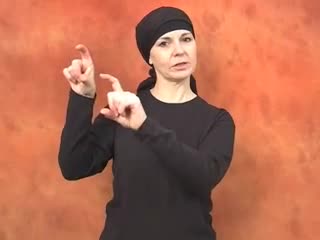
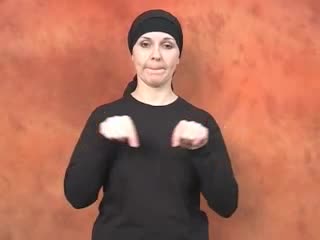
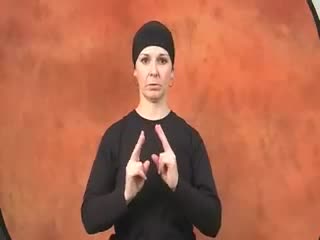
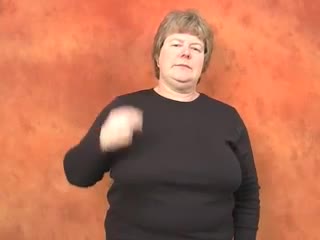
Imagine a structure hastily erected, perhaps for protection or to conceal a building site; that's precisely the visual narrative captured by the BSL sign for boarded wall. This essential sign allows you to convey the presence of a temporary or makeshift barrier made of planks, a common sight in urban landscapes and construction zones across the United Kingdom. Mastering this particular British Sign Language boarded wall gesture opens up conversations about building projects, securing areas, or even describing scenes in stories. It effectively paints a clear picture of an improvised wooden enclosure, making your communication both vivid and precise within the Deaf community.
How to Sign "boarded wall" in British Sign Language - Step-by-Step
Let's break down the precise movements and expressions that bring the BSL sign for boarded wall to life, ensuring you convey its meaning with clarity and confidence.
Step 1: Handshape
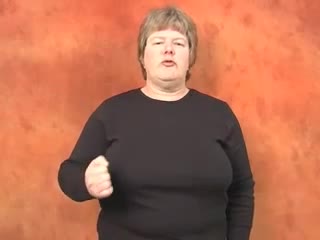
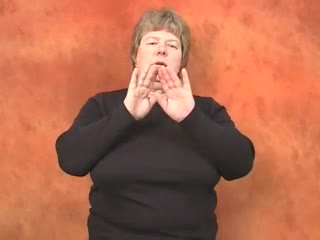
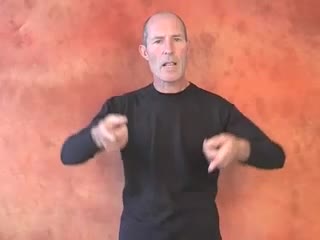
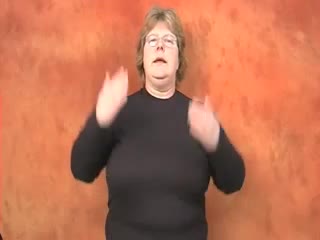
For this sign, you'll primarily use your dominant hand. Begin by extending your index finger and thumb, keeping them straight and forming an "L" shape. The remaining three fingers (middle, ring, and pinky) should be curled down into your palm, resting gently. Your thumb should be held relatively close to your index finger, creating a compact and defined form, much like the rigid edge of a wooden plank.
Step 2: Hand Placement and Location
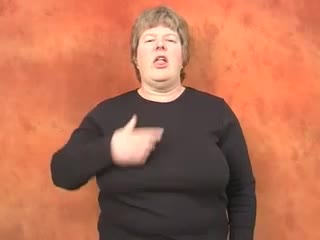
You'll initiate this sign in the neutral signing space directly in front of your body, roughly at chest height. Your dominant hand, in the described handshape, should be positioned so your index finger points outwards, away from your torso. The palm of your hand will generally face slightly inwards towards your body, preparing for the upcoming motion.
Step 3: Movement
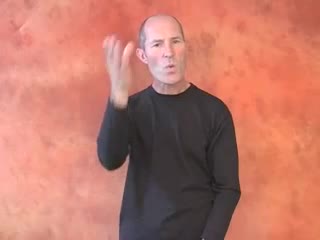
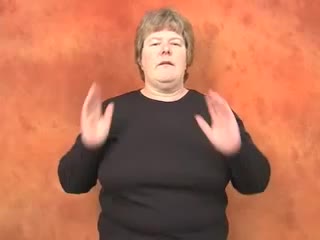
With your dominant hand held in the "L" shape, make a series of short, repeated downward movements. Picture hammering a series of planks into place. Each downward tap should be distinct, moving your hand a few inches down, then lifting it slightly to repeat the action. Perform this rhythmic, tapping motion approximately three to four times, mimicking the action of constructing a simple wooden barrier.
Step 4: Facial Expression and Mouthing
Non-manual features are truly integral to BSL, adding grammatical nuance and emotional context to your signs; for "boarded wall," a neutral or slightly focused expression is usually appropriate. You'll want to mouth the word "boarded wall" silently as you perform the sign. This mouthing isn't merely for speechreading; it linguistically clarifies the sign's lexical meaning and helps differentiate it from other visually similar movements within a sentence structure.
Step 5: Palm Orientation
Throughout the signing movement for "boarded wall," your palm orientation remains relatively consistent. Your palm generally faces slightly inwards towards your body, or perhaps straight down, with your index finger pointing forward. This specific orientation helps reinforce the idea of a flat surface or a series of flat planks being placed vertically, providing a clear visual representation of the concept.
"boarded wall" in BSL - Quick Reference Snapshot
- Handshape: Dominant hand in an "L" shape (index finger and thumb extended, others curled).
- Location: Neutral signing space, chest height, in front of the body.
- Movement: Several distinct, short, downward tapping motions.
- Facial Expression: Neutral or slightly focused, with silent mouthing of "boarded wall."
- Dominant Hand: Used exclusively for this one-handed sign.
- Palm Orientation: Palm generally faces slightly inwards or downwards.
5 Memorisation Tricks for the BSL Sign "boarded wall"
- Visual Mnemonic: Imagine your index finger and thumb as the first two wooden planks being held side-by-side, ready to be hammered. The "L" shape itself can resemble the corner of a simple wooden box or frame, making it easy to recall this BSL sign for boarded wall.
- Muscle-Memory Drill: Practice the repetitive downward tapping motion while looking at a real boarded wall or even a photograph of one. This specific BSL boarded wall sign benefits greatly from connecting the physical action directly to the visual stimulus, embedding the movement in your motor memory.
- Connection to the Word's Meaning: Think about the action of someone physically putting up boards to create a wall. The repeated downward movement directly mimics the act of fixing planks into place, reinforcing the meaning of "boarded wall British Sign Language" through direct action.
- Common-Confusion Tip: Be mindful not to confuse this sign with others that involve a single downward stroke, like "hammer" or "nail." The key differentiator here is the *repeated*, rhythmic tapping and the specific "L" handshape, ensuring you correctly learn boarded wall BSL.
- Daily-Life Practice Idea: Whenever you walk past a construction site or an area fenced off with temporary wooden panels, discreetly practice the sign. Associating the sign with real-world examples strengthens your recall and helps you instinctively know what is the sign for boarded wall when you need it.
Real-Life Situations to Use the BSL Sign for "boarded wall"
- You might use this sign when describing renovation work on a house: "The old shop is having a lot of work done, they've got a boarded wall all around the front." This helps explain temporary changes to a building.
- During a conversation about an urban exploration adventure, you could sign: "We found an abandoned building, but the entrance had a strong boarded wall." Here, it describes a barrier preventing access.
- If you're discussing local news or an event, you might say: "After the incident, the police put up a boarded wall to secure the area." This shows a measure taken for safety or privacy.
- When telling a story about childhood games, you might recall: "We used to pretend the fence was a boarded wall in our secret fort." In this context, it describes an improvised structure within a playful narrative.
Top 3 Mistakes Learners Make Signing "boarded wall" in BSL
- Incorrect Handshape: Many beginners tend to use a flat hand or an index finger alone, missing the crucial "L" shape formed by the index and thumb. This happens because they might oversimplify the concept of a flat board; the correct BSL sign for boarded wall requires that specific "L" to represent the distinct planks. To correct this, consciously form the "L" shape, ensuring the other three fingers are firmly curled into your palm before beginning the movement.
- Single or Continuous Movement: Instead of distinct, separate downward taps, some learners will make one continuous downward sweep or just a single tap. This error often stems from thinking of "wall" as a singular entity rather than a construction of multiple boards; the how to sign boarded wall in BSL actually emphasizes the individual components. The proper fix is to practice three to four clear, short, separate downward motions, each representing a distinct board being placed.
- Inconsistent Location: Sometimes, learners perform the sign too high, near the head, or too low, near the waist, rather than in the neutral signing space. This shift in location can distort the meaning or make the sign less clear; the British Sign Language boarded wall gesture has a specific spatial reference. Always start and execute the sign around chest height, maintaining a consistent position in front of your body to ensure clarity.
Fascinating Facts About the BSL Sign for "boarded wall"
- The iconic nature of the BSL sign for boarded wall is quite striking; its movement directly illustrates the physical act of assembling planks to form a barrier, making it highly intuitive.
- While the core sign remains consistent, some regional variations within the BSL-using community might slightly alter the speed or the number of taps. However, the fundamental handshape and direction are generally preserved across different areas.
- The sign's clear visual motivation, where the hand literally "builds" the wall, means it's often readily understood even by those with limited BSL exposure, highlighting its strong indexical link to the real world.
- Unlike some signs that might derive directly from finger-spelling, the sign for boarded wall is purely lexical, representing the concept through its unique form and movement, completely independent of the manual alphabet.
- The emphasis on repeated, distinct movements rather than a single gesture underlines the BSL sign for boarded wall's focus on the *construction* or *assembly* aspect of a temporary wall, not just the finished product itself.
"boarded wall" in Deaf Culture - Community and Identity
Signs like "boarded wall" are more than just vocabulary; they're woven into the fabric of daily life and communication within the Deaf community. These practical, descriptive signs allow for vivid storytelling and efficient information exchange, reflecting a world where visual representation is paramount. When discussing urban development, building projects, or even local news, the ability to accurately describe physical environments with specific signs like this one fosters a shared understanding. It connects individuals through common experiences and observations of their surroundings, reinforcing a collective identity built on visual communication and shared cultural nuances.
Example Conversations Using "boarded wall" in BSL
English: Did you see the old library? It has a new boarded wall around it. - BSL structure: OLD LIBRARY, YOU SEE? AROUND IT NEW BOARDED-WALL.
English: We need to put up a boarded wall to keep people out of the construction area. - BSL structure: CONSTRUCTION AREA, PEOPLE OUT, WE NEED BOARDED-WALL PUT-UP.
English: The wind was so strong, it blew down part of the boarded wall! - BSL structure: WIND SO STRONG, BOARDED-WALL PART BLOW-DOWN!
English: Is that a permanent structure or just a boarded wall? - BSL structure: THAT PERMANENT STRUCTURE? OR JUST BOARDED-WALL?
English: They plan to remove the boarded wall next week when the repairs are finished. - BSL structure: REPAIRS FINISHED, NEXT WEEK BOARDED-WALL REMOVE, THEY PLAN.
Frequently Asked Questions: The BSL Sign for "boarded wall"
Is the BSL sign for boarded wall difficult for beginners?
Not at all, the BSL sign for boarded wall is quite intuitive and often considered beginner-friendly. Its iconic movement directly mimics the action of putting up boards, which makes it relatively easy to grasp and remember when you're just starting your sign language journey. The handshape is distinct, but the motion is simple, allowing new learners to quickly integrate it into their vocabulary.
How does this sign differ from other building-related signs in BSL?
The sign for "boarded wall" is specific because it emphasizes the temporary, plank-based nature of the barrier, often through its distinct, repeated tapping motion. Other signs for general "wall" might use a flat hand to indicate a solid, continuous surface, or signs for "fence" might involve crisscrossing motions. This particular sign focuses on the modular construction, making the learn boarded wall BSL experience unique.
Are there regional variations of the BSL sign for boarded wall?
While the core elements of the BSL sign for boarded wall are widely understood across the UK, minor regional variations might exist in terms of the precise speed or the number of downward taps. However, the fundamental "L" handshape and the overall concept of representing individual planks being assembled remain consistent, so you'll be understood wherever you go. These slight differences typically don't hinder comprehension, ensuring what is the sign for boarded wall is clear.
Can children easily learn the BSL sign for boarded wall?
Absolutely, children often pick up the BSL sign for boarded wall with great ease due to its highly visual and action-oriented nature. The idea of hammering boards is something many children can relate to through play or observation, making the sign memorable and engaging. Incorporating it into stories about building or construction can be a fun way to introduce this sign to young learners.
How does the BSL sign for boarded wall handle similar concepts like a temporary barrier or hoarding?
The sign for "boarded wall" often serves as the primary sign for a temporary barrier made of wooden planks or hoarding in British Sign Language. While BSL has other signs for more general concepts like "barrier" or "fence," this specific sign captures the essence of a wooden, often makeshift, construction. Its clarity means there's rarely a need for a separate sign for "hoarding" when describing such a structure.
Signs That Pair Naturally with "boarded wall" in BSL
- BUILDING: This sign naturally complements "boarded wall" because you'll often encounter a boarded wall around a building under construction or renovation. They conceptually link through architectural contexts.
- CONSTRUCTION: The act of "construction" frequently involves putting up temporary barriers, making it an ideal companion sign for "boarded wall" in discussions about development. Both signs describe processes and elements of building.
- TEMPORARY: Since boarded walls are often not permanent structures, signing "temporary" alongside "boarded wall" provides crucial contextual information. This pairing emphasizes the impermanent nature of the structure.
- SECURE: A common purpose of a boarded wall is to secure an area, whether for safety or privacy. Using "secure" with "boarded wall" explains the function and intent behind its placement.
- DEMOLISH: Before or after a building is demolished, you might see boarded walls. This sign pairs well to describe the full lifecycle of a structure or site, from its temporary enclosure to its removal.
- FENCE: While distinct, "fence" and "boarded wall" share the concept of an enclosing barrier. Learning them together helps differentiate between different types of enclosures and enhances your descriptive vocabulary.
Building Fluency: How to Practise "boarded wall" in BSL
To truly embed the BSL sign for boarded wall into your expressive vocabulary, consistent and varied practice is key. Try standing in front of a mirror, carefully watching your dominant hand to ensure your "L" handshape is precise and that each downward tap is distinct, not a continuous sweep. Integrate this sign into your daily conversations; perhaps describe a construction site you passed or a scene from a book where a temporary barrier is present. Filming yourself performing the sign can provide invaluable feedback, allowing you to critically assess your handshape, movement, and facial expression, refining your British Sign Language boarded wall. Don't forget the power of spaced repetition: practice the sign for boarded wall British Sign Language a few times today, then again tomorrow, and again in a few days to really cement it in your memory. Ultimately, finding a Deaf conversation partner to practice with will offer the most authentic and effective way to gain fluency, allowing you to use the sign naturally in context and receive real-time feedback. You're doing brilliantly, and every sign you master brings you closer to confident communication!