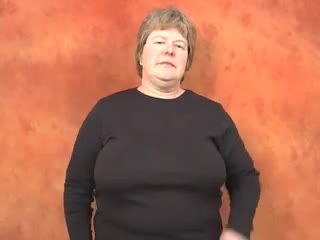
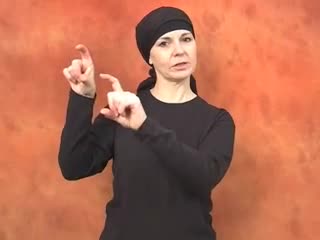
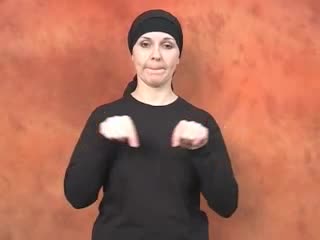
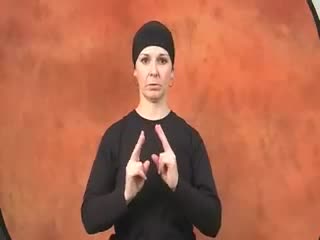
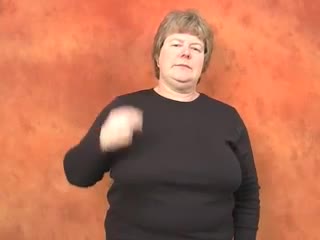
What Is the BSL Sign for "millimetre"?
Imagine needing to describe something incredibly small, a tiny increment that demands precision. That's precisely where understanding the BSL sign for millimetre becomes invaluable. This particular sign in British Sign Language represents the smallest common unit of length, a precise measurement you'll encounter in countless practical situations. It's a foundational piece of vocabulary for anyone discussing dimensions, crafting, or even just explaining the exact size of something petite. Learning the British Sign Language millimetre will unlock a richer layer of descriptive power in your signing, moving beyond general terms to specific, unambiguous detail.
How to Sign "millimetre" in British Sign Language - Step-by-Step
Mastering the millimetre sign in British Sign Language involves a series of subtle yet specific actions, focusing on clarity and precision in your hand movements.
Step 1: Handshape
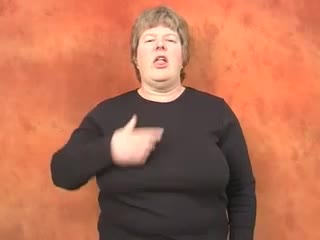
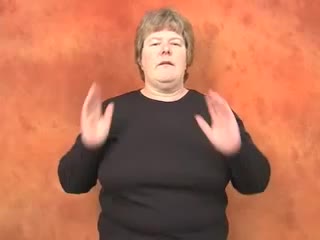
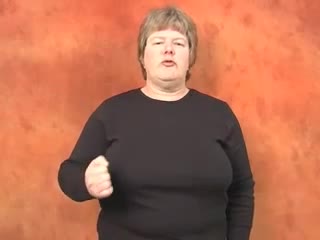
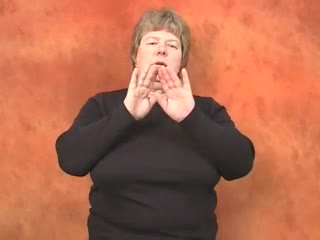
For this sign, you'll begin by forming a very specific handshape with your dominant hand. Extend your index finger straight up, keeping it quite rigid and pointed. Your thumb should rest across your palm, gently touching the side of your middle finger, which will be curled inwards along with your ring and pinky fingers. Essentially, you're making a tight "1" handshape, where only the index finger is extended, and it's held firmly.
Step 2: Hand Placement and Location
Now, place your dominant hand, with that precise index finger handshape, directly in front of your chest. The tip of your index finger should point upwards, roughly at shoulder height, or perhaps slightly lower, in what we call your neutral signing space. It shouldn't be too close to your body or too far away; imagine it resting comfortably in the air before you. Your non-dominant hand remains relaxed at your side, not involved in this particular sign.
Step 3: Movement
The movement for "millimetre" is quite distinct and conveys the idea of a tiny, precise measure. From its initial position, your dominant index finger makes a very small, short, and sharp downward flick. Think of it as a minuscule 'tap' downwards in the air, a quick, almost imperceptible dip and return. It's not a large sweep or a slow motion; instead, it's a brief, controlled, single movement downwards, immediately resetting to the initial position.
Step 4: Facial Expression and Mouthing
Non-manual features are absolutely vital in BSL, and for "millimetre," your facial expression should convey a sense of precision or smallness. Often, you might narrow your eyes slightly or purse your lips subtly, demonstrating focused attention on a tiny detail. Crucially, you should mouth the word "millimetre" clearly and naturally as you perform the sign. Mouthing the English word helps disambiguate the sign, particularly if there are similar signs for other small units, and it's a fundamental part of BSL's grammatical structure.
Step 5: Palm Orientation
Throughout this BSL sign, the palm of your dominant hand will consistently face inwards, towards your body. The back of your hand will be visible to the person you are communicating with. This orientation remains stable during the entire small flicking movement and is important because altering the palm's direction could inadvertently change the meaning or clarity of the sign, potentially confusing it with other signs that share a similar handshape but different orientations.
"millimetre" in BSL - Quick Reference Snapshot
- Handshape: Dominant hand, index finger extended, other fingers curled tightly, thumb resting on middle finger.
- Location: In neutral signing space, in front of the chest at shoulder height.
- Movement: A single, short, sharp downward flick of the index finger.
- Facial Expression: Slight narrowing of eyes or pursed lips, conveying precision or smallness.
- Dominant Hand: Performs the sign; non-dominant hand remains passive.
- Palm Orientation: Faces inwards, towards the signer's body.
5 Memorisation Tricks for the BSL Sign "millimetre"
- Visualise the Tiny Mark: Imagine your extended index finger as a tiny pencil, and the small downward flick is like making an incredibly precise, almost invisible mark on a ruler, representing a single millimetre. This visual connection to its meaning makes the BSL millimetre sign instantly more intuitive.
- The "One Tiny Unit" Drill: Practice the sign by focusing on the 'one' handshape of your index finger, then exaggerate the 'tiny' aspect of the flick. Perform the sign ten times, each time verbally reminding yourself, "This is for one small unit, one millimetre," building muscle memory tied directly to the concept.
- Connect to Measuring: Think about the context of using a millimetre – it's always about exact, small measurements. Associate the precise, controlled flick of your finger with the meticulous act of measuring something minute, reinforcing the sign's meaning through its real-world application.
- Avoid Confusion with "Small": A common mistake is to make the flick too large or too sweeping, potentially confusing it with the general sign for "small" or "tiny." Remember, the millimetre sign is about *precision* of a unit, not just general smallness; keep the movement exceptionally short and sharp to differentiate it.
- "Daily Detail" Practice: Throughout your day, whenever you notice something requiring a fine measurement – perhaps the thickness of a piece of paper, the gap in a window frame, or a tiny bead – mentally sign "millimetre" and perform the action. Integrating it into your observations will make it feel natural.
Real-Life Situations to Use the BSL Sign for "millimetre"
When you're communicating in British Sign Language, the sign for millimetre becomes incredibly useful for conveying specific details, especially in technical or descriptive contexts. Here are a few scenarios where you'd naturally employ this sign:
- Imagine you're discussing a DIY project: "The shelf needs to be adjusted by just a few millimetres." You'd sign SHELF ADJUST (millimetre, millimetre, millimetre) SLIGHTLY, using repetition of the sign to indicate multiple small adjustments.
- Perhaps you're at an optician: "The lens prescription requires a very specific pupil distance, measured in millimetres." You would communicate LENS PRESCRIPTION NEED PUPIL DISTANCE ACCURATE (millimetre) MEASURE.
- When describing a small object: "The crack in the phone screen is only one millimetre wide, but it's really annoying." Here, you'd sign PHONE SCREEN CRACK JUST ONE (millimetre) WIDE ANNOY. Notice how the sign for millimetre integrates naturally into numerical expressions.
- If you're asking for precise instructions: "How many millimetres should I cut off this piece of wood?" Your question would become WOOD CUT HOW MANY (millimetre) OFF? using an interrogative facial expression.
Top 3 Mistakes Learners Make Signing "millimetre" in BSL
Learning any sign involves refining your technique, and the sign for "millimetre" in BSL is no exception. Watch out for these common missteps, and you'll improve your clarity quickly:
- Over-Exaggerating the Movement: Many beginners tend to make the downward flick far too large or too slow. This can sometimes be confused with other signs indicating 'small' in a general sense, or even 'drop'. The correction is to keep the movement extremely compact and swift; think of it as a sharp, tiny 'tap' downwards, not a sweeping motion.
- Incorrect Handshape or Palm Orientation: Sometimes, learners might not curl their other fingers tightly enough, or they allow their thumb to stray from its position. Equally, letting the palm turn outwards or sideways significantly alters the sign's appearance. Ensure your index finger is isolated and firm, and your palm consistently faces your body, maintaining that precise, inward orientation.
- Neglecting Mouthing or Facial Expression: Forgetting to mouth "millimetre" or omitting the accompanying expression of precision is a frequent oversight. In BSL, non-manual features are not optional; they are integral to the sign's identity and grammatical function. Always remember to mouth the word clearly and adopt a focused, slightly narrowed-eye or pursed-lip expression to convey the specific meaning of a tiny, exact measurement.
Fascinating Facts About the BSL Sign for "millimetre"
Exploring the nuances of signs like "millimetre" reveals some intriguing aspects of British Sign Language and its rich tapestry.
- The sign for "millimetre" often uses an iconic motivation, with the isolated index finger visually representing a single, fine point of measurement, much like the smallest increment on a ruler. This direct visual link aids memorisation and makes the sign highly effective.
- While the core handshape and movement are widely understood across the BSL-using community, you might occasionally encounter slight regional variations in the precise height or subtle angle of the hand, though the fundamental structure remains consistent. These minor differences rarely impede understanding.
- It's quite distinct from simply fingerspelling "M-M," offering a much more efficient and natural way to communicate the concept within signed conversation. This efficiency is a hallmark of natural sign languages, prioritising speed and clarity over letter-by-letter translation.
- The emphasis on the small, sharp movement for "millimetre" showcases BSL's capacity to convey not just a concept, but also its inherent quality – in this case, the idea of minimal size and high accuracy, all within a single, concise gesture.
- This sign often serves as a base when discussing other metric measurements. While not directly related to the manual alphabet, its '1' handshape is a common component in many numerical signs, subtly reinforcing the idea of a singular unit.
"millimetre" in Deaf Culture - Community and Identity
The ability to communicate precise measurements like "millimetre" in British Sign Language isn't just about technical accuracy; it's a vital part of how Deaf people navigate and interact with their world. In a community that values clear, unambiguous communication, signs for specific units of measure allow for detailed discussions, whether it's planning a new piece of furniture, discussing architectural blueprints, or explaining a medical finding. It empowers Deaf individuals to articulate their needs and ideas with exactitude, ensuring nothing is lost in translation due to a lack of specific vocabulary. This precision in signing fosters independence and self-advocacy, reinforcing the community's capacity to communicate fully and effectively on every topic imaginable, from the grandest ideas to the tiniest, most precise details.
Example Conversations Using "millimetre" in BSL
Here are five practical examples demonstrating how "millimetre" can be integrated into everyday BSL conversations:
English: Could you move that picture frame up by just a few millimetres, please? - BSL structure: PICTURE FRAME UP (millimetre, millimetre) SLIGHTLY CAN YOU?
English: The gap in the door is exactly five millimetres too wide; we need to fix it. - BSL structure: DOOR GAP EXACTLY FIVE (millimetre) WIDE, WE NEED FIX.
English: My new ring is perfect, but I think it needs to be made smaller by one millimetre. - BSL structure: MY NEW RING PERFECT, BUT I THINK NEED SMALLER ONE (millimetre).
English: What's the recommended thickness for this material in millimetres? - BSL structure: THIS MATERIAL THICKNESS RECOMMENDED HOW MANY (millimetre)?
English: Be careful, the instructions say to cut off only two millimetres. - BSL structure: BE CAREFUL, INSTRUCTIONS SAY CUT OFF ONLY TWO (millimetre).
Frequently Asked Questions: The BSL Sign for "millimetre"
Is there a different BSL sign for "millimetre" in different regions of the UK?
While the core elements of the BSL sign for millimetre – the single extended index finger and the small flick – are widely consistent across the UK, you might observe minor stylistic differences in hand height or the exact angle of the flick in specific regional dialects. These variations are usually subtle and won't hinder understanding of the sign's meaning.
How does the BSL sign for "millimetre" differ from other signs for smallness, like "tiny" or "small"?
The BSL sign for millimetre specifically denotes a unit of measurement, conveying precision and an exact, albeit tiny, quantity. Signs like "small" or "tiny" are more general descriptors of size, often using different handshapes and movements that are more expansive or descriptive of overall dimensions, rather than a specific metric unit.
Is the BSL sign for "millimetre" suitable for beginners to learn?
Absolutely, the BSL sign for millimetre is an excellent sign for beginners to learn because it introduces the concept of precise handshapes and controlled movements crucial for many BSL signs. Mastering this sign helps build foundational skills in accuracy and understanding non-manual features early in your learning journey.
Can children learn and use the BSL sign for "millimetre" easily?
Yes, children can readily learn and use the BSL sign for millimetre. Its clear handshape and simple, repetitive movement make it accessible, and linking it to measuring toys or small objects helps them grasp the concept of tiny units. It's a practical sign for encouraging descriptive communication in young learners.
How does the BSL sign for "millimetre" compare to its equivalent in American Sign Language (ASL)?
While both BSL and ASL have ways to communicate "millimetre," their signs are typically distinct due to the independent development of each language. ASL often uses a modified 'F' handshape or a fingerspelled 'MM' in contexts where BSL would employ its unique, specific sign for millimetre, highlighting the linguistic differences between the two sign languages.
Signs That Pair Naturally with "millimetre" in BSL
Understanding how signs connect to each other helps build your vocabulary systematically and naturally. Here are some BSL signs that frequently appear alongside "millimetre":
- CENTIMETRE: This is an obvious pairing, as you'll often discuss these two units of measurement together, one being ten times larger than the other. Learning them side-by-side helps distinguish between precise scales.
- METRE: Continuing the metric theme, knowing the sign for "metre" extends your ability to discuss length and distance across various scales, from the very small to larger dimensions.
- MEASURE: The general sign for "measure" is crucial, as "millimetre" is a specific unit used within the broader act of measuring or taking dimensions.
- THICK / THIN: When describing the thickness of an object in millimetres, these signs become essential companions, allowing you to quantify the depth or lack thereof.
- SMALL / TINY: While different in meaning, these general size descriptors often precede or follow a precise "millimetre" measurement to add emphasis or provide context for the object's overall scale.
- ADJUST: If something needs to be moved or changed by a minimal amount, you'll use "adjust" alongside "millimetre" to indicate a fine-tuning rather than a major alteration.
Building Fluency: How to Practise "millimetre" in BSL
To truly embed the BSL sign for millimetre into your active vocabulary, consistent and thoughtful practice is key. Start by performing the sign in front of a mirror, paying close attention to your handshape, the precise, small flick, and your palm orientation; notice if your facial expression conveys precision. Try integrating the sign into your daily life by observing objects around you and mentally signing their approximate dimensions in millimetres. Film yourself signing a few sentences that include "millimetre" and then review the footage, critically assessing your clarity and natural flow. The best way to build genuine fluency is to find a Deaf conversation partner or join a local BSL group; using the sign in real-time dialogue will cement your understanding and comfort with it. Don't rush; spaced repetition over several days, rather than intense cramming, will help solidify this valuable sign in your memory.