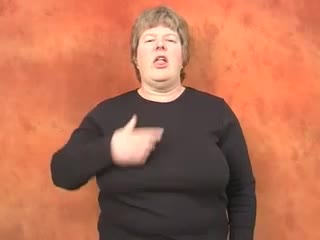
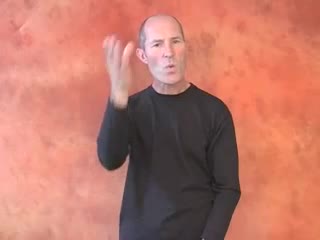
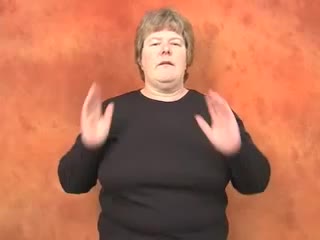
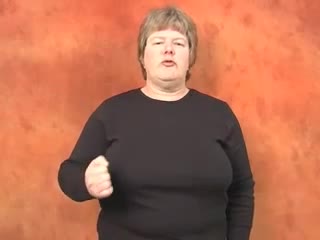
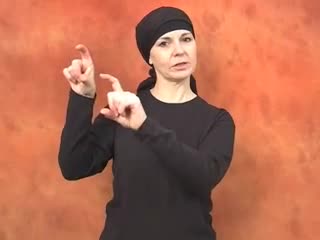
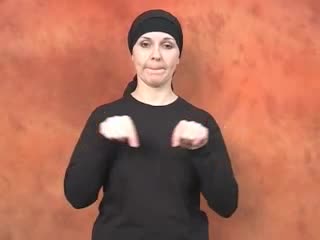
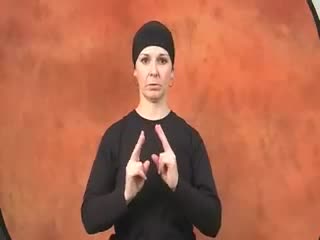
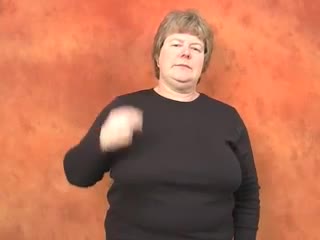
What Is the BSL Sign for "plank"?
Welcome, fellow sign language enthusiasts and learners, to SignDeaf.com! We are thrilled to guide you through another essential sign in British Sign Language. Today, we're focusing on the BSL sign for "plank". Whether you're a builder, a DIY enthusiast, or simply describing a scene, knowing how to sign "plank" is incredibly useful for clear communication within the Deaf community. This sign represents a long, flat piece of timber, a fundamental element in construction and everyday descriptions. Mastering the British Sign Language plank sign will enhance your vocabulary and help you connect more effectively, whether you are Deaf yourself or learning BSL to bridge communication gaps.
How to Sign "plank" in British Sign Language - Step-by-Step Guide
Let's break down the sign for "plank" into easy-to-follow steps, ensuring you can learn how to sign plank in BSL with precision.
Step 1: Handshape
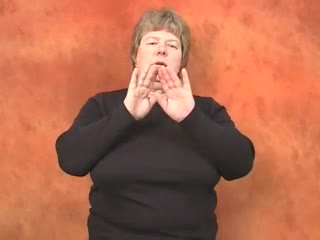
For the BSL sign for "plank", you will primarily use both hands in what is known as a "B" handshape. To form this, extend all four fingers (index, middle, ring, and pinky) straight upwards and keep them pressed tightly together. Your thumb should be tucked across your palm, resting against the side of your index finger or slightly below it. Both hands should maintain this flat, rigid "B" handshape throughout the sign. This handshape is crucial as it visually represents the flat, solid surface of a plank.
Step 2: Hand Position and Location
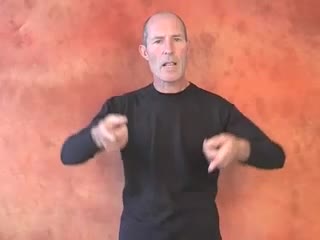
Begin by positioning your non-dominant hand. Keep it in the "B" handshape, with your palm facing upwards, creating a flat, stable surface in front of your upper abdomen or lower chest area. This non-dominant hand will act as the metaphorical ground or a supporting surface upon which the plank is "placed." Your dominant hand, also in the "B" handshape, should start positioned just above the heel of your non-dominant hand, with its palm facing downwards. The fingertips of both hands should generally be pointing forward, away from your body.
Step 3: Movement
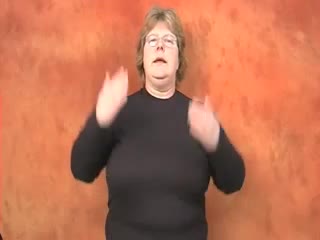
The movement for the BSL plank sign is clear and deliberate. From its starting position, your dominant hand (still in the flat "B" handshape and palm-down orientation) moves smoothly and directly forward, extending horizontally past the fingertips of your non-dominant hand. The movement should be a single, controlled sweep, mimicking the action of laying a long, flat object or indicating its linear extent. The speed should be moderate and consistent, concluding with a firm stop to denote the end of the plank. There is no arc or wrist rotation; the movement is purely linear to convey length and flatness.
Step 4: Non-Manual Features (Facial Expression & Mouthing)
Non-manual features are grammatically essential in BSL and convey significant meaning, even for a simple noun like "plank." For this sign, a neutral yet firm or deliberate facial expression is typically used, reflecting the solid and unyielding nature of a plank. There is generally no specific mouthing required for "plank" itself, but you might mouth the English word "plank" if it helps clarify context, especially when first introducing the sign or if you are speaking simultaneously. Head position usually remains neutral, looking towards the person you are communicating with.
Step 5: Palm Orientation
Throughout the BSL sign for "plank," the palm orientation remains consistent and vital for conveying the visual meaning. Your dominant hand, forming the "plank," will maintain a palm-down orientation from start to finish. Conversely, your non-dominant hand, acting as the base or surface, will maintain a palm-up orientation. This contrasting palm orientation between the two hands vividly illustrates the flat, horizontal nature of the object being described.
Quick Reference: "plank" BSL Sign at a Glance
- Handshape: Both hands in a flat "B" handshape (fingers extended and joined, thumb tucked).
- Location: Non-dominant hand flat, palm up, in front of body; dominant hand above it.
- Movement: Dominant hand moves smoothly forward over non-dominant hand, then stops.
- Facial Expression: Neutral to firm/deliberate.
- Dominant Hand: Moves to represent the plank.
5 Tips to Learn the BSL Sign for "plank" Quickly
- Visualise the Object: Connect the sign directly to the physical appearance of a plank. Imagine you are actually laying a long, flat piece of wood. The flat "B" handshape perfectly represents the surface, and the forward movement shows its length. This strong visual association will help you recall the sign for "plank" more readily.
- Focus on the Two-Hand Interaction: Understand the distinct roles of each hand. The non-dominant hand serves as a stable base, while the dominant hand performs the action of showing the plank. Practising this interaction, rather than just the dominant hand's movement, reinforces the complete meaning of the sign and helps solidify the British Sign Language plank in your memory.
- Use Repetition with Purpose: Don't just repeat the sign mindlessly. Each time you practise, consciously think about the shape, location, and movement. Say the word "plank" aloud as you sign it, and try to picture a real plank. This mindful repetition is far more effective for long-term retention of how to sign plank in BSL.
- Practice in Context: Integrate the sign into simple sentences as soon as you feel comfortable. Think about scenarios where you would naturally use the word "plank" – perhaps describing furniture, a construction site, or a pirate ship! Using the BSL plank sign in context helps you remember its meaning and application.
- Break It Down and Build Up: If the sign feels complex, practise each step individually. Master the handshape, then the starting position, then the movement, and finally, combine them. Once you're comfortable with the individual components, bringing them together will feel much more natural and cohesive, making it easier to learn plank BSL.
When and How to Use the BSL Sign for "plank"
The BSL sign for "plank" is versatile and can be used in various everyday contexts, especially when discussing construction, carpentry, or simply describing objects. Here are a few scenarios:
- Construction and DIY: This is the most common use. You might sign "plank" when talking about building a shed, repairing a fence, or laying down floorboards. For example, you could sign "NEED MORE PLANK" to communicate a requirement for materials.
- Describing Objects and Furniture: The sign can be used to describe components of furniture or other items made of wood. You might sign "TABLE MADE-FROM PLANK" to indicate its construction, or describe a "LONG PLANK" for a shelf.
- Outdoor and Nature Descriptions: If you're talking about a wooden bridge, a boardwalk, or even a fallen log that resembles a plank, this sign is appropriate. You could sign "WALK-ON PLANK" to describe crossing a narrow wooden path.
- Figurative Language (e.g., "Walk the Plank"): While BSL is highly visual and often avoids direct translation of English idioms, the sign for "plank" can be incorporated into more complex BSL phrases to convey concepts like "walk the plank" in a pirate context, often accompanied by other signs for "walk" and a narrative movement. Grammatically, BSL often places the noun (plank) before the verb or adjective, using spatial grammar to indicate relationships.
Common Mistakes When Signing "plank" in BSL - And How to Fix Them
Learning any new sign can present challenges, and "plank" is no exception. Here are some common errors beginners make and how to refine your technique to master the BSL plank sign.
- Incorrect Handshape:
- Error: Often, learners might use a "5" handshape (fingers spread) or a "flat O" handshape instead of the precise "B" handshape. This can make the sign less clear or even confuse it with other signs that use different flat handshapes.
- Why it Happens: The "B" handshape requires keeping fingers tightly together, which can feel unnatural at first.
- Correction: Consciously press your fingers together and tuck your thumb firmly. Practice forming the "B" handshape repeatedly until it feels natural and strong. This solid, flat hand is key to accurately representing a plank.
- Wavy or Non-Linear Movement:
- Error: Instead of a straight, deliberate forward motion, some beginners might make the dominant hand move in a slightly wavy line, or even an arc.
- Why it Happens: A lack of focus on the precise direction and control of the movement.
- Correction: Emphasise a strictly horizontal, linear movement. Imagine you are drawing a perfectly straight line with your dominant hand. Practise moving your hand as if it's gliding along a straight edge, maintaining a steady speed and stopping firmly to convey the rigidity and straightness of the plank.
- Incorrect Palm Orientation or Location:
- Error: The dominant hand's palm might turn sideways, or the non-dominant hand might not be flat and palm-up, or the hands might be too far apart or too close together at the start.
- Why it Happens: Forgetting the specific spatial relationship and orientation of the hands, which is crucial for visual clarity in BSL.
- Correction: Always ensure your dominant hand's palm faces down and your non-dominant hand's palm faces up. Start with your dominant hand closely above your non-dominant hand to establish the base, then execute the forward movement. Regularly check your palm orientations in a mirror to ensure they are correct throughout the sign.
"plank" in BSL - Fun Facts and History
- Iconic Representation: The BSL sign for "plank" is highly iconic, meaning it visually represents the object it describes. The flat handshape and linear movement directly mimic the appearance and action associated with a plank of wood, making it relatively intuitive for new learners to grasp the BSL sign for plank.
- Commonality Across UK: While BSL has regional variations, the core concept of showing a flat, linear object like a plank tends to be quite consistent across different regions of the UK. The specific handshapes and general movement for this sign are widely understood, though slight stylistic differences in speed or emphasis might occur between, say, London BSL and Scottish BSL.
- Connection to "Flat" and "Long" Concepts: The sign for "plank" shares foundational elements with other BSL signs that describe flat surfaces or elongated objects. The "B" handshape is a common component in signs like "TABLE," "SHELF," or "WALL," demonstrating BSL's efficient use of core handshapes to build a rich vocabulary. Learning "plank" can therefore provide a gateway to understanding a family of related signs.
- Evolution of Simplicity: Many practical BSL signs, especially those for tangible objects, have evolved towards simplicity and clarity. The current sign for "plank" is a straightforward and unambiguous representation, likely streamlined over generations of use within the Deaf community to be easily understood and executed. This makes it an excellent sign for those who learn plank BSL.
- Beyond Wood: While primarily referring to a wooden plank, the fundamental visual representation of a long, flat object can, in context, be adapted or understood to refer to other similar materials or forms in a more descriptive sense, highlighting the visual flexibility inherent in British Sign Language.
"plank" in Deaf Culture and BSL Community
In Deaf culture and the BSL community, clear and precise communication is paramount, especially when describing the physical world. The sign for "plank" exemplifies this need for visual clarity. Whether discussing home renovations, describing a construction project, or sharing stories about nature, the ability to accurately sign objects like a "plank" allows for rich and detailed conversations. Deaf individuals often rely on visual cues and detailed descriptions to convey information that hearing people might take for granted. This sign, therefore, isn't just a word; it's a tool for building shared understanding of environments and objects. It reinforces the visual-spatial nature of BSL, where shapes, sizes, and movements are expertly communicated through handshapes and gestures, fostering a deep connection within the community through shared visual language.
Example Sentences Using "plank" in BSL
Here are five practical example sentences showing how to use the BSL sign for "plank" in context:
English sentence: We need a long plank for the new shelf. - BSL structure: SHELF NEW, PLANK LONG, WE NEED.
English sentence: The builders laid down many planks yesterday. - BSL structure: BUILDERS YESTERDAY, PLANK MANY, LAY-DOWN.
English sentence: Be careful, that plank is old and might break. - BSL structure: PLANK THAT OLD, CAREFUL, BREAK MAYBE.
English sentence: Can you cut this plank in half for me? - BSL structure: PLANK THIS, HALF CUT, YOU CAN?
English sentence: He used a strong plank to cross the ditch. - BSL structure: DITCH CROSS, HE USE PLANK STRONG.
Frequently Asked Questions About the BSL Sign for "plank"
Is this sign the same everywhere in the UK?
While BSL does have regional variations, the sign for "plank" is quite consistent across the UK. Its iconic nature (visually representing the object) means there's less room for significant deviation, unlike some more abstract concepts. You might see minor stylistic differences, but the core handshape and movement for the BSL sign for plank are generally understood universally.
How is this sign different from similar signs?
The sign for "plank" uses two "B" handshapes with a specific linear movement. It's distinct from signs like "WOOD" (which might involve a 'W' handshape or a chopping motion), "TABLE" (which typically outlines a flat surface with both hands), or "SHELF" (which often involves showing a horizontal surface extending from a wall). The specific combination of handshapes, location, and linear forward movement makes the BSL plank sign unique.
Is this suitable for beginners?
Absolutely! The BSL sign for "plank" is an excellent sign for beginners. Its iconic nature and relatively simple, clear movement make it easy to learn and remember. Mastering this sign helps build foundational BSL vocabulary for describing objects and environments, making it a great addition for anyone learning how to sign plank in BSL.
Can I use this sign with Deaf children?
Yes, this sign is perfectly suitable for use with Deaf children. Children often respond well to iconic signs that visually represent objects. When teaching children, you can make it fun by incorporating it into games, describing toys made of wood, or reading stories involving building and construction. Encourage them to practice and engage with the sign visually.
Where can I practise this sign?
You can practise the BSL sign for "plank" in many ways! Use a mirror to check your handshapes and movements, or film yourself to review your technique. Practising with a Deaf friend, a BSL tutor, or at a local Deaf club or BSL class is invaluable for feedback. You can also find online BSL resources and apps that provide videos to ensure your sign is accurate and natural.
Related BSL Signs to Learn Alongside "plank"
Learning related signs in clusters can significantly boost your BSL fluency. Here are some signs that naturally complement the BSL sign for "plank":
- WOOD: Essential for context, often signed by tapping an 'X' handshape on the side of the dominant hand or by 'chopping' with a flat hand. Learning "wood" alongside "plank" helps clarify the material.
- BUILD: A foundational sign often using stacked 'B' or 'C' handshapes. If you're talking about planks, you're often talking about building something, so this is a natural pairing.
- NAIL: Typically signed by tapping an 'X' handshape or a pointed index finger against the non-dominant palm, then a hammering motion. Planks are often joined with nails.
- SAW: Signed by moving a 'V' handshape (representing teeth) across the non-dominant arm or mimicking a sawing action. Crucial for discussing how planks are prepared.
- LONG: Signed by extending both index fingers outwards from each other. This adjective frequently accompanies "plank" to describe its dimension.
- FLAT: Often signed with both "B" handshapes moving horizontally apart. This concept is inherent in the "plank" sign and reinforces its visual meaning.
How to Practise the BSL Sign for "plank" Effectively
To truly master the BSL sign for "plank" and make it a natural part of your signing vocabulary, consistent and effective practice is key. Start by using a mirror: carefully watch your handshapes, positions, and movements, comparing them to the step-by-step guide. Filming yourself is also incredibly helpful, allowing you to objectively review your technique and identify any areas for improvement. Crucially, try to use the BSL plank sign in real sentences and conversations, even if it's just narrating your day to yourself. If possible, practise with a Deaf person or a BSL fluent individual who can provide valuable feedback. Daily repetition, even for just a few minutes, will build muscle memory and confidence, ensuring that when you need to sign "plank" in British Sign Language, it comes naturally and clearly.