What Is the BSL Sign for "machine"?
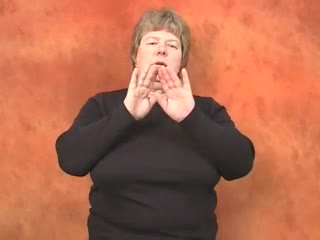
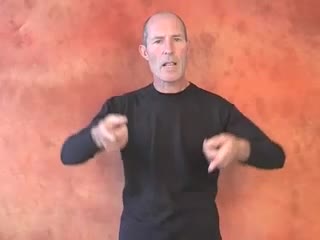
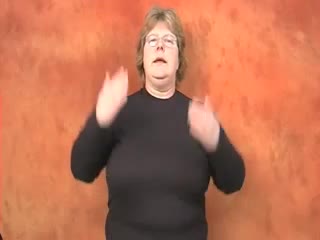
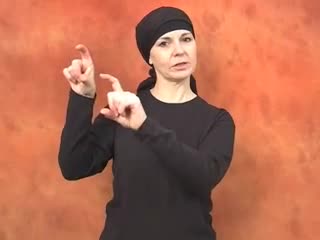
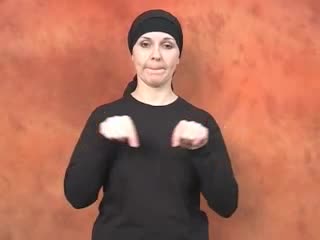
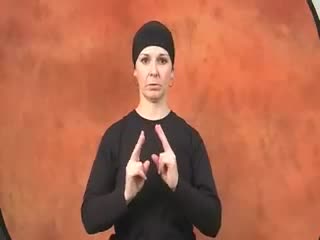
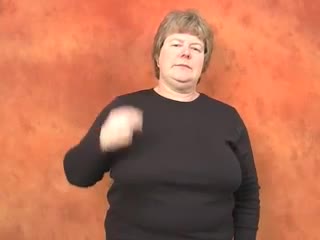
Ever wondered how to talk about all the amazing contraptions around us in British Sign Language? The BSL sign for machine is a wonderfully visual representation, capturing the essence of gears and moving parts with an elegant, almost balletic motion. This isn't just a simple gesture; it's a dynamic sign that truly brings the concept of intricate workings to life. Understanding this particular sign unlocks a whole vocabulary related to technology, mechanics, and everyday objects, making it a foundational piece in your British Sign Language machine learning journey.
How to Sign "machine" in British Sign Language - Step-by-Step
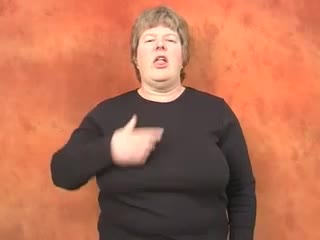
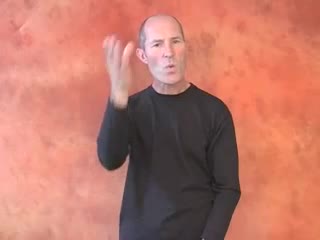
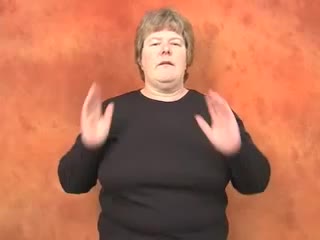
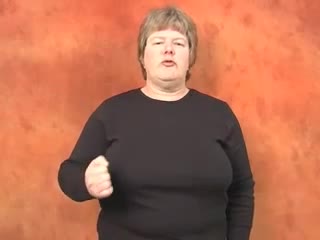
Learning to sign "machine" properly involves a careful coordination of handshape, placement, and movement, each element contributing to its clear meaning.
Step 1: Handshape
Begin by forming a specific handshape with both of your hands. Extend your index finger and middle finger outwards, keeping them slightly spread apart, almost like a 'V' shape or two spokes. Curl your ring finger and little finger tightly into your palm, securing them with your thumb. This precise configuration should be maintained throughout the sign for both hands.
Step 2: Hand Placement and Location
Position both of your hands in the neutral signing space directly in front of your torso, around chest height. Your dominant hand will be slightly above and in front of your non-dominant hand, ready to interact. Ensure there's enough room for both hands to move freely without touching your body or each other unnecessarily.
Step 3: Movement
Now, initiate a simultaneous, circular movement with both hands. Your dominant hand performs a small circular motion forward, while your non-dominant hand performs a small circular motion backward. Imagine two gears meshing and turning in opposite directions. Repeat this opposite circular motion two or three times smoothly and continuously, depicting the ongoing operation of machinery.
Step 4: Facial Expression and Mouthing
Maintain a neutral facial expression when signing "machine"; typically, there's no strong emotion attached to this concept unless specified by context. Accompanying the sign, you should mouth the word "machine" clearly, or a shortened version like "m/c". This mouthing provides crucial phonetic information and reinforces the lexical item for both the signer and the viewer.
Step 5: Palm Orientation
Throughout the sign's movement, the palms of both hands generally face each other, or are angled slightly inward towards your body. This orientation helps to convey the sense of internal, interworking components. The angle might subtly shift as the hands rotate, but the general facing-each-other direction remains consistent, reinforcing the iconic representation of gears engaging.
"machine" in BSL - Quick Reference Snapshot
- Handshape: Both hands form 'V' shape (index and middle fingers extended, spread).
- Location: Neutral space, in front of the chest.
- Movement: Both hands perform small, opposite circular motions simultaneously.
- Facial Expression: Neutral, with mouthing of "machine" or "m/c".
- Dominant Hand: Works in tandem with non-dominant hand, typically slightly above.
- Palm Orientation: Palms generally face each other.
5 Memorisation Tricks for the BSL Sign "machine"
- Visual Mnemonic: Picture the 'V' handshape on both hands as two cogs or gears. As you sign, visualise them turning against each other, just like the internal workings of an engine. That mental image helps cement the opposing circular motion.
- Muscle-Memory Drill: Try closing your eyes and just focusing on the sensation of your fingers and wrists. Repeat the movement slowly, feeling the slight tension in your index and middle fingers as they stay extended, and the smooth rotation of your wrists. This helps build the physical memory for the sign.
- Connection to Meaning: Think about the core function of a machine: it's about interconnected parts working in harmony to perform a task. The circular, opposing motion perfectly embodies this, representing the endless cycle of mechanical operation.
- Common-Confusion Tip: A lot of people initially struggle with the opposing direction of the circles. Remember, if both hands circled the same way, it wouldn't look like gears meshing; it would look more like stirring. Focus on one hand moving forward, the other backward, for that authentic mechanical feel.
- Daily-Life Practice Idea: Whenever you see an appliance, a vehicle, or any device with moving parts, consciously make the BSL sign for "machine". Whether it's a washing machine, a car engine, or even a simple clock, relate the sign directly to the object.
Real-Life Situations to Use the BSL Sign for "machine"
You'll find the sign for "machine" incredibly versatile in everyday conversations, popping up in many contexts.
- Imagine you're discussing a faulty appliance; you might sign, "MY WASHING MACHINE BROKEN" (MY WASHING MACHINE BROKEN), with "BROKEN" following the sign for "machine".
- Perhaps you're explaining a complex device to someone. You could ask, "WHAT THIS MACHINE DO?" (WHAT THIS MACHINE DO?), using a questioning facial expression and tilting your head slightly.
- When talking about factory settings, you might describe, "FACTORY MANY MACHINE" (FACTORY MANY MACHINE), indicating a large number of machines operating.
- If you're making a comparison, you might say, "MY COMPUTER OLD MACHINE" (MY COMPUTER OLD MACHINE), showing how you perceive its dated technology.
Top 3 Mistakes Learners Make Signing "machine" in BSL
Even experienced signers remember the common pitfalls when first learning a new sign; here are three that often trip up learners with "machine."
- Incorrect Handshape Consistency: A frequent error involves not keeping the index and middle fingers consistently extended and spread. Learners sometimes let their fingers drift together or curl slightly, which distorts the iconic 'gear' look. To correct this, consciously practise holding the 'V' shape firmly throughout the entire movement, ensuring your fingers remain distinct and separated.
- Non-Opposing Movement: Many beginners make both hands circle in the same direction, or perform a simple up-and-down motion. This completely misses the central concept of interworking parts. The solution is to deliberately focus on one hand rotating clockwise and the other counter-clockwise, establishing that crucial opposing motion from the start.
- Lack of Spatial Awareness: Sometimes people sign "machine" too close to their body, or with their hands too far apart, losing the visual cohesion. The sign needs to be performed within a focused, compact space in front of your chest, allowing the two hands to clearly interact as a single unit without bumping or being excessively spread. Practise in front of a mirror to ensure your hands are positioned optimally.
Fascinating Facts About the BSL Sign for "machine"
The BSL sign for "machine" holds several interesting facets that reveal much about the language's structure and history.
- This sign is highly iconic, meaning its form visually resembles what it represents. The two 'V' handshapes rotating in opposite directions are a direct, intuitive depiction of meshing gears, making its meaning often transparent to new learners.
- While BSL has regional variations for many signs, the sign for "machine" is remarkably consistent across the BSL-using community throughout the UK. This widespread uniformity makes it a very reliable sign to learn and use.
- Its strong iconic motivation means it's less likely to be confused with other signs that rely more on arbitrary forms or abstract concepts, making it a relatively straightforward sign to acquire early on.
- The interaction between the two hands in "machine" is a beautiful example of how BSL uses spatial grammar and simultaneous action to convey meaning. Both hands perform distinct but coordinated movements, creating a complex visual message.
- Unlike some signs that have clear historical links to older forms or influences from other languages, the origin of "machine" appears deeply rooted in its visual representation of mechanical function, a testament to BSL's inherent expressiveness.
"machine" in Deaf Culture - Community and Identity
The concept of "machine" resonates within the Deaf community, often touching upon themes of accessibility, independence, and technological advancement. For Deaf individuals, machines can represent both opportunities and challenges; think about how hearing aids, cochlear implants, or communication devices like videophones leverage technology to connect. Yet, there's also the historical context where machines, like telephones or public address systems, were often inaccessible. Today, the sign for "machine" might be used in discussions about assistive technologies, the latest gadgets, or even the complex systems that power a Deaf-led organisation. It speaks to the ongoing interaction between human ingenuity and the evolving needs and experiences of the Deaf community.
Example Conversations Using "machine" in BSL
Here are five practical ways you might encounter or use the sign for "machine" in real BSL conversations.
English: My washing machine broke down yesterday. - BSL structure: Topic-Comment structure, with "YESTERDAY" often placed at the beginning for time reference: YESTERDAY MY WASHING MACHINE BROKEN.
English: Can you show me how this coffee machine works? - BSL structure: Question formation with raised eyebrows and forward lean: THIS COFFEE MACHINE HOW WORK YOU SHOW ME?
English: The factory has many complex machines. - BSL structure: Adjective placed after the noun, quantifying with "MANY": FACTORY MACHINE MANY COMPLEX.
English: This new machine saves so much time. - BSL structure: Focus on the benefit, using "SAVE" and "TIME": NEW MACHINE TIME SAVE SO MUCH.
English: Is this machine suitable for a small business? - BSL structure: Question about suitability, often with "FIT" or "SUITABLE": THIS MACHINE SMALL BUSINESS FIT?
Frequently Asked Questions: The BSL Sign for "machine"
Is there a specific regional variation for the BSL sign for "machine"?
The good news is, the BSL sign for "machine" is remarkably consistent throughout the UK. While many signs have regional differences, this particular sign is widely understood and used in the same form from Scotland to the south coast, making it a reliable addition to your vocabulary. You won't typically encounter significant variations for this specific concept.
Are there any similar BSL signs I might confuse with "machine"?
Because of its distinctive two-handed, opposing circular movement, "machine" is generally quite unique and hard to confuse with other BSL signs. However, some learners might initially muddle it with signs involving simple rotation or two-handed actions, so always pay close attention to the specific 'V' handshape and the precise opposing movement to keep it clear.
Is the BSL sign for "machine" suitable for beginners to learn?
Absolutely, this is an excellent sign for beginners! Its iconic nature, directly representing gears, makes it quite intuitive and easy to remember compared to more abstract signs. Mastering "machine" early on helps build confidence and introduces you to the crucial element of two-handed, interacting signs.
Can children easily learn the BSL sign for "machine"?
Children often grasp the BSL sign for "machine" very quickly because of its clear visual representation. They tend to enjoy mimicking the gear-like motion, and connecting it to toys or everyday appliances like a blender or a toy car makes it highly engaging for young learners. It's a fantastic sign for introducing mechanical concepts.
How does the BSL sign for "machine" compare to the sign for it in other sign languages?
Interestingly, many sign languages around the world, including American Sign Language (ASL), often use highly iconic signs for "machine" that similarly depict meshing gears or moving parts. While the specific handshapes or exact movements might vary slightly, the underlying visual metaphor of intertwined mechanical motion is frequently shared across different sign languages, showcasing a universal human understanding of this concept.
Signs That Pair Naturally with "machine" in BSL
Building your BSL vocabulary effectively means learning signs in clusters that relate to each other conceptually. Here are some signs that naturally pair with "machine":
- TOOL: Often signed with an 'F' handshape making a repeated striking motion against the palm, connecting to the idea of instruments used with machines.
- FACTORY: Typically involves outlining a building shape and then showing internal activity, linking to places where machines are heavily used.
- TECHNOLOGY: Often signed by touching the temple and then moving the hand forward, representing innovation and the broader context of machinery.
- FIX/REPAIR: Signed by twisting dominant thumb and forefinger together, which is highly relevant when discussing a broken machine.
- ENGINE: Can be similar to "machine" but with a more intense, rhythmic pumping motion, referring to the heart of a mechanical system.
- ROBOT: Often involves a specific handshape mimicking a robotic arm or movement, directly relating to automated machines.
Building Fluency: How to Practise "machine" in BSL
To truly embed the BSL sign for "machine" into your active vocabulary, consistent and varied practice is key. Start by using a mirror; this allows you to observe your own handshapes and movements, ensuring your 'V' is crisp and your circular motions are accurately opposing. Don't be afraid to film yourself signing this, then watch it back critically – you'll quickly spot any subtle adjustments needed. Integrate "machine" into your daily BSL conversation practice; try to describe objects around your house or workplace, consciously thinking of their mechanical nature. For instance, describe your computer as a "clever machine" or your blender as a "kitchen machine." Perhaps the most impactful method is to find a Deaf conversation partner; they can provide invaluable real-time feedback and context. Remember, spaced repetition is your friend: practice the sign for a few minutes each day over several days rather than cramming it all at once. You'll build that muscle memory and confidence, making "machine" feel completely natural in your BSL communication.