What Is the BSL Sign for "file"?
Have you ever needed to talk about important documents, digital records, or those organised folders filled with paperwork? Understanding how to express this concept clearly in British Sign Language is incredibly helpful. This particular BSL sign for file doesn't just represent a physical object; it also encompasses the idea of a digital container for information or a collection of data. You'll find this British Sign Language file sign proves remarkably versatile, appearing in many everyday conversations and professional contexts. It's a foundational piece of vocabulary that truly empowers your communication within the Deaf community.
How to Sign "file" in British Sign Language - Step-by-Step
Let's meticulously unpack the process for forming the British Sign Language sign for "file", focusing on each crucial element to ensure accuracy.
Step 1: Handshape
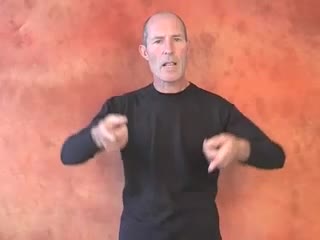
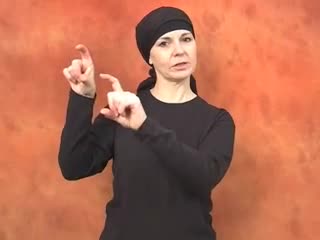
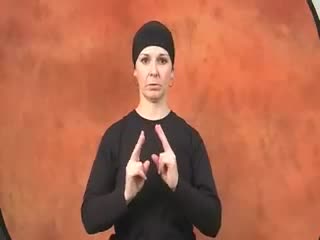
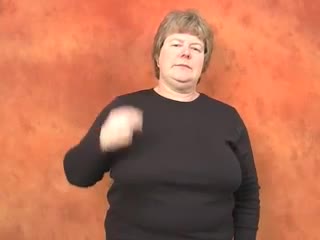
For this sign, you'll primarily use your dominant hand. Start by extending your index finger straight upwards, pointing towards the ceiling. Now, gently place your thumb against the side of your extended index finger. Ensure your remaining three fingers (middle, ring, and pinky) are comfortably curled inwards, resting against your palm. This specific configuration creates a distinct and easily recognisable handshape vital for the sign's clarity.
Step 2: Hand Placement and Location
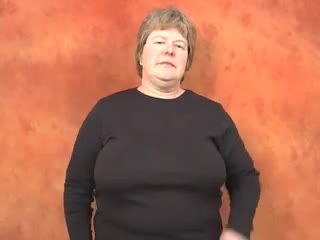
Your non-dominant hand plays an equally important, albeit static, role here. Position your non-dominant hand flat, with all fingers held together and your thumb tucked neatly against your palm. The palm of this hand should face upwards, creating a flat, stable surface. Now, bring your dominant hand, already in the correct handshape, to rest just above the centre of your non-dominant palm, as if hovering directly over a stack of documents.
Step 3: Movement
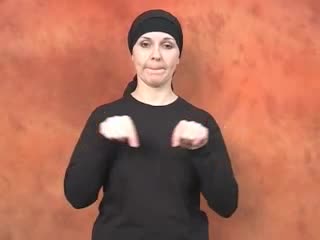
With your dominant hand positioned as described, execute a single, smooth, and deliberate movement. Move your dominant hand downwards and slightly forward, gently brushing or tapping the surface of your non-dominant palm as it moves. Imagine pulling a single item from a stack or sliding a folder out from a neat pile. The motion should be fluid, not jerky, conveying the action of retrieving something.
Step 4: Facial Expression and Mouthing
While the sign for "file" doesn't inherently demand a specific dramatic facial expression, maintaining a neutral or inquisitive look is generally appropriate for its common usage. For enhanced clarity, especially when learning how to sign file in BSL, it's often beneficial to mouth the word "file" silently as you make the sign. Mouthing provides crucial phonetic information, assisting with word recognition and helping to differentiate homonyms in British Sign Language, serving as a vital grammatical component for precise communication.
Step 5: Palm Orientation
Throughout the initial positioning and subsequent movement of your dominant hand, its palm should primarily face downwards, or slightly towards your non-dominant hand, as you prepare to perform the pulling action. The non-dominant hand's palm, by contrast, consistently faces upwards, providing the stable base. This orientation helps to visually convey the act of interacting with a flat surface or a stack of items.
"file" in BSL - Quick Reference Snapshot
- Handshape: Dominant hand, index finger extended, thumb resting against its side, other fingers curled.
- Location: Dominant hand positioned just above the palm of the non-dominant hand.
- Movement: Dominant hand moves downwards and slightly forward, brushing or tapping the non-dominant palm.
- Facial Expression: Typically neutral, adapting to conversational context.
- Dominant Hand: Performs the primary action and handshape.
- Palm Orientation: Dominant palm faces downwards/inwards; non-dominant palm faces upwards.
5 Memorisation Tricks for the BSL Sign "file"
- Visual Mnemonic: Picture your dominant hand, with its extended index and thumb, as the small tab sticking out from a physical document file. Your non-dominant hand then becomes the stack of other files or the open drawer from which you're selecting this particular one.
- Muscle-Memory Drill: Perform the sign slowly and deliberately ten times in a row, focusing intensely on the tactile sensation of your index finger and thumb forming the handshape. Then, repeat the smooth downward and forward motion, really feeling the connection between your dominant and non-dominant hands.
- Meaning Connection: Associate the action of pulling your dominant hand downwards and forward with the specific English meaning of "retrieving a file" from a physical storage system. This direct link between the physical motion and the concept can solidify your understanding of the file sign language.
- Common-Confusion Tip: Be mindful not to confuse this sign with others that use a similar handshape, such as "finish" or "find," which involve different movements or locations. The key differentiator for "file" is that distinct downward-forward pull against the non-dominant palm.
- Daily-Life Practice Idea: Every time you open a folder on your computer, physically handle a document, or even see a filing cabinet, make the BSL file sign. Integrate this practice into your routine activities; it transforms passive observation into active learning.
Real-Life Situations to Use the BSL Sign for "file"
Here are a few practical scenarios illustrating how you might naturally integrate the BSL sign for file into your daily conversations:
- Imagine you're at work and you need to ask a colleague for a specific document. You might sign, "YOU HAVE PROJECT FILE, PLEASE?" using a questioning facial expression and leaning slightly forward.
- Perhaps you're discussing digital organisation with a friend; you could comment, "MY COMPUTER MANY FILE, NEED ORGANISE," indicating a large quantity of digital files.
- Talking about administrative tasks, you might explain, "I MUST FILE ALL THESE PAPERS TODAY," clearly indicating the act of sorting and placing documents.
- If you're instructing someone to retrieve something, you could direct them: "GO GRAB THAT RED FILE, OVER THERE," incorporating spatial grammar to point towards the file's location.
Top 3 Mistakes Learners Make Signing "file" in BSL
Learning any sign language involves common hurdles, and the sign for "file" is no exception. Here are the three most frequent errors beginners encounter and how to correct them effectively.
- Incorrect Handshape Confusion: Many learners mistakenly form a 'G' handshape (index finger extended, thumb extended, other fingers curled) or a 'T' handshape (thumb tucked between index and middle finger) instead of the precise index-and-thumb formation. This error can drastically alter the sign's meaning or make it unrecognisable.
Correction: Focus on curling your middle, ring, and pinky fingers completely into your palm, ensuring only your index finger is extended straight up, with your thumb pressed firmly against its side. Practice this specific handshape in isolation until it feels natural.
- Vague or Jabbing Movement: Instead of the smooth, deliberate pulling motion, some beginners perform a quick, sharp jab or an overly small, indistinct flick. A lack of clear movement can make the sign appear unclear or even convey a different meaning entirely.
Correction: Consciously slow down your movement. Envision gently drawing a file from a drawer or sliding it off a stack. The motion should be graceful, intentional, and cover a noticeable, but not exaggerated, distance across your non-dominant palm.
- Neglecting the Non-Dominant Hand: Sometimes, learners focus so much on the dominant hand that they either forget to use their non-dominant hand or position it incorrectly (e.g., palm facing down, fingers splayed). This omission removes the crucial contextual "surface" for the file.
Correction: Always ensure your non-dominant hand is flat, palm up, with fingers together and thumb tucked. Think of it as the stable base that gives the dominant hand's action its full meaning. Both hands working in harmony are essential for the complete BSL file sign.
Fascinating Facts About the BSL Sign for "file"
Let's uncover some intriguing details about this practical sign that illuminate its structure and place within British Sign Language.
- The BSL sign for file possesses a strong iconic motivation, meaning its form visually represents the concept it conveys. It directly mimics the physical action of pulling a document or folder from a collection, making it intuitively understandable even for new learners.
- Interestingly, while the core concept remains consistent, some regional variations exist within the BSL-using community. You might observe slight differences in the exact hand movement or the angle of the non-dominant hand, though the foundational handshape and general action of retrieving remain the same.
- This sign's handshape, with the extended index finger and thumb, is quite versatile and appears in numerous other BSL signs, demonstrating a common morphological pattern in the language. Learning this specific handshape well unlocks understanding for many other vocabulary items.
- It's vital to differentiate the handshape used for "file" from the BSL fingerspelling alphabet's letter 'F'. The fingerspelled 'F' is typically a two-handed sign, whereas the handshape for the noun "file" is a distinct, one-handed configuration that doesn't correspond to any single fingerspelled letter.
- The sign for "file" can often be subtly modified or paired with other signs to convey related concepts, such as "filing" (the verb, often with repeated motion) or "a filed document" (by adding context or an accompanying sign like 'document').
"file" in Deaf Culture - Community and Identity
The sign for "file" holds a quiet but significant place within Deaf culture, particularly in professional and educational environments where clear communication about administrative tasks and information management is paramount. Shared understanding of practical signs like this fosters efficiency and removes barriers, allowing Deaf individuals to navigate workplaces and academic settings with greater ease. It reflects a collective need for precise terminology in everyday scenarios, highlighting how British Sign Language adapts to the complexities of modern life. When a Deaf person uses this sign, it's not just conveying a word; it's part of a shared linguistic and cultural experience that reinforces identity and connection. These seemingly simple signs build the robust framework of a rich visual language, essential for collaboration and mutual respect within the community.
Example Conversations Using "file" in BSL
Here are five distinct conversational examples, demonstrating how you might use the sign for "file" in various contexts, alongside notes on their BSL grammatical structure.
English: Where is the project file? - BSL structure: TOPIC (PROJECT FILE), LOCATION (WHERE) + Q (questioning expression)
English: I need to save this important file. - BSL structure: SUBJECT (ME), ACTION (SAVE), OBJECT (THIS FILE), EMPHASIS (IMPORTANT)
English: Can you please organise these files? - BSL structure: YOU (polite), ACTION (ORGANISE), OBJECT (THESE FILES), REQUEST (PLEASE)
English: That's a very old file from last year. - BSL structure: OBJECT (THAT FILE), DESCRIPTION (OLD VERY), TIME REFERENCE (LAST YEAR)
English: Don't delete that digital file! - BSL structure: NEGATION (DON'T), ACTION (DELETE), OBJECT (THAT FILE), TYPE (DIGITAL)
Frequently Asked Questions: The BSL Sign for "file"
Are there regional variations for the BSL sign for file?
Yes, you might encounter minor regional differences in the exact execution of the BSL sign for file, though the core concept remains consistent across British Sign Language users. These variations typically involve subtle shifts in hand placement or the specific angle of movement, but the underlying handshape and the iconic representation of retrieving a document are generally preserved. Always observe local signers if you have the opportunity.
What signs are easily confused with the BSL sign for file?
Learners sometimes confuse the BSL sign for file with signs like "finish" or "find," due to similar handshapes or movement patterns. "Finish" often involves a two-handed action or a distinct handshape change, while "find" typically uses a different handshape and a more exploratory, searching movement. Paying close attention to the specific handshape and precise movement described for "file" will help avoid these common mix-ups.
Is the BSL sign for "file" suitable for beginners?
Absolutely, the BSL sign for file is very suitable for beginners! Its iconic nature, directly mimicking a real-world action, makes it relatively easy to grasp and remember. It's a highly practical piece of vocabulary that you'll use frequently in many contexts, making it an excellent early addition to your British Sign Language repertoire.
Can children use the BSL sign for "file"?
Yes, children can certainly use the BSL sign for file. It’s a clear and practical sign that relates to objects they encounter in school or at home, like books, papers, or digital folders. Teaching this sign to young learners helps them develop their vocabulary for everyday objects and actions, fostering early communication skills in British Sign Language.
How does the British Sign Language sign for "file" compare to the equivalent sign in American Sign Language?
While both British Sign Language and American Sign Language are visual languages, their signs for "file" are distinct. In ASL, a common sign for "file" (as in a document) might involve a different handshape, often a 'C' hand moving as if containing papers, or a flat hand brushing the palm. This contrasts with the specific index-and-thumb handshape and pulling motion characteristic of the BSL sign, highlighting how unique each sign language is.
Signs That Pair Naturally with "file" in BSL
Building your vocabulary means understanding how signs connect and cluster together. Here are some natural pairings for the BSL sign for file that will help you expand your British Sign Language communication.
- DOCUMENT: This sign complements "file" perfectly, as "file" often refers to a collection of documents. Learning them together helps you specify whether you mean the container or the content.
- FOLDER: Similar to "file," "folder" is another container for papers or digital items. They're often used interchangeably or together to clarify the type of storage.
- SAVE: Once you've created or accessed a file, "save" is the logical next action. Mastering "save" alongside "file" provides a practical action-object pair.
- SEARCH: You'll frequently need to "search" for a specific "file." This pairing helps you express the process of locating information or documents.
- COMPUTER: Many files today are digital, residing on a "computer." Learning "computer" with "file" immediately expands your ability to discuss digital information.
- PAPER: This sign specifies the physical medium of a file. When you sign "file" and then "paper," you clarify you're talking about a tangible document, not a digital one.
Building Fluency: How to Practise "file" in BSL
Achieving fluency with any sign, especially the BSL sign for file, requires consistent and varied practice. Start by using a mirror to observe your own signing. Carefully check your handshape, ensuring your index finger is extended and your thumb is correctly positioned, and critically examine the smoothness and direction of your movement. Integrate the sign into your daily thoughts; for instance, every time you see a folder, think about making the BSL file sign. Recording yourself on video allows for self-critique; you can review your technique and identify areas for refinement that you might miss in real-time. The most impactful step you can take is to find a Deaf conversation partner or attend local BSL meet-ups. Using the sign in genuine interaction provides immediate feedback and builds confidence in a natural setting. Remember to space out your practice over several days, revisiting the sign regularly to reinforce muscle memory and truly embed it into your active British Sign Language vocabulary.