What Is the BSL Sign for "scissors"?
Welcome, aspiring BSL communicators! We're thrilled to guide you through another essential sign that will undoubtedly enhance your everyday conversations. Today, we're focusing on the BSL sign for scissors, a practical and widely recognised sign within the British Deaf community. Understanding how to sign scissors in BSL is incredibly useful, whether you're discussing crafts, household chores, or even a trip to the hairdresser. This particular sign is quite iconic, meaning it visually represents the object it describes, making it a fantastic starting point for new learners. Join us as we explore the British Sign Language scissors sign, ensuring you feel confident and ready to use it in your interactions.
How to Sign "scissors" in British Sign Language - Step-by-Step Guide
Learning the BSL scissors sign is straightforward, thanks to its visual nature. Follow these detailed steps to master how to sign scissors in BSL with clarity and precision.
Step 1: Handshape
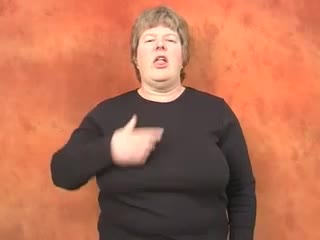
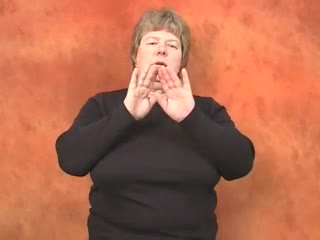
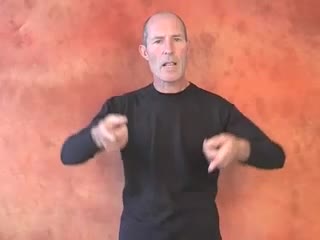
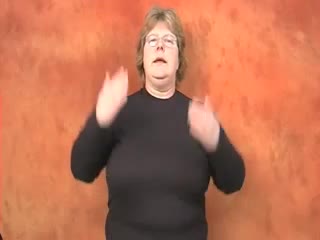
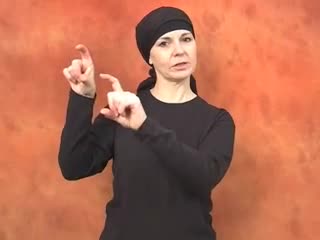
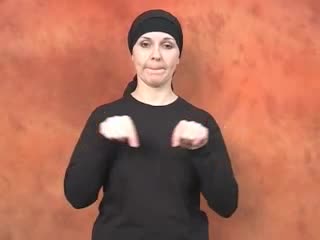
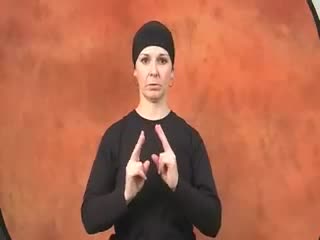
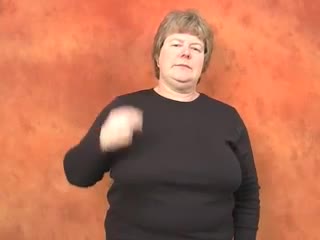
To form the correct handshape for the BSL sign for scissors, begin by extending your dominant hand in front of you. Your index finger and middle finger should be extended straight upwards, held slightly apart from each other, forming a "V" shape. Crucially, your thumb should be tucked in, resting against your palm, and your ring finger and little finger should be curled down into your palm. The key is to ensure only the index and middle fingers are actively extended, as these will mimic the blades of a pair of scissors. This handshape is sometimes referred to as a "V-hand" or "scissors handshape" due to its distinctive appearance. Ensure your fingers are not stiff but rather relaxed enough to allow for movement in the next step.
Step 2: Hand Position and Location
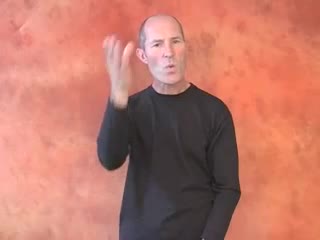
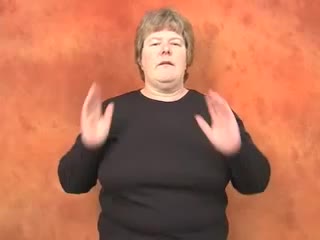
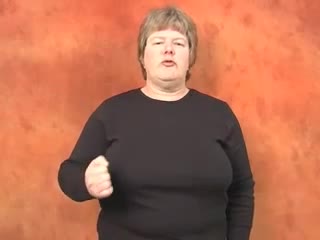
Once you have the correct handshape, position your dominant hand in the neutral signing space. This means holding your hand comfortably in front of your chest, roughly at shoulder height, or slightly lower, but not touching your body. The elbow should be relaxed and slightly bent, allowing for natural movement. Your forearm should be pointing generally forward and slightly upwards. This neutral position ensures the sign is clear and easily visible to your conversational partner without being too close to your face or too far away, which might obscure other signs or expressions. The dominant hand is exclusively used for this sign.
Step 3: Movement
This is where the "scissors" action truly comes to life in British Sign Language. With your hand in position and the correct handshape (index and middle fingers extended in a "V"), perform a repeated opening and closing motion with these two fingers. Imagine they are the blades of a pair of scissors. The fingers should come together and then separate again, typically a few times (two to three repetitions are common). The movement should primarily originate from the knuckles, creating a smooth, scissor-like action. There might be a slight, subtle wrist rotation or forearm adjustment to enhance the visual representation of cutting, but the core movement is the articulation of the index and middle fingers. This action is what truly conveys the meaning of "scissors sign language."
Step 4: Non-Manual Features (Facial Expression & Mouthing)
Non-manual features (NMFs) are an absolutely vital component of BSL, just as important as the hand movements themselves. For the BSL scissors sign, the accompanying facial expression is typically neutral and attentive, reflecting the context of what you're discussing. However, if you're asking for scissors urgently or expressing frustration about not having them, your facial expression would naturally reflect that emotion.
Crucially, you should mouth the word "scissors" clearly and naturally as you perform the sign. Mouthing is not simply speaking the word; it's forming the mouth pattern of the spoken word without necessarily vocalising it. This provides clarity, aids in disambiguation, and is a grammatical feature in BSL, helping to distinguish between similar-looking signs or to specify the exact English equivalent. Your head position should remain neutral unless a specific grammatical structure (like a question) or an emotional context requires a tilt or nod.
Step 5: Palm Orientation
Throughout the signing of "scissors British Sign Language," your palm orientation will generally remain consistent. The palm of your dominant hand, which is performing the scissor-like action, should typically face inward towards your body or slightly downwards. It's not usually rotated outwards or upwards significantly during the movement. This orientation allows for a clear view of the "blades" (your fingers) as they open and close, making the iconic representation of scissors unmistakable. Maintaining this palm orientation helps to ensure the sign is easily understood by your audience.
Quick Reference: "scissors" BSL Sign at a Glance
- Handshape: Index and middle fingers extended in a "V" shape (V-hand), other fingers curled into palm.
- Location: Neutral signing space, typically in front of the chest, not touching the body.
- Movement: Index and middle fingers repeatedly open and close, mimicking scissor blades.
- Facial Expression & Mouthing: Neutral expression, clear mouthing of "scissors."
- Dominant Hand: Performed with the dominant hand.
5 Tips to Learn the BSL Sign for "scissors" Quickly
Learning the BSL sign for scissors effectively involves more than just memorising the steps; it's about integrating it into your mental and physical vocabulary. Here are five top tips to help you master this sign swiftly.
- Visualise the Object: The sign for "scissors" is highly iconic, meaning it looks like what it represents. As you practise, strongly visualise a pair of actual scissors opening and closing. This mental connection will reinforce the handshape and movement, making it easier to recall and perform the BSL scissors sign naturally and correctly, turning abstract movements into a meaningful action.
- Emphasise Finger Articulation: Many beginners focus too much on wrist movement. For "scissors sign language," the key is the precise, independent opening and closing of your index and middle fingers. Practise this finger isolation repeatedly without involving your wrist much initially, then add a subtle, natural wrist movement. This focused finger exercise will build the muscle memory needed for accurate execution.
- Integrate Mouthing from Day One: Non-manual features like mouthing are not optional extras; they are integral to BSL grammar and clarity. From your very first practice session, make a conscious effort to mouth "scissors" as you sign. This simultaneous practice will help ingrain the connection, ensuring your communication is clear and grammatically correct in BSL, and it's a vital part of how to sign scissors in BSL effectively.
- Practise in Contextual Sentences: Instead of just signing "scissors" in isolation, try to form simple English sentences in your head (e.g., "I need scissors," "Where are the scissors?") and then sign "scissors" within that mental framework. This helps you understand when and how to use the BSL sign for scissors in a practical conversation, building confidence for real-life application.
- Use Repetition with Purpose: Regular, short bursts of practice are more effective than infrequent, long sessions. Dedicate a minute or two each day to practise the learn scissors BSL sign, focusing on accuracy, smoothness, and combining all the elements (handshape, movement, mouthing). Consistent repetition helps to solidify the sign in your long-term memory, making it an automatic part of your BSL vocabulary.
When and How to Use the BSL Sign for "scissors"
The BSL sign for scissors is a versatile and frequently used sign in many everyday contexts. Its clear, iconic nature makes it easy to incorporate into various conversations. Here are a few real-life scenarios where you'd use this sign, along with any relevant grammatical considerations.
- Requesting a Tool: This is perhaps the most common use. If you're working on a craft project, opening a package, or need to cut something, you might sign "YOU HAVE SCISSORS?" (using appropriate BSL question structure with raised eyebrows for "YOU HAVE") or "NEED SCISSORS ME." The sign typically remains the same whether it's singular or plural, with context or accompanying numbers providing clarity.
- Describing an Action: You can use the BSL sign for scissors to describe the act of cutting. For example, if explaining how to open a box, you might sign "BOX OPEN, SCISSORS USE." In this context, the sign functions more like a verb, but its form remains consistent.
- In Educational or Craft Settings: When teaching children or participating in art and craft activities, "scissors" is a fundamental vocabulary item. You might sign "CHILDREN, SCISSORS USE CAREFUL" (with a serious expression) or "WE MAKE PICTURE, SCISSORS NEED." This sign is universally understood by Deaf children and adults alike across the UK.
- Discussing Hairdressing or Styling: The sign is also appropriate when talking about getting a haircut or styling hair. You could sign "HAIR CUT, SCISSORS USE" or "HAIRDRESSER, SCISSORS." The context of the conversation will make it clear that you're referring to hair-cutting scissors.
In BSL, the sign for "scissors" often functions as both the noun and the verb "to cut with scissors," depending on the surrounding signs and non-manual features. If you need to specify different types of scissors (e.g., small scissors, big scissors), you would sign "SMALL" or "BIG" before or after the "scissors" sign, with the size adjective typically preceding the noun in BSL structure.
Common Mistakes When Signing "scissors" in BSL - And How to Fix Them
Learning any new language comes with its share of common hurdles, and BSL is no exception. When learning the BSL sign for scissors, beginners often make a few specific errors. Recognising these and knowing how to correct them will help you refine your signing and communicate more clearly.
-
Mistake 1: Incorrect Handshape – Using the Full 'V' Sign.
A very common error is to use the full 'V' handshape, where the index and middle fingers are extended, but the thumb is also extended or not fully tucked away. This might be confused with the BSL sign for 'V' (as in victory) or the number '2'. The error happens because learners might focus only on the extended fingers and forget the precise positioning of the thumb and other fingers.
How to Fix It: Consciously tuck your thumb firmly against your palm, and ensure your ring finger and little finger are completely curled down. The strength of the sign for "scissors sign language" lies in the distinct isolation of the two "blades" (index and middle fingers), unhindered by other extended digits. Practise closing your fist and then only extending the index and middle fingers, ensuring the thumb stays out of the way.
-
Mistake 2: Incorrect Movement – Wrist Flapping Instead of Finger Articulation.
Some beginners tend to move their entire wrist or even forearm to create the "opening and closing" motion, rather than primarily articulating their index and middle fingers. This often results in a less precise, more floppy movement that doesn't accurately convey the sharp, deliberate action of scissors. This happens because it can be challenging for new signers to isolate finger movements, especially when they are used to moving their whole hand.
How to Fix It: Focus intently on the joint movement of your index and middle fingers. Your wrist should remain relatively stable, with only a very subtle, natural flexion if any. The primary action must come from the fingers themselves. Imagine your fingers are literally the pivot points of the scissor blades. Practise slowly at first, ensuring each finger opens and closes distinctly and smoothly, before increasing your speed to a natural pace for the BSL scissors sign.
-
Mistake 3: Neglecting Non-Manual Features – Skipping the Mouthing.
A frequent oversight, particularly among hearing learners, is to perform the hand sign correctly but neglect to mouth the word "scissors." This can lead to ambiguity or make your BSL appear less fluent and less grammatically complete. Learners might think mouthing is unnecessary if the hand sign is clear, or they may simply forget its importance.
How to Fix It: Make mouthing "scissors" an integral part of your practice from the very beginning. As soon as you form the handshape and prepare for the movement, consciously mouth the word. This helps to connect the visual hand sign with its lexical equivalent, reinforcing clarity and ensuring you're using British Sign Language scissors in its fullest, most accurate form. Remember, mouthing provides crucial context and can even differentiate between signs that look similar.
"scissors" in BSL - Fun Facts and History
The BSL sign for scissors is more than just a functional movement; it carries interesting facets that highlight the richness and evolution of British Sign Language.
- Iconic Representation: The sign for "scissors" is a prime example of an iconic sign. This means it visually resembles the object or action it represents. The opening and closing of the index and middle fingers directly mimics the action of scissor blades, making it incredibly intuitive and often one of the first signs new learners pick up. This iconicity is a powerful memory aid when you learn scissors BSL.
- Widespread Consistency: Due to its highly iconic nature, the BSL sign for scissors is remarkably consistent across different regions of the UK. While some signs can have significant regional variations (like 'purple' or 'holiday'), the core movement and handshape for "scissors" remain largely uniform, making it easily understood whether you're signing in London, Manchester, Edinburgh, or Cardiff. This universal recognition is a testament to its strong visual connection.
- Connection to the Concept of "Cutting": The "scissors" sign is intrinsically linked to the concept of "cutting." While BSL has a more general sign for 'cut' (often a flat hand moving across another hand or space), the "scissors" sign specifically implies cutting with scissors. This demonstrates how BSL can be precise in distinguishing between different methods or tools for an action.
- Part of Foundational Vocabulary: "Scissors British Sign Language" is considered part of the foundational vocabulary for children and adults alike. It's a practical tool often encountered in schools, homes, and workplaces, making its sign essential for everyday communication about tasks, crafts, and materials. This makes it a great sign for beginners to master early on.
- Early Appearance in BSL Literature: Due to its commonality and iconic nature, variations of the "scissors" sign likely appeared in early documentations of British Sign Language, reflecting its long-standing presence in the Deaf community's lexicon. Its simplicity and utility have ensured its enduring relevance throughout the history of BSL.
"scissors" in Deaf Culture and BSL Community
Within Deaf culture and the BSL community, the sign for "scissors" holds a place as a common, practical, and easily understood element of daily communication. It's not just a word for a tool; it's a part of the rich tapestry of interactions that happen within the community. Whether it's for school projects, preparing food, or opening a new package, the ability to clearly sign "scissors" facilitates smooth, independent communication for Deaf individuals. This shared vocabulary around everyday objects strengthens community bonds and ensures that essential information about tools and tasks can be conveyed without reliance on spoken language. Learning how to sign scissors in BSL is more than acquiring a sign; it's about gaining a small piece of independence and connection within the vibrant Deaf world. It underscores the practical, hands-on nature of BSL as a living, dynamic language.
Example Sentences Using "scissors" in BSL
Here are five practical example sentences demonstrating how the BSL sign for scissors can be used in context, alongside notes on BSL grammatical structure.
English sentence: Can I borrow the scissors?
BSL structure: SCISSORS, YOU HAVE? (with raised eyebrows and slight head tilt for question)
English sentence: I need scissors to cut this paper.
BSL structure: PAPER, CUT, SCISSORS NEED ME. (topic-comment structure, "paper" is the topic, "cut, scissors need me" is the comment)
English sentence: The child used scissors for art class.
BSL structure: CHILD, ART CLASS, SCISSORS USE. (clear subject-verb-object order, often with implied past tense through context or time signs)
English sentence: Where are the big scissors?
BSL structure: SCISSORS, BIG, WHERE? (with raised eyebrows and searching expression for "where")
English sentence: Don't run with scissors!
BSL structure: SCISSORS HOLD, RUN, NO! (strong negative headshake for "no," clear warning expression)
Frequently Asked Questions About the BSL Sign for "scissors"
Is this sign the same everywhere in the UK?
Yes, the BSL sign for scissors is remarkably consistent across the entire United Kingdom. Its highly iconic nature, directly mimicking the action of actual scissors, means there are very few significant regional variations. While stylistic differences might exist in how smoothly or quickly someone performs the sign, the core handshape, location, and movement remain universally understood, making it an excellent sign for all learners of British Sign Language scissors.
How is this sign different from similar signs?
The BSL sign for scissors is distinct due to its specific handshape and movement. It differs from the BSL sign for 'V' (the letter or victory sign), which typically has a consistent palm orientation and no opening/closing movement. It's also different from the general sign for 'CUT,' which usually involves a flat hand or 'C' hand moving across another hand or surface to represent cutting with a knife or general severance. The "scissors sign language" specifically denotes the use of scissors as the cutting tool.
Is this suitable for beginners?
Absolutely! The BSL sign for scissors is highly suitable for beginners. Its iconic nature makes it intuitive and easy to grasp, often being one of the first practical signs people learn. It's an excellent sign to build confidence and understand the principles of handshape, movement, and non-manual features in BSL. Learning how to sign scissors in BSL is a fantastic step on your journey.
Can I use this sign with Deaf children?
Yes, without a doubt! The BSL sign for scissors is commonly used with Deaf children in homes, schools, and play settings. Children often pick up iconic signs very quickly, and "scissors" is a frequently needed item in craft activities and daily routines. Using this sign with children helps them develop their BSL vocabulary and engage in practical communication effectively.
Where can I practise this sign?
You can practise the learn scissors BSL sign in numerous ways! Start by using a mirror to observe your handshape and movement. Film yourself to identify areas for improvement. Seek out local BSL classes or Deaf clubs where you can interact with experienced signers and Deaf community members. Online resources like SignDeaf.com provide visual aids, and simply incorporating the sign into your daily thoughts or imaginary conversations will also help solidify your memory.
Related BSL Signs to Learn Alongside "scissors"
Learning signs in clusters can significantly boost your BSL fluency and understanding of contextual communication. Here are some related or complementary BSL signs that naturally pair with the BSL sign for scissors.
- CUT: This is a more general sign for the action of cutting, often using a flat hand or 'C' hand slicing across another hand. Learning it alongside "scissors" helps differentiate between cutting with scissors and other methods of cutting.
- PAPER: Often, when you use scissors, you're cutting paper. Learning the sign for "paper" (dominant flat hand brushing down on the non-dominant palm) creates a natural phrase: "PAPER CUT SCISSORS."
- GLUE: Another common item in craft or office settings, "glue" (mimicking squeezing a tube of glue) forms a practical trio with paper and scissors, enabling you to discuss various craft activities.
- CRAFT / MAKE: The sign for "craft" or "make" (two fists twisting together or hands shaping something) is often relevant when discussing activities that involve scissors, such as art projects or DIY.
- SHARP: The concept of "sharp" (index finger touching the tip of the dominant index finger, then pulling away sharply) is important when talking about scissors, especially in safety contexts.
- OPEN (package): You might need scissors to open a package. The sign for "open" (hands starting together and moving outwards) connects well for practical tasks.
How to Practise the BSL Sign for "scissors" Effectively
Consistent and thoughtful practice is the cornerstone of mastering any BSL sign, and "scissors" is no different. To truly embed the BSL sign for scissors into your vocabulary, we recommend several effective techniques. Start with mirror practice: stand in front of a mirror and perform the sign, carefully observing your handshape, movement, and non-manual features. This immediate visual feedback is invaluable for self-correction. Next, try filming yourself; this allows you to review your signing objectively, spot subtle errors you might miss in real-time, and track your progress over time. The most impactful practice comes from using the sign in real sentences, even if initially just in your head or with a fellow learner. Think about everyday scenarios where you might need scissors and integrate the sign naturally. Finally, make daily repetition a habit: short, focused bursts of practice each day are far more effective than infrequent, long sessions. By consistently engaging with the learn scissors BSL sign, you'll build muscle memory and confidence, making it a natural part of your British Sign Language communication.