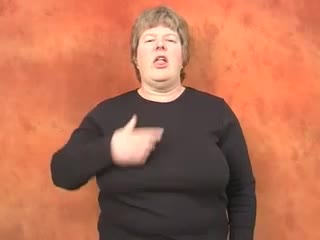
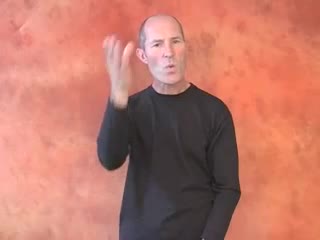
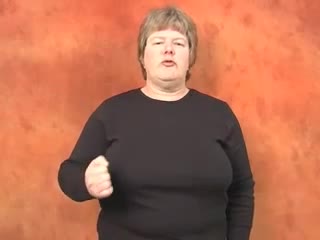
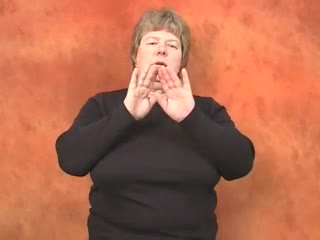
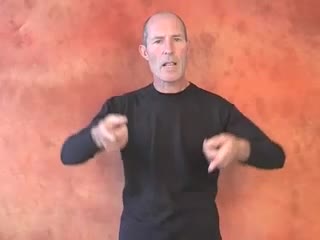
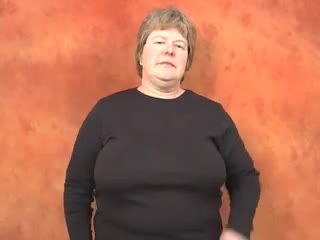
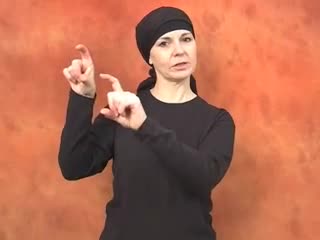
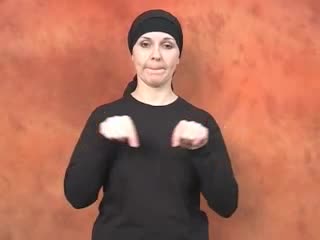
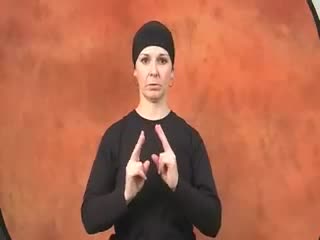
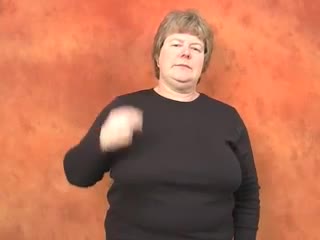
What Is the BSL Sign for "work clothes"?
When you're diving into British Sign Language, understanding how to express everyday concepts like what someone wears for their job is incredibly useful. The BSL sign for "work clothes" beautifully illustrates how two distinct ideas can merge to form a new meaning, creating a clear visual representation. This particular sign isn't just about garments; it specifically refers to the attire worn while performing professional duties, encompassing everything from uniforms to functional gear. Mastering the British Sign Language work clothes sign connects you directly to conversations about daily routines, professions, and personal identity within the Deaf community. You'll discover it's a foundational piece for discussing employment and lifestyle, making your BSL communication much richer.
How to Sign "work clothes" in British Sign Language - Step-by-Step
Let's break down this practical compound sign, guiding your hands and body through each component that together signifies "work clothes."
Step 1: Handshape
For the first part of this sign, representing "work," you'll form an 'S' handshape with both of your hands. This means making a fist where your thumb rests across the front of your curled fingers. Next, for the "clothes" component, you'll open both hands into a '5' handshape; imagine your fingers extended and spread, with your thumb also out, creating an open palm.
Step 2: Hand Placement and Location
To begin the "work" section, position your non-dominant hand in the 'S' handshape, holding it steady in front of your body at about waist height, with your knuckles facing forward and your palm directed downwards. Now, place your dominant hand, also in the 'S' handshape, slightly above and behind your non-dominant hand, ensuring its knuckles also point forward. Following this, for the "clothes" segment, shift both hands up to your upper chest or shoulder area, maintaining the '5' handshape, with palms facing in towards your body.
Step 3: Movement
The movement for "work" involves your dominant 'S' hand moving forward and then tapping the back of your non-dominant 'S' hand or wrist twice with a distinct, firm rhythm. After completing these taps, smoothly transition into the "clothes" part: both hands, now in the '5' handshape, sweep downwards over your chest and torso in a synchronised, parallel motion. This downward sweep should indicate the general outline of clothing without actually touching your body.
Step 4: Facial Expression and Mouthing
A neutral facial expression typically accompanies the sign for "work clothes," as it’s a straightforward noun. While signing, you'll naturally mouth the word "work clothes" without voice, allowing your lip patterns to provide additional clarity and reinforce the English equivalent for those who can lip-read. This non-manual feature enhances the overall communication, offering linguistic support that is crucial in BSL.
Step 5: Palm Orientation
During the "work" segment, both of your 'S' hands will generally have their palms facing downwards or slightly towards each other. As you transition to the "clothes" segment, the palm orientation shifts dramatically: both of your '5' hands will turn so their palms face inwards, towards your own body, mirroring the action of indicating clothing on your torso. Maintaining this orientation throughout the downward sweep for "clothes" is vital for conveying the correct meaning.
"work clothes" in BSL - Quick Reference Snapshot
- Handshape: 'S' for WORK, then '5' for CLOTHES
- Location: Non-dominant 'S' hand at waist, dominant 'S' hand taps; then both '5' hands at upper chest, sweeping down
- Movement: Dominant 'S' hand taps non-dominant 'S' hand twice; then both '5' hands sweep down the torso
- Facial Expression: Neutral, accompanied by mouthing "work clothes"
- Dominant Hand: Performs tapping action and leads the downward sweep
- Palm Orientation: Downwards for WORK, then inwards towards the body for CLOTHES
5 Memorisation Tricks for the BSL Sign "work clothes"
Here are some helpful strategies to really embed the sign for "work clothes" into your BSL vocabulary. You'll find these tips make the learning process much more intuitive.
- Visual Mnemonic: Picture a carpenter repeatedly hammering a nail (the 'S' hands tapping), then immediately afterwards, imagine them smoothing down their sturdy overalls (the '5' hands sweeping down the chest). This strong visual connection links the action of "work" directly to the garments worn for it.
- Muscle-Memory Drill: Perform the "work" tapping motion ten times, focusing on the rhythmic impact. Immediately follow this with ten smooth, downward sweeps of the "clothes" sign. This repetitive pairing helps your hands learn the sequence and fluidity, building a physical memory of the sign.
- Connection to Meaning: Think of the dual meaning: the first part, the tapping, evokes the physical effort or a task being completed, while the second part, the downward sweep, clearly represents apparel. Understanding that it's a compound sign for a compound concept helps cement its structure in your mind.
- Common-Confusion Tip: Be careful not to let your "work" tap become too gentle; it needs a firm, purposeful impact. Also, ensure the "clothes" sweep is a broad, open gesture, distinct from a small, fiddly movement that might imply specific fabric details rather than general attire.
- Daily-Life Practice Idea: Each morning, as you choose your outfit for the day, practice signing "work clothes" if you're heading to a job requiring specific attire. If you see someone in uniform, mentally sign it. Integrating this sign into your daily observations strengthens your recall.
Real-Life Situations to Use the BSL Sign for "work clothes"
Understanding how to integrate "work clothes" into actual conversations makes a huge difference in your fluency. Here are some practical scenarios where you'll naturally employ this sign.
- Imagine asking a colleague, "Do you need your work clothes tomorrow?" Here, the sign for "work clothes" would follow "you" and "need," often with a raised eyebrow for the question.
- You might tell a friend, "I left my work clothes at the office." The sign for "work clothes" would typically be placed before "office" or be the topic of the sentence, followed by the location.
- Perhaps you're discussing a new job with someone and comment, "The new role requires special work clothes." You'd sign "special" then "work clothes" as a descriptive phrase for the attire.
- When describing a uniform, you could explain, "These are my work clothes for the hospital." The sign for "work clothes" would be paired with the context of the specific profession or workplace.
Top 3 Mistakes Learners Make Signing "work clothes" in BSL
Every learner encounters hurdles, and recognising common missteps is the first step towards signing with precision and confidence. Let's look at the frequent errors with "work clothes."
- Confusing the "Work" Handshape: Many beginners inadvertently use an open 'B' handshape for the non-dominant hand in the "work" part, rather than the firm 'S' handshape. This changes the visual impact from a solid, working motion to something less defined. The correction involves consciously forming a tight fist with the thumb across for both hands in the initial phase, ensuring the 'S' shape is distinct and purposeful.
- Inconsistent Movement for "Clothes": Sometimes learners rush the "clothes" sweep, making it too small or disjointed, failing to convey the full garment. The sweep should be broad and fluid, extending downwards from the chest. To correct this, focus on a smooth, generous arc with both hands, imagining you're outlining the entire front of a top or coat on your body, giving the sign its full expressive range.
- Skipping the Compound Nature: A common oversight is performing only the "clothes" sign when referring to attire specifically for work, missing the crucial "work" component entirely. This results in just "clothes," which isn't specific enough. Always remember that "work clothes" is a compound sign; both parts must be executed in sequence. Deliberately practice the "WORK" tap immediately followed by the "CLOTHES" sweep until it feels like one integrated action.
Fascinating Facts About the BSL Sign for "work clothes"
Delving into the background and nuances of a sign offers a deeper appreciation for British Sign Language. Here are some intriguing insights about "work clothes."
- The compound nature of "work clothes" highlights a common BSL linguistic strategy where two established signs combine to form a new, specific concept, much like combining words in spoken English.
- While the "work" component generally remains consistent across the BSL-using community, you might observe subtle regional variations in the "clothes" part, perhaps in the exact handshape or the breadth of the sweep.
- The "work" sign is an example of an iconic sign, as the repetitive tapping action visually represents effort or a task, offering a direct link to its meaning.
- The "clothes" sign, with its downward sweep, is also iconic, visually tracing the outline or action of putting on a garment, making its meaning readily apparent to new learners.
- The clear distinction between general "clothes" and "work clothes" in BSL underscores the importance of context and specificity in signed communication, ensuring clarity about purpose or function.
"work clothes" in Deaf Culture - Community and Identity
Clothing, especially what one wears for work, often carries significant meaning within any community, and the Deaf community is no exception. For many, work clothes symbolise not just a profession, but also independence, skill, and contribution to society. Discussing "work clothes" can lead to deeper conversations about career paths, professional achievements, and even the accessibility of certain workplaces. It's a sign that facilitates sharing personal narratives about employment, showcasing the diverse roles Deaf individuals hold. This sign helps build connections by allowing people to share their daily lives and the pride they take in their work and the attire that comes with it.
Example Conversations Using "work clothes" in BSL
Putting "work clothes" into practice within full sentences helps solidify your understanding of BSL grammar. Here are five varied examples.
English: Do you need to wash your work clothes tonight? - BSL structure: YOU WORK CLOTHES WASH TONIGHT? (Eyebrows raised for question)
English: My work clothes are uncomfortable for long shifts. - BSL structure: MY WORK CLOTHES LONG SHIFT UNCOMFORTABLE. (Non-manual features indicating discomfort)
English: Where do I put my dirty work clothes? - BSL structure: DIRTY WORK CLOTHES WHERE? (Spatial question, head titled forward for question)
English: I bought new work clothes for my catering job. - BSL structure: CATERING JOB NEW WORK CLOTHES I BOUGHT. (Topic-comment structure)
English: She always wears very practical work clothes. - BSL structure: SHE WORK CLOTHES PRACTICAL ALWAYS. (Emphasis on the practical aspect)
Frequently Asked Questions: The BSL Sign for "work clothes"
As you learn BSL, certain questions naturally arise, especially about signs with multiple components. Let's address some common queries about "work clothes."
Is there a different BSL sign for "uniform" compared to "work clothes"?
Yes, typically there's a distinct sign for "uniform" in BSL, often involving a specific movement indicating a shared or standard outfit, which differs from the compound "work clothes." While "work clothes" can encompass a uniform, the sign for "uniform" itself carries the additional nuance of standardisation and often a more formal appearance.
Can children easily learn the BSL sign for "work clothes"?
Absolutely, children can pick up the sign for "work clothes" quite easily, especially since both component signs ("work" and "clothes") are commonly taught early in BSL education. The iconic nature of the movements makes it memorable, and discussing different jobs and what people wear for them provides excellent context for young learners.
What if I only sign "clothes" when I mean "work clothes" in BSL?
If you only sign "clothes," you'll be understood as referring to general attire, not specifically professional garments. While the context might sometimes clarify your meaning, it lacks the precision of the full compound sign. For clear communication, especially when distinguishing between casual wear and job-specific attire, it's always best to use the complete "work clothes" sign.
Does the sign for "work clothes" vary significantly across different regions in the BSL community?
The core structure of the "work clothes" sign, being a compound of "WORK" and "CLOTHES," is generally consistent across BSL regions. However, minor variations might be observed in the precise execution of the "clothes" component, such as slight differences in handshape or the exact path of the sweep. These regional nuances are usually subtle and don't impede overall understanding.
How does the BSL sign for "work clothes" compare to a more general sign like "attire"?
The BSL sign for "work clothes" is highly specific, focusing on garments related to employment, whereas a sign for "attire" would be much broader, encompassing any type of clothing worn for any occasion. "Attire" might use a more generic sweep over the body, without the initial "work" component, highlighting the difference in specificity.
Signs That Pair Naturally with "work clothes" in BSL
Expanding your vocabulary by learning related signs helps you build more coherent and expressive sentences. These signs naturally fit into conversations about "work clothes."
- WORK: The independent sign for "work" (dominant 'S' hand tapping non-dominant 'S' hand) obviously pairs perfectly, as it forms the first part of "work clothes."
- JOB: Often signed with two 'J' handshapes tapping together, "job" connects directly to the concept of needing specific attire for employment.
- UNIFORM: As discussed, a distinct sign for "uniform" might involve shaping a specific collar or badge area, linking to the structured aspect of work clothing.
- WASH: The sign for "wash" (hands rubbing together) is frequently used in discussions about maintaining or cleaning "work clothes."
- CHANGE (clothes): Signing "change" (often using 'X' handshapes hooking together) naturally follows when discussing altering one's "work clothes" after a shift.
- PROFESSION: This sign (often involving 'P' handshapes) groups well, allowing you to discuss the type of "work clothes" associated with various careers.
Building Fluency: How to Practise "work clothes" in BSL
Consistent and targeted practice is your best friend on the path to BSL fluency. Here’s how you can effectively integrate the sign for "work clothes" into your learning routine. Start by using a mirror to observe your handshapes and movements for "work clothes," ensuring your 'S' and '5' handshapes are clear and your taps and sweeps are precise. Try to weave the sign into your daily BSL conversation practice, perhaps describing what you wore for your own job or what you might need to wear for a new role. Filming yourself signing "work clothes" within a short sentence can reveal subtle areas for improvement in your non-manual features or movement fluidity. Seek opportunities to discuss work-related topics with a Deaf conversation partner, as they can provide invaluable feedback and context. Finally, spaced repetition is key; revisit the sign for "work clothes" over several days and weeks, rather than just once, to truly embed it into your long-term memory.