What Is the BSL Sign for "sander"?
Stepping into the world of DIY or home improvements in British Sign Language means you’ll quickly encounter signs for tools and materials. Today, we're focusing on a key one for many projects: the BSL sign for sander. This particular sign beautifully captures the essence of the tool it represents, making it quite intuitive once you understand its form and motion. It’s a fantastic example of how BSL often uses iconic representation to describe objects, helping to bridge the gap between concept and visual form. Knowing the British Sign Language sander sign will certainly enrich your conversations about crafting, renovation, or even just explaining what’s making all that noise next door!
How to Sign "sander" in British Sign Language - Step-by-Step
Let's get your hands ready to bring this useful tool to life in BSL; you'll find its movement quite descriptive.
Step 1: Handshape
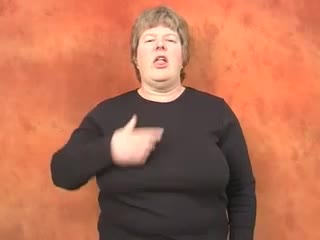
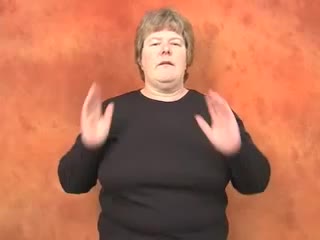
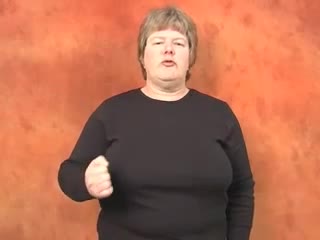
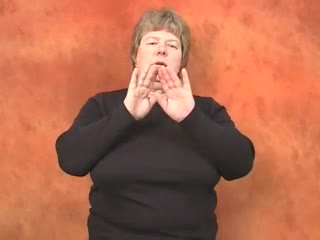
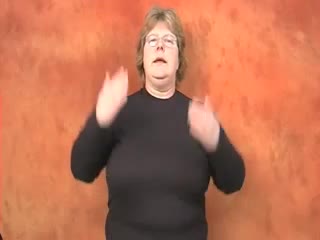
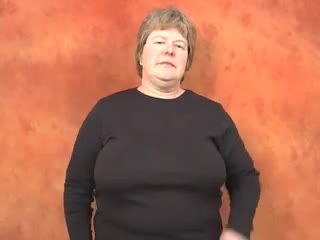
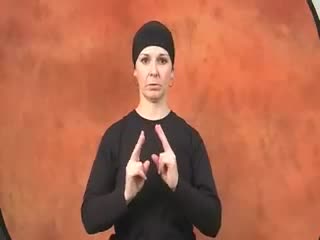
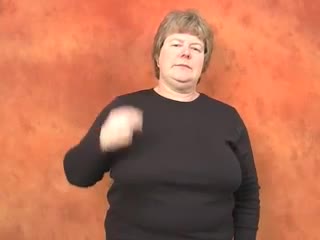
For this sign, your dominant hand will adopt a flat handshape, much like you're preparing to pat something gently. All four fingers remain extended and held tightly together, while your thumb rests naturally alongside the palm. Imagine the broad, flat base of a sanding machine, ready to glide across a surface.
Step 2: Hand Placement and Location
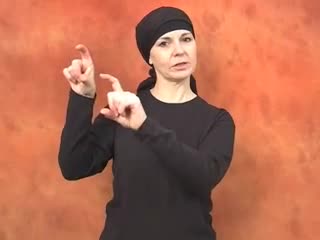
You’ll want to create a 'surface' for your imaginary sander; this is where your non-dominant hand comes in. Hold your non-dominant hand flat, with its palm facing upwards or slightly angled, representing a piece of wood or another item awaiting preparation. Position your dominant hand, already in the sander handshape, just above this non-dominant 'surface,' almost touching it.
Step 3: Movement
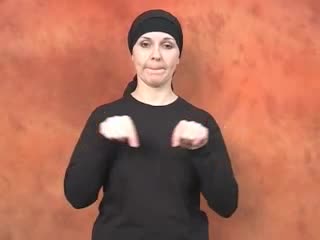
Now for the action! Your dominant hand, maintaining its flat shape, performs short, brisk, and repetitive back-and-forth motions across the palm or fingers of your non-dominant hand. The movement should be contained and somewhat rapid, mimicking the vibration and work of an actual sander. Think of a compact, steady scrub, not a wide sweep.
Step 4: Facial Expression and Mouthing
Typically, a neutral or mildly focused facial expression accompanies the sign for a tool like this. When you sign "sander," it’s very common to mouth the English word "sander" or even just "sand." This mouthing isn't optional; it serves as a crucial non-manual feature in BSL, clarifying the specific meaning and adding grammatical nuance, especially when distinguishing similar actions.
Step 5: Palm Orientation
Throughout the sign, the palm of your dominant hand should consistently face downwards, directly towards the 'surface' created by your non-dominant hand. This orientation is essential because it visually communicates the direct interaction of the tool with the material it's working on, effectively showing the abrasive side engaging with the object.
"sander" in BSL - Quick Reference Snapshot
- Handshape: Dominant hand flat, fingers together, thumb alongside.
- Location: Dominant hand moves just above non-dominant hand (acting as surface).
- Movement: Short, repetitive, back-and-forth motion across the non-dominant palm.
- Facial Expression: Neutral or focused, often with mouthing "sander."
- Dominant Hand: Performs the main action, mimicking the tool.
- Palm Orientation: Dominant palm faces downwards towards the 'surface.'
5 Memorisation Tricks for the BSL Sign "sander"
Here are some clever ways to really cement the BSL sign for "sander" into your memory.
- Visualise the Tool: Picture a handheld orbital sander with its flat base. The handshape you form directly represents this flat surface, and the repetitive movement perfectly illustrates how it vibrates and smooths. Keeping this mental image front and centre will make the sign's form immediately logical.
- Embrace the Muscle Memory: Practice the short, contained, repetitive motion slowly at first, really feeling the action in your dominant wrist and arm. Then, gradually increase the speed to mimic the whirring of the tool, allowing your muscles to remember the unique rhythm of sanding. This physical repetition helps solidify the sign.
- Connect to its Purpose: Think about what a sander *does*: it smooths rough surfaces. The action of your dominant hand moving across your non-dominant hand clearly shows this smoothing process. Linking the visual action directly to the tool's function makes the sign deeply meaningful and easy to recall.
- Differentiate from "Wipe": A common point of confusion for beginners is making the movement too broad, which can look like "wiping" or "cleaning." Remember to keep the "sander" movement short, sharp, and contained, emphasising the rapid vibration rather than a sweeping motion. Focus on the distinct, smaller scale of the action.
- Integrate into Your Day: The next time you walk past a construction site, see a piece of unfinished furniture, or even hear the distant hum of power tools, mentally perform the sign for "sander." Actively associating the sign with real-world triggers builds strong connections and makes recall much more fluid.
Real-Life Situations to Use the BSL Sign for "sander"
You'll find countless opportunities to use this sign, making your BSL conversations about practical matters much clearer.
- When asking a friend if they own the tool: "YOU HAVE SANDER?" (BSL grammar often places the topic first, followed by the question structure).
- Describing a DIY task you need to complete: "ME NEED SANDER, TABLE SMOOTH." (This shows the intention and the result using topic-comment structure).
- Explaining a project you've just finished: "YESTERDAY ME USE SANDER, OLD CHAIR NEW LOOK." (Here, "sander" acts as the instrument, clarifying the method).
- Discussing safety around power tools: "BE CAREFUL SANDER, VERY NOISY." (You're providing a warning, where the sign integrates into a descriptive statement).
Top 3 Mistakes Learners Make Signing "sander" in BSL
Every learner encounters little hurdles, and knowing common pitfalls can save you time and frustration.
- Exaggerating the Movement: Many beginners tend to make the back-and-forth motion too wide or too long, extending beyond the non-dominant hand. This often makes the sign look like "wiping" or "polishing" rather than the specific, compact action of a sander. The precise correction is to keep the movement short, brisk, and contained strictly to the area just above your non-dominant palm, emphasising rapid, small oscillations.
- Incorrect Palm Orientation: Sometimes, learners inadvertently let their dominant palm drift to face slightly forward or even upwards during the movement. This changes the visual representation from the tool's base engaging a surface to a less clear action. The fix is simple: consciously maintain your dominant palm facing directly downwards towards your non-dominant hand throughout the entire signing motion.
- Neglecting the Non-Dominant Hand: A common oversight is to perform the sanding motion in neutral space without providing a 'surface' for the tool. While understandable, this reduces the clarity and iconic strength of the sign. Always remember to use your non-dominant hand, held flat, as the essential 'surface' upon which the dominant hand performs the sanding action, making the sign complete and unambiguous.
Fascinating Facts About the BSL Sign for "sander"
Delving into the specifics of a sign often reveals surprising insights into BSL itself.
- The BSL sign for "sander" is a brilliant example of an iconic sign, meaning its form directly resembles the action or object it represents. You're literally mimicking the work of a sander with your hands.
- Unlike some signs with ancient roots, the sign for "sander" is relatively modern, evolving as tools and technology became commonplace. Its creation reflects the Deaf community's need to represent new concepts as they emerge.
- Across the diverse BSL-using regions of the UK, this sign maintains remarkable consistency. While some signs exhibit regional variations, the iconic nature of "sander" means it's widely understood and used in the same way, from Scotland to the south coast of England.
- There isn't a direct link between the handshape for "sander" and a specific letter in the BSL manual alphabet, but the flat handshape is fundamental and appears in many other signs. This foundational handform is versatile across BSL vocabulary.
- The combination of a stationary non-dominant hand (the 'surface') and a moving dominant hand (the 'tool') is a powerful linguistic feature in BSL, frequently used to depict an action being performed on an object. This structure makes the sign incredibly clear and efficient.
"sander" in Deaf Culture - Community and Identity
Tools and practical skills hold a significant place in any community, and for Deaf people, discussing home improvements, crafting, or professional trades is no different. The sign for "sander" becomes a natural part of conversations about renovating a home, engaging in woodworking as a hobby, or even detailing a specific job. It facilitates easy communication amongst Deaf tradespeople or DIY enthusiasts, allowing them to share tips, ask for help, or describe ongoing projects without language barriers. Learning such signs connects you deeply with the practical, everyday aspects of Deaf life, highlighting how BSL adapts seamlessly to all facets of human experience, from profound discussions to the simple act of preparing a surface. This sign, like many others representing common objects and actions, underscores the full and rich lives lived within the Deaf community.
Example Conversations Using "sander" in BSL
Let's see how "sander" fits into everyday BSL exchanges.
English: Do you need to borrow a sander for your project? - BSL structure: YOU PROJECT, SANDER BORROW NEED? (Using topic-comment structure and a question facial expression)
English: My old sander stopped working yesterday. - BSL structure: MY SANDER, YESTERDAY STOP WORK. (Clear topic first, then past tense action)
English: We should buy a powerful sander for this tough wood. - BSL structure: THIS WOOD HARD, WE SANDER POWERFUL BUY SHOULD. (Adjectives often follow the noun in BSL, or are incorporated into the sign itself)
English: Be careful, the sander makes a lot of dust! - BSL structure: SANDER CAREFUL, DUST PLENTY. (A warning followed by a descriptive statement)
English: I used the sander to smooth the edges of the shelf. - BSL structure: SHELF EDGE, ME SANDER SMOOTH. (The object and its attribute are often presented before the action and instrument)
Frequently Asked Questions: The BSL Sign for "sander"
Is there any regional variation for the BSL sign for sander across the UK?
The BSL sign for "sander" is remarkably consistent across different regions of the UK. Its iconic nature, directly representing the tool's action, means it's widely recognised and used in the same way, from urban centres to more rural areas. You can be confident in using this specific sign wherever BSL is spoken.
Are there any similar BSL signs that I should be careful not to confuse with "sander"?
You'll want to avoid confusing "sander" with signs like "polish" or "rub." The key differentiator is the specific movement: "sander" involves short, brisk, repetitive motions, often with a slight vibration, whereas "polish" usually has a smoother, more circular, or broader wiping action. Pay close attention to the scale and quality of the movement.
Is the BSL sign for "sander" suitable for beginners to learn early on?
Absolutely! The BSL sign for "sander" is an excellent sign for beginners. Its iconic nature makes it intuitive to grasp and remember, as it visually demonstrates the tool's function. Learning signs like this early helps build confidence and provides practical vocabulary for everyday conversations.
Can children easily learn and use the BSL sign for "sander"?
Children can very easily learn the BSL sign for "sander." Its visual and action-based representation is engaging for young learners. They might use it to talk about toys, helping with DIY, or understanding renovation work, making it a functional and accessible sign for family communication.
How does the BSL sign for "sander" compare to signs for similar tools in other sign languages?
While many sign languages use iconic signs for tools, the specific handshapes, placements, and movements are unique to each language. The BSL sign for "sander" is distinct within British Sign Language, reflecting its own linguistic structure and cultural context. While other sign languages will have their own way to convey "sander," the BSL version is specific to its users.
Signs That Pair Naturally with "sander" in BSL
Building your vocabulary means understanding how signs connect, and "sander" links to many practical concepts.
- WOOD: Naturally, a sander is often used on wood, so this material sign is a perfect companion. They share the context of construction and crafting.
- SMOOTH: The primary purpose of a sander is to make something smooth, making this an ideal descriptive partner. You'd often sign "sander" then "smooth."
- TOOL: "Sander" is a specific type of tool, so learning the general sign for "tool" helps categorise it and expand your vocabulary around equipment.
- BUILD/FIX: These action verbs frequently involve using a sander as part of a larger project, creating a logical sequence for your signed sentences.
- DUST: Sanding inevitably creates dust, so this byproduct sign connects directly to the activity and its consequences.
- TABLE: As a common object that often needs sanding, "table" provides a concrete example for applying the "sander" sign in context.
Building Fluency: How to Practise "sander" in BSL
To truly master the BSL sign for "sander," consistent and thoughtful practice is key. Stand in front of a mirror and watch your dominant hand as you perform the sign, ensuring your handshape is flat, your palm faces down, and the movement is short and repetitive. Try integrating "sander" into your daily BSL conversations by thinking about what you’d sign if you saw a dusty surface or heard a DIY project happening nearby. Filming yourself signing can provide invaluable feedback, allowing you to catch any subtle misinterpretations you might be making that aren't apparent in the mirror. Most importantly, seek opportunities to practise with a Deaf conversation partner or within the Deaf community; their feedback will refine your technique and boost your confidence. Repetition spaced out over several days, rather than intense cramming, will help your muscle memory truly absorb this useful sign.