What Is the BSL Sign for "redwood"?
Imagine standing at the foot of an ancient giant, a tree so immensely tall it seems to touch the clouds; that's the feeling encapsulated by the British Sign Language redwood sign. This particular BSL sign for redwood evokes the sheer scale and distinctive presence of these magnificent trees, representing them as a unique and awe-inspiring natural wonder within BSL communication. We're not just signing 'tree'; we're conveying a specific, grand type of tree, making it instantly recognisable for anyone familiar with redwood British Sign Language. This sign is a beautiful example of how BSL uses visual imagery to convey complex concepts with elegance and clarity, offering a distinct way to talk about one of nature's most impressive creations.
How to Sign "redwood" in British Sign Language - Step-by-Step
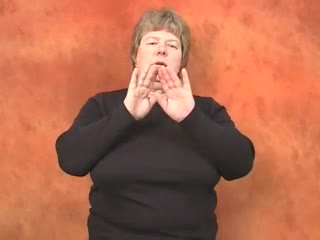
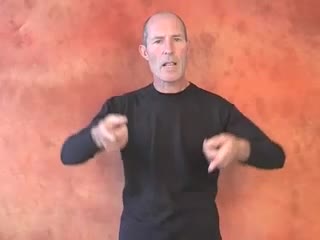
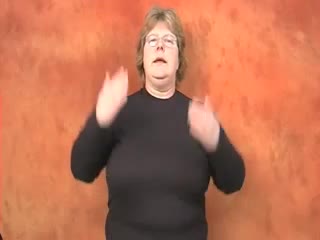
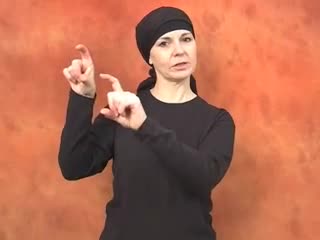
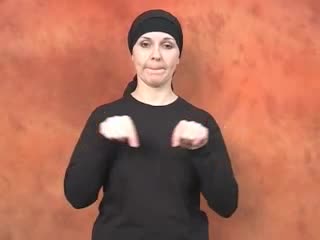
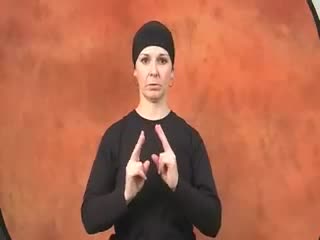
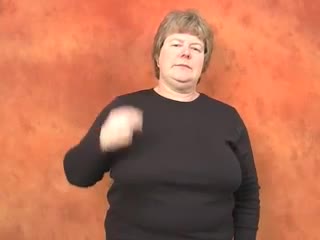
Mastering the sign for "redwood" involves a careful progression through handshape, placement, movement, and critical non-manual features, each element building on the last to form a coherent visual message.
Step 1: Handshape
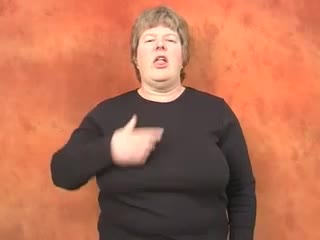
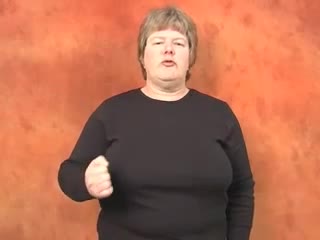
Begin by forming a 'C' handshape with your dominant hand. Your fingers should be slightly spread and gently curved, with your thumb lightly touching the side of your index finger, creating an open, somewhat relaxed cylinder. Picture your hand as if it's loosely encircling a substantial, thick column; that's the precise form you're aiming for.
Step 2: Hand Placement and Location
Position your dominant hand, maintaining that 'C' handshape, low down on your dominant side, specifically around your waist or hip level. It should be held directly in front of your body, creating a clear starting point that suggests the base of something grand. This initial placement is fundamental for conveying the tree's immense verticality.
Step 3: Movement
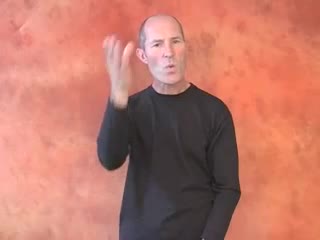
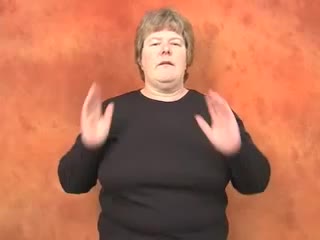
From its low starting point, move your 'C' handshape slowly and smoothly upwards in a straight, deliberate line. This upward trajectory should extend significantly higher than your head, symbolising the extraordinary height of a redwood tree. As your hand ascends, incorporate a subtle, continuous twisting motion of your wrist, as if your hand is spiralling gently upwards around an invisible trunk, adding texture and organic detail to the movement.
Step 4: Facial Expression and Mouthing
Maintain a neutral and gently impressed facial expression throughout the sign; your eyebrows might be slightly raised, or your eyes a little wider, conveying a sense of awe or scale. Crucially, you'll mouth the word "redwood" silently as you perform the sign. Mouthing is an integral non-manual feature in BSL, providing phonological information and enhancing the clarity of your communication, making it unequivocally clear you're referring to this specific type of tree.
Step 5: Palm Orientation
Your palm will initially face slightly towards your body when you begin the sign at your waist. As your hand moves upwards, gracefully rotate your wrist so that your palm gradually shifts to face forward by the time it reaches its highest point. This subtle change in orientation helps to present the 'trunk' of the tree clearly to your conversational partner, enhancing the visual impact and reinforcing the iconic nature of the sign.
"redwood" in BSL - Quick Reference Snapshot
- Handshape: Dominant hand forms a relaxed 'C' shape.
- Location: Starts at dominant waist/hip level, directly in front.
- Movement: Slow, continuous upward sweep past the head with a subtle twisting wrist motion.
- Facial Expression: Neutral to slightly impressed, often with widened eyes.
- Dominant Hand: Performed exclusively with your dominant hand.
- Palm Orientation: Begins facing slightly inward, gradually rotates to face forward during ascent.
5 Memorisation Tricks for the BSL Sign "redwood"
Learning how to sign redwood in BSL effectively means cementing it in your memory; here are some clever ways to do just that.
- Visual Mnemonic: The Growing Trunk: Picture yourself actually drawing the outline of a massive redwood trunk upwards with your dominant hand. The 'C' handshape at the bottom represents the vast girth of the tree at its base, and as your hand spirals upwards, imagine the trunk's impressive height and the textured bark. This visual connection to the tree's physical characteristics makes the movement and handshape incredibly intuitive.
- Muscle-Memory Drill: Repetition with Purpose: Dedicate five minutes each day to simply performing the sign for "redwood" 20-30 times in a row, focusing intensely on the smooth upward motion and the subtle wrist twist. Don't just go through the motions; concentrate on the feeling in your arm and wrist, allowing your muscles to learn the precise kinetics of this particular British Sign Language redwood sign.
- Connection to Meaning: Towering Above: Think about the defining characteristic of a redwood tree: its incredible height. Whenever you practice the sign, exaggerate the upward movement, really stretching your arm high. Connect that feeling of reaching for the sky with the meaning of the word, which helps reinforce the iconic link between the sign's form and its significance.
- Common-Confusion Tip: Not Just 'Tree': Many learners might confuse this with a generic 'tree' sign, but remember the specific 'C' handshape and the distinct, continuous twist for "redwood." The 'tree' sign often uses a '5' handshape and a different arm placement. Pay close attention to that initial handshape and the twisting motion to avoid miscommunication and ensure you're signing specifically for redwood.
- Daily-Life Practice: Spot the Giants: Incorporate the sign into your daily observations. Whenever you see a particularly tall building, a prominent flagpole, or even a very large houseplant, take a moment to mentally (or actually) sign "redwood." This contextual practice helps you associate the sign with impressive vertical scale, making it feel more natural to use when you need to express the concept of redwood in sign language.
Real-Life Situations to Use the BSL Sign for "redwood"
Knowing what is the sign for redwood is one thing, but understanding its application in actual conversations is how you truly learn redwood BSL. Here are some practical scenarios.
- Imagine you're discussing travel plans: "We're planning a trip to California; I really want to see the [redwood sign]." (BSL structure: CALIFORNIA TRIP PLAN. ME WANT SEE [redwood sign] V-CL: 'tall trees stand'.) Here, the sign fits naturally into a desire statement, often placed after the subject and before the verb in topic-comment structure.
- You might be sharing an amazing experience: "Yesterday, I stood amongst the giant [redwood sign] trees; it was breathtaking!" (BSL structure: YESTERDAY ME STAND AMONGST GIANT [redwood sign] TREES. WOW!) Notice how the sign for redwood can be accompanied by an adjective like 'giant' for emphasis, and a strong facial expression conveys your emotion.
- Perhaps you're asking a friend about their nature walk: "Did you see any [redwood sign] when you went hiking in the forest?" (BSL structure: YOU HIKE FOREST. SEE [redwood sign]? Q.) In a question, the sign maintains its form, but your facial expression shifts to a questioning look, with raised eyebrows, indicating an interrogative sentence.
- When describing a documentary: "That documentary about nature showed some incredible [redwood sign] forests, they're so old." (BSL structure: DOCUMENTARY NATURE SHOW [redwood sign] FOREST. WOW OLD.) The sign beautifully integrates into descriptions, providing a specific visual reference for the type of forest.
Top 3 Mistakes Learners Make Signing "redwood" in BSL
Even experienced learners can sometimes stumble with a specific sign; let's look at how to avoid common pitfalls when trying to learn redwood BSL.
- Failing to Extend High Enough: A frequent error is stopping the upward movement of the hand too soon, perhaps only reaching shoulder or head height. This significantly diminishes the iconic impact, making the tree seem merely 'tall' rather than 'immensely tall' like a redwood. The precise correction involves consciously ensuring your dominant hand sweeps well above your head, clearly indicating an extraordinary vertical scale.
- Omitting the Wrist Twist: Some learners perform a straight upward sweep without incorporating the subtle, continuous twisting motion of the wrist. This omission makes the sign look more like 'tall pole' or 'straight line' rather than conveying the organic, textured mass of a tree trunk. To rectify this, focus on a gentle, almost imperceptible rotation of your wrist as your hand ascends, adding that crucial organic quality to the sign.
- Incorrect Handshape Initialisation: Beginning the sign with an incorrect handshape, such as a flat hand or a 'G' handshape, is another common mistake. This immediately misrepresents the girth and cylindrical nature intended by the 'C' handshape. The correct approach is to carefully form that relaxed 'C' shape right from the start, ensuring your fingers are curved and slightly spread, accurately setting the stage for the rest of the sign.
Fascinating Facts About the BSL Sign for "redwood"
Exploring the nuances of how to sign redwood in BSL reveals some captivating insights into the language itself.
- The iconic motivation behind the redwood sign is remarkably strong, directly mimicking the visual experience of observing a towering tree from its base upwards. This direct representation makes the sign highly intuitive and memorable for learners, embodying the sheer scale of the natural wonder it represents.
- While the core sign for "redwood" is widely understood across the BSL-using community, you might occasionally encounter slight regional variations in the speed or emphasis of the twisting motion. These subtle differences highlight the organic evolution of BSL within different Deaf communities, yet the fundamental handshape and upward trajectory remain consistent.
- This sign for redwood in sign language is an excellent illustration of BSL's reliance on spatial grammar. The upward movement isn't just descriptive; it utilises the signing space to convey relative size and height, a core linguistic feature that distinguishes BSL from spoken languages.
- The sign doesn't typically incorporate elements from the manual alphabet directly within its structure, meaning it isn't an initialised sign beginning with 'R'. Instead, its form is driven by its strong iconic connection to the physical characteristics of a redwood tree, prioritising visual representation over finger-spelled components for its core meaning.
- The mouthing of "redwood" is a vital non-manual component, acting as a clear indicator of the specific tree. Without mouthing, the sign might be interpreted more generically as 'very tall tree' or 'giant trunk', underscoring the linguistic importance of non-manual features in BSL for disambiguation.
"redwood" in Deaf Culture - Community and Identity
For the Deaf community, signs like "redwood" connect to a broader appreciation for nature and the environment, often shared through visual storytelling and travel experiences. When Deaf people communicate about natural wonders, the visual richness of BSL allows for vivid descriptions that transcend simple words. Discussing "redwood" isn't just about a tree; it's about the feeling of being small next to something immense, a shared human experience that sign language is uniquely equipped to convey. These conversations often become opportunities to exchange personal stories of awe and wonder, fostering connection and a collective identity rooted in shared visual and experiential understanding. The ability to describe such powerful natural phenomena with specific, iconic signs enriches the communicative landscape and strengthens cultural bonds within the Deaf community.
Example Conversations Using "redwood" in BSL
Here are five different contexts demonstrating how to sign redwood in BSL within natural conversational flows.
English: Have you ever seen a real redwood tree? - BSL structure: YOU EVER SEE REAL [redwood sign] TREE? Q.
English: We walked through a magnificent redwood forest last summer. - BSL structure: LAST SUMMER WE WALK THROUGH MAGNIFICENT [redwood sign] FOREST.
English: I learned that redwood trees can live for thousands of years. - BSL structure: ME LEARN [redwood sign] TREES CAN LIVE THOUSANDS YEARS.
English: The tallest redwood in the world is named Hyperion. - BSL structure: WORLD TALLEST [redwood sign] NAME HYPERION.
English: It's incredible how resilient redwood trees are to fires. - BSL structure: [redwood sign] TREES RESILIENT FIRE. INCREDIBLE!
Frequently Asked Questions: The BSL Sign for "redwood"
Is there a common regional variation for the BSL sign for redwood?
While the fundamental handshape and upward motion of the British Sign Language redwood sign are largely consistent across regions, you might observe minor variations in the speed or intensity of the wrist's twisting motion. These subtle differences are usually not significant enough to impede understanding, as the core iconic representation remains clear and universally recognised within the BSL-using community.
Are there similar BSL signs I might confuse with the redwood sign?
Learners sometimes confuse the sign for "redwood" with a generic sign for 'tree' or 'tall object'. The crucial distinction lies in the specific 'C' handshape used for "redwood" and its continuous, subtle wrist twist, which differs from the '5' handshape often employed for a general 'tree' sign. Paying close attention to these precise handshape and movement details will help avoid confusion.
Is the BSL redwood sign suitable for beginners to learn early on?
Absolutely, the BSL sign for redwood is quite suitable for beginners. Its iconic nature, directly representing the towering form of the tree, makes it relatively intuitive and easy to remember. Mastering this sign early helps build confidence in understanding how BSL visually captures descriptive concepts, proving a solid foundation for more complex vocabulary.
Can children easily learn to sign "redwood" in BSL?
Yes, children can readily learn what is the sign for redwood. The strong visual association with a very tall tree makes it engaging and memorable for young learners. Encouraging them to stretch their arm high and imagine the tree helps reinforce the concept, making it a fun and accessible sign for early BSL education.
How does the BSL sign for redwood compare to equivalents in other signed languages?
Signed languages across the globe often develop iconic signs for natural phenomena, and "redwood" is no exception, though specific signs will vary. While the BSL sign for redwood uses a distinct upward 'C' handshape with a twist, another signed language might employ a different handshape or movement to represent the same concept, perhaps focusing on the bark texture or overall shape, reflecting the unique linguistic and cultural motivations of that particular language.
Signs That Pair Naturally with "redwood" in BSL
Building vocabulary around specific themes helps you learn redwood BSL more effectively and naturally.
- TREE: This generic sign is a fundamental companion, allowing you to specify "redwood" as a particular type of tree, building from general to specific.
- FOREST: When you sign "redwood," you'll often be referring to the environment where they grow, making "forest" a natural next step to describe their habitat.
- TALL: This sign reinforces the primary characteristic of redwood trees, providing an adjective that naturally enhances the description conveyed by the "redwood" sign.
- OLD: Redwoods are known for their ancient age, so pairing "redwood" with "old" allows you to discuss their impressive longevity and historical significance.
- NATURE: As a prime example of a natural wonder, "redwood" fits perfectly into discussions about the broader concept of "nature" or the environment.
- CALIFORNIA: Since redwoods are predominantly found in specific regions, the sign for "California" often directly precedes or follows the "redwood" sign in geographical contexts.
Building Fluency: How to Practise "redwood" in BSL
Consistent and thoughtful practice is key to truly embedding the BSL sign for redwood into your communication repertoire. Start by using a mirror to observe your own signing; really focus on ensuring your 'C' handshape is correct and that the upward movement extends significantly past your head with that subtle wrist twist. Try to integrate the sign into your daily BSL conversations by actively seeking opportunities to mention tall objects or natural scenes, even if just to yourself. Filming yourself signing "redwood" offers an invaluable opportunity for self-correction, allowing you to objectively review your handshape, placement, and movement against the detailed instructions. If possible, find a Deaf conversation partner and ask them for feedback on your rendition of the redwood sign; their insights will be incredibly beneficial. Most importantly, practise this sign, and all your BSL vocabulary, through spaced repetition over several days and weeks, ensuring that the unique visual and kinesthetic memory for "redwood" becomes a deeply ingrained part of your BSL fluency.