What Is the BSL Sign for "nail gun"?
When you're delving into the world of British Sign Language, discovering the signs for practical tools like a "nail gun" connects you directly to everyday conversations, especially around DIY, construction, or even just sharing stories about home improvements. This particular sign captures the essence of the tool's function, offering a clear visual representation that instantly makes sense in context. Understanding the BSL sign for nail gun is more than just learning a vocabulary item; it’s about grasping how the British Sign Language community communicates about common objects and actions, bringing the physical world into a visual language. You’ll find this sign becomes quite useful for discussing a range of topics, from trade work to weekend projects, deepening your ability to engage authentically within the Deaf community.
How to Sign "nail gun" in British Sign Language - Step-by-Step
Let's get your hands ready to accurately represent this powerful tool, as the sign for "nail gun" beautifully mimics its action and form in a clear, concise motion.
Step 1: Handshape
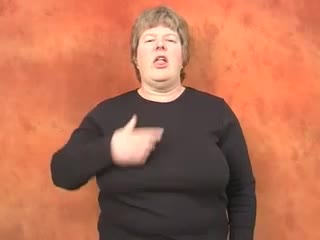
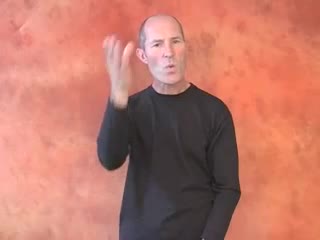
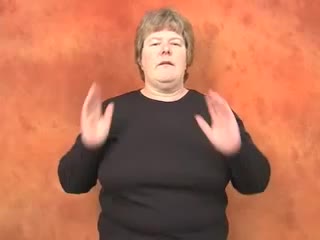
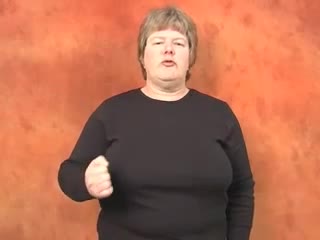
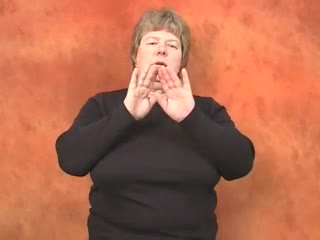
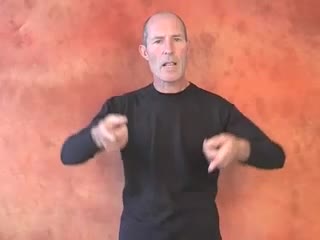
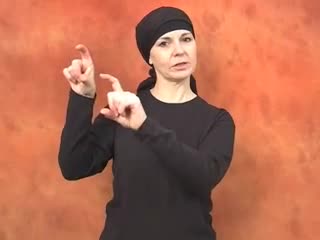
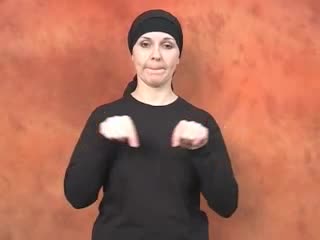
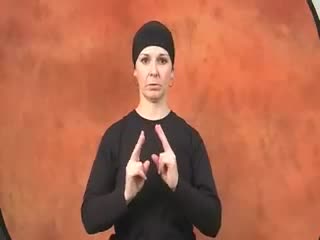
For the BSL sign for "nail gun," you'll begin by forming a specific handshape with your dominant hand. Start by extending your index finger straight out, keeping it firm and pointed. Your thumb should be extended as well, pointing upwards and away from your palm, creating a shape reminiscent of the handle and trigger mechanism. Now, curl your middle, ring, and pinky fingers tightly into your palm, ensuring they are neatly tucked away. This handshape will visually represent the main body of the nail gun, with your index finger acting as the barrel or nozzle.
Step 2: Hand Placement and Location
With your dominant hand formed into the correct handshape, position it in a neutral signing space, typically around chest height, slightly in front of your body. Your non-dominant hand remains relaxed or can be used to represent the surface being nailed, though for the basic sign, it's often not actively involved. Think of holding the tool itself, poised and ready for action, so the sign naturally aligns with where you'd operate a nail gun in real life. This initial placement sets the scene for the action to follow, ready to demonstrate its purpose.
Step 3: Movement
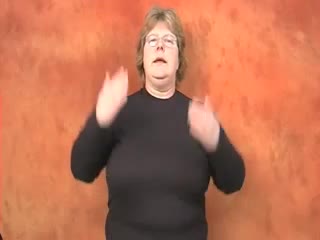
Now for the action that brings the sign to life: the movement. From your starting position, make a sharp, swift forward and slightly downward thrust with your dominant hand, as if pressing the nail gun against a surface and firing a nail. This movement should be short and controlled, not a wide swing. Immediately after the thrust, bring your hand back slightly to its original position, mimicking the recoil or ready-to-fire stance of the tool. You'll perform this forward-and-back action once or twice, with a crisp, definite quality to each movement, embodying the precise, impactful nature of a nail gun.
Step 4: Facial Expression and Mouthing
Non-manual features are absolutely integral to British Sign Language, and while a neutral facial expression often accompanies simple nouns, mouthing "nail gun" is very common and helpful for clarity here. Your lips should articulate the word "nail gun" silently or with a slight whisper, which provides phonetic information and aids comprehension, especially for new learners. If you're using the sign in a sentence implying danger or caution, your facial expression might shift to one of concern or seriousness, but for simply identifying the object, a relaxed, neutral face is generally appropriate. This mouthing acts as a direct verbal cue, reinforcing the visual sign.
Step 5: Palm Orientation
The direction your palm faces during the sign for "nail gun" is crucial for its visual accuracy. Throughout the signing process, your palm should primarily face downwards or slightly towards the front, reflecting how you naturally hold and operate such a tool. As you perform the forward thrusting movement, your palm maintains this orientation, ensuring the 'barrel' (your index finger) is pointing forward, ready to 'fire'. This consistent palm orientation visually grounds the sign, making it instantly recognisable as the action of using a tool.
"nail gun" in BSL - Quick Reference Snapshot
- Handshape: Dominant hand, index finger and thumb extended, other fingers curled.
- Location: Neutral signing space, chest height, in front of the body.
- Movement: Sharp, swift forward and slightly downward thrust, then slight retraction (repeated once or twice).
- Facial Expression: Neutral, often accompanied by mouthing "nail gun."
- Dominant Hand: Performs the primary action.
- Palm Orientation: Primarily faces downwards or slightly forward, maintaining orientation during movement.
5 Memorisation Tricks for the BSL Sign "nail gun"
- Visualise the Tool: Picture the actual nail gun in your mind, specifically focusing on its handle and the long barrel. Your index finger becomes that barrel, ready to fire, while your thumb acts as the grip and trigger mechanism, making the BSL nail gun sign a direct visual mnemonic for the tool itself. This direct representation helps cement the connection.
- Feel the "Impact": Practise the sharp, short forward thrust with a slight recoil in your movement; this isn't just a gentle push. Really embody the feeling of a nail being driven into wood, even if imaginary, and let that physical sensation of impact and retraction embed the motion into your muscle memory. The crispness of the movement is key to its meaning.
- Connect to Action Verbs: Think about the core action a nail gun performs – "to nail." While this isn't the sign for "nail" or "to nail," connecting the tool to its primary function can help you remember its specific form. Consider how this sign is distinct from other tools by its unique "firing" motion.
- Avoid "Gun" Confusion: Learners sometimes confuse the "nail gun" sign with a generic "gun" sign, which typically involves a similar index finger and thumb shape but with different movement or location. Remember that for the nail gun, the movement is a specific forward thrust, almost a jab, whereas a generic gun sign might have a more defined 'shooting' action or be held higher. Focus on the tool's specific operation.
- Integrate into DIY Scenarios: Next time you're talking about home improvements or construction, either in English or BSL, mentally insert the sign for "nail gun." Imagine yourself saying, "I need a nail gun for that project," or "Be careful with the nail gun!" The more you associate the sign with relevant daily situations, the stronger your recall becomes.
Real-Life Situations to Use the BSL Sign for "nail gun"
- When you're discussing a home renovation project with a Deaf friend, you might sign about needing to "borrow your [nail gun] for the decking." This places the tool directly into a practical request context, often accompanied by a questioning facial expression.
- Imagine you're at a hardware store explaining to a shop assistant that you're looking for a specific tool. You could sign, "I want to buy a new [nail gun]," clearly indicating the item you're searching for. The sign here acts as a direct noun object within your sentence structure.
- Perhaps you're warning someone about safety on a construction site. You'd sign, "Watch out, there's a [nail gun] on the floor!" Here, the sign for the tool is combined with warning NMFs and spatial grammar to indicate its location and potential hazard.
- If you're describing someone's job, you could mention, "My brother uses a [nail gun] every day in his carpentry work," integrating the sign as part of a description of their professional activities. It simply states an object used in their daily routine.
Top 3 Mistakes Learners Make Signing "nail gun" in BSL
- Incorrect Handshape: A very common error is not extending the thumb fully or allowing other fingers to slightly uncurl, which changes the visual representation from a tool grip to a more ambiguous shape. This happens because beginners sometimes focus only on the index finger. To correct this, consciously ensure your middle, ring, and pinky fingers are tightly tucked away, creating a distinct "L" shape with the index and thumb, making it look much more like the handle of the actual tool.
- Vague or Overly Large Movement: Some learners might make the forward thrust too gentle, too wide, or with too much arm movement rather than a precise, short action. This can make the sign unclear or confuse it with a general "push" or "point." The solution is to practise a sharp, controlled, short forward thrust primarily from the wrist and elbow, immediately followed by a slight retraction, truly mimicking the specific, impactful action of firing a nail.
- Missing the Mouthing: Beginners sometimes focus so intently on the manual components that they forget the crucial non-manual feature of mouthing "nail gun." While the sign is visually iconic, mouthing adds vital clarity and reinforces the lexical item. The fix is simply to make a conscious effort to articulate "nail gun" with your lips each time you sign it, even if silently, as this helps both you and your audience connect the sign to the specific English word.
Fascinating Facts About the BSL Sign for "nail gun"
- The sign for "nail gun" is highly iconic, meaning it visually resembles the action or object it represents. This makes it relatively intuitive for learners, as the handshape and movement directly mimic how one would hold and use the actual tool, a common characteristic for many tool signs in BSL.
- While modern tools like nail guns are relatively new, the principles of iconic representation for tools have existed in BSL for centuries, adapting to incorporate new inventions. This sign's structure builds on that tradition of showing the function.
- Regional variations for specific tools can sometimes occur within the BSL-using community, though the core concept of mimicking the tool's action often remains. However, for a widely recognised piece of equipment like a nail gun, the sign tends to be fairly consistent across different areas where British Sign Language is used.
- You won't find a direct correlation to the manual alphabet (finger-spelling) for the sign itself, as it's a lexical sign, not an initialised one. Instead, its form is driven by the tool's physical characteristics, prioritising visual clarity over a letter-based approach.
- Linguistically, this sign functions as a noun classifier, where the handshape itself carries information about the object's form or how it's handled. Your hand *becomes* the nail gun, demonstrating a sophisticated aspect of BSL's grammatical structure.
"nail gun" in Deaf Culture - Community and Identity
In the Deaf community, just like in the hearing world, practical skills, trades, and home improvements are important aspects of life and conversation. The sign for "nail gun" fits naturally into discussions about work, hobbies, and personal projects, bridging communication gaps when discussing construction or DIY. Deaf individuals are involved in all professions, including carpentry, building, and renovation, where tools like this are essential. Learning this sign isn't just about vocabulary; it's about acknowledging and connecting with the diverse experiences and occupations within the Deaf community. It fosters inclusion by ensuring that conversations about everyday practicalities, shared projects, or occupational experiences are accessible and engaging for everyone.
Example Conversations Using "nail gun" in BSL
English: Where is the nail gun? - BSL structure: NAIL-GUN WHERE? (Topic-Comment structure, with 'nail gun' as the topic, followed by the question word)
English: I need a new nail gun for my work. - BSL structure: MY WORK, NEW NAIL-GUN NEED I. (Time-Topic-Comment structure, focusing on the need for the item in a specific context)
English: Be careful with that nail gun! - BSL structure: THAT NAIL-GUN, BE-CAREFUL! (Emphasis on the object, followed by a direct warning, often with strong NMFs of caution)
English: He bought a powerful nail gun last week. - BSL structure: LAST WEEK, HE BUY NAIL-GUN STRONG. (Clear temporal marker, subject-verb-object, with an adjective describing the tool)
English: Can you show me how to use the nail gun? - BSL structure: NAIL-GUN, HOW USE? YOU SHOW ME? (Topic-Comment, followed by a direct request for demonstration)
Frequently Asked Questions: The BSL Sign for "nail gun"
Is the BSL sign for nail gun difficult for beginners?
Not at all! The sign for "nail gun" is generally considered quite accessible for beginners because it's highly iconic. Its visual resemblance to the actual tool and its action means that once you understand the basic handshape and movement, it tends to stick in your memory quite easily. You'll likely find it a satisfying sign to learn as it directly relates to a common object.
Are there regional variations for the BSL nail gun sign?
While British Sign Language does have some regional variations for certain signs, the sign for "nail gun" is fairly consistent across different regions. This is often true for signs representing modern tools or objects that have a clear, distinct function that can be easily mimicked. So, you can be confident that the sign you learn here will be widely understood.
What's the difference between "nail gun" and "hammer" in BSL?
The signs for "nail gun" and "hammer" are quite distinct in BSL, even though both are tools for driving nails. The "nail gun" sign involves a forward thrusting motion with an index finger and thumb handshape, mimicking firing. In contrast, the "hammer" sign typically involves one hand shaping like a fist hitting the palm of the other hand, or an alternating downward striking motion, directly reflecting the manual action of hammering.
Can children learn the BSL sign for nail gun?
Absolutely! Children can definitely learn the BSL sign for "nail gun," especially if they have an interest in building, tools, or simply seeing adults use them. The iconic nature of the sign makes it engaging for younger learners, as they can easily connect the visual action to the real-world object. It’s a practical sign that can be introduced in play or when discussing household activities.
How might this sign differ in other sign languages?
Different sign languages develop independently, so while the concept of a "nail gun" exists globally, its sign would likely be unique in other sign languages. While some might also use an iconic representation, the specific handshapes, movements, and palm orientations would vary according to the linguistic conventions of that particular sign language. It highlights the diversity of visual languages worldwide, even for similar concepts.
Signs That Pair Naturally with "nail gun" in BSL
- HAMMER: This tool often comes up in similar contexts of construction or DIY, making it a natural companion sign. You might discuss using either a hammer or a nail gun for a particular task.
- WOOD: Since nail guns are primarily used with wood, this sign frequently appears in sentences describing projects or materials. You'll often sign about nailing pieces of wood together.
- BUILD: This general action sign is highly relevant, as a nail gun is a key tool used in the process of building things, from furniture to houses. They both belong to the construction vocabulary cluster.
- WORK: Discussing one's job or a specific task often involves mentioning the tools used, so "work" naturally pairs with "nail gun" in professional or hobby contexts. Many jobs require using such equipment.
- SCREWDRIVER: Another common fastening tool, "screwdriver" falls into the same category of construction implements. Learners often group tools together for easier vocabulary acquisition.
- DANGER/CAREFUL: Given the nature of a power tool like a nail gun, signs for "danger" or "careful" are frequently used in conjunction, especially when discussing safety or giving warnings.
Building Fluency: How to Practise "nail gun" in BSL
To really make the sign for "nail gun" feel natural, spend some time in front of a mirror, carefully observing your dominant hand's shape and the crispness of your forward thrust. Pay close attention to how your index finger extends and your thumb stays firm, ensuring your movement perfectly mimics the tool's action, then bring it back slightly for the 'recoil'. Try to integrate this sign into your daily BSL conversations by thinking about situations where you might genuinely use it, perhaps when describing a home improvement show or a project you've seen. Filming yourself signing can provide invaluable feedback, allowing you to spot subtle nuances in your handshape or movement that you might miss otherwise. Most importantly, seek out opportunities to practise with a Deaf conversation partner; their feedback will be the most authentic and helpful for refining your fluency. Spaced repetition, signing "nail gun" a few times each day over a week rather than all at once, will embed this sign firmly into your BSL repertoire.